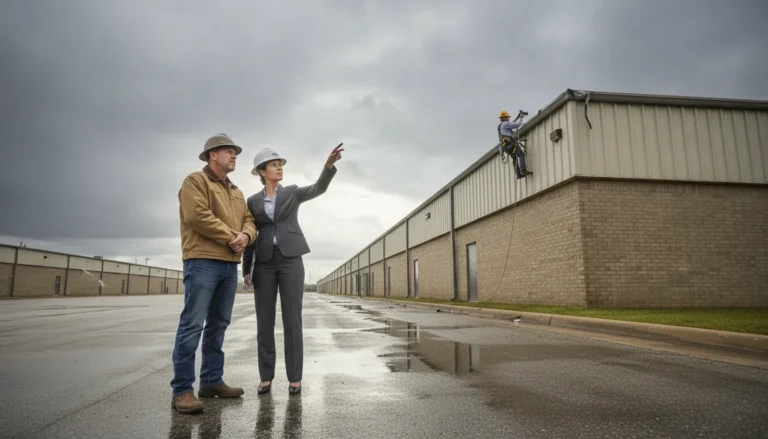
When a Texas property loss disrupts rent, sales, or day-to-day operations, the financial impact can continue long after the visible damage is repaired. The records you preserve early can help connect the physical loss to the interruption and explain how the claimed amount was calculated.
Business interruption claim documentation for Texas property owners should bring together the policy and endorsements, property-loss evidence, financial records, repair and mitigation expenses, insurer communications, and a dated timeline. The actual policy controls which losses, periods, and expenses may qualify, so organize records without assuming coverage.
Call Hoch Law Firm at 817-731-9703 for a free case evaluation.
A useful file does more than collect receipts. It shows what happened, when operations changed, what income was affected, and which expenses continued or increased. Start by identifying what the documentation must establish, then build the financial and property records around those questions.
What business interruption claim documentation for Texas property owners must establish?
The file should connect four points.
Strong business interruption claim documentation for Texas property owners should show a covered physical loss or peril, an interruption or suspension of operations, a covered financial impact, and a reasonable restoration period. It should tell that story in order, using records that answer both coverage questions and accounting questions.
Coverage proof: why the loss may be covered
Start with the insurance contract and the event. Preserve the complete policy, business income endorsements, declarations, exclusions, notices, and any denial or reservation-of-rights letters. Then organize photographs, inspection reports, repair estimates, property reports, and coverage decisions showing what happened at the affected premises. A business interruption claim may require analysis of the underlying property damage and the covered cause of loss, not merely a showing that revenue declined.
The actual policy controls. Covered causes, waiting periods, limits, sublimits, endorsements, and the definition of the restoration period can vary. Some policies may address related categories such as extra expense, payroll during closure, loss of rents, utility-services interruption, or contingent business interruption. Those categories should be identified from the policy rather than assumed. The existing business interruption insurance claim Texas guide provides a service-oriented resource for owners who need to examine broader coverage, calculation, and claim issues.
Accounting proof: how the interruption affected the business
Coverage proof does not, by itself, establish the amount of the loss. Accounting records must show what the business would likely have earned, what it actually earned, and which expenses continued during the interruption. Relevant records may include tax returns, profit-and-loss statements, general ledgers, bank records, payroll, sales data, budgets, bookings, purchase orders, contracts, and evidence of growth or seasonality.
Separate continuing expenses from expenses the business avoided. Track temporary-location costs, extra expenses, payroll, and other measures taken to continue operations or reduce the interruption. A tax return may show annual performance without explaining a seasonal business, recent expansion, major contract, or the precise effect of the loss. The financial analysis should match the policy’s requirements, not rely on a calculation method the contract does not recognize.
Finally, preserve repair schedules, permits, contractor agreements, invoices, and progress records. Together, these materials help establish why operations were affected, what steps were taken, and when restoration reasonably occurred. Keep originals, preserve electronic records with backups, and review the policy’s notice and proof-of-loss requirements before submitting a final claim package.
What financial records prove lost income?
A strong financial record set connects the interruption to the income the business likely would have earned. It should show the business’s pre-loss performance, the disruption itself, and the expenses that continued while operations were limited. The goal is not to submit a pile of documents. It is to create a clear, supportable explanation of the loss.
For business interruption claim documentation for Texas property owners, gather records from several periods and compare them rather than relying on one annual figure. Useful categories include:
| Record group | What it helps explain | Examples |
|---|---|---|
| Historical financials. | Pre-loss performance and trends. | Tax returns, profit-and-loss statements, ledgers, bank records. |
| Revenue and contracts. | Expected sales, rent, or growth. | Sales reports, rent rolls, bookings, purchase orders, signed contracts. |
| Operating costs. | Expenses that continued or were avoided. | Payroll, utilities, rent, vendor invoices, reduced supplies. |
| Post-loss analysis. | How the interruption changed results. | Monthly comparisons, forecasts, customer orders, accounting exports. |
- Tax returns and financial statements: Preserve federal and state tax returns, monthly or quarterly profit-and-loss statements, balance sheets, general ledgers, and trial balances. These records establish historical performance, but a tax return alone may not explain the interruption.
- Revenue records: Collect sales reports, point-of-sale data, invoices, accounts receivable records, deposits, booking calendars, and customer order histories. For a property with tenants, rent rolls, leases, payment histories, and tenant communications may help explain lost rental income.
- Payroll and operating expenses: Keep payroll registers, benefit records, utility bills, rent, loan payments, vendor invoices, and other expenses that continued during the shutdown or reduced operations. Separately identify expenses that were avoided because the business operated less, such as reduced supplies, commissions, or production costs.
- Budgets and forward-looking records: Preserve annual budgets, forecasts, sales targets, purchase orders, signed contracts, recurring customer agreements, and pending bookings. These records can help show expected growth or a significant contract that an older tax return would not capture.
- Seasonality and business changes: Save month-by-month comparisons, prior-year sales, marketing calendars, expansion plans, new-location records, and evidence of unusual seasonal demand. A seasonal retailer, apartment property, warehouse, or event-based business may have a very different expected result from its annual average.
Organize the records by month and label each item as pre-loss, interruption-period, or post-loss. Keep the original electronic files and preserve supporting bank records, rather than relying only on spreadsheets prepared after the event. A reconstruction should explain how the figures were derived and identify continuing, avoided, and additional expenses.
Business income proof is needed to calculate the amount of business lost, but the accounting analysis should also fit the policy language and the documented timeline. Compare the financial records with the property damage, operational suspension, restoration period, and applicable endorsements. The actual policy controls, and the insurer may question whether a projection reflects ordinary growth, seasonality, or facts unrelated to the covered interruption. A forensic accountant may help organize records, test projections, analyze trends, and separate continuing from avoided expenses. Review the complete file against the policy and claim correspondence.
Which property and repair records should owners preserve?
Physical-loss records connect the damage at a Texas property to the repairs, temporary measures, and operating disruption that followed. Preserve them as soon as conditions are safe. This evidence can matter even when the immediate goal is simply to stabilize a warehouse, office, apartment complex, retail center, or other commercial property.
Document the property before cleanup
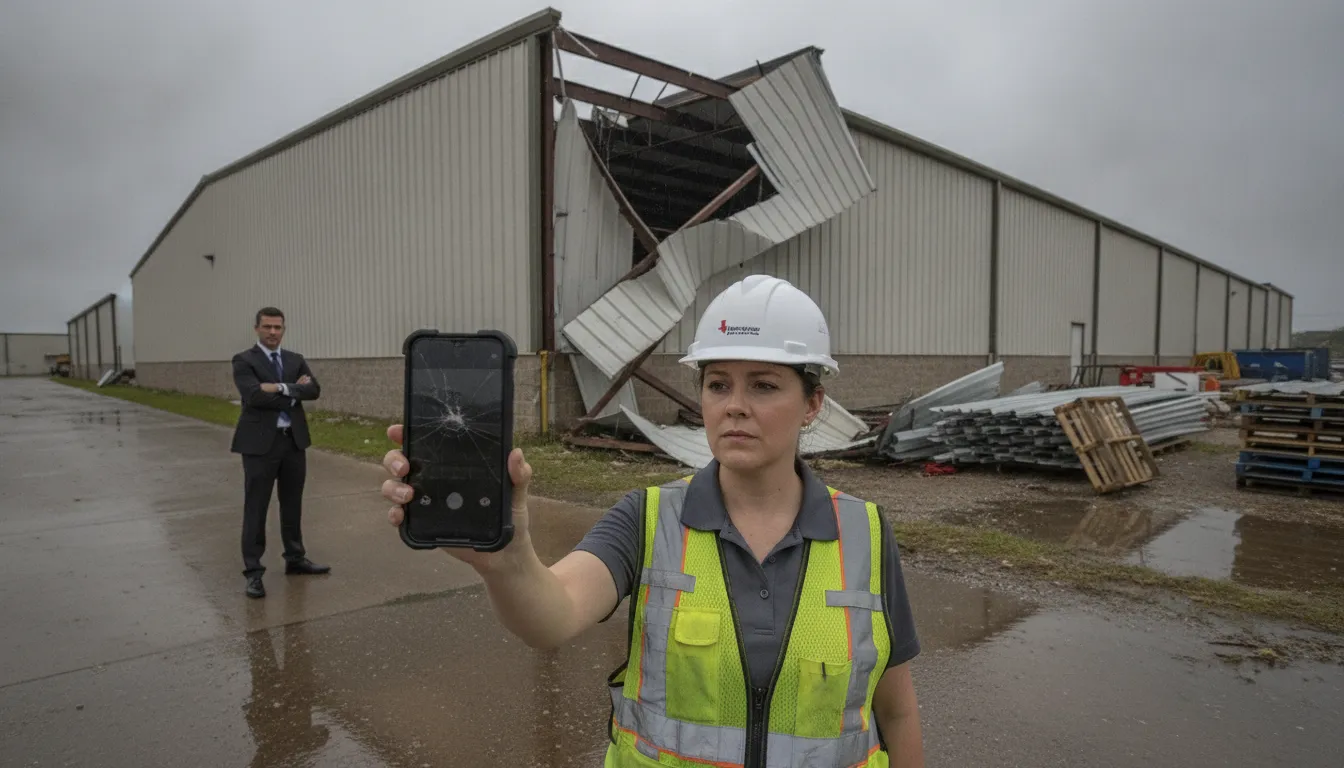
Take dated photographs and video before moving, cleaning, or discarding damaged materials. Capture wide views of each affected area, then close views of roof damage, water intrusion, equipment, inventory, finishes, and other relevant details. Include surrounding conditions that help show the location and extent of the loss. If pre-loss photographs, inspection reports, maintenance records, or property-condition surveys exist, preserve those too. Before-and-after documentation can help show how the property changed.
Do not discard damaged property merely because it appears unusable. Retain damaged materials when safe and reasonably practical, and check the policy and insurer’s instructions before disposal. If health, fire, structural, or other safety concerns require removal, photograph and record the material first. Note what was removed, when it was removed, who authorized the work, and where samples or salvage were kept.
Keep a complete repair and mitigation file
Save inspection reports, contractor estimates, scopes of work, permits, contracts, repair schedules, change orders, progress reports, invoices, receipts, and proof of payment. A dated record of temporary repairs is especially important. Identify the problem addressed, the work performed, the vendor, the cost, and whether the measure protected the property, reduced further damage, maintained operations, or supported a faster reopening. These records may also show the restoration sequence and why a particular expense was necessary.
Keep receipts for emergency services, drying, security, storage, temporary space, equipment rental, debris removal, and other mitigation or extra expenses. Do not assume that an expense is covered, but do preserve it for comparison with the policy and claim analysis. Extra expense coverage may address certain costs incurred to continue operations, reduce an interruption, or reopen more quickly, depending on the policy.
Preserve inventory and equipment values
Build an itemized inventory of damaged or unavailable stock, machinery, fixtures, furnishings, tools, and other equipment. Record descriptions, quantities, serial numbers, purchase dates, original costs, current condition, and replacement or repair estimates when available. Attach purchase records, leases, maintenance files, appraisals, and photographs. Keep separate records for property owned by tenants, customers, vendors, or other parties.
Property reports, estimates, photographs, and coverage decisions are among the records that may be relevant to a claim review. The actual policy and endorsements control, and physical damage documentation does not automatically establish business-income coverage. For related coverage issues, see Hoch’s pages on commercial property insurance dispute and commercial property insurance exclusions. Keep originals and backups of electronic files, using consistent filenames and dates.
How should owners document insurer communications and the loss timeline?
A well-kept chronology helps connect the property event to the operational impact, claim handling, repairs, and financial loss. Start the file with the policy number, claim number, insured entity, affected premises, date of loss, and the name and contact information for the adjuster. Keep the complete policy and endorsements with the claim file because the notice, waiting-period, restoration-period, and proof-of-loss duties depend on the policy language and facts.
Record every communication and submission
Use a running log for every call, email, inspection, meeting, and letter. Record the date, participants, topics discussed, documents requested, documents submitted, and any promised follow-up. Save the original email and attachments. For phone calls, write a short same-day summary and identify any deadline or question that remains open. Preserve communications with the insurer, adjuster, engineer, accountant, and other consultants involved in the claim.
Track what you sent and how you sent it. Include the initial notice, photographs, inventories, repair estimates, invoices, financial records, receipts, sworn statements, and proof-of-loss materials. If the insurer asks for additional information, save the request and your response together. A denial or reservation-of-rights letter should remain in the file, along with the factual and policy grounds stated by the insurer. Do not assume that a request, partial payment, or verbal statement changes the policy’s written requirements.
Build the loss timeline from the event through restoration
Use dated entries to show what happened at the property and how operations changed. Include:
- The event, discovery of damage, initial notice, and emergency measures.
- Business closure, reduced operations, access restrictions, tenant impacts, utility interruptions, or relocation.
- Inspections, adjuster and consultant visits, document requests, and claim submissions.
- Temporary repairs, permits, contractor agreements, work starts, delays, completed milestones, and reopening steps.
- Payroll, continuing expenses, avoided expenses, extra expenses, and other financial effects tied to each period.
Keep repair schedules, permits, contracts, progress records, photographs, and invoices with the related timeline entry. These records can help explain the restoration period and whether operational limits continued for a documented reason. They also create a clearer record when the insurer proposes a different restoration endpoint.
Finally, review the policy’s notice and proof-of-loss provisions before assuming a particular deadline applies. Requirements vary by policy and circumstances. If a submission is incomplete, disputed, or rejected, preserve the request and response and consider obtaining advice before making a significant coverage position or signing a release. For broader background on policy-specific coverage issues, see the business interruption insurance claim Texas guide.
How should a Texas property owner organize a claim file?
Good business interruption claim documentation for Texas property owners should let someone unfamiliar with the loss understand what happened, when it happened, and how each claimed amount was calculated. Organization makes review easier, but it does not determine coverage. The policy, endorsements, covered cause, and policy duties still control.
Use a secure digital file with a consistent naming system, and keep a physical file for critical originals. A practical sequence is:
- Create a master index. Start with the policy, declarations, business-income forms, endorsements, claim number, notice of loss, and insurer correspondence. Add sections for property damage, financial records, communications, repairs, mitigation, and supporting contracts. Record the file name and date for each item so a reviewer can find it quickly.
- Preserve originals and backups. Keep original invoices, statements, photographs, videos, emails, and exported accounting records in an unaltered folder. Store working copies separately. Back up electronic records in at least one secure location outside the affected premises. Photograph or scan damaged materials before disposal, and check policy requirements before discarding anything.
- Separate the financial categories. Do not combine every post-loss cost into one spreadsheet. Track continuing expenses, avoided expenses, temporary-location costs, and extra expenses in separate schedules. Payroll, rent, utilities, repairs, relocation, and mitigation costs may require different support. These categories are relevant to claim analysis, but the policy determines which are covered. A forensic accountant may help organize records, test projections, and prepare financial models when the calculation is complex. Financial records and expense categories should be reviewed together rather than in isolation.
- Maintain a dated timeline. Record the event, discovery of damage, notice to the insurer, inspections, access restrictions, shutdowns, temporary operations, repairs, reopening steps, and significant communications. Note the waiting period and restoration milestones described in the policy. Save the related email, photograph, invoice, or report beside each timeline entry.
- Cross-reference every claimed figure. Give each line in a loss schedule a source, such as a bank statement, payroll report, invoice, lease, sales record, or accounting export. Note the relevant period and explain adjustments. This prevents a total from appearing without a traceable evidentiary path.
- Review policy duties before submission. Confirm notice, cooperation, proof-of-loss, preservation, and documentation requirements in the actual policy and endorsements. Do not assume that a well-organized file proves coverage or satisfies every contractual duty. If a later dispute involves appraisal versus litigation, those paths address different issues, while the underlying records remain important to either review.
Keep the index current as new estimates, requests, payments, and decisions arrive. A living file is more useful than a folder assembled only after the insurer questions the claim.
When should an owner get legal or accounting help?
Good records do not always resolve a business interruption claim. Consider getting professional help when the insurer disputes whether the underlying property damage resulted from a covered cause. Whether operations were actually suspended, or how long the restoration period should last. Business interruption coverage generally connects to property coverage, but covered events and exclusions vary by carrier and policy. The policy language and endorsements control the analysis.
Those questions can be difficult when the physical damage claim and the income claim are treated differently. For example, an insurer may accept some property damage while questioning whether the loss caused the claimed interruption. The review may need to connect the damaged premises, the operational effect, the policy’s waiting or restoration periods, and the financial records supporting the claimed loss. A denial or reservation-of-rights letter that does not clearly identify the relevant coverage trigger or factual basis deserves careful review.
When an attorney may help
Legal guidance may be useful if the insurer requests broad additional information, relies on an exclusion. Limits the restoration period, disputes partial operations, or offers a payment that does not address all claimed categories. An attorney can compare the policy, endorsements, claim correspondence, property findings, repair timeline, and business records without assuming that the insurer’s interpretation is correct. Owners dealing with a commercial property insurance dispute can review the coverage and claim-handling issues before deciding what response is appropriate.
This is also a point to preserve the file carefully. Keep original records, correspondence, financial exports, photographs, repair documents, and notes of conversations. Do not discard or alter materials simply because the property has been repaired. The actual policy may impose duties concerning notice, proof of loss, cooperation, or preservation.
When a forensic accountant may help
A forensic accountant is not necessary for every claim. The role may become useful when the loss involves multiple locations, seasonal revenue, changing operations, continuing payroll, temporary facilities, or disputed projections. A forensic accountant may organize records, reconstruct lost income, analyze historical trends, test projections, prepare financial models, and separate continuing expenses from avoided expenses. The analysis should follow the policy’s coverage requirements, not an assumed calculation method.
Legal and accounting assistance can work together, but neither guarantees coverage or a particular result. If you need to discuss a Texas property insurance dispute, a Fort Worth property insurance lawyer can evaluate the available records and the policy issues affecting the claim.
Call Hoch Law Firm at 817-731-9703 to discuss your documentation.
Frequently Asked Questions
What records should I gather first for a business interruption claim?
Start with the policy, business income endorsements, claim number, notice, and insurer correspondence. Then collect pre-loss tax returns, profit-and-loss statements, ledgers, bank records, payroll, sales data, budgets, contracts, and bookings. Add photographs, repair estimates, invoices, inspection reports, and receipts for temporary operations or extra expenses.
How can financial records prove lost income?
Financial records help compare expected performance with actual results during the interruption. Use more than an annual tax return when possible. Monthly sales, expense, payroll, and bank records can help explain seasonality, expansion, a major contract, or the specific effect of the interruption. The policy’s definition of covered business income still controls.
Should I preserve communications with the insurance company?
Yes. Keep emails, letters, claim forms, recorded statements, inspection notices, adjuster communications, and communications with financial consultants. Maintain a dated log showing who was contacted, when, and what was discussed. Preserve denial or reservation-of-rights letters because they may identify the insurer’s factual and policy position.
When should I get help reviewing the documentation?
Consider a detailed review when the insurer disputes the covered cause, property damage, operational suspension, restoration period, or calculation. A forensic accountant may help organize records and separate continuing, avoided, temporary-location, and extra expenses. Counsel can then compare the documentation with the actual policy, endorsements, and claim requirements before you submit or challenge the claim.
Ready to discuss your documentation?
Organized financial records, repair evidence, and claim communications can make it easier to evaluate a business interruption dispute under the applicable policy. If you are unsure whether your file supports the claimed loss, Hoch Law Firm can review the situation and explain potential next steps.
Call Hoch Law Firm at 817-731-9703 for a free case evaluation.