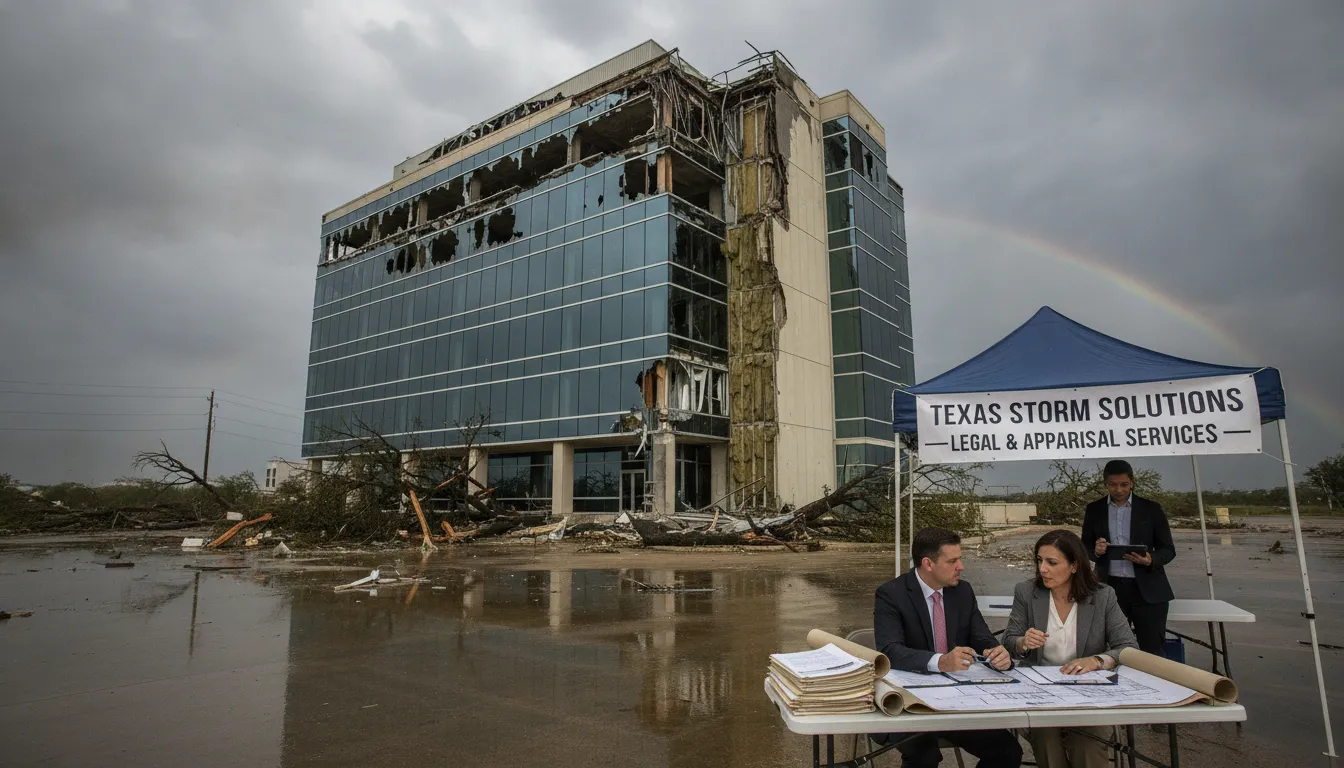
Severe hailstorms inflict billions of dollars in structural damage on Texas commercial properties every year. When an insurer underpays your storm claim, your business survival depends on securing a fair, objective valuation. The commercial property insurance appraisal Texas process offers an alternative to costly, drawn-out courtroom battles.
The commercial property insurance appraisal Texas process is a contract-based method designed to settle disputes about the final cost of covered property losses. Under Texas Insurance Code rules, this process cannot settle coverage disputes or say if your insurance policy covers the damage. Instead, both you and your insurer select independent, unbiased appraisers who then inspect the building and try to agree on the repair costs. If these two appraisers cannot agree on the amount of loss, they select a neutral umpire to review the files and settle their differences. Once any two of these three panel members sign the written appraisal award, that decision becomes binding on both you and the insurance company.
Knowing how this process works is vital to protect your claim and avoid costly errors. You may wonder how this system starts and what steps you must follow. To help you understand your options, we begin with What Is the Commercial Property Insurance Appraisal Process in Texas?
Commercial Property Insurance Appraisal Texas: What Is the Commercial Property Insurance Appraisal Process in Texas?
When you own a business, property damage can halt your work. If your insurer agrees that your policy covers the loss but offers a low payout, you face a major challenge. In these situations, the commercial property insurance policy often has a built-in path to resolve the fight. This path is known as the insurance appraisal process.
A private way to settle disputes
The appraisal process acts as a private, agreed way to settle disputes. It exists to settle fights about the cost of property damage. If your commercial building is damaged, the insurer might offer a low payout. You know the real repair costs are much higher.
Rather than going straight to court, either side can demand an appraisal. This step activates a special clause in your insurance policy. It allows both parties to bypass standard claims adjustment to find a fair price.
Once triggered, the process is governed by strict rules. In Texas, the commercial property insurance appraisal Texas owners use is influenced by state guidelines. For example, rules outlined in Texas Insurance Code Section 2210.574 define how these panel reviews operate. The main goal is to have neutral experts set the true cost of the physical damage.
Setting the amount of loss versus coverage
It is vital to know what appraisal can and cannot do. The process can only settle the exact amount of loss. It does not decide if the insurance company must pay for the damage under the policy.
This difference is a key legal point. Under Texas law, coverage is a question for the courts, not an appraisal panel. The panel only finds the price tag for the repairs.
For example, if a storm rips off your roof, the panel can find the cost to fix it. But if the insurer claims the roof was already rotting, that is a coverage dispute. The appraisal panel cannot rule on whether the rotting voids your claim. An appraisal award only binds the parties to the cost of repairs if coverage is later proven.
How appraisal differs from court fights
Appraisal is not the same as a lawsuit. In a court case, a judge or jury decides all parts of the claim. This includes coverage, bad faith, and the amount of loss. Litigation is often slow and very costly.
In contrast, appraisal is a faster way to resolve pricing fights. It is less formal than a trial, but the resulting award is still binding. This path helps you avoid a long court battle. You can resolve your valuation dispute in a few months.
During a standard claim review, you talk back and forth with an adjuster. In an appraisal, both sides hire neutral experts. These experts form a panel to inspect the property and set the loss. This takes the final decision out of the hands of the insurance company.
When Does the Appraisal Clause Apply to a Commercial Property Claim?
The appraisal clause in a commercial policy is not a catch-all tool, but it has a specific role in settling disputes. You cannot use it to settle every fight with your insurer. Instead, it only applies when both sides agree that a loss is covered, but they do not agree on the cost of the damage. When this happens, a commercial property insurance dispute can enter the appraisal phase.
Accepted Coverage and Disputes Over the Amount of Loss
Before you can start a commercial property insurance appraisal Texas process, the insurer must first accept coverage for the claim. This means they agree that the policy covers the event. They admit that they owe you money for the loss, but they want to pay a low price. But the two sides do not agree on how much the repairs will cost. This split on the value is what triggers the clause.
For example, your insurer might agree that a storm broke your roof. They offer twenty thousand dollars to fix it. But your contractor says the job will cost sixty thousand dollars. Since both sides agree the roof is covered, the appraisal panel can step in to find the real value of the loss.
Common Triggers for Commercial Claims in Texas
Severe weather often triggers these disputes. Texas is a prime target for major storms. In fact, Texas leads the nation with six point five billion dollars in property damage from hail damage claims from 2012 to 2021. When these storms hit large retail centers, warehouses, or office sites, the cost to rebuild is huge. The scope of the loss often leads to deep splits over the final price.
Other events also trigger these cost fights. For example, fire can gut a building and leave complex smoke damage. Strong winds can lift roof decks without blowing them off. Vandals can also ruin building walls and complex electrical systems. In each case, the insurer may agree the event is covered. But they will try to pay as little as they can, and this is when you need to act.
When the Appraisal Process Does Not Apply
It is vital to know when this process will not work. Appraisal cannot solve legal questions about your policy. If your insurer denies your claim outright, you cannot use the clause to force them to pay. For example, if they say a policy exclusion applies, appraisal is off the table. You must resolve these issues through talks or in court.
You also cannot use appraisal to address bad faith actions. If an insurer delays your claim for months without a reason, that is a legal matter. When they lie about your policy terms, they act in bad faith. These wrongs must go before a judge. Appraisal only looks at the cost of accepted losses.
How to Invoke the Appraisal Clause: A Step-by-Step Guide
To start the process, you must follow the steps set by your policy and state law. If you have a dispute over storm or fire damage, a commercial property insurance appraisal Texas can help resolve the cost gap. This path avoids the cost of a long court fight.
It gives both sides a clear way to settle on a fair price for the damage. Many business owners in Fort Worth use this process to get their claims paid quickly. It is a powerful tool when you and your carrier do not agree on repair costs.
The initial demand
You must first send a formal demand letter to the carrier. This document must state that you want to start the appraisal process. Under 28 Tex. Admin. Code §5.4211, the carrier must acknowledge your demand in writing within ten days.
This quick response keeps the claim moving. You should work with a lawyer to draft this letter. A clear demand makes sure the carrier knows you are serious about your rights. It also sets a strict timeline for their reply.
The panel selection
Once both sides agree to the demand, the panel is formed. Each party must select a qualified and independent appraiser. These two appraisers then choose a neutral umpire.
The umpire acts as a judge if the two appraisers cannot agree on the repair costs. This setup ensures that the process remains fair to both you and the insurer. Your appraiser must know the local commercial market well. They will look at the real damage to your roof, walls, and structures.
The inspection and award
The chosen appraisers will inspect your property. They will review all documents, photos, and cost estimates. They then try to agree on the final value of the loss. If they reach an agreement, they sign the award.
If they clash, they ask the umpire to step in and make a final ruling. The final award is binding on both sides once two panel members sign it. This makes it vital to have strong proof from the start.
- Send a written demand: You must mail or email a formal written demand for appraisal to your insurance company. This letter must state that you are invoking the appraisal clause of your policy.
- Wait for acknowledgment: Your carrier has ten days to respond to your demand in writing under Texas law. They must state whether they accept or deny the appraisal process.
- Select your appraiser: You must name a qualified and independent appraiser to work on your behalf. This person must have no financial interest in the outcome of your claim.
- Appoint the umpire: The two chosen appraisers must select a neutral umpire. This third party acts as an impartial referee if the appraisers do not agree on repair costs.
- Inspect the damage: The appraisers will visit your commercial site to inspect the physical damage. They will exchange and review all repair bids, damage reports, and photos.
- Resolve disputed items: The appraisers will try to agree on a fair cost. If they cannot agree on specific items, they will ask the neutral umpire to make the final choice.
- Issue the final award: A binding appraisal award is issued when any two of the three panel members sign the deal. Once signed, this award sets the final payout for your claim.
Who Selects the Appraisers and the Umpire?
The process for a commercial property insurance appraisal Texas owners face starts with choosing who will measure the loss. The full panel has three members. It has two appraisers and one neutral umpire. Both the owner and the carrier have a key role in picking these people.
Choosing Your Independent Appraiser
Each side must select its own appraiser. You will choose your appraiser, and the insurance company will select theirs. Under Texas law, both appraisers must be skilled and independent, meaning they cannot have conflicts of interest. These rules are outlined under 28 Tex. Admin. Code Section 5.4212 to keep the process fair.
Each appraiser works to value the claim from their side. Your appraiser will push for your side on repair costs, while the carrier’s appraiser does the same. Both appraisers must list their planned fees within 15 days of being named. This fee list helps protect the independence of the appraisers during the insurance appraisal process.
How the Neutral Umpire Is Selected
Once both appraisers are named, they must select a neutral umpire who acts as a joint judge. They must be fully neutral. The appraisers have 15 days from being named to agree on this third party. If they agree, the panel starts its work right away.
But appraisers do not always agree on who should be the umpire. If they fail to name an umpire in 15 days, either side can ask for help. Under state rules, the Texas Department of Insurance can select the umpire to prevent any long delay. Once the umpire is chosen, the panel can move forward to settle the dispute.
Roles of the Appraisers and the Umpire
The appraisers and the umpire have distinct jobs. Each appraiser looks at the real damage and finds the cost to fix or replace the property. They present their findings to find common ground. Since they work for different sides, their estimates often differ.
If the appraisers cannot agree on the amount of loss, the umpire steps in. The umpire does not take sides, but instead reviews the facts from both appraisers. The umpire then makes a final ruling on the disputed items. When any two of the three panel members sign the award, the amount of loss is fully set.
What Is the Timeline for a Commercial Appraisal in Texas?
Commercial property insurance in Texas often includes an appraisal clause. When a dispute over a loss occurs, both sides can use this tool to find a fair price. Knowing the exact deadlines for this process helps you protect your business and avoid costly delays.
Initial response deadlines
The timeline starts the day you make a written demand for appraisal. Under state rules, the insurer must respond in writing within 10 days to confirm your request. This rule is set by the Texas Department of Insurance to keep claims moving forward. Missing this deadline can show bad faith.
After the insurer responds, both sides must choose their appraisers. Within 15 days of naming these experts, both sides must share their planned fees. At the same time, the two appraisers must agree on a neutral umpire to help resolve any disputes. These strict rules make sure both sides act fairly and help stop early delays.
Resolving the dispute
For commercial claims in Texas, the state sets strict time limits to finish the work. Under state windstorm and commercial guidelines, the two appraisers must reach an agreement on the amount of loss within 120 days of both being named. This window gives them time to inspect the property and review documents. Without these rules, a claim could sit for years, which is bad for firms that need to plan repairs.
If the appraisers cannot agree on the damage, they must call in the umpire. Once the umpire becomes involved, the panel has 90 days to make a final award. This rule prevents insurers from dragging out a dispute for months. Working together keeps the process moving.
Factors that affect speed
While the law sets clear limits, the actual speed of a commercial property insurance appraisal Texas can vary. Some properties are large and have complex issues, like major office parks or factories. These cases take more time to review than simple claims. A small retail shop is much faster to inspect than a big warehouse.
The speed also depends on how fast the appraisers can meet and inspect the site. If they cannot agree on an umpire, you may have to ask a local judge to name one. This step adds time and cost, but having an expert attorney helps you avoid this. A skilled lawyer can help push the process forward and protect your rights.
Appraisal vs. Litigation: Which Path Is Right for Your Claim?
When you have a dispute over a commercial property insurance claim, you have two main paths to resolve it. You can demand an appraisal, or you can file a lawsuit. Each path serves a different role under Texas law, and choosing the wrong one can cost you time and money.
Different Tools for Different Disputes
The main difference between these two paths is the scope of the dispute. A commercial property insurance appraisal Texas process only decides the amount of loss. It does not decide if the insurance company owes you money or if they broke the law. If the insurer denies your claim completely, or if you need to file bad faith insurance claims, you must go to court.
To help you decide which path fits your needs, look at how they compare across key areas of your claim. Each option offers unique benefits depending on your type of loss.
| Feature | Appraisal Path | Litigation Path |
|---|---|---|
| Dispute Scope | Amount of loss only. | Coverage, bad faith, and damages. |
| Process Speed | Fast (weeks to months). | Slow (months to years). |
| Total Cost | Lower cost. | Higher cost. |
| Process Rules | No discovery or depositions. | Full discovery and depositions. |
| Final Outcome | Binding award on value. | Court judgment or jury verdict. |
The Binding Nature of an Appraisal Award
If you choose appraisal, the final award is binding on both sides. This means you cannot ask a court to change the value of the loss later. But there are exceptions to this rule.
Under Texas law, a court can throw out an award for clear reasons. These include fraud, mistake, or misconduct by the appraiser or the umpire. The court treats the award as a final decision on the cost of repair. If the process was fair, the award will stand, and the insurer must pay that amount.
Litigation is a broader path, but it is also much slower. It is the best choice when the insurer claims your policy does not cover the damage. In court, your lawyer can seek full damages and hold the company liable for bad faith. Knowing which path to take is key to a successful claim.
Why You Need Legal Representation During the Appraisal Process
When you face a commercial property insurance appraisal Texas law does not require you to go it alone. Many commercial property owners believe that the appraisal process is simple, but in Texas, it is often complex. Insurers often work to reduce what they owe. Having a skilled lawyer protects your business and ensures a fair outcome.
Appraiser independence and legal rights
A main goal of the process is to keep the appraisers neutral and free of bias. Under the Texas Department of Insurance guidelines, appraisers must remain independent when they find the amount of loss. But insurance firms sometimes select appraisers who have conflicts of interest.
A skilled property insurance attorney Fort Worth can check the background of each appraiser. Your lawyer will make sure the other side’s appraiser is skilled and fair. If the insurer picks an appraiser with a bias, your attorney can challenge that choice fast.
Umpire selection and misconduct challenges
Selecting the umpire is a key step in the process. If the two appraisers cannot agree on the loss, the umpire makes the final choice. Insurance firms often try to push for an umpire who favors their side. Your lawyer will help you choose a fair umpire.
If the insurer’s appraiser acts in bad faith, your lawyer can step in. An attorney knows how to challenge misconduct and document it for court. This protects you from a skewed process and keeps the playing field level.
Preserving your right to litigate
Sometimes, the appraisal process does not lead to a fair outcome. There are cases where an insurer acts in bad faith during or before the process. Signing off on a bad award could end your right to sue.
A lawyer ensures that you preserve your right to file bad faith insurance claims if needed. Your legal team will guide you on when to accept an award and when to fight. This ensures that you do not waive key legal rights that could help you recover your full loss.
At Hoch Law Firm, we represent only policyholders, never insurance firms. Led by Board Certified trial attorney Tim Hoch, our firm has the skills needed to guide you. We handle commercial claims on a contingent fee structure, which means you pay nothing unless we recover money for you. If you face a complex dispute, call us at 817-731-9703 to discuss your claim.
Frequently Asked Questions
How long does a commercial property insurance appraisal take in Texas?
In Texas, the timeline for a commercial property insurance appraisal depends on several rules. For commercial claims, appraisers must agree on the amount of loss within 120 days of being named. This timeline is set by the Texas Department of Insurance. If the appraisers cannot agree, they must select an umpire. The panel must then reach a final decision within 90 days of the date the umpire joins.
How much does a commercial property insurance appraisal cost in Texas?
There is no set cost for a commercial property insurance appraisal in Texas. Each side must pay its own selected appraiser. If the appraisers need an umpire to settle their dispute, both sides split that fee evenly. Appraiser costs often depend on the size and scope of the property damage claim.
Does my Texas commercial property insurance policy contain an appraisal clause?
Most commercial property insurance policies in Texas contain an appraisal clause. This clause is usually in the conditions section of the policy under the heading appraisal. You can review your policy contract or have an attorney check for this clause. Knowing if you have this clause is key when a dispute arises over storm or fire damage.
What happens when an insurance claim enters the appraisal process?
When a commercial claim enters appraisal, both sides select their own appraisers to assess the damage. These appraisers review the damage, estimate the loss, and try to agree on a figure. If they reach an agreement, they sign an award that is binding on both you and the insurance company. This process avoids court and focuses on the cost of repair or replacement.
Ready to Secure a Fair Commercial Property Insurance Appraisal?
Insurers often use aggressive delay tactics to wear you down, which can force your business to accept a lower payout on your commercial loss. If you do not act quickly, you risk missing strict Texas deadlines and losing crucial physical evidence needed to prove your extensive building damage. Starting the commercial appraisal process now protects your vital financial rights, with direct support from an experienced property insurance attorney in Fort Worth.
Do not let your commercial insurance company dictate the true value of your property claim and business loss. Are you ready to protect your commercial insurance claim? Call 817-731-9703 to schedule a free consultation about your commercial property insurance appraisal in Texas.