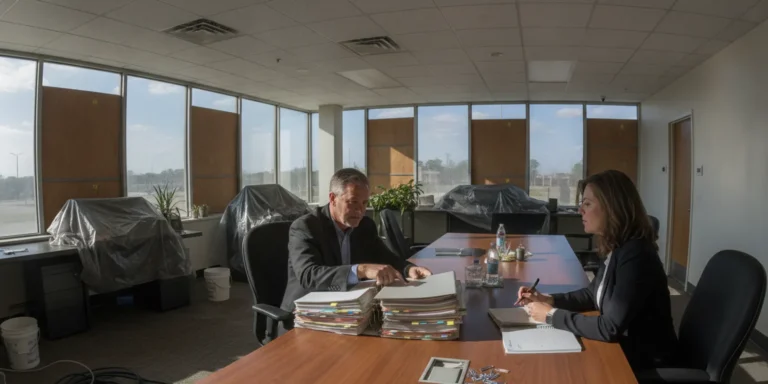
Commercial property insurance disputes often arise after an insurer denies, underpays, delays, or limits a claim for building damage, business personal property, equipment, inventory, or business interruption. A Texas business owner should preserve the policy, denial letter, estimates, photographs, repair records, and insurer communications before deciding how to respond.
Hoch Law Firm reviews the policy language, endorsements, claim file, and loss documentation to help identify the dispute and explain possible next steps. The right strategy depends on the policy, the cause and extent of the loss, and how the insurer investigated and handled the claim.
When a Commercial Property Insurance Dispute Lawyer Steps In
When storm, wind, or hail hits a large business building in North Texas, the costs can mount fast. An owner of a strip center, warehouse, or office building worth millions of dollars cannot afford to wait. But insurance firms often delay, underpay, or deny these big claims. A seasoned commercial property insurance dispute lawyer must step in to read complex policies and hold firms to their promises.
The role of a property dispute attorney
A commercial insurance lawyer does more than just file paperwork. They manage the whole legal fight. They hire outside experts, like engineers and roofers, to find the true cost of the damage.
Disputes often start when an insurance adjuster gives a low estimate that misses hidden harms. You can tell the firm why you disagree, as noted by the Texas Department of Insurance, but they may still refuse to pay fairly. A lawyer steps in to build a solid case that shows the full loss.
When to hire a commercial lawyer
Many business owners wonder when to seek legal help. You should talk to a lawyer if your insurer denies your claim outright or offers a very low payment. If the insurer delays their decision for months without a clear reason, that is another warning sign. For properties worth between $2 million and $50 million, even a small error can cost you a lot of money.
You may be torn between hiring a commercial property dispute attorney and working with a public adjuster. Adjusters can estimate your losses, but they cannot file a lawsuit. Only a licensed lawyer can take your insurer to court and force them to pay fairly.
Why early involvement matters
Bringing a lawyer in early protects your rights. Insurance firms use teams of adjusters and attorneys to protect their own bottom line. When you have a strong trial lawyer on your side, you can stand up to big carriers with confidence. Your attorney will handle all talks with the firm to keep you from saying things they might use against you.
Early help also ensures you meet all Texas legal deadlines. If you wait too long, you might lose your right to sue or even recover your losses. A lawyer will track your claim, gather evidence while it is fresh, and push the carrier for a fast decision. With millions of dollars on the line for your North Texas business, early legal support can save your property and your business.
Why Commercial Property Claims Get Denied or Underpaid
Commercial property claims are complex. Insurers often look for ways to pay as little as possible. They may deny your claim outright or offer a low payout. Knowing where the claim process can fail helps you protect your business and your investments. Large buildings can take months to inspect, but you should not have to wait forever for a fair decision.
The Texas commercial property claim timeline
Texas law sets strict rules for how insurance companies must handle your claim. When these deadlines are missed, or when you face unfair delays, disputes often arise. The claim process follows a clear path of legal steps. Knowing each of these steps helps you spot when an insurer is taking too long or acting in bad faith. Texas commercial property owners can also review the Texas Prompt Payment of Claims Act for a focused explanation of payment deadlines, penalty interest, and related remedies.
- Initial claim acknowledgment. State law gives your insurance company 15 business days to tell you that they received your claim. This is the first deadline in the process. You can track this timeline and learn more about deadlines on the Texas Department of Insurance blog.
- The adjuster’s inspection and estimate. An insurance adjuster will inspect the loss and write an estimate that may fail to cover all damages. Disputes are common during this stage of the claim. If you do not agree with their estimate, you should tell the company why so they can make changes. Get more tips from the Texas Department of Insurance tips page.
- The decision to approve or deny. The insurer has 15 business days to approve or deny your claim once they have all the proof they need. They must send you this decision in writing. But they can extend this deadline by 45 days if they tell you in writing why they need more time.
- Written reasons for a denial. If the insurer decides to deny your claim, they must give you the exact reasons in writing. These written notes must outline the rules and facts they used. This step is key when you are disputing a commercial property claim denial.
- Final payment of the claim. Once the insurance company approves your claim, they must send you the money quickly. Under Texas rules, the company must pay you no later than five business days after they send the approval note. If they miss this payment date, they may owe you interest and other fees.
Why underpayments and delays happen
Many business owners face major underpayments because insurance companies use their own adjusters. These adjusters often write estimates that do not reflect real construction costs in Texas. This can leave you with a massive cash gap that halts your business repairs. In these cases, working with a commercial property insurance dispute lawyer is often the only way to get full payment. A skilled attorney can hold the insurer to their duties under Texas law.
Common Commercial Property Insurance Exclusions and How to Fight Them
Insurers often use policy exclusions to avoid paying commercial property claims. When storm damage occurs, the insurer will search the fine print. They look for any reason to reject your claim.
Under Texas rules, an insurer must approve or deny your claim in 15 business days. This clock starts once they have all needed details. This deadline comes from the Texas Department of Insurance. Knowing your rights is key when fighting a claim denial.
Why insurers deny claims using exclusions
For example, flood damage is not covered by most business plans. Insurers often say water rose from the ground instead of leaking from the roof. They also exclude normal wear and tear on old roofs. If your building sits empty for two months, vacancy rules can void your policy.
If the insurance company denies your claim based on these terms, they cannot just tell you over the phone. Under Texas law, insurers must write down their exact reasons to deny your claim. This written notice helps you see how the insurer read your policy. If they make an error, a commercial property insurance dispute lawyer can help you challenge their decision.
| Exclusion Type | Why Carrier Invokes It | Policyholder Challenge |
|---|---|---|
| Flood and Water | Claims water rose from the ground rather than leaking from the roof. | Prove wind-driven rain caused the damage before water pooled on the ground. |
| Wear and Tear | Argues the roof or structure failed due to age and lack of maintenance. | Use expert inspection reports to show wind or hail caused immediate structural failure. |
| Earth Movement | Blames damage on soil settlement, earthquakes, or sinkholes. | Show that water pipe breaks or storms caused the shifting. |
| Vacancy Clause | Claims the building was vacant for over 60 days before the loss. | Provide utility bills, lease drafts, or active work logs to prove ongoing use. |
How to fight an exclusion denial
To fight a denial, you need strong proof and expert help. Insurers often use vague policy words to reject your claim. A skilled lawyer can hire experts to find the true cause of the damage. These experts can prove that a covered event, like a windstorm, was the main cause of the loss.
In Texas, cases often hinge on complex legal rules about causation. This is true when both covered storms and excluded water cause damage. This rule states that if both covered and excluded events cause damage, you must prove how much damage came from the covered event. Working with a lawyer ensures you gather the right proof to beat exclusions and recover your losses.
How Depreciation Lowers Your Claim and What You Can Recover
After a loss, many insurers pay only the actual cash value of your building instead of the full replacement cost. This means they subtract depreciation from what you are owed. The result is a payout that is far too small to fix your building. Understanding depreciation is key to recovering what your policy truly promises.
Your policy may guarantee replacement cost coverage, but the carrier often withholds the depreciated portion until repairs are complete. This can leave a commercial owner with a cash shortfall at the exact moment they need funds to rebuild. A commercial property insurance depreciation guide for Texas explains how carriers calculate these amounts and how owners can recover the withheld balance. If a carrier says a coinsurance clause reduces the payment, our Texas commercial property coinsurance guide explains the valuation mechanics; this page focuses on evaluating and responding to the dispute.
To recover the withheld depreciation, you must usually complete the repairs and provide proof of the work done. Insurers want to see final invoices and receipts that match the approved scope of loss. If you cannot afford to front the full repair cost, the insurer may use this as a reason to keep your money. This is where a skilled trial lawyer can step in and push the carrier to release the full amount you are owed under your policy.
Many commercial owners also overlook additional coverages that should be paid separately. These can include building code upgrades, business interruption, and extra debris removal costs. Insurers may quietly subtract these from your payout if you do not claim them. A thorough lawyer reviews your full policy to catch every dollar you are owed, not just the obvious repair costs.
When a carrier uses depreciation unfairly, it becomes a dispute over the true value of your loss. Working with a commercial property insurance dispute lawyer helps you recover the full replacement cost your policy was meant to provide. Do not accept a depreciated payout that is too low to restore your business.
The Cost of Fighting Your Insurance Company
Many business owners worry that suing their insurance company is too expensive. They assume legal fees will eat up any payout they win. But the real cost of doing nothing is usually much higher. A denied or underpaid claim can stop your business from reopening and drain your own funds for months or years.
Texas law gives policyholders real leverage when an insurer acts in bad faith or misses deadlines. Under state insurance rules, if your insurer fails to pay a valid claim on time, they may have to pay you interest plus your attorney’s fees. This means a lawyer’s fees can be recovered from the carrier, not out of your own pocket. You can learn more about your rights in our guide on whether you can sue your insurance company for bad faith in Texas.
Litigation also forces the carrier to take your claim seriously. Insurers are in the business of paying as little as possible. When they see a policyholder with a strong, trial-ready attorney, they often reconsider a lowball offer rather than risk a large judgment plus fees. That leverage alone can push a fair settlement far faster than letters and phone calls.
You should also weigh the cost of delay. While your claim sits in dispute, you lose rental income, face mounting repair costs, and carry the full burden of a damaged property. Every month you wait is cash flowing out the door. A business-minded lawyer helps you measure the true cost of waiting against the cost of fighting for what you are owed.
Is litigation right for your case? That depends on the size of the claim, the strength of the evidence, and whether the insurer acted in bad faith. A good lawyer gives you an honest assessment of your leverage and expected recovery before any lawsuit is filed. This helps you make a calm, business-driven decision rather than acting on frustration.
How to Prepare for a Commercial Property Insurance Dispute
If an insurer denies, underpays, or delays a commercial property claim, organized records can help clarify what happened and what the policy may cover. The response should fit the policy, the cause of the loss, the property, and the insurer’s handling of the claim.
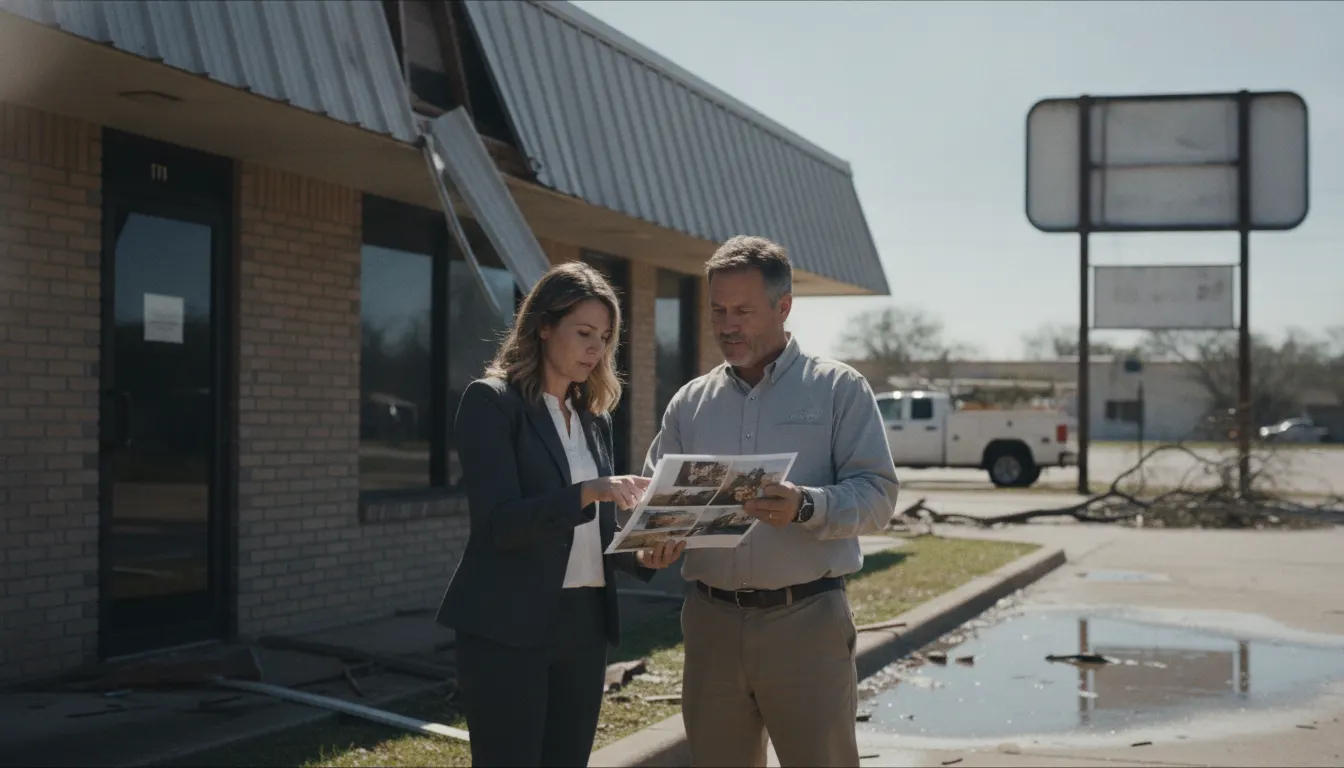
Preserve claim evidence
Keep the policy and endorsements, denial or reservation-of-rights letters, photographs, repair estimates, invoices, financial records for business interruption or extra expense, and all insurer communications together. Preserve damaged property when reasonably safe and document temporary repairs.
Check the insurer’s position
Ask for the insurer’s written decision and identify the policy provisions and facts it relied on. Compare the decision with the inspection report, estimates, endorsements, and your own documentation. Do not assume an estimate resolves a disagreement about coverage or the amount of loss.
Identify the next review path
Depending on the policy and facts, the next step may include additional documentation, appraisal of the amount of loss, negotiation, or litigation. A Texas insurance lawyer can review the policy and claim handling and explain which path may fit the dispute.
Request a focused legal review
Call Hoch Law Firm at 817-731-9703 to discuss a commercial property insurance dispute
Frequently Asked Questions
How long does a Texas insurer have to make a claim decision?
In Texas, insurance companies face strict deadlines. Under the Texas Department of Insurance, an insurer must approve or deny your claim within 15 business days of getting all needed details. They can take up to 45 more days if they tell you in writing why they need more time. Once approved, they must pay within 5 business days.
What can I do if I disagree with an insurance adjuster’s estimate?
You should first tell the insurance company in writing why you disagree, as they may have missed key damages. According to the Texas Department of Insurance, you can also use your policy’s appraisal clause. This process lets you and the insurer each hire an independent appraiser, who then choose an umpire to resolve the dispute.
How can I get my attorney fees paid in a Texas commercial insurance dispute?
If your insurer fails to pay a valid claim on time, Texas law can force them to pay your legal costs. Under state insurance rules, an insurance company that misses its payment deadline may have to pay you interest plus your attorney fees. A commercial property insurance lawyer can help you recover these extra fees.
Can an insurance company deny a commercial property claim without explaining why?
No. Texas law states that insurers cannot reject your claim without a clear reason. According to the Texas Department of Insurance, companies must give you the exact reasons for a denial in writing. If they refuse to put their reasons in writing, they may be acting in bad faith.
Get a Commercial Property Insurance Dispute Lawyer on Your Side
When an insurance carrier denies or underpays your commercial property claim, waiting to act only hurts your business. Texas law sets strict deadlines to challenge claim denials. Delays can weaken your case, make it harder to gather clean proof, and cost you the money you need to rebuild. Working with an expert commercial property insurance dispute lawyer helps you protect your assets and hold your insurer accountable. Our team fights to get you every dollar you are owed under your policy so you can focus on running your business. Do not let insurance companies dictate your recovery.