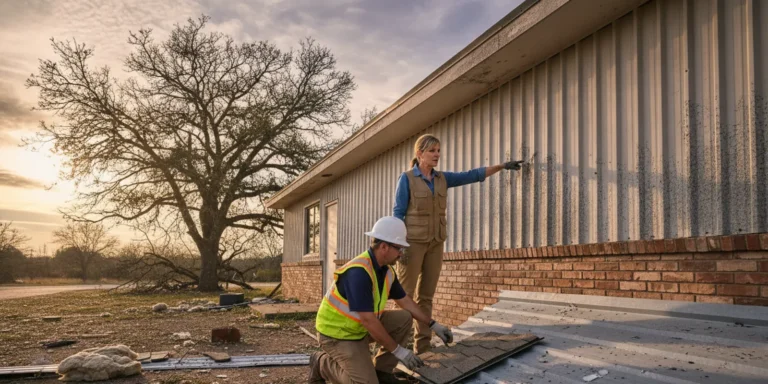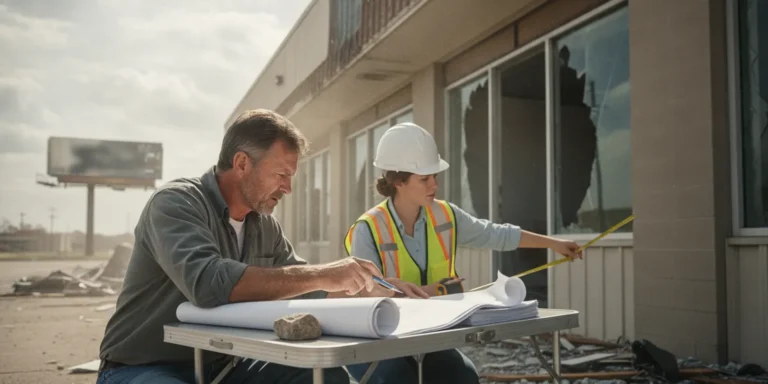
A construction contract dispute can put a project, payment schedule, and business relationship at risk. A construction contract dispute attorney can help an owner, contractor, or subcontractor determine what the agreement requires, preserve the project record, and choose a practical path before a disagreement becomes a larger claim.
Call Hoch Law Firm at 817-731-9703 about your construction contract dispute.
This guide focuses on Texas commercial and business construction disputes involving scope, change orders, payment, performance, delays, defects, termination, and dispute-resolution clauses. It is not a substitute for reviewing the specific contract and project record with a Texas attorney.
What Is a Construction Contract Dispute?
A construction contract dispute is a disagreement about what a project participant promised to do, whether the work or payment met that promise, or which party must absorb a resulting cost. The written agreement, incorporated plans, change orders, notices, and performance record usually determine the available options.
Construction contracts often involve several linked relationships. An owner may have an agreement with a general contractor, while the general contractor has separate agreements with subcontractors and suppliers. An architect, engineer, lender, surety, or property manager may also influence the work without being a direct party to every contract.
That structure can make a seemingly simple disagreement more complicated. For example, a contractor may claim that an owner-directed change increased the price and extended the schedule. The owner may respond that the work was already included in the original scope. A subcontractor may be owed money by a general contractor even while the owner disputes the general contractor’s draw request.
The first question is not always who is right. It is which contract governs the disputed obligation, what the parties documented at the time, and whether a notice, approval, cure period, or dispute-resolution clause controls the next step.
What Are the Most Common Construction Contract Disputes?
The most common Texas construction contract disputes concern scope, extra work, payment, schedule responsibility, defective performance, warranties, termination, and contract administration. Each category requires a different record, so the dispute should be classified before a party sends a demand or stops work.
Scope and change-order disputes
Scope disputes arise when the parties disagree about what the original price and schedule included. Drawings, specifications, allowances, exclusions, bid assumptions, site conditions, and incorporated documents may all affect the analysis.
Change orders can alter price, materials, labor, sequencing, or the completion date. The safest practice is to document the requested change, its cost and schedule effect, and the required approval before the additional work begins. If an urgent directive is given verbally, confirm it in writing promptly and state what remains unresolved.
Payment, retainage, and nonpayment disputes
Payment disputes may involve unpaid invoices, progress draws, retainage, disputed back charges, disputed completion percentages, or an owner’s refusal to release funds. The parties may disagree about whether work was complete, whether a pay application met the contract, or whether an offset is permitted.
Payment analysis should compare the contract’s billing procedure with the invoices, sworn statements, delivery tickets, inspection reports, lien releases, and payment history. A party should not assume that a payment delay is automatically a breach or that every withholding is permitted. The agreement and applicable Texas law matter.
Performance and construction-defect disputes
Performance disputes arise when completed work allegedly fails to meet plans, specifications, code requirements, warranties, or accepted construction standards. Owners may seek correction costs or completion damages. Contractors may argue that the alleged condition resulted from design, owner-furnished materials, another trade, changed conditions, or lack of maintenance.
Photographs alone may not establish causation. Preserve the condition before repairs when reasonably possible, identify who performed the work, and obtain a qualified evaluation when the technical cause is disputed. A party that repairs or removes evidence without documenting it can make the later legal analysis harder.
Delay, disruption, and differing-condition disputes
Schedule claims often turn on responsibility rather than the number of days lost. Delays may involve late access, design revisions, permitting, material shortages, weather, inspections, interference by another trade, or a party’s failure to coordinate work.
A useful project record connects each event to the affected activity, notice given, mitigation attempted, added cost, and revised completion date. A contractor claiming time or money needs more than a general assertion that the project was delayed. An owner defending a delay claim should test whether the claimed impact was caused by the alleged event and whether the contract required timely notice.
Termination, warranty, and closeout disputes
Termination disputes may involve an alleged material breach, failure to cure, abandonment, nonpayment, insolvency, or a contract right to terminate for convenience. Closeout disputes may involve punch-list work, warranties, final payment, lien releases, as-built documents, or responsibility for correcting conditions discovered after completion.
Before declaring a default or terminating, review the notice method, cure period, suspension rights, and required opportunity to inspect or correct. A termination that ignores the contract’s procedure can create a second dispute even when the underlying performance concern is legitimate.
| Dispute type | Key question | Early evidence to preserve |
|---|---|---|
| Scope or change order | Was the work included, directed, and approved? | Plans, specifications, proposals, directives, written approvals |
| Payment or retainage | What amount was due, and did the payment process occur? | Invoices, pay applications, notices, waivers, payment records |
| Delay or disruption | Which event affected which work, and who was responsible? | Schedules, daily reports, meeting minutes, notices, cost records |
| Defect or warranty | What condition exists, and what caused it? | Photos, inspections, testing, repair estimates, specifications |
| Termination or closeout | Did the contract’s notice and cure process apply? | Default notices, cure communications, punch lists, final documents |
What Should You Document Before a Construction Dispute Escalates?
Before a construction dispute escalates, preserve the complete project record rather than only the documents that support one side. A lawyer needs the agreement, performance history, communications, payment trail, schedule evidence, technical information, and proof of the business impact to evaluate both liability and remedies.
Organize the record around the contract and the timeline. Preserve:
- Contract documents: signed agreements, exhibits, plans, specifications, schedules, incorporated terms, insurance provisions, and dispute-resolution clauses.
- Changes and directives: change orders, requests for information, field directives, approvals, pricing, time extensions, and unresolved reservations.
- Project communications: emails, text messages, meeting minutes, notices, daily reports, inspection records, and coordination messages.
- Payment records: invoices, pay applications, draws, retainage calculations, payment confirmations, back charges, releases, and disputed amounts.
- Schedule and cost data: baseline and updated schedules, delivery records, labor records, equipment costs, acceleration requests, and delay analyses.
- Condition evidence: dated photographs, videos, samples, testing, expert evaluations, repair proposals, and records showing what was changed after the dispute arose.
- Business impact: added completion costs, lost use, financing pressure, tenant or customer effects, and other losses tied to the disputed event.
Do not delete unfavorable communications or rewrite the project history after the fact. A complete record is more credible and allows counsel to identify weaknesses before the opposing side does.
How Should an Owner, Contractor, or Subcontractor Respond?
A sound response to a construction contract dispute starts with the contract, a neutral timeline, and a written plan. The goal is to preserve rights while keeping the project and potential resolution from being damaged by an avoidable admission, missed notice, or unnecessary work stoppage.
- Secure the governing documents: Collect the signed contract, incorporated plans, amendments, change orders, and any terms that control notice or dispute resolution.
- Build a dated timeline: Record the instruction, performance, payment request, delay, defect notice, or other event that triggered the disagreement.
- Separate fact from position: Identify what is undisputed, what is alleged, what remains technically uncertain, and what evidence supports each position.
- Check notice requirements: Review contractual notice, cure, suspension, payment, lien, bond, and claim procedures before sending a demand or taking self-help action.
- Protect the project record: Continue appropriate inspections, preserve the disputed condition, and document mitigation without conceding liability.
- Choose a proportionate next step: Depending on the agreement and urgency, that may be a clarification letter, payment demand, negotiated change order, mediation request, arbitration filing, or court action.
Do not assume that stopping work, withholding payment, replacing a contractor, or filing a lien is risk-free. Those actions may be available in some circumstances, but the contract, statutory requirements, project type, and party’s role determine whether they are strategically and legally appropriate.
What Texas Laws May Affect a Construction Contract Dispute?
Texas construction disputes may involve the contract plus statutes addressing payment, liens, notices, remedies, and project-specific procedures. The correct rule depends on the project, the parties’ roles, the type of claim, and the contract, so statutory research should be tailored rather than reduced to a universal deadline.
Texas Property Code Chapter 28 addresses prompt payment to contractors and subcontractors and includes provisions concerning good-faith payment disputes, interest, suspension rights, and unsigned change orders. Whether a particular provision applies, what notice is required, and what amount may be withheld must be analyzed against the project and current law.
Texas Property Code Chapter 53 addresses mechanic’s, contractor’s, and materialman’s liens. Lien rights and enforcement depend on the claimant’s role, the property, the contract chain, notices, filing requirements, and deadlines. Missing a required step can affect a remedy, so a payment dispute should be reviewed promptly.
Other legal issues may include contract damages, indemnity, bond rights, construction defects, arbitration enforcement, and pre-suit procedures. A construction contract dispute attorney can identify which rules apply without assuming that a provision designed for one type of project controls another.
Call Hoch Law Firm at 817-731-9703 to discuss the contract, project record, and next step.
Should You Negotiate, Mediate, Arbitrate, or Litigate?
Negotiation, mediation, arbitration, and litigation each have a different cost, timing, privacy, evidence, and control profile. The contract may require a particular sequence, while the urgency of payment, project completion, evidence preservation, or injunctive relief may influence the best strategy.
| Option | When it may fit | Important consideration |
|---|---|---|
| Direct negotiation | The facts are developing and the parties can communicate | Use a clear written proposal without waiving rights or accepting an inaccurate project history |
| Mediation | The parties need a neutral process to explore settlement | A mediator facilitates agreement but generally cannot impose a result |
| Arbitration | The contract contains an enforceable arbitration provision | Review the clause, forum rules, fees, discovery limits, and award procedures |
| Litigation | Urgent court relief, formal discovery, multiple claims, or an unresolved dispute requires it | Public court proceedings involve formal deadlines, pleadings, evidence, and potential appeal issues |
A party should read the dispute-resolution clause before filing in court or demanding arbitration. The clause may require notice, negotiation, mediation, a specific forum, or a defined procedure. Filing in the wrong forum can create delay and additional expense.
When Should You Speak With a Construction Contract Dispute Attorney?
Early legal advice is especially important when a project participant receives a default notice, faces a payment withholding, is asked to perform substantial extra work, discovers a serious defect, needs to terminate, or may lose lien, bond, or contract rights through delay. Waiting can narrow the available options.
Consider speaking with counsel when:
- A written contract, change order, or incorporated plan is unclear or internally inconsistent.
- The other party disputes work that was completed, accepted, or paid in prior draws.
- An owner or contractor directs significant extra work without agreeing on price or time.
- A payment demand, lien notice, bond claim, default notice, arbitration demand, or lawsuit has been received.
- A defect or delay could require destructive testing, repair, replacement, or a major schedule change.
- The project is approaching a closeout, termination, notice, filing, or contractual deadline.
- The dispute is affecting financing, tenants, customers, payroll, or the ability to complete the project.
Hoch Law Firm handles business litigation with a practical, business-minded approach. The firm can evaluate the contract and project record, identify the central dispute, and help determine whether negotiation, mediation, arbitration, or litigation best serves the client’s objectives. Learn more about Texas business contract dispute guidance, commercial breach of contract issues, and business litigation representation.
Frequently Asked Questions
What kind of attorney do I need for a construction contract dispute?
A business or commercial litigation attorney with experience analyzing construction contracts may be appropriate for a dispute involving payment, scope, delay, defects, termination, or performance. The attorney should review the actual agreement, project documents, party relationships, and any required notice or dispute-resolution process before recommending a path.
How do you deal with a construction contract dispute?
Start by preserving the contract and project record, building a timeline, checking notice requirements, and separating confirmed facts from disputed positions. Then evaluate negotiation, mediation, arbitration, or litigation based on the contract, urgency, evidence, and business objectives. Avoid stopping work or withholding payment without legal review.
Is it worth suing a contractor or owner?
Whether a lawsuit is worthwhile depends on the strength of the contract claim, available evidence, damages, collectability, required procedures, and the cost of pursuing the case. A construction contract dispute attorney can compare litigation with negotiation, mediation, or arbitration and identify risks before a party commits to court.
What should I do about an unsigned change order in Texas?
Document the requested work, the parties’ communications, the price and schedule effect, and whether the contract requires signed approval. Texas Property Code provisions may affect certain owner-directed additional work, but applicability and the correct response depend on the project and facts. Obtain advice before refusing work or asserting a statutory right.
Can a construction dispute be resolved without going to court?
Yes. Many construction disputes are addressed through clarification, direct negotiation, mediation, or contractually required arbitration. The contract may control the sequence, and urgent issues may require court involvement. A written settlement should identify the payment, work, release, schedule, and remaining obligations clearly.
Call Hoch Law Firm at 817-731-9703 for guidance on your Texas construction contract dispute.