Whether commercial property insurance covers equipment breakdown depends on the policy wording, cause of failure, and any applicable exclusions or endorsements. A Texas business facing equipment failure may want to discuss an insurance claim with counsel. Start by identifying what failed, what damage followed, and what the insurer says the policy does or does not cover.
Equipment failure can interrupt production, damage other property, and create questions that are not answered by the label on a policy. A commercial property policy may address some kinds of physical damage while treating mechanical or electrical breakdown differently. The answer cannot be assumed without reviewing the actual contract and the facts of the loss.
For a business owner, separate the event into clear questions: What component failed? What caused it? What property was damaged? Which policy provisions apply? Counsel can help examine those issues and assess an insurer’s explanation, but no general article can determine coverage for a particular loss.
How can an equipment breakdown insurance claim lawyer Texas businesses consult clarify whether a commercial property policy covers equipment breakdown?
There is no universal yes-or-no answer. Coverage depends on the policy’s insuring language, definitions, exclusions, conditions, limits, and endorsements. A policy may treat damage to machinery differently from damage the machinery causes to other covered property. A separate equipment-breakdown endorsement or coverage section may also affect the analysis, if included.
The Texas Department of Insurance provides consumer information about insurance and helps Texans understand insurance-related questions; its official website is a starting point for general information. That general resource cannot determine whether a specific equipment loss is covered. The issued policy and evidence remain central to that question.
Read the policy provisions together rather than relying on a heading or short summary. Relevant wording may appear in the declarations, property coverage form, exclusions, endorsements, and conditions. The exact policy issued to the business matters; another company’s form or a general description cannot establish the terms of this claim. Hoch Law Firm’s equipment claim review page describes its commercial property insurance work.
| Review question | Information to collect | Why it matters |
|---|---|---|
| What failed? | Equipment identity, component, inspection findings. | Different failure mechanisms may raise different policy questions. |
| What was damaged? | Machine, building, inventory, and other property. | Separate items may be evaluated under different terms. |
| What caused the damage? | Timeline, repair findings, operating information. | Causation may affect how a coverage grant or exclusion applies. |
| What does the insurer rely on? | Written decision, cited wording, and estimate. | A specific explanation can be compared with policy language and evidence. |
| What provisions apply? | Declarations, forms, endorsements, limits, and conditions. | The full contract, not a general summary, controls the review. |
These are review categories, not promises that any particular loss is covered. The policy and factual record must be assessed together.
How can an equipment breakdown insurance claim lawyer Texas businesses consult assess the cause of failure?
Insurers may ask whether damage resulted from a sudden event, a gradual condition, wear and tear, a maintenance issue, or another cause. Those labels do not resolve the claim by themselves. The policy language and evidence about what happened are important.
For example, a machine may stop operating and also damage nearby property. The claim may involve more than one item and more than one causal question. Identify separately the failed component, physical damage to that component, and any resulting damage to other property. Do not assume one answer automatically determines every part of the loss.
Where an insurer relies on a wear-and-tear exclusion or similar wording, the dispute may turn on whether the evidence supports that explanation and how the provision applies. A technical assessment can help distinguish a maintenance condition from another cause, but conclusions should come from qualified investigation of the actual equipment and circumstances. A business may need a qualified equipment professional or other investigator to evaluate the actual machinery and circumstances.
What equipment records can help explain the loss?
Evidence is most useful when it helps establish the sequence of events rather than simply showing that equipment stopped working. Create a timeline using records that already exist. For each item, note its date, source, author if known, and what it does or does not establish.
- Record when the problem was discovered, who observed it, and what the equipment was doing beforehand.
- Identify the equipment and affected component, including model or serial information when readily available.
- Preserve existing operating records, alarms, service tickets, maintenance documents, and repair communications that may relate to the event.
- Keep photographs, inspection notes, diagnostic output, invoices, estimates, and replaced-part information where available.
- Save insurer correspondence and note when each inspection, request, or response occurred.
Do not create missing records after the fact or describe an assumption as a verified diagnosis. Preserve originals and make a separate note explaining who supplied each document. If an electronic system may overwrite routine data, ask the relevant equipment or IT professional how to preserve it safely. Do not access systems in a way that risks changing or damaging them.
Records can be incomplete or point in different directions. For example, a maintenance record might confirm a prior service visit but say nothing about the event that caused the present damage. An equipment log could show an alert shortly before shutdown without establishing whether that alert was a cause, symptom, or unrelated condition. Preserve the surrounding records and context instead of selecting only the entries that appear favorable. A chronology that includes uncertainty is more reliable than one that fills gaps with guesses. A service note may describe a symptom without identifying its cause. A diagnostic alert can show that a condition occurred without explaining what produced it. Keep the underlying material so a qualified reviewer can assess it in context.
How should a business document damage and repairs?
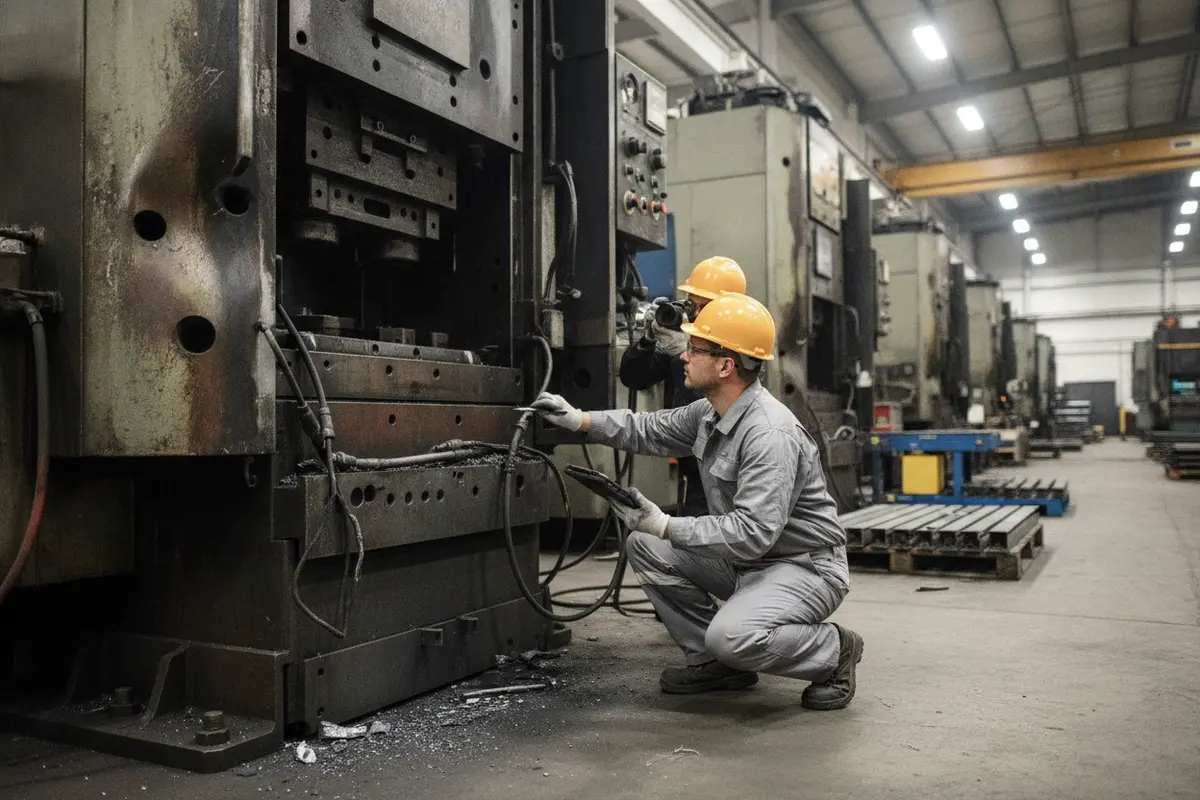
Safety and reasonable steps to prevent further damage come first. When it is safe and practical, photograph the machine, affected components, surrounding area, and any damage to inventory or building elements before cleanup changes the scene. Use wide views to show location and close views for detail. Retain the original files and note when they were taken.
Do not delay urgent repairs solely to preserve evidence. Instead, document the condition as circumstances allow and keep removed components or samples if a qualified professional advises that they can be retained safely. Record what was repaired, by whom, when, and why. Preserve invoices, work orders, and any report explaining the limits of the inspection.
Track the damaged equipment separately from resulting property damage. Keep a simple ledger with the date, item or service, vendor, amount, reason for the work, and associated receipt or report. Mark estimated costs as estimates and paid charges as paid; do not combine them.
If an item was replaced or discarded, note when and why. Identify any photographs or inspection records showing its prior condition. If several departments or locations are involved, give each item a consistent label so later records can be matched to the correct property. This detail can make it easier to compare the business’s documented loss with the insurer’s estimate without assuming that every listed cost is insured. For instance, an invoice for a replacement component is different from a repair to a wall or damage to stored inventory. This organization does not establish coverage, but it helps prevent unlike items from being treated as one undifferentiated amount.
Policy conditions may address notice, cooperation, inspections, or mitigation. Review the contract and communicate with the insurer as required. This article does not state a particular deadline or replace advice about the specific policy.
How can you compare repair findings with the insurer’s explanation?
Start with the insurer’s written position. Identify the exact policy provision cited, the facts the insurer says support its conclusion, and the property or expense addressed. If the explanation is unclear, request clarification in writing rather than guessing at the reasoning.
Then compare the position with the repair or inspection materials. The policy’s claim conditions may prescribe processes, deadlines, or documentation, so note relevant dates and confirm requirements from the actual contract rather than relying on a general online description. Keep a copy of each submission and a record of delivery. If the insurer requests additional information, identify the request’s scope and response date, and retain the materials sent in reply. Does the report identify the failed part? Does it distinguish observed damage from an opinion about cause? What information was available to the inspector, and what could not be determined? These questions help locate the actual disagreement.
If assessments differ, avoid reducing the conflict to a general statement that the machine broke. Set out each conclusion and the material supporting it. A useful comparison might say that the insurer attributes a failure to a stated condition, while a repair report documents a different physical finding; the next step is to identify whether the report actually addresses causation and the policy issue.
Expert review can be important where specialized equipment or competing causation explanations are involved. Hoch Law Firm’s work on disputed property damage can include expert coordination, inspection coordination, and comparing pre-loss and post-loss conditions. Learn more about insurance litigation and disputed insurance claims.
What should a focused claim review include?
A practical review can proceed in stages. First, assemble the complete policy, including declarations and endorsements. Second, create a short event chronology. Third, list each damaged item separately and connect it to supporting photographs, reports, and costs. Fourth, summarize what the insurer has decided and the policy wording it cites. Finally, identify unresolved factual or coverage questions.
This format helps a discussion stay specific. Instead of asking only whether “the machine is covered,” a business can ask whether the policy addresses the identified component failure, what provision governs resulting damage, and what evidence bears on the insurer’s stated cause. The answers still depend on the contract and the full record.
For related claim context, see Hoch Law Firm’s property insurance claim process, appraisal dispute information, and Tim Hoch’s biography. These materials do not replace review of the policy issued to a particular business.
When may legal review help?
Legal review may be useful when the insurer denies or limits a claim, relies on wording the business does not understand, or leaves important damage or causation questions unanswered. It may also help organize the policy, claim record, and technical issues for a focused discussion.
An equipment breakdown insurance claim lawyer Texas businesses consider should review the policy and available facts rather than promise an outcome based on a short description. Hoch Law Firm represents policyholders, not insurance companies. Tim Hoch personally reviews potential matters, and clients work directly with him throughout a case. The firm’s primary fee model is contingent; the arrangement should be discussed for the specific matter.
Frequently Asked Questions
Does every commercial property policy include equipment breakdown coverage?
No. Coverage varies by policy and endorsements. Review the specific contract to see whether and how equipment breakdown is addressed.
Can a claim include damage beyond the failed machine?
It may raise separate questions about damage to other property, but the policy terms and facts determine whether those items are covered.
What if the insurer says the damage was caused by wear and tear?
Review the exact wording and the evidence supporting that explanation. Repair findings and qualified assessment may help clarify causation, but the result depends on the particular claim.
Should damaged equipment be repaired immediately?
Safety and mitigation needs come first. Document the condition when practical, keep available records, and coordinate inspections where feasible before removing or changing evidence.
What should I bring to an initial claim discussion?
Useful materials may include the policy, insurer letters, estimates, photographs, repair findings, and a dated account of events. The relevant documents depend on the loss.
Reviewing the policy language alongside the evidence can help a business understand the questions raised by an equipment failure and decide what information to address next.