Construction Site Injury Attorney Texas: What to Know
A construction injury can change your health, income, and ability to work in a matter of seconds. It can also raise difficult questions. Was your employer responsible? Did another company create the danger? Which benefits or damages may be available?
Call Hoch Law Firm for a free consultation about your construction site injury.
A construction site injury attorney Texas workers can trust will examine workers’ compensation options and potential third-party claims. The attorney can identify parties responsible for unsafe conditions and preserve evidence before it disappears. Because construction sites often involve multiple employers, contractors, and subcontractors, the correct legal path depends on the accident facts.
This guide explains common construction hazards, how liability may be evaluated, and the differences between workers’ compensation and a third-party lawsuit. It also covers damages, evidence, and when prompt legal advice may protect your claim. Start with the dangers that most often lead to serious construction injuries.
Common Construction Site Hazards That Cause Serious Injuries
Construction sites change quickly. Workers may move between elevated surfaces, heavy equipment, electrical systems, trenches, and active work zones during the same shift. A basic safety review should account for the hazards most likely to cause severe harm.
OSHA identifies falls, struck-by incidents, caught-in or caught-between incidents, and electrocutions among the leading causes of worker deaths in construction. These hazards can arise from unsafe conditions, missing safeguards, defective equipment, or inadequate supervision. See the agency’s construction safety data for the categories it tracks.
Falls from heights
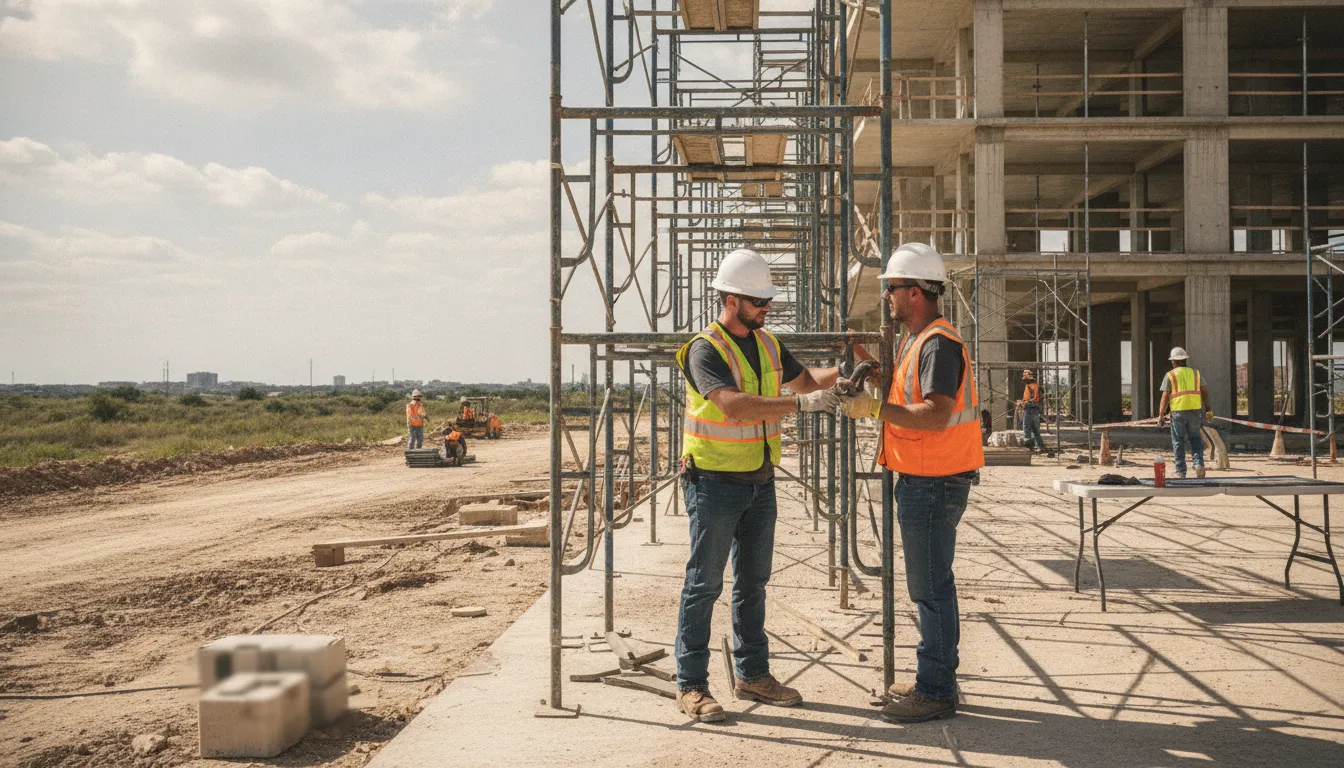
Falls can occur from roofs, scaffolds, ladders, platforms, and unprotected edges. Employers must provide fall protection and appropriate equipment for the job, including suitable ladders, scaffolds, and safety gear. A worker may be exposed to danger when guardrails are missing, anchors are unavailable, or equipment is not properly maintained. OSHA’s fall protection guidance explains the employer’s obligations.
Struck-by and caught-in hazards
Struck-by injuries may involve falling materials, swinging loads, moving vehicles, or equipment that enters a worker’s path. Caught-in or caught-between injuries happen when a person is pulled into machinery, pinned between objects, or trapped by shifting materials. These risks increase when work areas are crowded or workers lack a clear warning system.
Electrocution, trenches, and inadequate training
Contact with energized lines, temporary wiring, or defective electrical equipment can cause catastrophic injury. Trenches create a separate danger because a collapse can bury or crush a worker. Federal safety measures apply to trench work, as an OSHA investigation into a fatality in El Paso illustrates: OSHA’s trench safety release.
Training is also part of hazard prevention. Employers are responsible for providing instruction in a language and vocabulary workers can understand. If an injury occurs, OSHA may also require the employer to record and report work-related fatalities, injuries, and illnesses. Those records, training materials, inspection reports, and photographs may help clarify what happened. A careful review by a construction site injury lawyer can help identify whether unsafe practices or another party’s conduct contributed to the injury.
Who May Be Liable After a Texas Construction Injury?
Potentially responsible parties may include an employer, general contractor, property owner, subcontractor, or equipment manufacturer. Liability depends on each party’s role, control, conduct, and connection to the worker’s injury.
Responsibility may extend beyond the worker’s direct employer. A construction site can involve a property owner, general contractor, subcontractor, equipment manufacturer, and other businesses whose actions contributed to the injury. Texas construction sites often include multiple employers and subcontractors, which can make liability difficult to determine.
An employer may be involved in the claim, but workers’ compensation rules and the employer’s legal status affect what remedies may be available. A separate third-party claim may also exist when someone other than the employer contributed to the injury. The Texas Real Estate Research Center explains that injured construction workers may seek compensation from parties such as a general contractor or equipment manufacturer: Texas land-occupier liability guidance.
General contractors and property owners
A general contractor may face potential liability when it fails to maintain a reasonably safe work environment. Property owners may also have duties related to reasonably safe conditions on the premises. Those general principles do not automatically establish fault. The investigation must examine what each party knew, what hazards existed, and what responsibility the party accepted for the worksite.
Control over safety can be especially important. A general contractor may be liable for a subcontractor employee’s injuries if the general contractor retained the right to control the work. That inquiry focuses on the actual agreement, instructions, supervision, and safety practices, not simply on the party’s title on the project.
Subcontractors and equipment manufacturers
Subcontractors may be relevant when their work created a dangerous condition or contributed to the accident. Their role can overlap with the general contractor’s role, especially when several companies directed different phases of construction. Records, contracts, safety communications, and witness accounts can help identify who performed the work and who had authority to correct a hazard.
An equipment manufacturer may be another potential third party when a defective or unsafe product contributed to the injury. That possibility requires careful review of the equipment, maintenance history, warnings, instructions, and accident sequence. Do not assume a product defect or manufacturer responsibility without evidence connecting the equipment to the injury.
The facts determine which parties may be responsible. Photos, incident reports, contracts, jobsite policies, equipment records, and witness information can help reconstruct what happened. A construction site injury lawyer can evaluate whether a third-party claim should be investigated while keeping the analysis focused on the evidence rather than assumptions.
Workers’ Compensation or a Third-Party Claim?
After a Texas construction injury, workers’ compensation may provide benefits through a subscribing employer, while a third-party claim may seek damages from another responsible party. The available options depend on coverage, control, evidence, and the conduct of each party.
A construction injury may involve more than one path to compensation. Workers’ compensation and a third-party liability claim are separate legal avenues. And the right strategy depends on the facts of the accident, the parties involved, and the available insurance coverage.
Workers’ compensation is designed to provide benefits for employees who suffer work-related injuries or illnesses. Texas employers may choose whether to subscribe to the state’s workers’ compensation system. If your employer participates, you generally must report the injury to your employer within 30 days. The Texas Department of Insurance explains the reporting requirement and provides other resources for injured employees.
| Issue | Workers’ compensation | Third-party claim |
|---|---|---|
| Who may be responsible? | Usually the employer’s workers’ compensation system, if the employer subscribes. | A person or company other than the employer, such as a general contractor, property owner, subcontractor, or equipment manufacturer. |
| What must be shown? | The injury or illness must be work-related under the applicable workers’ compensation rules. | The evidence must support a claim that the outside party’s negligence, unsafe conduct, or defective product caused the injury. |
| What may be available? | Benefits may address covered medical care and income-related losses under the workers’ compensation system. | Damages may include medical expenses, lost wages, and losses such as pain and suffering, subject to proof and applicable law. |
A third-party claim can arise when someone other than your employer contributed to the accident. For example, a general contractor may face potential liability if it retained control over worksite safety. An equipment manufacturer may also be involved when a defective product caused the injury. Texas construction sites often include multiple employers, contractors, and subcontractors, so identifying every responsible party requires a careful investigation. See the Texas Real Estate Research Center’s liability guide for background on third-party responsibility.
Workers’ compensation benefits and a third-party lawsuit may sometimes proceed at the same time, but eligibility is not automatic. The facts can affect whether a claim exists, which damages may be pursued, and how different claims interact. Preserve accident records, medical documentation, and communications with employers or insurers. A lawyer can evaluate the worksite relationships and determine which legal options the evidence supports.
What Damages May an Injured Worker Recover?
Potential recovery depends on the claim. Workers’ compensation may cover defined medical and income benefits. A third-party case may support medical costs, lost income, pain and suffering, and future needs when the evidence and law allow.
The answer depends on which legal claim applies. Workers’ compensation benefits and a third-party personal injury claim are separate paths, and they do not provide the same types of recovery. A construction injury attorney must examine how the accident happened, who controlled the work, and which parties may have contributed to the injury.
Workers’ compensation generally addresses benefits for a work-related injury or illness through that system. A third-party claim is different. It may arise when someone other than the injured worker’s employer contributed to the accident or unsafe conditions. That claim can seek damages that workers’ compensation may not cover. The Texas Real Estate Research Center explains the distinction between workers’ compensation and third-party liability claims.
Medical expenses, including future care
A personal injury case may include past medical expenses related to the injury. Depending on the evidence and the worker’s medical outlook, it may also involve future medical costs. Construction injuries can require continuing treatment, rehabilitation, medication, or other care. The appropriate evaluation depends on the actual diagnosis, treatment history, and expected needs, not a predetermined formula.
Lost wages and reduced ability to work
Lost wages may be part of a personal injury claim. The analysis can involve income lost while an injured worker cannot perform the job, as well as the effect of lasting limitations on future work. Documentation matters. Pay records, employment information, medical restrictions, and testimony about the worker’s duties may help establish the financial impact.
Pain, suffering, and future needs
Unlike workers’ compensation, a third-party claim may allow recovery for pain and suffering. This category addresses the physical pain and emotional effects associated with the injury, when supported by the facts and applicable law. A claim may also account for future needs when the injury creates continuing consequences. The Texas Board of Legal Specialization identifies past and future medical costs, lost wages, and pain and suffering as potential damages in personal injury claims.
These categories are possibilities, not guarantees. Construction accidents often require a thorough investigation because multiple defendants, insurance policies, and severe injuries can complicate the analysis. Medical records, employment evidence, accident information, and other documentation may affect what can be claimed and proven. A careful review can help distinguish workers’ compensation benefits from damages potentially available through a third-party case.
When to Call a Construction Site Injury Attorney Texas Workers Trust
Protect a construction injury claim by obtaining medical care, reporting the accident, and preserving photographs and records. Identify witnesses and get claim-specific advice before jobsite evidence disappears or legal deadlines create additional problems.
The steps you take after a construction accident can help preserve important evidence and clarify what happened. Focus first on your health, then create a careful record of the incident and its effects. Avoid guessing about legal responsibility before the available evidence has been reviewed.
- Get medical care and follow the treatment plan. Seek prompt medical attention for any injury, including symptoms that appear or worsen later. Tell the provider how the injury occurred and identify every affected body part. Keep copies of medical records, diagnostic results, prescriptions, bills, work restrictions, and appointment information. Consistent follow-up helps document the injury and the care it requires.
- Report the accident through the proper channels. Notify your supervisor, employer, or designated safety contact as soon as possible. Give a factual description of what happened, where it happened, and when symptoms began. Ask how the report will be documented, and keep a copy or written confirmation if one is available. The Texas Department of Insurance explains that an employee generally must report a work-related injury to the employer within 30 days. Different deadlines or procedures may apply to particular claims, so do not assume that waiting is harmless. Review Texas Department of Insurance injury-reporting information for the workers’ compensation reporting rule.
- Photograph the scene and gather witness information, if it is safe. Take photographs of the work area, equipment, surfaces, warning signs, lighting, barriers, and visible injuries. Preserve the original files and note when each photograph was taken. Write down the names, phone numbers, employers, and job roles of people who saw the accident or its conditions. Photographs and witness statements can be important parts of a construction accident investigation. Do not put yourself at further risk to obtain evidence, and do not interfere with an active investigation.
- Preserve records and communications. Save incident reports, safety instructions, training materials, schedules, time records, text messages, emails, and correspondence with employers, contractors, insurers, or medical providers. Keep a simple timeline of symptoms, treatment, missed work, and communications. Employers may have OSHA recordkeeping duties for work-related injuries and illnesses, so ask whether an incident record exists and preserve any copy you receive. OSHA recordkeeping guidance explains those employer obligations.
- Calendar deadlines and get claim-specific advice. Texas personal-injury claims generally have a two-year statute of limitations measured from the incident date. That is a general rule, not a guarantee that every claim has the same deadline. Exceptions, claim type, the identity of a responsible party, and other facts can change the analysis. Workers’ compensation procedures may also differ from a third-party personal-injury claim. Because evidence can disappear and deadlines can run before the full extent of an injury is clear, have an attorney evaluate the facts promptly.
How to Choose a Construction Site Injury Attorney Texas Workers Can Trust
A construction site injury attorney Texas workers can trust evaluates an accident by tracing jobsite control and preserving evidence. The review identifies involved companies, possible claims, and damages supported by the facts.
Consider speaking with counsel promptly when the injury is severe, the cause is disputed, or more than one company controlled the worksite. Construction cases can require a detailed investigation because employers, general contractors, subcontractors, property owners, and equipment companies may each have different roles.
Early evidence can answer critical questions
A construction site changes after an accident. Equipment may be repaired, materials moved, and temporary conditions removed. Early legal review can help identify photographs, incident reports, contracts, safety communications, training records, medical documentation, and witness accounts that may clarify what happened.
Early review also helps separate a workers’ compensation claim from a potential third-party case. A worker may have rights under the applicable workers’ compensation system, while another company may face potential responsibility for unsafe conditions or defective equipment. These issues require fact-specific analysis, not an assumption based only on a job title.
Choose experience that fits a complex injury case
Tim Hoch is Board Certified in Personal Injury Trial Law and brings substantial trial experience to complex injury matters. Hoch Law Firm handles catastrophic injury cases and provides personalized representation. You can learn more about Tim Hoch’s trial experience before deciding whether the firm’s approach fits your needs.
Hoch Law Firm is based in Fort Worth and serves clients across Texas. The firm represents plaintiffs, not insurance companies. If you are unsure whether your construction injury involves a third-party claim, a focused review can help identify the legal options supported by the evidence. Explore the firm’s broader practice areas and personal injury services for related legal guidance.
Call Hoch Law Firm at 817-731-9703 before important construction injury evidence is lost.
Frequently Asked Questions
Can I sue a contractor for my construction site injury?
Possibly. A contractor may be a potential third party when its conduct, retained control over safety, or work created a dangerous condition. The evidence must connect that party’s conduct to the injury.
How much does a construction injury lawyer cost in Texas?
Fees vary by case and agreement. Hoch Law Firm generally handles personal injury matters on a contingent fee basis, so the fee arrangement should be discussed during an initial case evaluation before representation begins.
Should I report my construction injury to my employer?
Yes, report a work-related injury promptly and follow the applicable workers’ compensation procedures. Texas Department of Insurance guidance states that an employee must report an injury to the employer within 30 days of the injury date. Keep a copy of the report and related communications.
Can I have both workers’ compensation and a third-party claim?
Sometimes. Workers’ compensation and a third-party personal injury claim are separate legal avenues. Whether both are available depends on the employer’s coverage status, the identity and conduct of other parties, the evidence, and applicable law.
What should I do after a construction site injury?
Seek appropriate medical care, report the injury, preserve photographs and witness information, and keep medical and work records. Avoid guessing about fault or giving a recorded statement without understanding the request. A Texas construction injury attorney can evaluate the facts and deadlines.
Talk With a Texas Construction Injury Lawyer
A construction injury can involve medical care, missed work, changing jobsite conditions, and several potentially responsible parties. A focused review can help you understand whether the facts support workers’ compensation benefits, a third-party claim, or both. Hoch Law Firm represents injured plaintiffs and evaluates complex personal injury matters.
Call Hoch Law Firm at 817-731-9703 to discuss your construction site injury and legal options.