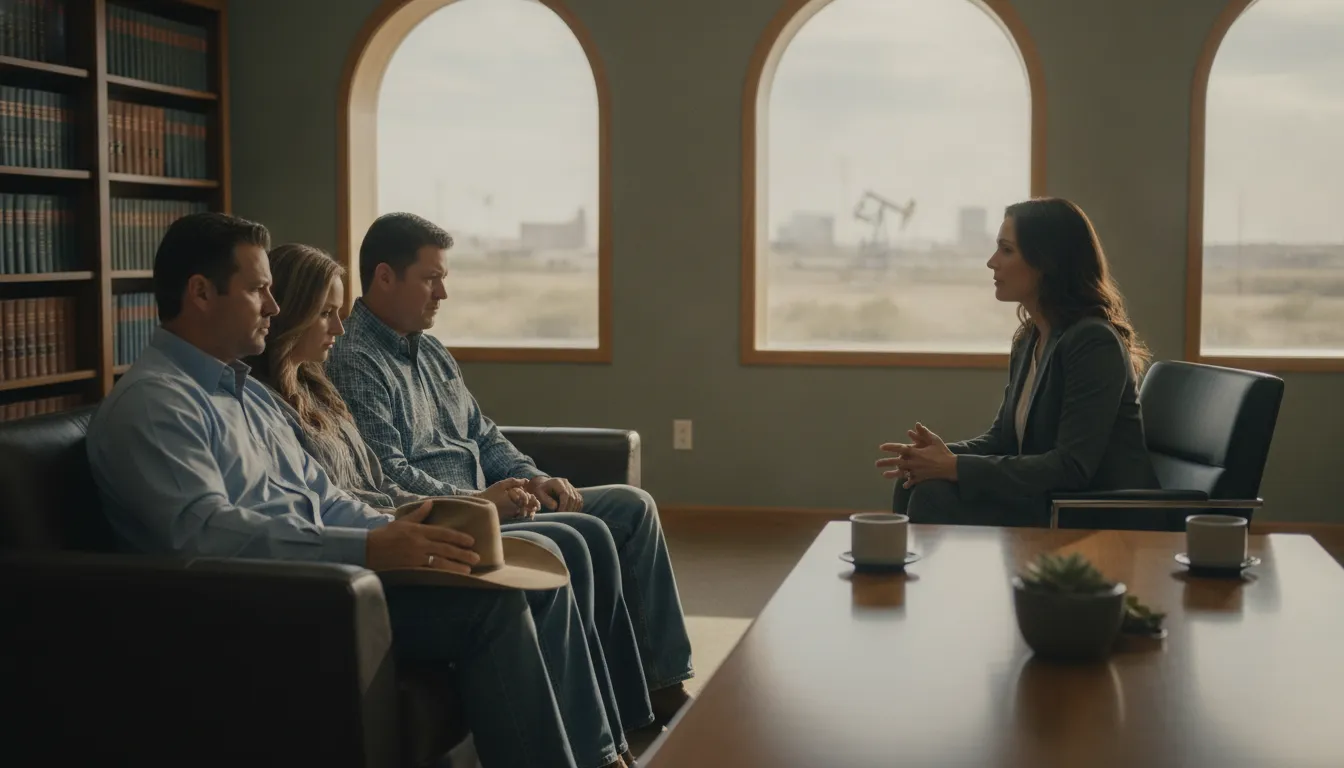
When a fatal accident occurs, surviving family members often face financial pressure before they have answers about what happened. Texas wrongful-death law may allow eligible relatives to seek compensation for documented economic losses and serious non-economic harm, but recovery is never automatic.
Call Hoch Law Firm at 817-731-9703 for a free consultation.
A compensation for fatal accident lawyer can evaluate whether another party’s negligence or intentional conduct caused the death. Counsel can identify the family members who may bring a claim and develop evidence supporting losses such as medical and funeral expenses. Lost income, loss of support, companionship, and mental anguish. Texas deadlines and eligibility rules can affect the case, so early legal review matters.
The value of a claim depends on the family’s relationship to the person who died. The available proof, and the losses that can be tied to the fatal incident. Understanding the categories of compensation is the first step toward evaluating what a claim may include.
What Compensation Can a Fatal Accident Claim Include?
A Texas wrongful death claim may address both the financial costs and the human losses that follow a fatal accident. The available categories depend on the facts, the evidence, the relationship between the survivor and the deceased, and the legal theory supporting the claim. Compensation is not automatic, and no category should be assumed without evaluating the specific circumstances.
Economic damages are losses that can be tied to financial records, bills, employment information, or other evidence of measurable value. They may include medical expenses incurred before death and reasonable funeral and burial expenses. A claim may also address income the deceased would likely have provided, along with the value of services and support the family lost.
| Category | What it may address | Examples of supporting evidence |
|---|---|---|
| Medical expenses | Treatment and related care provided before the person died. | Medical bills, treatment records, and provider statements. |
| Funeral and burial expenses | Reasonable costs connected to funeral services and burial. | Invoices, contracts, receipts, and payment records. |
| Lost income and support | Income, financial support, and certain benefits the deceased may have provided. | Pay records, tax information, employment history, and financial analysis. |
| Lost care and services | The loss of care, maintenance, household services, advice, counsel, or support. | Family testimony, household information, and evidence of the person’s role. |
| Loss of companionship | The loss of the relationship, companionship, and guidance the deceased provided. | Evidence describing the relationship, shared life, and family circumstances. |
| Mental anguish | The emotional pain and suffering experienced by eligible surviving family members. | Testimony and other evidence concerning the loss and its effects. |
Non-economic damages are different because they do not come with a single invoice or objective price. Loss of companionship and mental anguish reflect the effect of losing a spouse, parent, or child. Emotional pain and suffering is a form of non-economic harm, but proving it still requires evidence and a careful explanation of the relationship and circumstances.
Survivors may also seek the value of the deceased person’s care, maintenance, services, support, advice, and counsel. That category recognizes contributions that may not appear as wages. For example, a person may have provided significant household assistance, guidance, or daily support even when those contributions were not separately purchased.
Texas law limits who may pursue a wrongful death claim, and the responsible party must generally be connected to the death through negligence or an intentional act. A wrongful death attorney Fort Worth families trust can review the available evidence, identify potentially recoverable losses, and distinguish a supported claim from an assumption about damages. The goal is a complete, fact-based evaluation rather than a promised result.
How Is Compensation Calculated After a Fatal Accident?
There is no reliable average for compensation after a fatal accident. A fair evaluation starts with the specific losses the family can prove, the relationship between those losses and the death, and the conduct that caused the accident. The result may include financial and non-financial harm, but the evidence and governing law control what can be pursued.

The first step is identifying the support and contributions the deceased provided. That analysis is broader than a recent paycheck. It may consider lost income, expected future earnings, and the value of care, maintenance, services, support, advice, and counsel the surviving family members no longer receive. When the deceased was a primary source of household income, the long-term effect on the family’s financial stability may be significant.
Lost earnings and household support
Future earnings are not calculated by guessing what the deceased would have earned. The evaluation may examine employment history, education, occupation, work-life expectancy, benefits, career progression, and the financial needs of the survivors. In a complex case, expert testimony may be needed to explain lost future earnings and establish a reasoned damages model.
Lost support can also involve unpaid contributions that kept the household functioning. Childcare, home maintenance, transportation, caregiving, and other services may have real value even when the deceased did not receive a separate paycheck for them. The available records, testimony from people who knew the household, and evidence of the family’s routine can help show what was lost.
Non-economic harm and the facts of the relationship
Financial records cannot fully describe the loss of a spouse, parent, or child. Non-economic harm may include the survivors’ mental anguish, emotional pain, and loss of companionship. Evaluating these losses requires attention to the nature of the relationship, the closeness of the family, the deceased’s role in daily life, and the circumstances surrounding the death. These damages are personal and fact-dependent, not a preset amount assigned to every case.
Finally, damages cannot be separated from liability. A claim generally requires proof that another party’s negligence or intentional act caused the fatal accident. Investigating the accident, preserving records, identifying witnesses, and connecting the responsible conduct to each claimed loss can affect both the strength and value of a case. A compensation for fatal accident lawyer can organize that evidence and test whether the requested damages are supported. Rather than relying on an unsupported average or a quick settlement figure.
Who Can Bring a Wrongful Death Claim in Texas?
Texas does not allow every relative or household member to bring a wrongful death claim. Eligibility generally belongs to the surviving spouse, children, and parents of the person who died. The relationship must be established, and the available damages may depend on the survivor’s own loss and the facts surrounding the death.
These rules matter when a family is evaluating compensation after a fatal accident. A compensation for fatal accident lawyer can help identify the proper claimants, coordinate their interests, and keep the case focused on the losses Texas law may recognize. This article addresses compensation and claim structure, rather than repeating a general overview of wrongful-death litigation.
Surviving spouses, children, and parents
A surviving spouse may have a claim for the financial and personal losses caused by the death. The deceased person’s children may also qualify, including children whose losses arise from the loss of support, care, guidance, or companionship. Parents may be eligible as well, although the analysis can depend on the facts and the nature of the relationship.
These family members may bring a claim together, or an eligible survivor may bring one separately under the circumstances permitted by Texas law. A disagreement among eligible relatives does not necessarily eliminate the claim, but it can affect how the case is organized and how any recovery is allocated. Families should avoid assuming that the person who handled funeral arrangements, managed finances, or lived with the deceased automatically has the right to sue.
Statutory sequencing can affect who files
Texas law generally gives the surviving spouse, children, and parents the initial opportunity to bring a wrongful death claim. If an eligible family member does not file within the applicable statutory period. The personal representative of the estate may have a role in bringing the claim, subject to the statute and the family’s circumstances. The timing and procedural posture should be reviewed promptly because the identity of the proper claimant can affect both filing strategy and the protection of each survivor’s interests.
A wrongful death claim is also distinct from an estate’s separate survival claim. Those claims may involve different damages, parties, and procedural requirements. Determining which claims exist requires examining how the death occurred, the available evidence, and each survivor’s relationship to the deceased. Fatal claims can arise from workplace incidents, unsafe premises, defective products, or other conduct, but eligibility alone does not establish liability or guarantee compensation.
When a surviving child is a minor
Special care is required when a qualifying survivor is under 18. A minor generally cannot independently manage litigation or approve a settlement. The court may appoint a guardian or other representative to protect the child’s interests and review the proposed resolution. That process is intended to ensure that money belonging to the child is handled appropriately, rather than treated as an adult survivor’s recovery.
Because claimant eligibility and representation can become complicated quickly, families should obtain advice before signing releases or dividing a proposed settlement. The right approach depends on the family structure, the available claims, and the evidence supporting each survivor’s losses.
What Evidence Supports Fatal Accident Compensation?
A fatal accident compensation claim depends on evidence that connects another party’s conduct to the death and documents the losses experienced by surviving family members. Texas claims may arise from workplace incidents, unsafe premises, defective products, or other circumstances. The legal theory can change with the facts, but liability generally requires proof of negligence or an intentional act by another party. Hoch Law Firm explains that evidence is central to establishing responsibility and pursuing compensation.
Useful evidence may include photographs or video of the location, maintenance or safety records, incident reports, medical and employment records, witness accounts, and communications involving the event. The most important evidence will depend on how the fatal accident occurred. A workplace investigation may focus on training, equipment, and safety procedures. A premises case may require records showing notice of a dangerous condition. A product case may involve preserving the product and examining its design, warnings, or failure.
Families should avoid altering, discarding, repairing, or returning physical items connected to the accident. They should also preserve messages, photographs, bills, and records rather than relying on memory alone. Acting promptly matters because crucial information can be lost or destroyed over time.
- Secure immediate records. Request available incident, emergency-response, medical, employment, and investigative records. Keep originals or reliable copies in one organized location.
- Document the scene and physical evidence. Preserve photographs, video, equipment, clothing, tools, products, and other items in the condition they were in after the event. Do not clean up, repair, discard, or modify potentially relevant property.
- Identify witnesses and decision-makers. Record the names and contact information of people who saw the event, observed conditions beforehand, or can explain policies, maintenance, training, or the deceased person’s work and support.
- Preserve financial and family-impact records. Gather wage information, benefits records, household expense documents, funeral invoices, and materials showing the care, services, support, advice, or counsel the deceased provided. The appropriate categories depend on the claim and the family’s circumstances.
- Request a prompt legal investigation. Counsel may analyze the accident site, obtain additional records, consult qualified experts, and evaluate whether the available proof establishes negligence, an intentional act, causation, and recoverable damages. Expert testimony may be necessary when the claim includes damages such as lost future earnings.
Evidence does more than show that a death occurred. It helps establish what happened, who had a duty or responsibility, how that responsibility was breached, and how the loss affected eligible survivors. Because each fatal accident presents different factual and legal questions, families should preserve what they can and obtain case-specific advice before making decisions that could affect a claim.
What Is the Texas Deadline for a Wrongful Death Claim?
Texas generally requires a wrongful death lawsuit to be filed within two years after the date the deceased person died. Texas Civil Practice and Remedies Code Section 16.003 states that a person must bring an action for an injury resulting in death no later than two years after the cause of action accrues. The statute also identifies the date of death as the date of accrual. Read the full rule in the Texas statute of limitations.
This deadline is important even when a family is still grieving, investigating what happened, or trying to understand the financial consequences of the loss. A potential claim may involve a workplace incident, unsafe property, a defective product, or another theory of liability. Building the case can require collecting records, identifying responsible parties, preserving physical or electronic evidence, and evaluating the losses suffered by eligible survivors. Waiting can make that work more difficult, particularly when evidence is lost or witnesses become harder to locate.
The two-year rule is a general rule, not a substitute for a case-specific limitations analysis. Exceptions may affect when a claim must be filed, and different claims arising from the same death can have different legal requirements or deadlines. The identity and age of a claimant, the type of claim, the responsible party, and the facts surrounding the death may all matter. Whether a particular exception applies is a legal question that should not be assumed from a general online explanation.
Missing the applicable filing period can generally result in the permanent loss of the right to sue, subject to any fact-specific exception recognized by law. A family should therefore avoid treating the deadline as a date to begin investigating. Speaking with a compensation for fatal accident lawyer early can help identify the potentially applicable claims, preserve evidence, and determine which filing deadlines require attention. Only an attorney who reviews the facts can assess how Texas limitations law applies to a specific loss.
When Should You Contact a Compensation for Fatal Accident Lawyer?
Contact counsel as soon as your family can manage it after a fatal accident. An early conversation gives a lawyer an opportunity to evaluate the known facts, identify potential responsible parties, and explain which legal theories may apply. Fatal claims can arise from workplace incidents, premises liability, product defects, or other circumstances. So the right next step depends on how the death occurred and what evidence exists.
A prompt case evaluation should address more than whether another party appears responsible. Counsel should ask how the accident happened, who controlled the relevant location or product, what records may exist, and how the loss affected the surviving family. The initial review can also identify gaps that require investigation, such as missing documents, witness information, or technical evidence. Families do not need to have every answer before seeking advice.
Preserving the case while the facts are still available
Evidence can shape both liability and the value of a claim. A lawyer may investigate the accident’s cause, gather available evidence, and determine which people or organizations should be included in the case. That work may involve reviewing records, examining the surrounding circumstances, and comparing the available proof with the legal requirements for a claim. The purpose is not to assume fault, but to develop a supported account of what happened.
Prompt involvement also helps prevent the case from being defined solely by an early statement from another party or an initial settlement position. Your lawyer can organize the factual record, identify unresolved questions, and communicate with opposing parties while the family focuses on immediate needs. Because compensation is not a fixed amount, the evaluation should consider the specific losses and circumstances rather than rely on a general estimate.
Preparing for negotiation without losing trial readiness
A fatal accident lawyer’s role can include investigating the cause of death, gathering evidence, negotiating with insurance companies, and representing the family in court. Negotiation may resolve a claim, but effective preparation does not assume that a settlement will be acceptable or that the case will end before trial. Counsel should build the evidence and legal arguments needed to present the claim in court if the parties cannot reach a fair resolution.
When choosing counsel, families may evaluate experience with wrongful death cases, past case results, and the lawyer’s commitment to client communication. These factors can help you understand whether the attorney is prepared for the complexity of the claim and willing to explain important decisions. Hoch Law Firm attorney Tim Hoch is Board Certified in Personal Injury Trial Law. Families can also review this wrongful death attorney Fort Worth guide for general background, while keeping the present article’s focus on evaluating compensation.
There is no need to wait until the family has calculated every loss or reached a final decision about litigation. An experienced trial counsel can review the circumstances, explain the available options, and help the family make an informed choice about pursuing compensation.
Call Hoch Law Firm at 817-731-9703 for a free consultation.
Frequently Asked Questions
What is the average wrongful death settlement?
There is no reliable average that predicts what a particular Texas family may recover. Compensation depends on the evidence, the deceased person’s income and support, the family’s relationship, the responsible party’s conduct, and the losses that can be proven. A case evaluation should focus on the facts rather than an advertised settlement figure.
How is compensation calculated for a fatal accident case?
Calculation may include financial losses, such as medical, funeral, burial, and lost-income expenses, along with non-economic losses such as lost companionship and mental anguish. The value of future support or earnings may require financial or vocational expert analysis. These damages are fact-specific and are not fixed in advance.
Who is eligible to file a wrongful death claim in Texas?
Texas law limits eligibility to certain surviving family members, including the deceased person’s spouse, children, and parents. The proper claimant and claim structure can depend on the family circumstances. If a minor is involved, a court may appoint a guardian to protect the child’s interests in a settlement.
What is the deadline for filing a wrongful death claim in Texas?
Generally, a wrongful death lawsuit must be filed no later than two years after the date of death under Texas Civil Practice and Remedies Code Section 16.003. Fact-specific exceptions may apply, so families should obtain legal advice promptly rather than assume an exception extends the deadline. Read the Texas statute.
Ready to Discuss Your Fatal Accident Claim?
Understanding potential compensation is only one part of evaluating a wrongful-death claim. A review of the facts, available evidence, and Texas deadlines may help your family understand the next steps and the questions that deserve attention. Call Hoch Law Firm at 817-731-9703 for a free consultation about a fatal accident compensation claim.