An industrial injury can change your health, income, and ability to return to work in a moment. In Fort Worth, the danger may come from heavy machinery, construction equipment, chemical exposure, falls, or a hazardous loading area. OSHA identifies failure to recognize workplace hazards as a root cause of many injuries and incidents: hazard identification guidance can help explain what should have been addressed.
Call Hoch Law Firm at 817-731-9703 for a free consultation about your industrial injury
An industrial accident lawyer Fort Worth workers may consult can investigate what happened and identify potentially responsible parties. The lawyer can explain whether the facts support workers’ compensation, a third-party personal injury claim, or another legal path. The answer depends on your employment status, the cause of the accident, and who controlled the equipment or worksite.
Those distinctions matter because workers’ compensation and third-party claims operate differently. Understanding what qualifies as an industrial accident is the first step toward preserving evidence and evaluating your options. Hoch Law Firm’s personal injury practice information provides broader context for injury representation.
What Counts as an Industrial Accident in Fort Worth?
An industrial accident is not limited to a construction site. In Fort Worth, the term can describe a serious workplace incident in a warehouse, manufacturing plant, loading area, oil-field operation, refinery, or industrial construction project. The setting matters because each workplace has different equipment, processes, contractors, and safety responsibilities.
Some incidents involve heavy machinery that malfunctions or lacks effective safeguards. Others involve a worker who falls from an elevated surface, is struck by a moving object, or is caught in a crush point between equipment and another surface. Loading docks and warehouse aisles can create risks involving forklifts, pallets, trailers, and shifting materials. In plants, refineries, and oil-field settings, workers may also face chemical exposure, fires, explosions, or other process-related hazards. The nature of the injury and the conditions that caused it will determine what evidence and legal questions require attention.
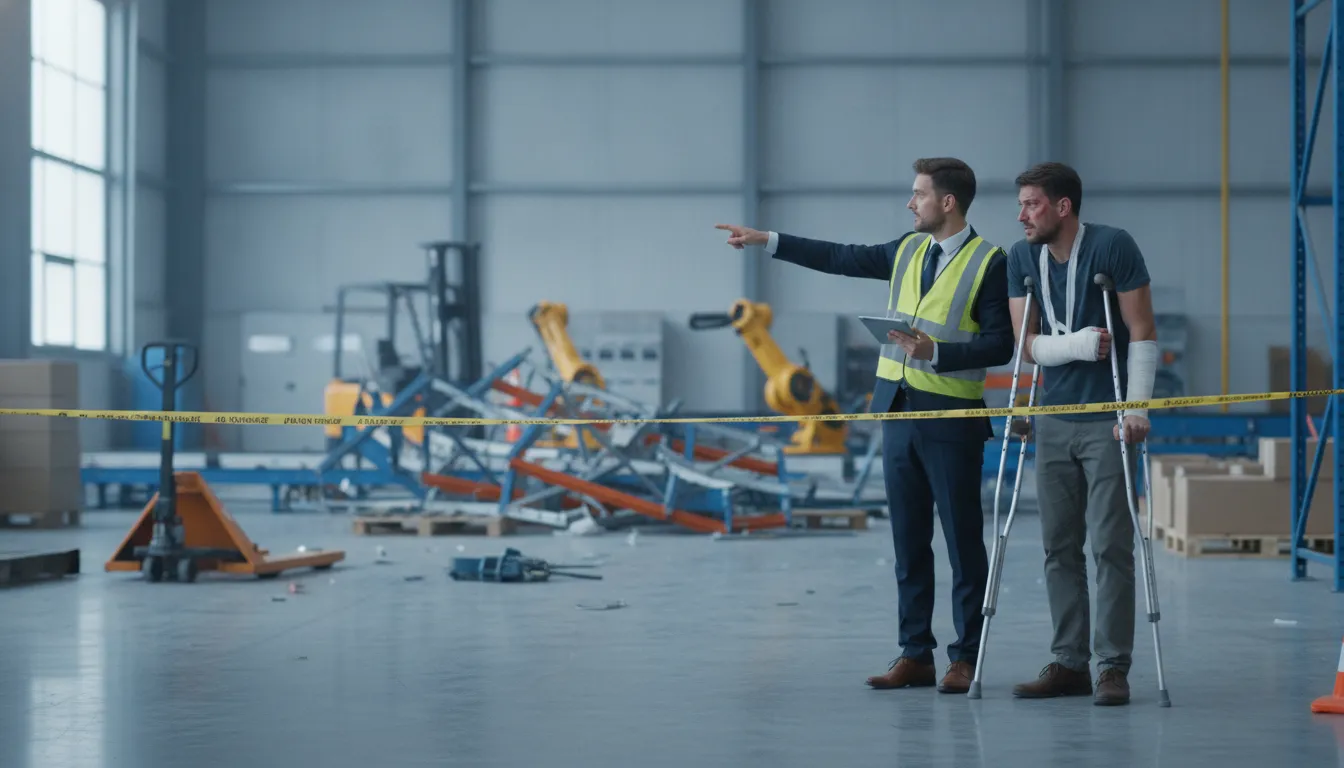
Industrial construction deserves particular care because multiple employers and contractors may work in the same area. A worker may be exposed to an unguarded machine, unstable materials, an unsafe access route, or a hazard created by another crew. Falls, struck-by incidents, and equipment-related accidents are among the hazards that require careful identification in these environments. You can learn more about that setting through Hoch Law Firm’s construction accident guidance for Fort Worth, but an industrial injury case may extend well beyond construction law.
Workplace hazards are not always obvious at the time of an accident. The Occupational Safety and Health Administration identifies failure to recognize hazards as a root cause of workplace injuries and illnesses. Its hazard-identification guidance also addresses the need to evaluate industrial construction conditions and other hazards before they cause harm. That makes the surrounding facts important: what equipment was operating, what warnings or procedures existed, whether the danger was known, and whether the work area had been inspected.
A near miss can also reveal an unsafe condition, even when no one is hurt. OSHA recommends investigating close calls to identify underlying hazards and weaknesses in a safety program. After an injury, those same questions may help show whether the event was an isolated occurrence or part of a recurring problem. Maintenance history, training materials, operating procedures, and accounts from people who saw the conditions can help clarify what happened.
Because industrial accidents can occur across many types of workplaces, the correct claim path depends on the facts. Workers’ compensation may be relevant, while a separate claim may exist against another responsible party. An industrial accident lawyer in Fort Worth can review the worksite, the injury, and the relationships among the companies involved before advising you about next steps.
What Should You Do After an Industrial Accident?
The first hours after an industrial accident can affect both your recovery and the evidence needed to understand what happened. Focus on your health first, then create a clear record of the incident before equipment is repaired, conditions change, or witnesses become difficult to locate. These steps apply whether the accident occurred at a plant, warehouse, jobsite, loading area, or another industrial setting.
- Get emergency care and follow up with a medical provider. Call for emergency help when necessary, and do not refuse treatment because you hope the pain will subside. Tell the provider how the injury occurred, identify every affected body part, and explain symptoms accurately. Keep records of visits, diagnoses, restrictions, prescriptions, referrals, and work-status instructions. Report later symptoms promptly.
- Report the accident through the required workplace channel. Notify your supervisor, safety representative, human resources department, or other designated contact as soon as you can. Describe the date, location, equipment, task, and injury without guessing about fault. Ask how the report will be documented and keep a copy. A prompt report preserves the basic timeline.
- Write down the conditions and people involved. As soon as your health permits, record what you were doing, what failed or changed, warnings you received, lighting and weather conditions, safety equipment, and who responded. List the names and contact information of coworkers, supervisors, contractors, inspectors, or others who saw the event or its aftermath. The scene may look different later, and witnesses may remember different details.
- Preserve evidence and request that it be retained. If it is safe and permitted, photograph the area, equipment, guards, controls, visible damage, and your injuries. Do not return to a hazardous area or alter equipment to obtain a photograph. Ask the employer or site operator in writing to preserve surveillance footage, maintenance and inspection records, incident reports, training records, communications, and relevant equipment. Maintenance logs, surveillance footage, and witness statements can become harder to secure over time. OSHA identifies initial and periodic inspections as tools for finding new or recurring hazards, making inspection and maintenance records potentially important to the investigation: OSHA hazard-identification guidance.
- Be careful with recorded statements. Provide necessary facts to obtain medical care and report the incident, but do not speculate, minimize your symptoms, or accept a recorded interview without understanding its purpose. Do not sign a release or statement that you have not read and understood. If an insurer, staffing company, contractor, or another organization requests a detailed recorded statement, consider getting legal guidance first.
- Discuss the claim path with an experienced lawyer. An industrial accident may involve workers’ compensation, a claim against a negligent third party, or another legal issue that depends on the facts. A lawyer can help identify what evidence to request and who may be responsible. For construction-related injuries, Hoch Law Firm’s construction accident guidance for Fort Worth workers provides additional context. Contact counsel promptly, before important evidence is lost or the facts become disputed.
Who May Be Liable for an Industrial Injury?
Identifying the responsible party after an industrial injury requires more than asking who employed the injured worker. The same accident may involve several companies, contractors, property owners, or product manufacturers. Liability depends on the worksite facts, each party’s role, the safety duties it assumed, and how its conduct contributed to the injury.
Employer and workplace safety duties
An employer may have responsibility for unsafe work practices, inadequate training, insufficient supervision, or a failure to address known hazards. Maintenance history can also matter. An equipment failure may point to a recurring failure to inspect or maintain machinery, rather than simple employee error. OSHA identifies hazard recognition, including hazards arising during emergency or nonroutine situations, as a core part of workplace safety.
Workers’ compensation may provide the primary claim path for an employee injured during work-related duties. It does not automatically answer every liability question, however. Texas employers that do not subscribe to workers’ compensation may face different exposure, and employment status and insurance status must be verified rather than assumed.
Site and property owners
The owner or operator of an industrial site may owe duties to workers who enter the premises, including employees of independent contractors. A site owner may be investigated for failing to maintain safe premises, failing to correct a known dangerous condition, or failing to provide an adequate warning. The owner may not be the injured worker’s employer, but that does not necessarily remove the owner from the liability analysis.
General contractors and subcontractors
Industrial projects often place multiple businesses at one location. A general contractor or subcontractor may have controlled the work area, supplied personnel, selected equipment, created a dangerous condition, or failed to coordinate safety procedures. Contracts, daily logs, safety meetings, work assignments, and communications can help show which company controlled the relevant activity. A contractor’s label alone does not establish liability, and responsibility must be tied to specific conduct.
Equipment manufacturers and other third parties
A manufacturer or distributor may be responsible when defective design, faulty manufacturing, or inadequate safety warnings make industrial equipment unreasonably dangerous. Other third parties may include maintenance companies, vendors, transportation providers, or companies that created a chemical or operational hazard. In an oil-field setting, oil-rig accident representation may involve reviewing the roles of several entities rather than focusing only on the worker’s employer.
Third-party claims involve distinct legal theories and liability standards. They may exist alongside a workers’ compensation claim, but they require separate investigation and proof. Maintenance records, surveillance footage, witness statements, equipment manuals, and safety documents should be preserved promptly. If the injury involves thermal or chemical exposure, severe burn injury counsel may also be relevant to the investigation. The facts, not the accident label, determine which claims may be available.
Workers’ Compensation or a Third-Party Claim?
After an industrial injury, the label assigned to the claim can affect who may be legally responsible and what must be proven. Workers’ compensation and a third-party personal injury claim are different paths, although the same accident may raise questions about both.
| Workers’ compensation | Third-party personal injury claim |
|---|---|
| Generally provides a no-fault system for covered workplace injuries. | Usually requires an investigation showing that another party’s negligence or other legal responsibility contributed to the injury. |
| Typically applies when the injury occurred within the scope and course of employment. | May involve a manufacturer, site owner, subcontractor, or another party outside the injured worker’s employer. |
| Is generally the exclusive remedy against a subscribing employer for a covered workplace injury. | Is analyzed separately from workers’ compensation because it involves different liability standards and legal theories. |
| Does not depend on proving that the employer negligently caused the accident. | Requires evidence connecting the third party’s conduct, product, property condition, or other responsibility to the injury. |
Workers’ compensation is generally described as a no-fault insurance system and the exclusive remedy for employees injured on the job. In Texas, however, the worker must still establish that the injury happened within the scope and course of employment. That work-relatedness question can matter when the accident occurred during changing assignments, travel between work areas, or activity that an employer disputes was part of the job.
A third-party claim is different. If an equipment manufacturer supplied a defective machine, a site owner failed to address a known dangerous condition. Or a subcontractor created an unsafe situation, the responsible party may not be the injured worker’s employer. A claim against that party may require proof of duty, breach, causation, and damages. The personal injury lawsuit process explains the broader framework for this type of case.
These paths can sometimes exist at the same time. Receiving or pursuing workers’ compensation does not, by itself, answer whether a separate claim against a non-employer is available. The facts must be investigated promptly, including the identities of every company at the site. Investigators may need to determine who controlled the work area, who maintained the equipment, and whether contracts divided safety responsibilities. A third-party case often requires a separate liability analysis even when a workers’ compensation claim is also involved.
There is an important Texas nonsubscriber caveat. An employer that does not subscribe to the workers’ compensation system may face tort liability for an employee’s work-related injury. That failure to subscribe may remove the statutory workers’ compensation immunity described in the usual employer relationship. The rules are fact-specific, so an employer’s insurance status should be confirmed rather than assumed.
Correct classification matters because it guides evidence preservation, claim strategy, and the parties who may need to be notified. An industrial accident lawyer in Fort Worth can review the employment relationship, insurance status, site structure, equipment records, and witness accounts before deciding which legal avenues may apply. Hoch Law Firm’s contingency-fee injury representation information explains another practical issue to discuss during an evaluation.
How Can an Industrial Accident Lawyer Fort Worth Help Prove a Claim?
Proving an industrial accident claim starts with connecting the event, the unsafe condition, and the harm. That usually requires more than an accident report or a worker’s description. An investigation should preserve evidence before equipment is repaired, a work area is altered, or surveillance footage is overwritten.
Photos and video of the scene can document the equipment’s position, visible damage, warning signs, lighting, housekeeping, and other conditions. If machinery is involved, preserve the equipment when possible and identify its make, model, controls, and condition after the incident. Maintenance records, inspection reports, repair orders, and service communications may help show whether a failure followed a pattern or whether needed maintenance was delayed. Evidence should not be altered or discarded while the cause remains under review.
Surveillance footage and witness accounts can fill gaps that a written report misses. Investigators may seek footage from the work area, entrances, loading zones, or nearby facilities. They may also need the names and contact information of people who saw the event or its immediate aftermath. Prompt action matters because footage may not be retained indefinitely, and recollections can change. Maintenance records, surveillance footage, and witness statements are among the evidence that may need to be secured early in an industrial case.
Records that explain the hazard and the injury
Workplace records can show what workers were told to do and what the employer knew about a risk. Relevant materials may include safety policies, training materials, job-hazard analyses, operating manuals, and written procedures. OSHA identifies equipment and machinery operating manuals as potential sources for recognizing workplace hazards. For chemical exposures, Safety Data Sheets, or SDS, may explain the substance’s hazards and handling information. OSHA also identifies 300 and 301 logs, along with incident-investigation reports, as records that can reveal recurring injuries or hazards.
Medical records connect the event to the diagnosed injury, treatment, restrictions, and expected recovery needs. Employment and pay records can help document the worker’s position, duties, time missed, and lost earnings. These records do not automatically prove that another party was legally responsible, but they can help establish the injury’s timing, severity, and practical consequences.
Showing causation, not just an accident
Causation means explaining how the condition or conduct led to the injury. For example, a maintenance history may support a theory involving equipment failure, but it does not by itself establish liability. Investigators must compare the physical evidence, manuals, policies, witness accounts, medical findings, and timeline. OSHA’s hazard-assessment guidance emphasizes identifying hazards, characterizing them, and prioritizing controls, which can provide useful context when evaluating whether a known risk was addressed.
Evidence preservation is the first step. Proving liability requires a separate analysis of who controlled the work, who maintained the equipment, what safety duties applied, and whether the available evidence supports that theory. The records that exist will depend on the workplace and the facts. An industrial accident lawyer in Fort Worth may need to act quickly to identify and request them. Hoch Law Firm’s practice-area overview offers additional context about the firm’s broader injury representation.
Sources: OSHA hazard identification guidance and Hoch Law Firm’s attorney information.
Why Choose a Trial-Tested Industrial Accident Lawyer Fort Worth Workers Can Trust?
Industrial injury claims often involve more than the question of whether an accident happened. The investigation may need to address who controlled the worksite, who maintained the equipment, what safety information was available, and whether another company contributed to the event. An industrial accident lawyer Fort Worth workers can trust should examine those issues before treating the case as a routine workplace injury. The goal is a fact-based assessment of available claims, not a promise about the result.
A complete investigation looks beyond the incident report
Early evidence can disappear or become harder to obtain. Counsel may work to preserve surveillance footage, maintenance records, equipment information, witness statements, photographs, and other records showing how the accident occurred. That investigation matters when an equipment failure may reflect inadequate or delayed maintenance rather than simple human error. It can also reveal whether a site owner, contractor, subcontractor, or equipment manufacturer had a separate responsibility for the conditions that caused the injury.
The available claim paths may not be obvious. Workers’ compensation issues can involve whether the injury arose in the course and scope of employment. While a third-party lawsuit requires a separate analysis of negligence or product liability. Experienced counsel can evaluate those paths together instead of assuming that one filing answers every legal question. Texas workers’ compensation rules can also be difficult to interpret, particularly when employment relationships and insurance status are disputed.
For a broader overview of representation after a serious injury, review Hoch Law Firm’s case results and experience page.
Preparation includes dealing with insurers and proving harm
Insurance communications can affect how an injury, its cause, and its consequences are understood. A lawyer can handle communications with insurers, identify missing information, and help keep the investigation focused on documented facts. The legal work also includes developing medical evidence and a clear causation story. That means connecting the incident to the diagnosed injuries, treatment, limitations, lost work, and other damages supported by the record. It does not mean assuming that every symptom or requested loss will be accepted without proof.
Trial readiness is useful even when a dispute may resolve without a courtroom. It encourages thorough evidence collection, careful witness preparation, and a realistic assessment of strengths and weaknesses. If negotiations fail, the case can move forward on an established factual and legal foundation rather than starting an investigation from scratch.
Personal attention from an experienced attorney
Hoch Law Firm provides direct-to-attorney, personalized service. Clients work with Tim Hoch throughout the case rather than being passed from an intake team to junior staff. Tim is Board Certified in Personal Injury Trial Law, a credential reflecting specialized experience in personal injury trial practice. That experience can help an injured worker understand the available options, the evidence still needed, and the practical decisions ahead. The right course depends on the facts, but a careful, trial-tested evaluation can protect those choices from the beginning.
Call Hoch Law Firm at 817-731-9703 for a free consultation
Call Hoch Law Firm at 817-731-9703 for a free consultation
Frequently Asked Questions
What should I do immediately after an industrial accident?
Get medical attention, report the incident through the required workplace channel, and write down what happened while your memory is fresh. Identify witnesses and preserve photographs, messages, equipment details, and other evidence. OSHA recommends investigating injuries and close calls to identify underlying hazards, so early documentation can matter. OSHA hazard-identification guidance supports prompt investigation.
What is the difference between workers’ compensation and a third-party claim?
Workers’ compensation is generally a no-fault system for covered, work-related injuries and is usually the exclusive remedy against a subscribing employer. A third-party claim may arise separately when a manufacturer, site owner, subcontractor, or another non-employer contributed to the injury through negligence or a defective product. The two claim paths can sometimes exist together, but the facts determine what is available.
Do I need a lawyer after a Fort Worth industrial accident?
Not every injury requires the same legal response. Counsel can help determine whether the incident involves workers’ compensation, a third-party claim, or a Texas nonsubscriber issue, then preserve evidence and communicate with insurers. This analysis is especially important when equipment failure, site conditions, or multiple contractors may have contributed.
What types of industrial accidents can cause serious injuries?
Examples include machinery malfunctions, crush injuries, falls, struck-by incidents, chemical exposure, fires, and explosions. Industrial accidents may occur at warehouses, plants, construction sites, loading areas, refineries, and oil-field locations. The source of the hazard matters because it can affect both the medical response and the potential liability analysis.
Are there upfront fees to hire a work injury lawyer?
Hoch Law Firm handles personal injury matters on a contingent fee basis, so eligible clients generally do not pay an upfront attorney fee. The fee arrangement and responsibility for case expenses should be explained clearly before representation begins. Ask for those terms in writing and discuss your specific claim during an initial consultation.
Ready to Discuss Your Industrial Injury?
Understanding which claim paths may apply can help you protect important evidence and make informed decisions about what comes next.