When an insurer delays a property claim, owners need more than a promise that the file remains under review. Texas prompt payment claim delay options for Texas property owners begin with identifying deadlines, preserving proof of submissions, and comparing each response with the policy and Texas law.
Texas Insurance Code Chapter 542 generally requires an insurer to acknowledge a first-party claim and begin investigating. The insurer must request reasonably required materials, decide whether to accept or reject the claim, and pay after acceptance within defined periods. The exact analysis depends on the policy, insurer, claim facts, proof-of-loss materials, and applicable exceptions.
Call Hoch Law Firm at 817-731-9703 for a claim evaluation.
The first step is understanding what the prompt-payment rules require and what an owner can do when a carrier does not act on time.
What Makes a Commercial Flood Claim Different From Other Water Losses?
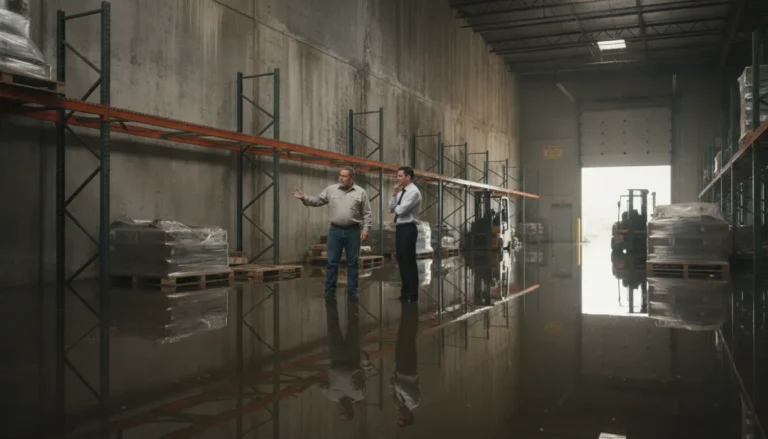
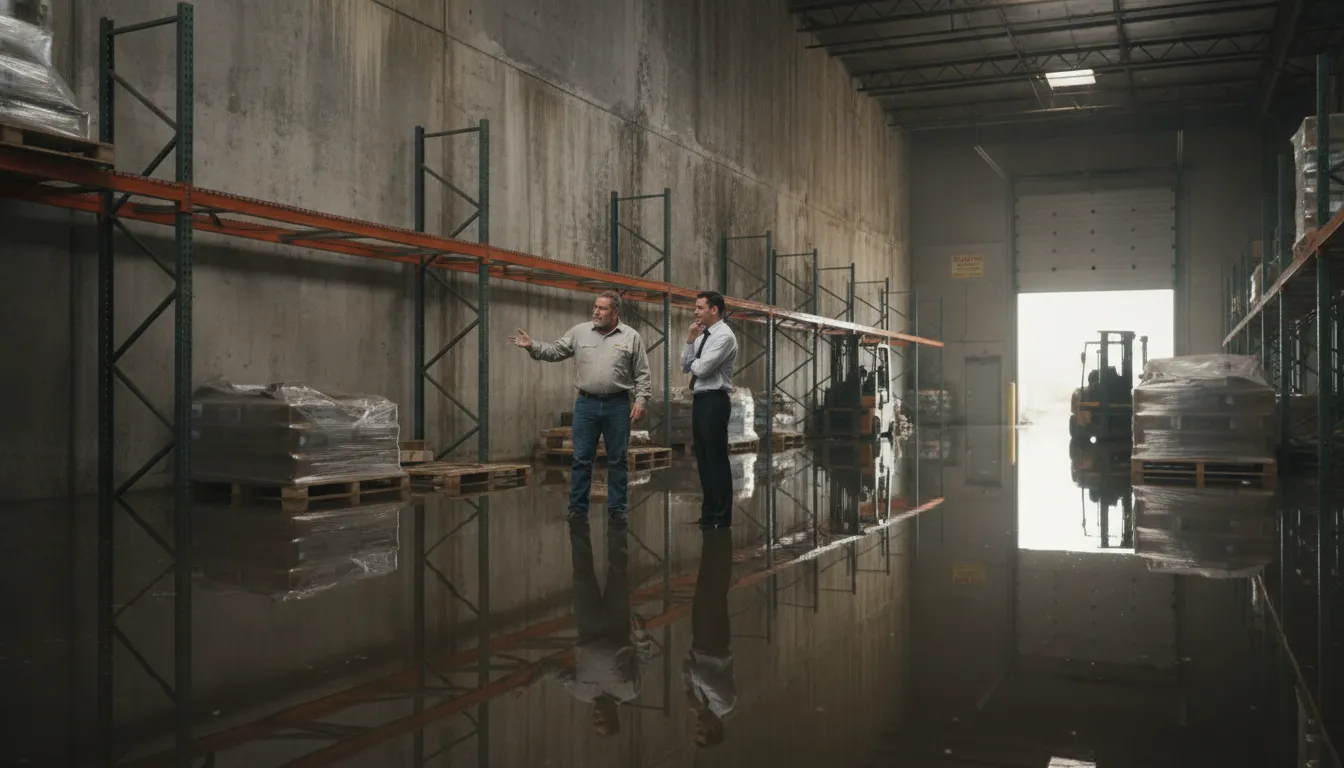
The word “water” does not identify the cause of a commercial property loss. A claim review must ask where the water came from, how it entered the building, when the damage occurred, what property was affected, and whether other causes contributed.
FEMA describes flooding as a general and temporary condition in which normally dry areas are partially or completely inundated. Its examples include overflow of inland or tidal waters and unusual or rapid accumulation of runoff. FEMA also explains that flood insurance covers physical damage directly caused by flooding, while a standard commercial property policy may not cover flood damage. See FEMA’s flood insurance guidance for the general definition.
That does not mean every water loss is automatically covered or excluded. Rising surface water may present a different question from rainwater that enters through a storm-damaged roof, broken window, or other storm-created opening. A plumbing failure, equipment leak, sewer backup, or water released during firefighting may raise still different issues. The label attached to the event is only a starting point. The physical source and pathway of the water must be established.
Commercial owners should compare the loss to the policy’s definitions, exclusions, endorsements, deductibles, limits, and conditions. Flood coverage may require a separate policy, often through the National Flood Insurance Program, but the applicable commercial policy and endorsements still control the analysis. A policy may also contain language addressing surface water, wind-driven rain, sewer or drain backup, concurrent causes, or resulting damage. Those provisions cannot be evaluated in isolation.
Causation evidence is therefore central. Photographs, videos, weather information, maintenance records, roof or building inspections, mitigation invoices, and witness accounts may help establish the sequence. The relevant question is not simply whether water was present. But whether the documented cause matches a covered peril, an excluded peril, an endorsement, or more than one cause.
For a broader review of available coverages and policyholder claim issues, see commercial property insurance claims. If the carrier disputes the classification or relies on an exclusion, the issue may become a commercial property claim dispute requiring careful policy interpretation and expert investigation. No universal coverage conclusion is appropriate without reviewing the policy and the facts.
How Should You Document Commercial Flood Damage?
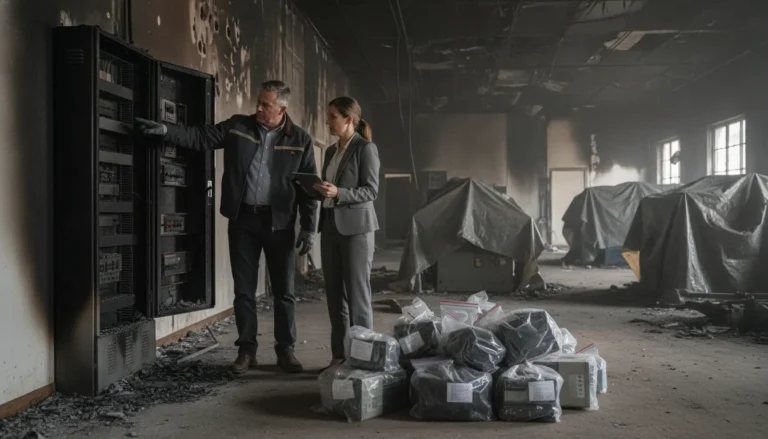
Strong documentation gives the carrier, experts, and any later reviewer a clearer record of what happened, what was damaged, and how the loss affected the business. Work through the following sequence, adapting it to the conditions at the property and the terms of the applicable policies.
- Protect people first. Restrict access to unsafe areas, address electrical or structural hazards, and follow appropriate emergency procedures. Do not delay urgent safety measures while waiting for an adjuster, but record what was done and why.
- Notify the carrier promptly. Report the loss through the required channel and keep the claim number, adjuster information, and notice date. Prompt notice is generally part of sound claim handling, but the policy language should be reviewed rather than assuming one deadline applies to every loss. FEMA also advises policyholders to report flood damage and document it with photographs or video.
- Photograph and record video before cleanup when reasonably safe. Capture wide views of each affected area, then close-ups of flooring, walls, equipment, inventory, fixtures, and visible waterlines or debris. Include exterior conditions, neighboring areas, drains, doors, windows, roofs, and any apparent entry points. Preserve original files and note when and where each image was taken.
- Preserve evidence of the water’s source and pathway. Record rainfall or runoff observations, drainage conditions, broken openings, plumbing conditions, and the sequence reported by employees or occupants. Do not assume every water loss has the same cause. The source, timing, pathway, affected property, and possible concurrent causes may all matter to coverage analysis.
- Save the complete insurance file. Preserve the policy, declarations, schedules, endorsements, renewals, deductibles, and relevant correspondence. A flood-related loss may involve separate or overlapping coverage questions, so do not rely on a certificate, summary, or verbal explanation in place of the actual policy wording.
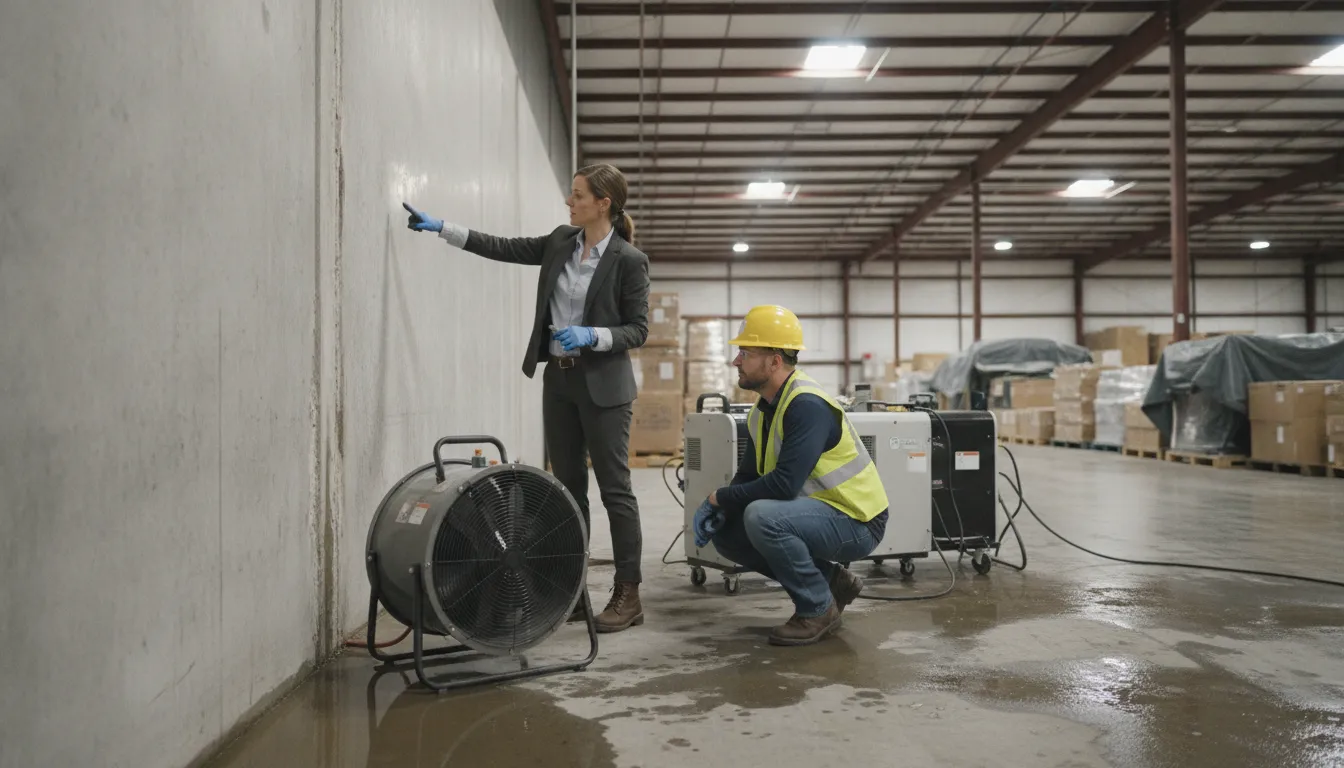
- Document mitigation and repairs. Keep work orders, invoices, receipts, contracts, photographs taken during removal or drying, equipment logs, and notes about temporary measures. FEMA specifically recommends keeping receipts for repairs and temporary measures. Before permanently discarding damaged materials, determine whether they can be preserved, sampled, or inspected safely.
- Inventory contents and property damage. List affected inventory, machinery, furnishings, fixtures, and building components. Include descriptions, quantities, approximate age or condition, ownership information, repair or replacement estimates, and photographs. Separate items that can be restored from those that appear to require replacement.
- Track the business impact. Maintain records of closures, reduced operations, extra expenses, payroll, lost rents, tenant effects, canceled orders, and other financial consequences that may be relevant under the policy. Keep a separate file for business interruption claim documentation, including the underlying financial records needed to explain the calculation.
- Keep communications organized. Save emails, letters, recorded statements, inspection notices, adjuster reports, engineer reports, estimates, and claim submissions. A dated communications log can show what was requested, provided, inspected, repaired, or disputed. If the claim becomes denied, delayed, or underpaid, this record can help counsel and experts compare the pre-loss and post-loss condition and evaluate the next step.
Coverage depends on the policy, facts, and proof. For a complex North Texas loss, preserving the evidence early can make a later policy and causation review more reliable.
What Policy Language and Exclusions Should Owners Review?
Definitions, exclusions, and causation language
Begin with the declarations page. Then read the complete policy, endorsements, and applicable forms together. The declarations may identify covered property, policy periods, limits, deductibles, and selected coverages. They do not answer every coverage question. The policy language and loss facts control.
Find definitions of flood, surface water, water damage, seepage, leakage, and related terms. Flood insurance generally addresses physical damage directly caused by flooding. A standard commercial property policy may not cover flood damage. FEMA also notes that flood policies contain limits, deductibles, exclusions, and conditions. Review the applicable policy rather than assuming coverage or exclusion.
Read water-related exclusions carefully. These may address rising water, groundwater, seepage, wear and tear, faulty maintenance, or earth movement. Look for anti-concurrent-causation language as well. That wording may affect a loss involving multiple alleged causes, such as rising water combined with wind damage or a storm-created opening. Analyze the actual wording and evidence together.
Endorsements, deductibles, and covered property
Endorsements can add, modify, or remove coverage. Check for flood, sewer or drain backup, equipment breakdown, ordinance or law, utility-service interruption, and other relevant endorsements. Confirm which buildings, contents, inventory, fixtures, machinery, and tenant improvements are insured. Check for separate limits or deductibles. Do not infer a limit from another policy or general online description.
Business income and claim conditions
Review business-income, extra-expense, rental-income, payroll, and contingent-business-interruption provisions. These coverages may apply only if the policy provides them and the loss satisfies its terms. Keep records showing operational effects, mitigation steps, expenses, tenant impacts, and lost revenue.
Finally, identify notice, mitigation, examination, cooperation, inventory, and proof-of-loss requirements. Missing a condition can create a dispute, even when physical damage is apparent. Preserve the policy, declarations, endorsements, communications, estimates, receipts, and business records. Obtain advice before signing a release or submitting a disputed proof of loss. For context on related coverage issues, review commercial property insurance claims.
How Do Causation Disputes Affect a Flood Insurance Claim?
Many commercial water-loss disputes turn on causation. The carrier may accept that water entered the building but disagree about where it came from, how it entered, or which event caused the claimed damage. A coverage review should separate source, pathway, timing, and resulting damage. It should not treat all water as one category.
Source and pathway
Rising surface water, unusual runoff, a broken roof, a failed window, plumbing, sewer backup, groundwater, and equipment leaks can create different policy questions. The same building may contain evidence of more than one event. A documented waterline does not by itself establish whether water came from flooding, a storm-created opening, or another source.
Preserve photos, videos, weather information, drainage observations, maintenance records, inspection findings, mitigation records, and witness accounts. Note when water was first observed, where it appeared, how far it traveled, and which areas or items were affected. That timeline can help experts compare physical evidence with the insurer’s theory.
Concurrent causes and expert review
Some claims involve multiple alleged causes, such as surface water combined with wind damage or rain entering through a damaged roof. Policy language addressing concurrent causes may affect the analysis. No universal result follows from the label. Consider definitions, exclusions, endorsements, causation evidence, and applicable law together.
On a significant Texas commercial loss, engineers, building consultants, restoration professionals, accountants, or other experts may be needed. Their work can address building conditions, water pathways, repair scope, contents, and financial effects. The goal is not to manufacture a covered cause. It is to test the evidence and determine whether the carrier’s position matches the policy and physical record.
If the carrier disputes the source or classification of the loss, a commercial property claim dispute review can help organize the policy, claim file, expert evidence, and recovery strategy. Hoch Law Firm’s approach includes policy interpretation, claim investigation, expert coordination, negotiation, and litigation when necessary. A result depends on the policy and facts.
What Recovery Options Exist After a Commercial Flood Claim Is Denied or Underpaid?
A denial or underpayment is not the end of the analysis. The response depends on why the carrier reached its position, what the policy says, and whether the evidence supports a different interpretation or valuation. A commercial property claim review may involve policy interpretation, coverage analysis, claim investigation, expert coordination, negotiation, and litigation when necessary. Hoch Law Firm handles these commercial property disputes for policyholders.
| Recovery path | When it may fit | What to evaluate |
|---|---|---|
| Policy review and supplement | The carrier may have overlooked policy language, damage, contents, or records. | Compare the estimate with the policy, endorsements, photos, records, invoices, and expert findings. |
| Negotiation | Additional evidence may resolve a coverage or damage presentation. | Identify the carrier’s assumptions and document the requested adjustment. Business losses need policy-specific proof. |
| Appraisal | The main dispute is the amount of covered damage. | Review the appraisal clause and dispute scope. Appraisal may address valuation, but not every coverage, causation, exclusion, or delay issue. Read about appraisal versus litigation. |
| Regulatory complaint | The policyholder believes claim handling warrants regulator review. | A complaint may create an administrative record. It does not replace policy analysis, damage proof, or litigation strategy. |
| Litigation evaluation | The carrier maintains a denial or substantial underpayment. | Assess policy language, communications, deadlines, causation evidence, damages, experts, and business impact before deciding whether suit is appropriate. |
These options are not mutually exclusive. A careful strategy may begin with policy and evidence review. It may then move to supplementation or negotiation while preserving other remedies. Hoch’s approach includes comparing pre-loss and post-loss conditions, coordinating expert assessments, negotiating with the carrier, and litigating when necessary. The strongest next step is supported by the policy, claim record, and reason for the denial or underpayment.
When Should You Contact a Commercial Flood Damage Insurance Lawyer?
Consider a legal review when the claim stops moving, the carrier’s position does not match the policy, or financial consequences continue to grow. A delayed response may affect repairs, tenants, rents, cash flow, business operations, and lender relationships. You do not need to wait for a final denial before asking whether the claim is being evaluated under the right coverage provisions.
One practical trigger is a disputed source of water or an unclear coverage position. Review the policy and written communications if the insurer characterizes the loss as flood damage without addressing other possible causes. Relies on an exclusion without explaining its application, or requests repeated documentation without identifying what remains missing. Also seek review before signing a release or submitting a disputed proof of loss.
An evaluation is useful when the carrier underpays building damage, omits contents or machinery, disputes the water source, or treats a business-income loss as unrelated. Commercial coverage may involve building property, inventory, fixtures, business interruption, extra expense, payroll, loss of rents, or utility interruption. Each category depends on the policy and facts. Keep the policy, declarations, endorsements, photographs, videos, mitigation records, estimates, invoices, expert reports, business-loss records, and correspondence together. For related financial records, review business interruption claim documentation.
Hoch Law Firm represents policyholders in the Dallas-Fort Worth and North Texas markets, not insurance companies. A review can include policy interpretation, causation analysis, comparison of pre-loss and post-loss conditions, expert damage assessment, and an evaluation of negotiation or litigation options. Learn more about commercial property insurance claims. A consultation evaluates the claim. It does not guarantee coverage, representation, or recovery.
When a Commercial Flood Damage Insurance Lawyer Reviews a Texas Claim
Commercial flood damage insurance lawyer review is useful when the carrier’s position depends on a disputed water source, an exclusion, or incomplete damage records. A lawyer can read the policy and endorsements. The review can compare the denial or estimate with the physical evidence. It can identify whether the disagreement concerns coverage, causation, valuation, or claim handling.
The review should begin with the business objective. An owner may need to protect a building, restore operations, keep tenants informed, preserve rental income, or respond to lender requirements. Those pressures do not change the policy, but they make an organized strategy more important. Separate urgent safety and mitigation decisions from the coverage analysis. Keep receipts and document why emergency work was necessary.
Bring the complete claim file, not only the denial letter. Include the declarations page, policy forms, endorsements, renewal documents, claim notice, adjuster communications, inspection reports. Engineer opinions, photographs, videos, estimates, invoices, inventory records, leases, rent rolls, financial statements, and business-loss calculations. A dated timeline can show what the carrier requested, what the owner supplied, and when each response occurred.
Hoch Law Firm represents policyholders in Texas and does not represent insurance companies. Its commercial-property work may include policy interpretation, claim investigation, expert coordination, negotiation, and litigation when necessary. A claim evaluation is fact-specific. It does not guarantee coverage, representation, or recovery, but it can help an owner understand which questions should be answered before choosing the next step.
Frequently Asked Questions
Does commercial property insurance cover flood damage?
Coverage depends on the policy’s definitions, exclusions, endorsements, deductibles, limits, and conditions. Flood insurance may require a separate policy, while water entering through a storm-damaged roof or broken window may present a different coverage question. Review the actual policy and evidence before assuming that a loss is covered or excluded.
What evidence helps prove the cause of commercial flood damage?
Preserve photographs, videos, waterline and debris observations, weather information, drainage conditions, roof or building inspections, maintenance records, mitigation invoices, and witness accounts. Keep the original files and a dated timeline. The useful evidence depends on the disputed source, pathway, timing, and extent of the loss.
What if water entered through a storm-damaged roof?
Water entering through a storm-created opening may raise a different policy question from rising surface water, but no general rule decides coverage. The policy language, causation evidence, exclusions, endorsements, and facts must be analyzed together. Avoid repairing away important evidence before it can be documented safely.
Can business interruption be part of a commercial flood recovery?
Possibly, if the policy provides business-income, extra-expense, loss-of-rents, payroll, or related coverage and the loss satisfies its terms. Track closures, reduced operations, continuing expenses, tenant effects, lost rents, and other financial impacts. Coverage and any recovery depend on the policy and supporting proof.
When should a commercial flood damage insurance lawyer review a claim?
Consider a review when the carrier disputes the source of water, relies on an exclusion, denies or underpays the claim. Requests repeated records without clarity, or the loss is affecting repairs, tenants, cash flow, or lenders. Counsel can evaluate the policy, evidence, expert needs, and available recovery options without assuming a particular result.
Talk With Hoch Law Firm About a Commercial Flood Claim
A commercial flood claim can turn on policy language, causation evidence, exclusions, and the financial effect on the business. A fact-specific review may help clarify the issues affecting your claim and the options available under the policy.