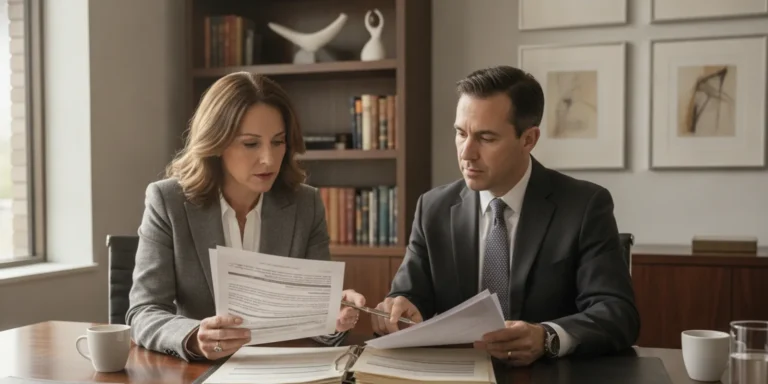
A defamation lawyer Texas readers consult can help assess whether a damaging statement may support a legal claim or whether a demand requires a response. The key questions are what was said, who received it, whether it was false, and what harm followed. Preserve the evidence before responding publicly or deleting records.
Contact Hoch Law Firm to discuss your situation
What does defamation mean under Texas law?
Defamation generally involves a false statement of fact communicated to another person that causes legally recognized harm, subject to defenses and constitutional protections. A statement may be spoken, often called slander, or written or otherwise recorded, often called libel. The label alone does not decide whether a claim is viable. Context, audience, proof, and the speaker’s position can all matter.
Texas law treats opinion and factual assertions differently. Rhetorical insults, obvious exaggeration, and statements that cannot reasonably be understood as asserting a fact may not support a defamation claim. By contrast, a specific factual accusation that can be tested against evidence may require closer review. The full communication matters, not just a clipped phrase or screenshot.
People and businesses can face different practical issues. A company may need to identify lost customers or contracts, while an individual may be concerned about professional standing, privacy, or personal relationships. The legal theories and proof depend on the circumstances. An unfavorable statement, an argument, or a drop in business does not by itself establish liability.
Which elements should a lawyer examine?
A lawyer typically starts by testing the statement and its context against the legal elements. The details may differ based on who is involved, the subject matter, and applicable privileges or constitutional rules. A useful initial review asks several separate questions rather than jumping directly to a conclusion.
- Publication: Was the statement communicated to someone other than the person it concerned? A private exchange can still raise this question, but the recipient and circumstances matter.
- Identification: Would a reasonable reader or listener understand the statement as referring to the claimant? Naming someone is not always necessary if the context identifies them.
- Falsity and fact: Can the assertion be proven true or false, and is it materially inaccurate? A disagreement or harsh opinion is not automatically a false factual claim.
- Fault: What did the speaker know or reasonably believe? The applicable fault standard can depend on the parties and subject matter.
- Harm and causation: What injury followed, and is there evidence connecting it to the statement? Business records or testimony may help show consequences.
These are screening questions, not a substitute for evaluating specific facts and current law. A claim may be weakened by uncertainty about who heard the statement, inability to show falsity, or lack of proof of resulting harm. A demand letter or lawsuit should be reviewed carefully rather than treated as proof that liability exists.
How should you preserve evidence?
Build a reliable record while the communications and surrounding events are still available. Preserve originals where possible and avoid editing files or messages. A lawyer can help determine which material is relevant and how it should be collected.

- Keep the complete post, email, letter, recording, or message, including its date, account information, and surrounding thread.
- Record where and when it appeared, who could access it, and who actually saw or heard it, if known.
- Save correspondence from customers, employers, colleagues, or others who refer to the statement or describe a resulting decision.
- For a business, organize relevant inquiries, canceled work, contract records, sales information, and notes documenting the timeline.
- Identify witnesses with first-hand knowledge. Note what each person observed without coaching them or asking them to adopt a particular account.
- Keep your own responses and any requests to correct or remove the statement. Do not alter or destroy relevant records.
A screenshot may be useful, but it may omit context or fail to preserve information about the source. When a statement is online, capture the full page and its address, and ask counsel how to preserve it appropriately. Do not access accounts or devices without authorization.
Make a simple evidence log
Create a dated list with the source, the exact words, the audience, and the effect you observed. Separate what you personally saw from what someone else reported. For example, if a customer says a post changed a purchasing decision, record the date of the conversation and ask whether the customer can share the message or explain the decision in their own words. Do not embellish the account or assume the post caused every later loss.
Keep a copy of the original materials in a stable location and note where the originals remain. If a page is edited or removed, retain earlier captures along with the date you saved them. Preserve the entire discussion, including replies that clarify or contradict the disputed statement. A well-organized record lets counsel compare the accusation with the surrounding facts instead of relying on memory alone.
How do fact and opinion differ in a real dispute?
The distinction is not as simple as whether a speaker uses phrases such as “I think” or “in my view.” A court may consider the words, the broader discussion, the audience, and whether the statement implies undisclosed facts. A review saying a service was “terrible” is evaluative on its face. A detailed accusation that a named professional falsified a particular record presents a more concrete factual assertion, though its truth and context still require proof.
Likewise, a statement can be technically accurate yet create a misleading impression through omitted context. The relevant inquiry is not whether the speaker was rude or unfair, but what the communication reasonably conveyed and whether evidence supports the legal elements. Save the entire exchange, not just the sentence that seems most damaging.
Consider a workplace example: a colleague says, “I would not work with that team again.” That may communicate dissatisfaction or opinion. A separate message stating that a named employee secretly altered a specific financial report makes a verifiable accusation. The phrasing alone does not settle the legal result; the speaker, audience, supporting facts, and context remain important. This comparison helps organize questions for counsel, not determine the outcome.
What defenses or complications may arise?
Truth or substantial truth can defeat a defamation claim. Other issues may include opinion, privilege, consent, limitations, or whether a statement concerned a matter protected by constitutional rules. Some communications made in particular settings may receive a privilege, whose scope and application depend on the facts. A privilege does not mean every statement in every setting is protected.
Public officials and public figures may face a higher burden concerning fault. Whether someone has that status is a legal question that depends on the person and the controversy. A business or professional dispute does not by itself answer that question.
Texas also has procedures that can affect the timing and handling of certain speech-related lawsuits. A motion or response may have a short deadline and important consequences, so do not assume that a case can wait while the parties negotiate. Prompt legal review can help identify deadlines, applicable procedures, and a response plan. Keep envelopes, service information, and attachments if you receive formal papers.
How can you compare the first steps?
| Situation | Useful first action | Records to gather |
|---|---|---|
| You found an online statement | Preserve the full page and avoid an impulsive public reply | Page address, date, complete post, replies, and audience information |
| A customer or employer reports a statement | Ask for the exact words and when they received them | Messages, witness details, and any decision or loss tied to the report |
| You received a legal demand | Note the response date and arrange prompt counsel review | Demand, attachments, prior communications, and relevant records |
| Your business reports lost work | Document the timeline and avoid overstating causation | Customer communications, contracts, canceled orders, and financial records |
This comparison is an organizing tool, not a legal conclusion. A lawyer can help determine whether a response, correction request, negotiation, or litigation step makes sense. If the dispute also involves a commercial agreement, review the distinct issues addressed in Hoch Law Firm’s business litigation practice and breach of contract resource.
How do you evaluate harm and causation?
Showing that a statement was upsetting is different from establishing legally recognized harm. Identify the particular consequence and the evidence supporting it. An individual may document a lost opportunity, workplace action, or other concrete effect. A business may compare customer communications, canceled orders, contract activity, and financial records over a defined period. The point is to connect a specific consequence to the statement rather than simply report that business was worse afterward.
For example, suppose a business sees fewer inquiries after an online accusation. That timing may be worth documenting, but it does not establish why inquiries declined. Other factors could have contributed. More useful evidence might include a customer’s dated message referring to the accusation before canceling a contract, paired with the contract and related communications. Even then, counsel must evaluate what the records prove and whether other explanations exist.
Keep the underlying records in their ordinary form. Do not create new numbers or estimates that appear to be historical records. If you prepare a summary for a lawyer, label it as a summary and retain the source documents used to make it. This distinction helps preserve clarity between original evidence and later analysis.
What should you avoid doing?
- Do not publish a retaliatory accusation or repeat a disputed statement more widely than necessary.
- Do not delete relevant messages, posts, drafts, or business records once a dispute is foreseeable.
- Do not assume that a correction or apology automatically resolves every legal issue.
- Do not contact witnesses in a way that pressures them or suggests what they should say.
- Do not ignore a demand, court paper, or stated response date. Have the document reviewed promptly.
- Do not make threats or promise a particular legal outcome in public correspondence.
A fast public response can enlarge the audience for a statement, introduce new factual disputes, or make later communications harder to interpret. Before responding, consider preserving the material, writing down what you want to accomplish, and getting advice about whether to request a correction or take another step. If the dispute concerns ownership or a business relationship, related questions may call for separate analysis; see Hoch’s resources on partnership disputes and contract issues.
How can you prepare for a consultation?
Write a short chronology: when the statement was made, when you learned of it, who received it, and what happened afterward. Bring the original communications and identify people who can verify key events. If you claim financial loss, gather records that show the change and its timing. If you received a demand, include the delivery information and every attachment.
Organize the material into a few groups: the complete statement and context; proof of its audience; evidence that bears on whether it is accurate; records of consequences; and any communications about correction or removal. A concise index is often more useful than an unfiltered folder of hundreds of screenshots. Mark any uncertain dates or missing items rather than filling gaps with guesses.
Be ready to discuss facts that may cut against your position as well as those that support it. A candid review can identify missing proof, possible defenses, and realistic next steps. A lawyer may also ask whether the statement is still being circulated, whether anyone requested a correction, and whether you have already responded. Hoch Law Firm’s attorney background and general information about timing to sue are additional starting points, not advice on a particular deadline.
For general legal information, the State Bar of Texas offers public-facing resources. General information cannot determine whether a specific statement is actionable or calculate a deadline in your case.
Frequently Asked Questions
Is a negative review defamation?
Not automatically. Negative opinions and criticism may be protected, while a provably false factual assertion can raise different issues. The wording, context, truth, audience, and evidence all matter.
Can a business bring a defamation claim?
A business may have a claim in appropriate circumstances, but it must establish the required legal elements and support any claimed harm. Records linking a statement to lost business can be important; a decline in revenue alone may not explain its cause.
Should I respond publicly to an accusation?
Pause before responding. A public reply can spread the statement further or create new issues. Preserve the original material and get advice on whether a private correction request or another response is appropriate.
How long do I have to act?
Deadlines depend on the claim and circumstances, and speech-related procedures may require quick action. Do not rely on a general online estimate; have a Texas attorney review the dates and documents promptly.
What should I bring to a defamation lawyer Texas consultation?
Bring the complete statement, its source and date, related messages, a list of people who saw or heard it, and records of any resulting harm. Include any demand or court papers so counsel can assess deadlines.
Contact Hoch Law Firm to request a consultation
Every defamation dispute turns on its own facts and applicable law. Preserve the record, track any deadlines, and seek legal advice before deciding how to respond.