
What should a Texas business do after a property policy cancellation notice? Start by preserving the complete notice and policy records, then identify the dates and questions that need answers. Do not assume the notice decides an open claim or that it means the same thing as a nonrenewal. The document and policy language matter.
Discuss your property insurance questions
First, identify what kind of notice arrived
People often use “cancellation” to describe any message that a policy may end. The notice may instead concern a midterm cancellation, a decision not to renew at the end of a term, a request to correct a condition, or another policy issue. Those are not interchangeable. The notice’s wording, dates, and the policy provisions should be reviewed together.
Record the date the business received the message and the date printed on it. Note the stated effective date, the policy number, the property address, and the reason given. Preserve the envelope, email headers, attachments, and any delivery tracking. Do not rely on a cropped screenshot or a summary from a phone call when the original record is available.
A notice does not, by itself, answer every question about a separate claim. If the business has an unresolved storm, fire, or other property loss, keep the claim file and policy notice in distinct but connected folders. Ask for written clarification about how the insurer views the policy status and the existing claim rather than treating an assumption as a decision.
Build a timeline before deciding what the notice means
A short, factual timeline helps the business and any reviewer understand what happened. Include the policy start and end dates shown in the documents, the date the notice was sent and received, the date of any reported loss, claim communications, inspections, and repair activity. Separate confirmed dates from estimates or recollections.
- Notice: Save the complete notice, its envelope or electronic delivery record, and any attachments.
- Policy: Keep the declarations, forms, endorsements, renewal materials, and prior notices together.
- Claim: Preserve the claim number, submission, inspection records, estimates, coverage letters, and all correspondence.
- Property: Retain dated photographs or video, repair documents, and records of steps taken to protect the building.
- Communication: Log calls with the date, participants, subject, and any promised follow-up. Confirm important points in writing.
Keep originals unchanged. If employees need to annotate a copy, retain the original separately. Use a secure shared location and identify who is responsible for gathering records. This makes it less likely that a key attachment or a newer policy version will be overlooked.
Read the stated reason and ask focused questions
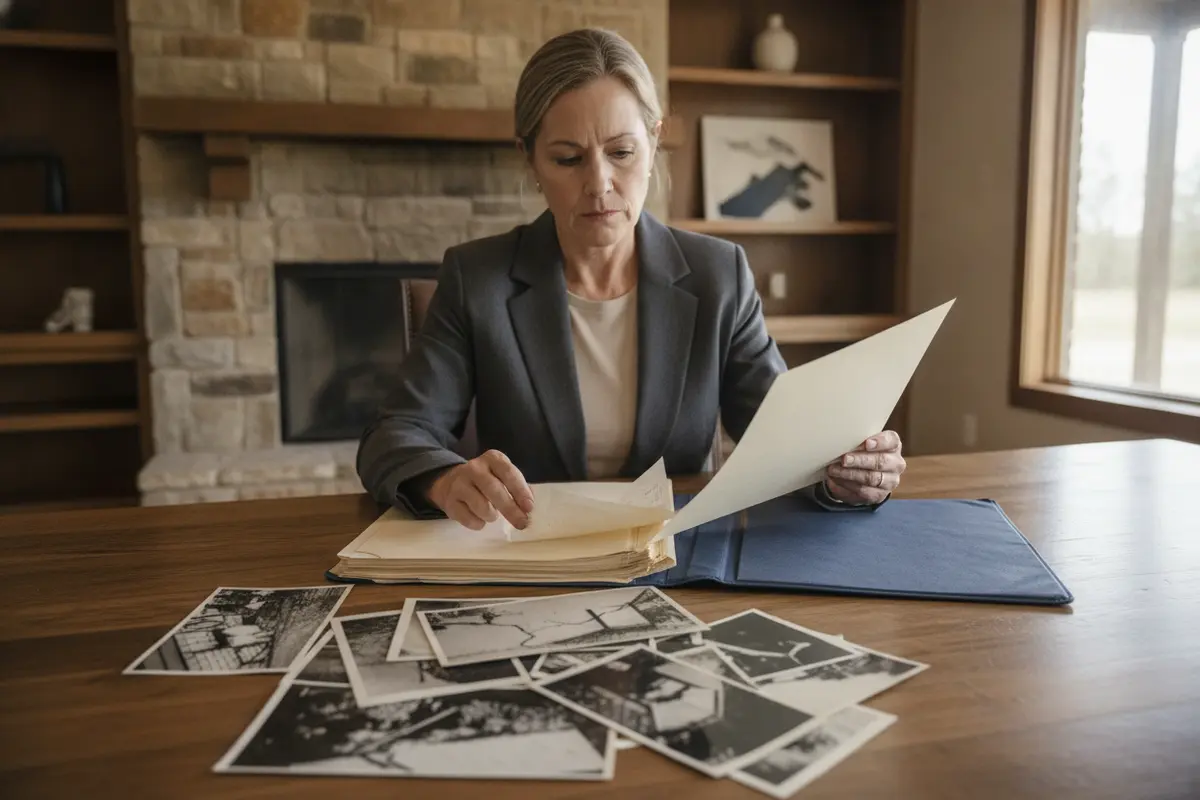
Read the notice from beginning to end, including any referenced forms or enclosure. Mark the stated reason and the date the insurer says the change takes effect. Then compare those details with the policy documents currently in the business’s possession. Avoid concluding that a notice is valid or invalid based on a general online description; the applicable language and facts need review.
Useful questions to put to the insurer in writing may include:
- What policy provision and factual reason does the notice rely on?
- Which policy term and property location does it concern?
- What date does the insurer identify as the effective date, and what does it say about delivery?
- Is the notice a cancellation during the term, a nonrenewal, or a request for action before a decision?
- How does the insurer say the notice relates to a claim already reported under the policy?
- Are there documents or property conditions the insurer says it needs addressed?
Keep questions neutral and specific. Ask for the answer and any cited policy language in writing. If the insurer gives an explanation by phone, make a dated note and send a concise follow-up confirming your understanding. Do not alter the property or discard damaged materials solely because a notice arrived; coordinate necessary protection and repairs with appropriate professionals and preserve records.
What Texas law says about certain cancellation notices
Texas Insurance Code Chapter 551 includes written-notice provisions for certain insurance cancellations. The official statute text states that written notice of cancellation for liability insurance or commercial property insurance must be given not later than the tenth day before the cancellation date. The provision’s application depends on the kind of policy and the circumstances; it should not be treated as a universal description of every cancellation or nonrenewal situation.
Review the current statute and the actual policy rather than assuming that one sentence resolves the notice question. The code excerpt does not establish every fact about a particular policy, the method of delivery, or the effect on a pending loss. A lawyer can compare the notice, policy, and claim record to identify issues that merit closer review.
Read Texas Insurance Code Chapter 551.
Keep an open property claim organized separately
A cancellation or nonrenewal communication and a claim decision are different records. Keep copies of the insurer’s claim acknowledgment, requests for information, inspection findings, estimates, reservation-of-rights correspondence, and any decision about coverage. If the business has not received an answer on a claim question, note what was asked and when. Do not assume that a change in future policy status automatically resolves a loss that was already reported.
For the claim itself, organize evidence by issue and date. Photograph affected areas from several angles, retain available original images, and note when and where each was taken. Keep invoices and work orders for emergency protection or repairs. Preserve relevant witness names and statements, along with expert reports if any exist. Avoid mixing unrelated maintenance records with claim-specific material without labeling them.
Hoch Law Firm represents commercial property owners in disputes involving coverage, storm damage, and insurer conduct. Its property-claim process includes documenting damage, reviewing the policy, assessing coverage, negotiating with the insurer, and filing suit if necessary. A property insurance claim process overview may help explain why a well-organized record matters. For a broader commercial property insurance discussion, review the firm’s practice information.
Compare the notice issue with the unresolved claim
| Record or question | What to check | Practical next step |
|---|---|---|
| Cancellation or nonrenewal notice. | Reason, policy reference, date sent, receipt date, and stated effective date. | Keep the full notice and request written clarification of the insurer’s position. |
| Policy documents. | Declarations, applicable forms, endorsements, term dates, and later changes. | Collect the versions that applied to the relevant loss and notice. |
| Open property claim. | Reported loss date, claim number, correspondence, inspection, and status. | Maintain a separate claim chronology and identify unanswered questions. |
| Property evidence. | Photographs, video, repair records, invoices, and witness information. | Preserve originals and label records by date, location, and subject. |
| Coverage or notice dispute. | Whether the written explanation matches the policy and the documents. | Request review of the notice and claim file before drawing conclusions. |
Plan for the next policy term without prejudging the dispute
A business should address continuity of protection as a practical matter while it seeks answers about the notice. Review the dates on the notice and policy, and contact an appropriately licensed insurance professional about available options and any underwriting information requested. This is not a substitute for analyzing whether the existing notice complies with the policy or applicable law.
Keep communications about a possible replacement policy distinct from the existing claim dispute. A new application or policy may involve separate terms, conditions, and representations. Provide accurate information and retain copies of what was submitted. Do not assume a later policy will cover earlier damage or replace rights under the policy in force when a loss occurred.
If the property has active damage, document reasonable protective work and keep receipts, photographs, and contractor communications. Make a record of any inspection or access request. For information about disputes involving storm-related property losses, see the firm’s storm damage claim guidance and its discussion of insurance bad-faith disputes. These resources do not determine the facts or terms of a particular policy.
When legal review may help
Consider asking a lawyer to review the notice and related claim file when the reason is unclear, the stated dates raise questions, the insurer’s explanation changes, or a pending claim has not received a clear response. Legal review can also help distinguish a policy-status issue from a disagreement about the cause, scope, or value of property damage.
Bring the full policy, the notice and delivery record, claim correspondence, photographs or video, repair records, and a concise timeline. Identify the business decision that is time-sensitive, such as responding to the insurer or organizing a claim submission. Hoch Law Firm exclusively represents policyholders in insurance disputes, not insurance companies. The firm offers an initial consultation to assess the matter, explain options, discuss fees, and let a prospective client decide without obligation. Property claims are primarily handled on a contingent-fee basis, but the applicable arrangement should be discussed for the particular matter.
Learn more about the firm’s property policy review and representation of property owners. The practice serves clients across Texas, including commercial property owners with disputed claims.
Request an initial consultation
Coordinate the people handling the property and claim
Assign one person to maintain the central file and track follow-up. For a business with multiple locations or departments, identify which records belong to the affected address and which relate to other sites. This reduces confusion when a policy schedule lists more than one property or when several employees have communicated with the insurer.
Tell relevant employees how to preserve messages, photographs, invoices, and inspection notes. Ask them not to delete original emails or edit original image files. If a contractor or consultant has information about the loss, retain the engagement documents and request copies of reports and photographs. Keep a simple index so a reviewer can locate records without searching every folder.
When you send materials to the insurer, preserve a copy of exactly what was sent and the date it was transmitted. Record any requested response date, but do not infer a legal deadline from a routine email. If a deadline appears in a notice, policy, or formal communication, obtain advice promptly about what it requires and how to respond.
Use the file to frame a focused review
A useful review begins with a narrow set of questions: Which policy version applies? What event or policy term does the notice concern? What explanation did the insurer provide? What remains unresolved in the reported claim? These questions keep the discussion grounded in the record rather than speculation about motive or outcome.
Keep separate copies of any updated records and note when they were added. If a new letter arrives, append it to the timeline and check whether it changes an earlier explanation or date. Avoid sending argumentative summaries that omit the underlying documents. A clear chronology supported by source records is easier to evaluate and can reveal what information is still missing.
Frequently Asked Questions
Does a cancellation notice automatically end an open property claim?
Do not assume that it does. The notice concerns policy status, while an existing claim has its own facts and documents. Review the policy, loss date, notice, and claim correspondence together, and request the insurer’s position in writing.
Is cancellation the same as nonrenewal?
No. A cancellation may concern ending a policy before its scheduled term expires, while nonrenewal generally concerns whether a new term will be offered. The actual notice and policy language control the issue being raised.
What records should a business bring for review?
Bring the complete policy and endorsements, notice and delivery information, claim file, photographs or video, repair records, relevant correspondence, and a dated timeline. Include both the records that support the business’s account and any insurer explanation or request.
What does Texas Insurance Code Chapter 551 say about notice?
Chapter 551 contains written-notice provisions for certain cancellations, including the stated ten-day rule for liability or commercial property insurance. Whether a provision applies to a particular policy and situation requires review of the statute, policy, and facts.
Should a business wait for the dispute to end before looking at future coverage?
It should not assume the dispute will answer future coverage questions. Track the notice dates and explore continuity options with an appropriately licensed insurance professional while preserving the separate claim file and seeking advice about the notice.
A complete notice, policy, and claim chronology gives the business a sound basis to ask what the insurer’s decision means and what steps merit review.