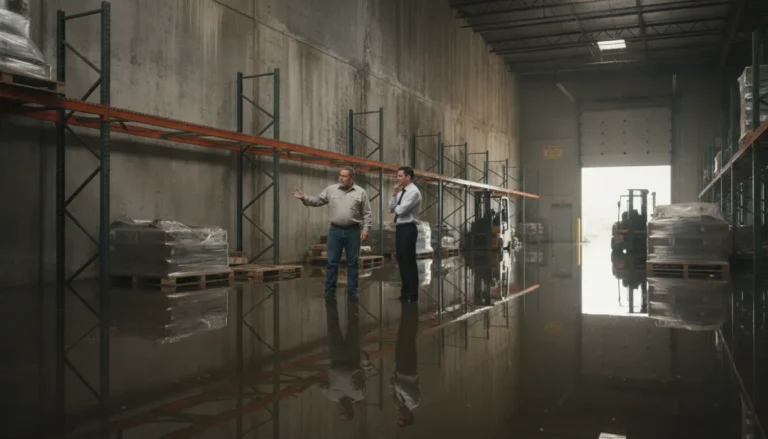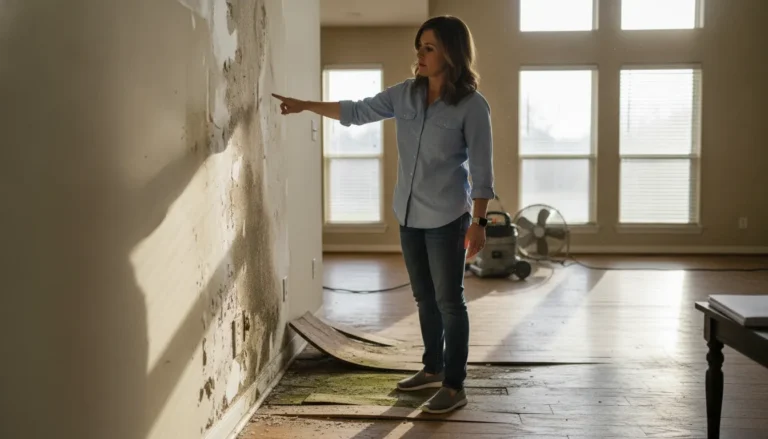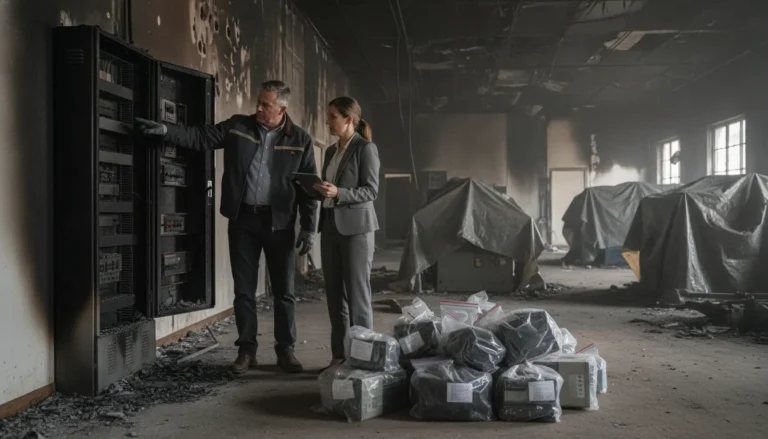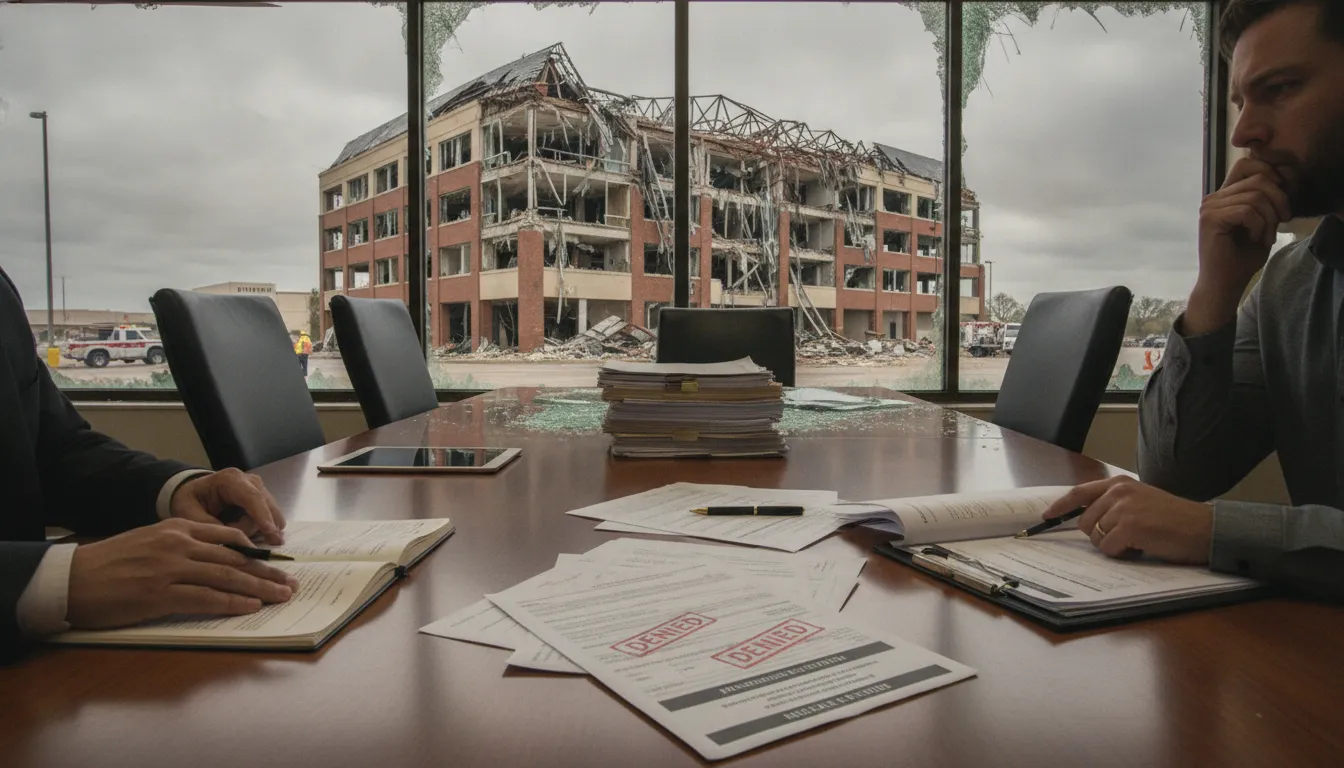
A single mistake in your commercial insurance policy can cost your business hundreds of thousands after a Texas storm. Many owners find out too late that their coverage falls short of the actual cost to rebuild.
Contact Hoch Law Firm today for a free case review. An experienced Texas property insurance attorney can review your policy before you file a claim. Find out whether your coverage uses actual cash value or replacement cost.
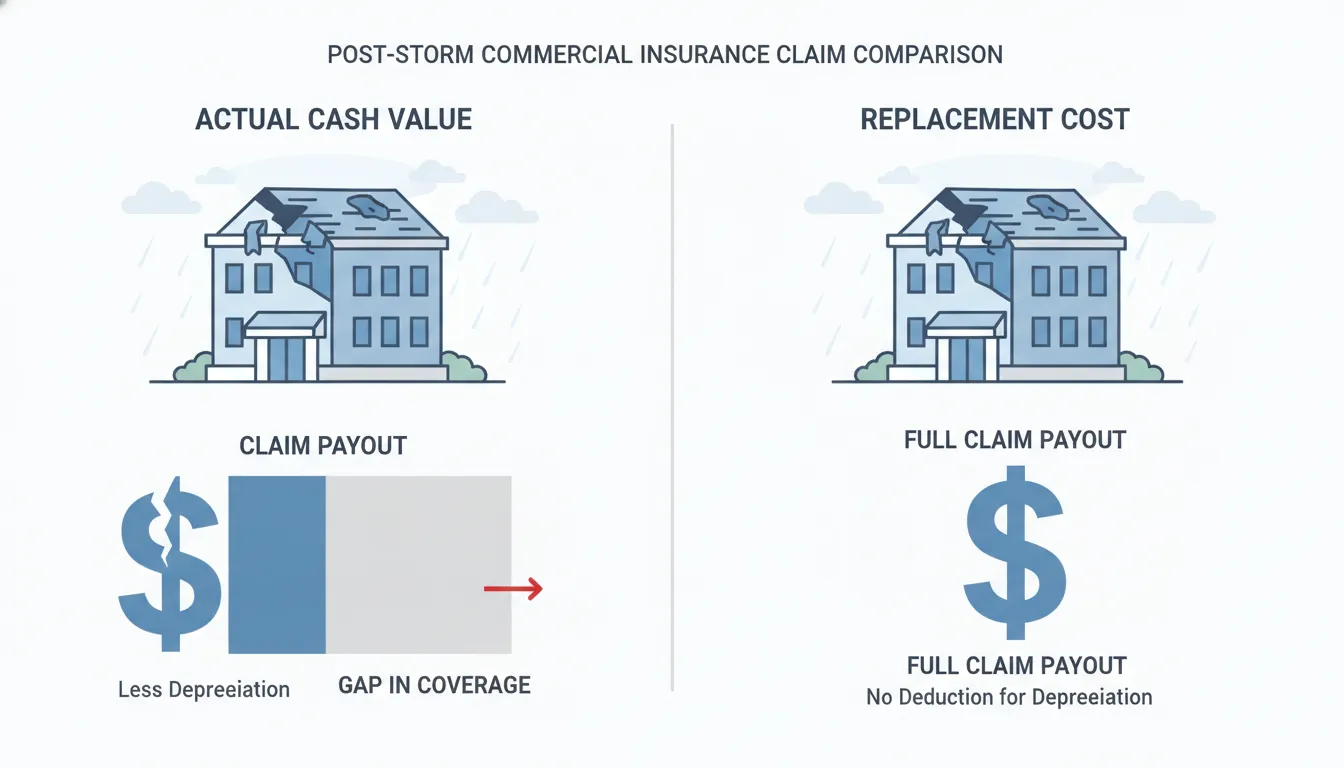
Choosing between actual cash value vs replacement cost commercial insurance determines how your carrier sets the final payout for a property loss. Actual Cash Value (ACV) covers the cost to repair or replace your property minus depreciation, which accounts for the age and state of the building. In contrast, Replacement Cost Value (RCV) pays the full amount needed to rebuild with materials of similar quality without taking out money for wear and tear. According to the National Association of Insurance Commissioners, ACV coverage often fails to provide enough funds to fully fix a business after a disaster. Choosing RCV ensures your policy covers current market prices for labor and materials, saving your company from paying large out of pocket costs for needed repairs.
Knowing these terms is the first step toward guarding your business against a total loss. Most disputes begin when owners find their policy uses a method that cuts the value of their property based on age. The path to clarity starts with a deep dive into What Is Actual Cash Value (ACV) in Commercial Property Insurance? Here is how.
Actual Cash Value Vs Replacement Cost Commercial: What Is Actual Cash Value (ACV) in Commercial Property Insurance?
In the world of commercial property insurance claims, Actual Cash Value (ACV) is a common way to measure loss. Most insurers define ACV as the replacement cost of an item minus its total depreciation. This means the policy only covers what the property is worth at the time of the loss, not what it costs to buy it new today.
How adjusters set ACV amounts
Insurance companies find the ACV by taking the full cost to replace an item and subtracting its drop in value due to age and wear. Most claims adjusters use software to get these numbers. They enter the type of material and the age of the item to get a precise amount for depreciation. According to the National Association of Insurance Commissioners (NAIC), this payout considers the condition and useful life of your business property.
The $10,000 computer example
The gap between ACV and the cost to buy new items can be large. Imagine your business owns computers that you bought for $10,000. If they are four years old and meant to last ten years, an insurer may say they have lost $4,000 in value. If the price to buy new ones today is $6,000, your ACV payout would be only $2,000. This example shows how age and useful life can quickly lower a claim check.
Lower premiums versus higher out-of-pocket costs
Many business owners choose ACV policies because they have lower monthly costs. These plans are often the best way to get basic coverage for a commercial building or gear. However, the NAIC warns that ACV coverage often fails to pay enough to fully replace what was lost. While you save money on your monthly bill, you face much higher out-of-pocket costs when you need to rebuild after a fire or storm.
What Is Replacement Cost Value (RCV)?
Replacement cost value (RCV) is the amount your insurance company pays to fix or replace property with new items of like kind and quality. This type of coverage is often the best choice for a business owner because it does not take away money for wear and tear. When you file commercial property insurance claims, an RCV policy helps you rebuild your business to the state it was in before the loss.
How RCV Payouts Work
The main goal of RCV is to give you enough money to buy a new version of what was lost. Most other methods subtract money based on how old an item is. RCV does not do this. It looks at what it costs to buy a new item or build a new structure today. This helps business owners avoid big gaps in their budget after a fire or storm.
Under an RCV policy, you can get the full cost of the repair or replacement. You do not have to worry about the age of your roof or your tools. This leads to a higher payout for your claim. Because the payout is larger, these policies give you more protection. It ensures you have the funds needed to get back to work quickly.
Exclusions and Limits
While RCV is a strong form of safety, it has some limits. It only covers the cost to fix or replace the real structure and items. It does not pay for the value of the land itself. For most commercial properties, the land is a big part of the total worth. But insurance only looks at the buildings and the items inside them.
You should also know that standard policies do not cover building code upgrades. If new laws require you to use more costly items, the firm may not pay the extra cost. You might need another rider for that type of coverage. Texas law requires every policy to state clearly if it uses RCV or actual cash value. You must read your papers to know what you have.
Premium Costs and Safety
An RCV policy gives you the most protection, but it comes at a price. Your monthly or yearly premiums will be higher than they would be with other plans. This is because the insurance firm takes on more risk. They know they will have to pay for new parts even if your old ones were near the end of their life.
For most Texas business owners, the extra cost is worth it. Dealing with a large loss is hard enough without a big shortfall in your payout. Choosing RCV is a way to handle your risk and protect your future. It keeps you from having to pay out of your own pocket to fix things that your insurance should cover.
ACV vs. RCV: Key Differences at a Glance
Choosing the right coverage for your business requires a clear look at how payouts work. Actual cash value and replacement cost provide very different levels of protection during a claim. For most Texas business owners, the choice comes down to how much risk you can afford to carry.
Commercial valuation comparison
The following table breaks down the main differences between these two common valuation methods. While actual cash value often has lower premiums, it can lead to large out-of-pocket costs when you need to repair your building.
| Feature | Actual Cash Value (ACV) | Replacement Cost Value (RCV) |
|---|---|---|
| Depreciation handled | Deducted from the payout | Not deducted |
| Payout calculation | Replacement cost minus depreciation | Full cost to repair or replace |
| Premium cost | Generally lower | Generally higher |
| Best for | Older assets with lower value | Newer or high-value properties |
| Out-of-pocket at claim | Higher due to value loss | Lower (mostly just the deductible) |
| Recoverable depreciation | Not available | Available after repairs |
How insurers calculate your payout
In a commercial claim, actual cash value reflects what your property is worth right now. This means your insurer looks at the age and wear of your property before they pay. If your roof is ten years old, they will subtract its used value from your check. This often leaves a large gap that you must pay to finish repairs.
Replacement cost value does not subtract for age. It pays the full cost to get your building back to its original state with new materials. If you have an RCV policy, you can often claim recoverable depreciation. This is the difference between the initial check and the final cost of work. You get this money back after you show proof that the repairs are done.
The impact on Texas property owners
Texas law requires your policy to state clearly which type of coverage you have. This is vital because Texas often faces severe storms that cause heavy damage to commercial roofs and structures. If you have a $300,000 loss on an older roof, an ACV policy might only pay $240,000. You would be short by $60,000 plus your deductible. A commercial property insurance claim with RCV coverage would cover that entire gap.
How Depreciation Affects Your Claim Payout
Depreciation is the drop in value of an asset over time. In a commercial insurance claim, it acts as a measure of wear and tear. When you compare actual cash value vs replacement cost commercial policies, depreciation is the key factor. It sets the final check you get from the insurance company after a fire, storm, or other loss.
How Insurers Find Depreciation
Insurance adjusters use software to find the value of a building at the time of a loss. They look at three main facts: the age of the item, its state, and its total useful life. For example, a new AC unit for a retail store will have very little depreciation. But an old unit that has not been serviced will have a much lower value in the eyes of the insurer.
Texas law helps keep this process clear for business owners. State rules require that a policy must clearly state the type of coverage you have. This means you should know early on if your payout will be based on the item’s current value or the cost to buy a new one. If the adjuster uses a high depreciation rate, it can lead to a much smaller payout than you expected.
Real-World Payout Examples
The impact of depreciation is easiest to see with real numbers. Many commercial claims involve office gear or roof parts. For instance, think about a set of office computers. You might have bought them for $10,000 years ago. If they are four years old and have a 10-year life, the insurer might find the replacement cost value is $6,000 today. After they take out $4,000 for depreciation, your check would only be $2,000.
Large losses can create even bigger gaps for a business. Consider a roof that would cost $300,000 to replace after a hail storm. If the insurer finds the roof is 20% depreciated, an actual cash value policy will only pay $240,000. This leaves the building owner to pay the $60,000 difference on their own. For most small firms, this is a big cost that can stop work for a long time.
Recoverable vs Non-Recoverable Depreciation
If you have a replacement cost policy, you might get some of that money back. This is known as recoverable depreciation. The insurer often pays the lower value first to let you start repairs. Once you finish the work and send them the final bills, they pay the rest. This ensures you can fully fix your business without losing money to age and wear.
On the other hand, many policies use non-recoverable depreciation. In these cases, the money lost to age is gone for good. This can be a major problem if the insurer and the owner do not agree on the value of the damage. If you find yourself in a fight over these numbers, you may need to use the insurance appraisal clause in your policy. This process can help you get a fair price through a third-party review.
Why Texas Commercial Property Owners Need to Understand This Now
The choice between actual cash value and replacement cost has never been more vital for Texas business owners. Recent shifts in the market have changed the math for commercial claims. If you have not reviewed your policy in two years, your coverage may not meet your needs. You could face a large bill if a major loss occurs today.
The Impact of High Inflation
Rising costs have hit the Texas building market hard. The U.S. has seen inflation rates as high as 9% in recent months. This surge devalues older policies that rely on old price data. A policy limit that seemed enough two years ago might now cover only a part of your real repair costs.
For those with actual cash value policies, the risk is even higher. High inflation drives up the cost of new parts while your building ages. This widens the gap between what a new roof costs and what the insurer pays after taking out depreciation. Many owners find their coverage is now too low to support a full recovery.
Supply Chain and Labor Issues
It is not just the price of wood and steel that has gone up. A mix of labor shortages and supply chain crises has pushed repair costs to new highs in North Texas. These issues lead to longer wait times and higher fees for trade work. When repair costs spike, the gap between actual cash value vs replacement cost commercial policies becomes a key factor in your business survival.
Under Texas insurance rules, your policy must state if it uses ACV or RCV for claims. Owners must check these terms against current market rates. If you have an ACV policy, you are paying for the part of the loss that the insurer calls depreciation. In today’s market, that part can be much larger than you think.
Closing the Insurance Gap
Learning about the Texas property insurance claims process is the first step to better safety. Many older buildings in Dallas-Fort Worth are insured for values set before recent price spikes. This creates a risk that only shows up after a storm or fire. A fast check of your policy limits can help ensure you have the funds needed to rebuild.
Business owners should look at how their insurer treats wear and tear. If your building has a low ACV but a high RCV, you are at risk. Moving to a full replacement cost policy can provide better safety. Making this change now can save your business from a total loss later.
What to Do If Your Insurer Underpays Your Commercial Property Claim
When your business suffers a loss, a low check from your insurance company can feel like a big blow. Many Texas business owners find that their claim is short because of how the company values the damage. These disputes often center on the gap between actual cash value vs replacement cost commercial policy terms. If you feel your claim payout is too low, you have ways to fight for the full amount you need to rebuild. You do not have to accept the first offer if it does not cover your real costs.
Check Your Policy for Price Rules
You must know exactly what your policy says about how it pays for losses. Texas insurance laws require that policies clearly state if they pay on an actual cash value (ACV) or replacement cost value (RCV) basis. This detail is usually on your first policy page, known as the declarations page. Knowing your Texas property insurance claims process starts with reading these terms. You need to see if the insurer used the right math for your specific claim. If the policy says RCV but they paid ACV, you may be owed much more money.
- Confirm your coverage type. Look at your policy to see if you have ACV or RCV coverage. An ACV policy takes away money for age and wear. An RCV policy pays the full price to buy new items or fix the site with like parts.
- Ask for a markdown list. If the insurer pays less than you expect, ask them for a full list of how they took off money for wear. They must show how they found the age and state of each item they marked down.
- Get your own repair quotes. Do not rely only on what the insurer says. Get at least two quotes from local Texas contractors with skill in commercial work. This shows the true cost to fix the damage in your city.
- Use the appraisal clause. If you and the insurer cannot agree on the price, most policies have an insurance appraisal clause. This lets a neutral person decide the fair price for the repairs.
- Speak with a lawyer. If the company refuses to pay the full price, you may need to file a legal claim. A lawyer can help you get the money you are owed for your business loss.
Gather Proof of the Shortfall
An ACV check often falls short of what you need to fix a commercial site. The National Association of Insurance Commissioners notes that ACV coverage may not pay enough to fully replace your property. This is why having your own proof is so vital. Keep all receipts and take photos of all damage. You should also track all letters and emails from your agent. If you have an RCV policy, you can often get back the held-back money once the repair work is done. Make sure you know the deadlines to ask for this extra pay.
Know Your Legal Rights in Texas
In Texas, insurance companies have a duty to treat you fairly and act in good faith. If they use the wrong math to save money, they might be crossing the line into insurance bad faith claims. You do not have to accept a low offer just because the company says it is final. Legal experts can help you find if the insurer is lowballing your business or ignoring the terms of your contract. Taking action early can help you get your business back on its feet sooner.
Frequently Asked Questions
Can I switch from actual cash value to replacement cost coverage?
Yes, most commercial insurance firms allow you to switch to replacement cost coverage when you renew your policy. This change will likely raise your monthly costs because the insurer must pay more if a loss occurs. However, it gives much better protection for your business. According to CBIZ, replacement cost policies are the best way to make sure you can fully fix or rebuild your property after a disaster.
Does Texas law require businesses to have replacement cost coverage?
No, Texas law does not require commercial property owners to carry replacement cost coverage. Businesses are free to choose between actual cash value and replacement cost based on their budget. However, state rules do require insurance firms to clearly state which type of coverage you have in your policy papers. The Texas Department of Insurance says that these notes must be easy to see so owners know how much they will get during a claim.
Does commercial replacement cost coverage pay for building code upgrades?
Standard replacement cost policies usually do not pay for the extra costs of meeting new building codes or city laws. If your older building is damaged, you may need to install expensive items like new fire sprinklers to meet current laws. You often need a special add-on called Law or Ordinance coverage to pay for these costs. As noted by Landesblosch, these upgrades can be a large out-of-pocket cost without the right help.
How do I know if my policy is actual cash value or replacement cost?
You can find this info by looking at the declarations page of your commercial property insurance policy. This page lists your coverage limits and the way the insurer values your buildings and tools. In Texas, insurance firms must give clear notice about whether they use actual cash value or replacement cost. If you are not sure, you should ask your agent for a written note. Knowing these terms early can help you avoid a major financial gap after a loss.
Ready to fight for your commercial claim value?
Failing to challenge a low offer can leave you with a massive bill. Insurers count on your delay to avoid paying for depreciation. Starting your legal review today protects your business rights. By acting now, you allow an expert to find errors and pursue the full funds you need. Do not wait until the clock runs out on your claim. You deserve an expert who fights for your best interests and knows the Texas law.
Ready to schedule a free consultation with a Texas property insurance attorney? Contact the team at Hoch Law Firm to request your free case review today and start your path to financial recovery after a commercial loss.