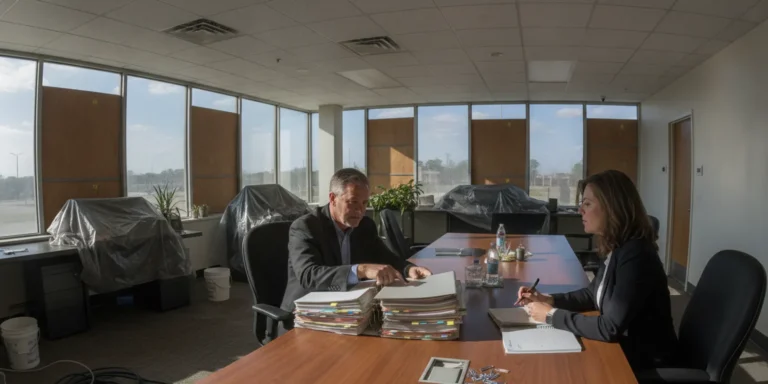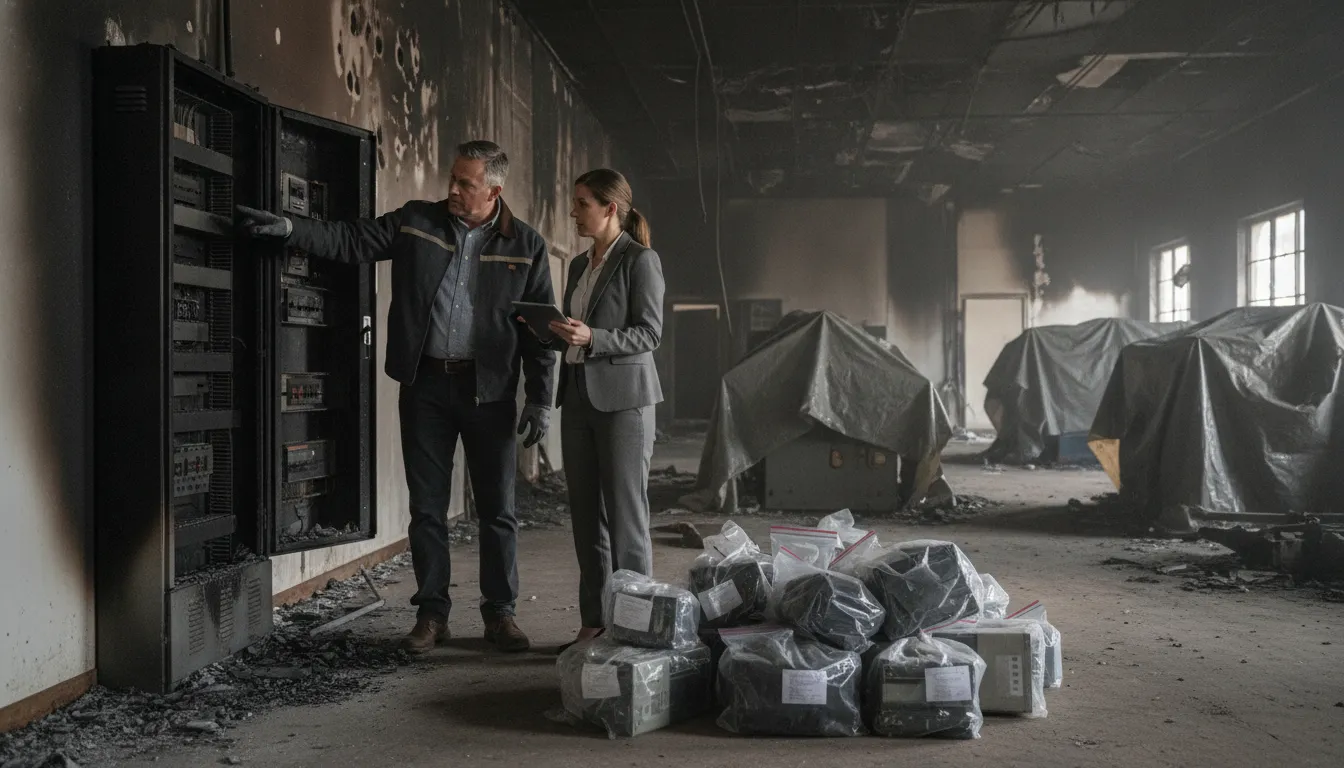
After a commercial fire, the claim often turns on more than the visible damage. Building repairs, smoke and water damage, damaged contents, lost income, and extra expenses may each require a different record and may be treated differently under the policy.
Commercial fire damage insurance claim proof for Texas property owners is organized evidence connecting the policy to the fire. It addresses the cause and scope of damage, repair or replacement value, and the financial effect on the business. Useful proof may include photographs, inventories, inspection reports, contractor estimates, maintenance records, insurer communications, and business records. No single checklist applies to every policy.
Call Hoch Law Firm at 817-731-9703
Coverage depends on the policy language, exclusions, valuation method, and the facts of the loss. A well-supported claim record can also clarify whether a disagreement concerns coverage, the cause of damage, the repair scope, valuation, or the business interruption component. The first step is understanding what the evidence should establish and how the pieces fit together.
Commercial Fire Damage Insurance Claim Proof for Texas Property Owners
For a Texas commercial owner, this proof is not one invoice or photograph. It is a connected record. It should show what coverage may apply, what caused the loss, what property was damaged, what repairs or replacement may cost, and how the fire affected operations. The strength of the claim often depends on whether those parts fit together and can be compared with the policy language.
Start with the coverage question. Texas Department of Insurance guidance explains that commercial property insurance may pay to repair or replace insured business property damaged by a covered fire. It may also cover some lost income when operations are disrupted, depending on the policy. Basic-form policies usually include fire, smoke, and sprinkler leakage, but the policy controls the actual scope of coverage. A special-form policy may cover causes of loss except those specifically excluded. Review the policy, endorsements, limits, and exclusions rather than assuming that every fire-related loss is covered. TDI commercial property coverage guidance provides general background.
Next, connect the event to the damage. An insurer may inspect the property, review photographs, and request more information before deciding coverage. A useful record can include the date and circumstances of the fire. Fire-department or inspection materials, photographs or video, an itemized inventory, repair estimates, and communications with the insurer. TDI recommends making a list of damaged property and photographing or recording the damage when possible. These records should distinguish direct fire damage from smoke, water, sprinkler, heat, or later deterioration, when those distinctions matter to the coverage analysis.
Value requires its own support. Commercial policies may use replacement cost, actual cash value, or a combination of both. Replacement cost generally addresses current repair or replacement prices, while actual cash value subtracts depreciation. Estimates should therefore identify the work, materials, quantities, and valuation basis instead of presenting only a single unexplained total. A contractor estimate may help explain why an adjuster’s estimate does not reflect the observed scope. TDI advises policyholders who disagree with an adjuster’s estimate to explain the disagreement and provide supporting documents.
Finally, preserve the business-impact record separately. Operating interruptions, continuing expenses, extra costs, lost rents, or other financial effects may involve different coverage provisions and proof. The policy determines whether those losses are included. A complete claim file lets the insurer, owner, and any reviewing professional test coverage, cause, scope, value, and business impact as related but distinct questions.
How to Document the Building, Contents, and Cause of the Fire
A strong commercial fire claim record connects the condition of the property to the claimed loss. It should help the insurer, contractor, engineer, or later reviewer understand what was damaged. How the damage occurred, what repairs are proposed, and why the claimed amount is reasonable. TDI recommends making a list of damaged property and photographing or recording the damage when possible. The same principle applies to a commercial loss, with additional attention to building systems, inventory, equipment, and business records.
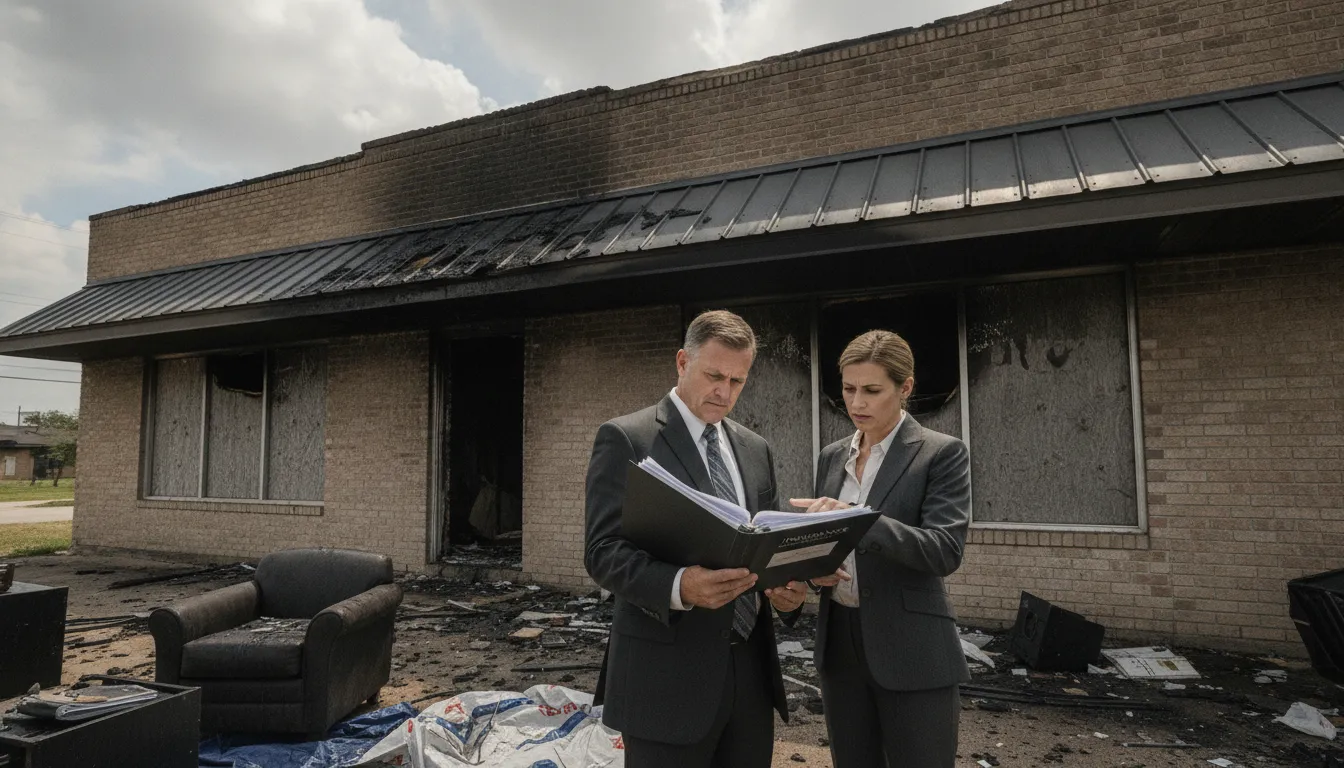
- Preserve condition evidence. Organize photographs and video by location, date, and subject. Capture the building exterior, each affected room, structural components, smoke and water damage, contents, equipment, fixtures, and areas that appear unaffected but may require inspection. Do not rely on a few wide shots. Close views and wider context can help show both the condition and the extent of the affected area.
- Build a detailed inventory. List damaged or destroyed furniture, machinery, technology, inventory, improvements, fixtures, and other business property. Include identifying information, quantity, approximate age, condition before the fire, and available purchase or ownership records. Coverage and valuation depend on the policy, so do not assume that every item is covered or that every valuation method is the same.
- Collect inspection reports and estimates. Keep reports from contractors, restoration professionals, engineers, and other inspectors. Request written repair estimates that identify the work, materials, quantities, and assumptions. If an adjuster’s estimate leaves out work or understates the scope, TDI advises explaining the disagreement and sending supporting documents, such as a contractor estimate. A clear side-by-side explanation is more useful than an unsupported assertion that the estimate is too low.
- Document ownership, maintenance, and pre-loss condition. Gather leases, purchase records, maintenance logs, service invoices, prior inspection reports, warranties, photographs, and property-management records. These materials may help address questions about age, condition, ownership, prior defects, and whether particular damage is related to the fire. Keep original files and note who created each record.
- Create a cause-and-scope timeline. Record when the fire was discovered, when emergency responders or investigators attended, when the insurer was notified, when inspections occurred, and when new damage was identified. Preserve fire-department or investigative reports, weather information when relevant, and communications about the suspected cause. TDI notes that insurers may inspect damage, review photographs, and request more information while determining coverage. Missing records can make cause or scope harder to evaluate.
- Track mitigation and communications. Preserve invoices, receipts, work authorizations, temporary protection costs, drying or cleaning records, and photographs showing mitigation progress. Save every notice, email, letter, estimate, request for information, and response exchanged with the insurer or adjuster. If new information changes the scope, add supplemental photographs, contractor reports, and updated estimates rather than replacing the earlier record.
Keep the file chronological and identify which records support building damage, contents, cause, scope, or repair value. That organization can make it easier to respond to questions without blending physical damage proof with separate business-income documentation.
How Do You Prove Business Income and Extra Expense After a Fire?
Physical damage and business loss require different proof. Photographs, inspection findings, repair estimates, and inventory records help establish what happened to the building and its contents. Business-income and extra-expense documentation must show how that covered physical loss affected operations and what costs followed.
Start with a clear timeline. Record the date operations stopped, whether the business fully or partially reopened, when reduced operations began, and when normal operations resumed, if they did. Support each milestone with contemporaneous records, such as a safety report, work log, emergency order, internal notice, payroll record, or communications with tenants and customers. A closure date supported by records is more useful than a date reconstructed from memory alone.
Organize pre-loss and post-loss financial records
Gather financial information that shows the business before the fire and during the disruption. Depending on the policy and the nature of the business, that may include financial statements. Sales reports, tax records, general ledgers, rent rolls, payroll records, invoices, point-of-sale reports, and other ordinary business records. Then separate the actual results after the fire from the pre-loss baseline. Reduced operations, lost revenue, continuing expenses, and the costs of restoring operations should be identifiable rather than combined into one unsupported figure.
Keep records of expenses that continued while the property was closed or operating below capacity. Also preserve invoices and receipts for additional costs incurred to keep serving customers, relocate operations, protect property, rent temporary space, or accelerate restoration. These may support an extra-expense request, but coverage depends on the policy. Commercial coverage may also address payroll during closure, loss of rents, utility interruption, or contingent business interruption in some circumstances. None should be assumed without reviewing the applicable wording.
For a broader discussion of organizing business interruption claim records, keep the financial file tied to the fire, the physical damage, and the operational effect. Do not treat business-income proof as a substitute for proving covered physical damage.
Call Hoch Law Firm at 817-731-9703 to discuss your commercial fire claim.
Reopening evidence can complete the timeline. Preserve permits, contractor completion records, inspection approvals, occupancy records, updated schedules, and communications showing when full or partial operations resumed. These records help compare the claimed interruption with the actual restoration history. The policy controls which losses are covered, what calculation applies, and what forms or supporting materials the insurer may require.
Which Policy Terms Change the Proof Your Claim Requires?
The policy does more than identify whether fire damage may be covered. Its valuation method, exclusions, and additional coverages determine which records help establish the amount and type of loss. Texas commercial property policies may use replacement cost, actual cash value, or a combination of both. Replacement cost generally focuses on current repair or replacement expense, while actual cash value deducts depreciation for age and wear. The policy language controls, so an owner should organize records around the coverage actually purchased.
| Policy term or coverage | Proof that may matter |
|---|---|
| Replacement cost | Detailed contractor estimates, repair scopes, invoices, receipts, specifications, and records showing the current cost to repair or replace insured property. |
| Actual cash value | Evidence identifying the damaged property, its age and condition before the fire, maintenance history, and the basis for any depreciation applied to replacement cost. |
| Exclusions and causes of loss | The complete policy, endorsements, fire or smoke investigation, inspection findings, maintenance records, and other evidence connecting the damage to a covered cause rather than an excluded condition. |
| Ordinance or law | Building-code requirements, municipal notices, architect or engineer reports, and separate estimates for added construction or repair work required by current code. |
| Valuable papers | Descriptions of destroyed business records, their business purpose, available backups, reconstruction costs, and evidence of the records’ connection to the insured operation. |
| Building, contents, and additional coverages | Separate inventories and valuations for the structure, fixtures, machinery, furnishings, materials, and inventory. Plus records for any applicable extra expense, payroll, loss of rents, utility interruption, or contingent business interruption coverage. |
These categories should not be treated as automatic coverage promises. The Texas Department of Insurance explains that valuable-papers coverage can be limited, while ordinance-or-law coverage may address extra construction or repair costs needed to meet current building codes. Both depend on the policy and its limits. A commercial property owner should also review exclusions and endorsements rather than relying on a summary or a prior policy year. For broader background on how these terms fit into a claim, see commercial property insurance coverage.
For a disputed valuation, separate the questions. One record set may prove what was damaged, another may establish why the loss is covered, and another may support the repair or replacement amount. Keeping those categories distinct makes it easier to identify whether the disagreement concerns coverage, cause, scope, depreciation, or the amount of loss.
What If the Insurer Disputes Your Fire-Damage Documentation?
Start by identifying exactly what the insurer disputes. A disagreement may concern the fire’s cause, the physical scope of damage. The amount needed to repair or replace property, or whether the submitted records adequately support the loss. Those are different issues and require different evidence.
Request the insurer’s position in writing
Ask the adjuster or claims representative to identify the disputed facts, policy provisions, documents, and estimate line items. If the insurer rejects the claim, the Texas Department of Insurance states that the company must explain the rejection in writing. Keep the letter, emails, claim notes, and other communications together with your policy and proof-of-loss materials. Written notice also creates a clearer record of what was submitted and when.
An insurer may inspect the property, review photographs, or request more information before deciding coverage. Respond carefully and preserve copies of everything provided. Do not assume that a request for additional documentation means the insurer has accepted coverage.
Answer estimate disagreements with organized support
If you disagree with an adjuster’s estimate, explain why each disputed item is incomplete or inaccurate. TDI recommends sending supporting documents, such as a contractor estimate. A useful response can match each objection to photographs, inspection findings, scope notes, repair estimates, invoices, inventory records, or other evidence showing what changed and why.
Preserve supplemental evidence as the investigation continues. New photographs may show concealed damage after safe access is available. Updated estimates can address code-related work, material availability, or additional damage discovered during repairs. Keep a dated log that connects each supplement to the observed condition and the earlier submission. TDI identifies photographs and letters to and from the insurer as examples of documents that may support a complaint.
Separate valuation disputes from coverage disputes
Appraisal may be available when the central disagreement is the amount of loss, but it is not a universal solution for every fire claim dispute. TDI advises checking whether the policy includes an appraisal process. Appraisal generally should not be treated as a way to decide whether the policy covers the loss or what caused the damage. TDI explains that it cannot resolve contested facts such as whether damage resulted from a covered cause.
Review the policy language and the evidence before invoking a process that may affect the claim. If the insurer disputes causation, coverage, or the adequacy of the investigation, consider getting counsel involved before making a final response. You can also review how to appeal an underpaid property claim and learn about the Texas commercial property appraisal process. Counsel can help organize the record, evaluate the policy, and distinguish an amount-of-loss issue from a broader coverage dispute without promising a particular outcome.
A Texas Commercial Fire Claim Proof Checklist Before You Submit
Before submitting a proof-of-loss package or responding to an insurer’s request, organize the file clearly. Another person should be able to follow the claim from the fire through the current dispute. The exact forms, deadlines, and supporting materials depend on the policy and the insurer’s written requirements.
- Preserve the original record. Keep the policy, endorsements, notices, photographs, videos, inventories, reports, estimates, receipts, and communications in their original formats. Save copies in more than one secure location.
- Build a dated timeline. Note the fire, notice to the insurer, inspections, mitigation, requests for information, repairs, supplemental discoveries, and reopening milestones. Written notice under Texas law is a record that reasonably apprises the insurer of claim-related facts.
- Separate proof by issue. Create sections for cause, building damage, contents, valuation, business income, extra expense, and communications. This prevents a business-income calculation from obscuring the physical loss it depends on.
- Check the policy before signing forms. Confirm what the policy says about proof of loss, valuation, appraisal, examinations, deadlines, and required cooperation. Do not rely on a universal deadline stated in a general online checklist.
- Document what you submit. Keep the complete package, delivery confirmation, cover letter, and any response. If the insurer says information is missing, request a specific list and answer each item with a dated supplement.
Texas statutes address written claim notice, written acceptance or rejection after an insurer receives required items for final proof of loss. And payment timing after an insurer gives notice that it will pay, subject to statutory exceptions. Review the Texas insurance claim payment deadlines that may apply to your situation, while recognizing that a deadline for the insurer is different from a policy-specific deadline for the insured.
Frequently Asked Questions
What happens if important fire-claim documentation is missing?
Missing records can make it harder to establish the cause, scope, or value of damage. Reconstruct the file with photographs, inventories, maintenance records, inspection materials, estimates, communications, and a dated timeline. Coverage and documentation requirements depend on the policy.
Can I submit supplemental documentation after filing the claim?
Yes, additional photographs, contractor reports, and updated repair estimates may be provided when new information becomes available. Organize each supplement by date and explain what it adds or corrects. TDI notes that an insurer may request more information while investigating coverage. Texas Department of Insurance guidance
Can repairs begin before the insurer inspects the property?
Urgent mitigation may be necessary, but preserve evidence before conditions change when reasonably possible. Photograph damage, retain invoices and work logs, and document what was removed, repaired, or replaced. Coordinate inspection access with the insurer and review the policy before substantial repairs.
What financial records support a business-income claim?
Useful records may include pre-loss financial history, the closure date, reduced operations, lost revenue, continuing expenses, and extra costs. Support dates with contemporaneous work logs, internal notices, or safety records rather than memory alone. Business-income coverage is policy-specific and generally requires a covered physical loss.
Does appraisal resolve a coverage dispute?
Usually, appraisal addresses the amount of loss when the policy provides that process, not every dispute about whether the loss is covered or what caused it. TDI explains that it cannot resolve contested facts such as causation. Review the policy and the insurer’s written position before invoking appraisal.
Ready to Discuss Your Commercial Fire Claim?
A careful review may help clarify how the policy, documentation, and insurer’s position fit together when a commercial fire claim is delayed, disputed, or underpaid. Call Hoch Law Firm at 817-731-9703 to discuss your claim and the questions raised by the available records.