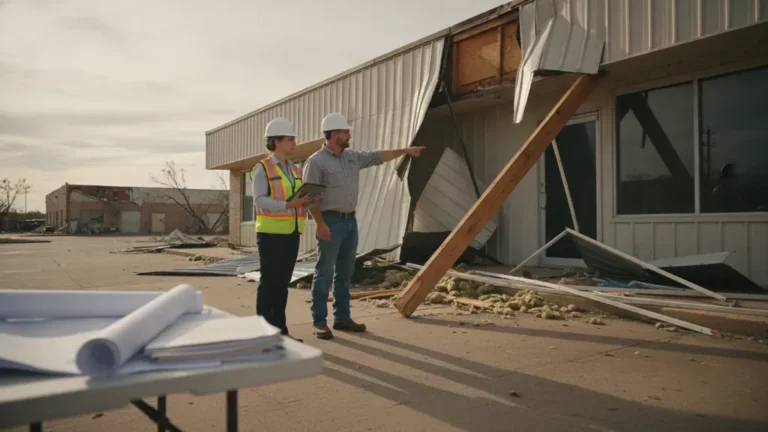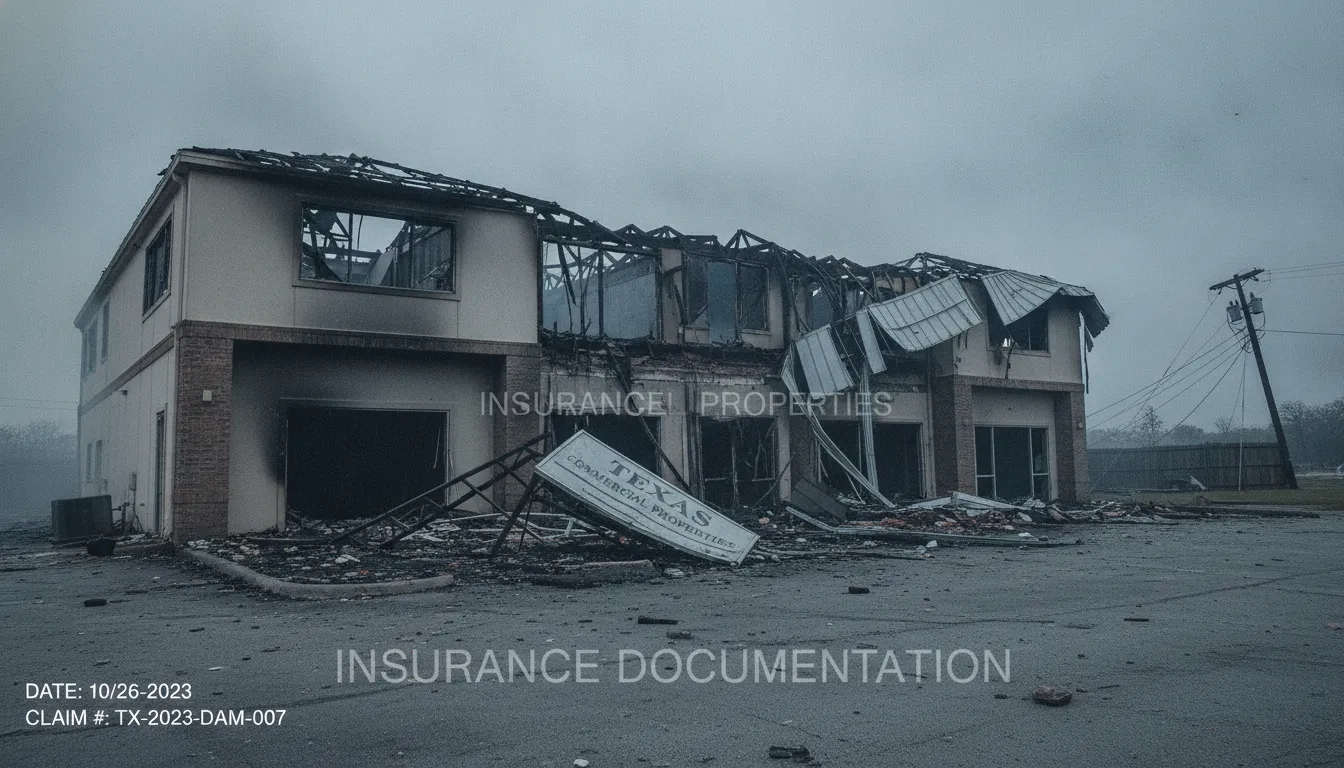
A commercial property insurance deductible is the out-of-pocket amount a policyholder must pay before insurance coverage applies to a loss. In Texas, these are usually structured as a flat dollar amount or a coinsurance percentage of the total insured value of the property. For storm events like hail or wind, many Texas policies use percentage deductibles ranging from 1% to 5%. This means a $10 million warehouse could face a $200,000 out-of-pocket cost before the carrier pays a single dollar. Fire damage claims may follow a different flat-fee structure, but all must comply with the Texas Prompt Payment of Claims Act. These rules apply to each separate occurrence and determine your final payout. Look at the Hoch Law Firm commercial property insurance page.
How the Commercial Property Insurance Deductible Works in Texas
A commercial property insurance deductible is the out-of-pocket cost you must pay before your insurance policy starts to cover a loss. This amount represents your share of the risk for every claim you file. In Texas, these costs can take two main forms: flat fees or percentages. While a flat fee is a fixed dollar amount, a percentage deductible is tied to the total value of your property assets.
Flat vs. Percentage Deductible Types
Most business owners in North Texas choose between a flat fee and a percentage rate. A flat deductible is simple. For example, you might pay a set $5,000 for every claim you file. On the other hand, a percentage deductible is based on the building’s value. These are common for wind and hail damage and often range from 1% to 5% in Texas. On a $10 million property, a 2% deductible would mean you pay $200,000 before getting any help from the insurance company.
Many owners do not realize their commercial property insurance has changed until they file a claim. Insurers have been raising these rates to deal with more frequent storms. This shifts more of the money risk to you as the property owner. You should check your policy to see if you have a split structure. This often means you pay a flat fee for fire damage but a high percentage for storm damage. Some policies also use split deductibles where different events trigger different costs.
The Per-Occurrence Rule
A key rule in Texas is that deductibles apply per-occurrence. This means each separate claim event triggers a new payment. If a spring storm damages your roof and a fire breaks out months later, you must meet your deductible for each event. The “per-occurrence” rule ensures the insurance carrier only pays for losses that exceed your self-insured limit for that specific event. This is different from health insurance, where you might meet one limit for the whole year.
Business interruption coverage may also have its own set of rules. Instead of a dollar amount, this often uses a time-based waiting period. For example, a 72-hour waiting period means you must cover the first three days of lost income yourself. This separate structure is common in complex commercial policies. It is vital to know how both property damage and time-based costs apply to your specific case.
Texas Laws and Claim Timelines
Texas law provides clear rules for how these costs apply. Wind and hail percentage deductibles are set under Texas Insurance Code Section 2001. These rules ensure that insurers follow fair practices when applying high costs to storm claims. These laws help protect you from carriers that might try to delay your payment or underpay your claim.
The Texas Prompt Payment of Claims Act sets strict deadlines for insurers. They must handle your file fast once you have met your cost share. If you feel your insurance company is not being fair, you have rights. Business owners should have their policies reviewed by a legal expert before accepting a low offer. At Hoch Law Firm, we focus on helping you get the full value of your claim without delays. We know how to hold carriers to the timelines set by Texas law.
Flat Deductibles vs Percentage Deductibles: What Texas Property Owners Need to Know
Most commercial property insurance policies in Texas use one of two deductible types. Understanding replacement cost vs. actual cash value is crucial. A flat deductible is a fixed dollar amount that stays the same for every claim. For example, if your policy has a $5,000 flat deductible, you pay that amount out of pocket before your coverage starts. This model is common for fire or theft claims.
A percentage deductible is calculated based on the insured value of your property. In Texas, these are very common for wind and hail damage. Carriers often set these between 1% and 5% of the total value. If you own a $10 million building with a 2% deductible, you must pay $200,000 toward repairs before the carrier pays anything. Many owners do not realize their property insurance lawyer could have helped them spot this risk before a storm hit.
How Split Deductibles Work
Many Texas policies use a split structure. This means the carrier applies different rules for different types of loss. You might have a low flat deductible for fire damage but a high percentage deductible for wind and hail. This shift allows carriers to move more financial risk to the property owner during storm seasons.
The Texas Insurance Code allows carriers to use these separate percentages. This is often regulated under Section 2001. It is vital to check your policy declarations page to see if your wind and hail coverage has changed from a flat amount to a percentage. These changes often happen at renewal without a clear warning.
Comparing Out of Pocket Costs
The table below shows how a percentage deductible can change your costs compared to a flat amount. These figures assume a commercial building with a $2,000,000 replacement cost value.
| Deductible Type | Rate | Your Cost |
|---|---|---|
| Flat Deductible | Fixed Amount | $1,000 |
| Percentage Deductible | 1% of Value | $20,000 |
| Percentage Deductible | 2% of Value | $40,000 |
| Percentage Deductible | 3% of Value | $60,000 |
| Percentage Deductible | 5% of Value | $100,000 |
As the value of your property goes up, so does your risk. For a larger facility, a 5% deductible could mean a million-dollar bill before insurance helps. You should review your policy with an expert to ensure you can cover these costs. If your carrier underpays a claim after a major storm, you can cite the Texas Prompt Payment of Claims Act to hold them to strict deadlines.
How Deductibles Apply to Storm Damage and Fire Claims
Need help with a commercial property claim?
With Texas recording 902 major hail events in 2025, insurers have been raising percentage deductibles to offset increased storm-related losses. Property owners should review their policies regularly to understand how these changes affect their out-of-pocket costs.
If your business faces big damage from a storm or fire, the insurance company may try to use high deductibles to reduce your payout. Tim Hoch is Board Certified in Personal Injury Trial Law and has recovered over $50 million for policyholders. Our firm only helps policyholders, never insurance companies. Contact us today for a free case review. If we take your case, you pay nothing unless we win.
Texas business owners face many risks, including large hail, tornadoes, and fire. When these events damage your site, your commercial property insurance deductible sets how much you pay before coverage starts. Most plans in Texas use a split structure. This means the amount you owe depends on what caused the damage. Knowing these costs helps you plan before you file a claim.
Split deductibles for wind and fire
In Texas, wind and hail claims often carry a percentage deductible. This cost is mostly between 1% and 5% of the total value of your building. If your site is worth $10 million, a 2% deductible means you pay $200,000 out of pocket. For fire claims, most insurers use a fixed cost instead. This might be a flat $1,000 or $5,000 charge for the whole event.
You should check your plan for a named-storm deductible as well. These are special rules for ocean storms or hurricanes. Even if you are far from the coast, some Texas plans include these higher costs for clear wind events. These rules are part of the Texas Insurance Code Section 2001 which covers how firms set their rates.
The per occurrence rule in Texas
Most Texas plans apply deductibles on a per occurrence basis. This means you must pay your share for each distinct event. If a hail storm hits your roof in May and a fire breaks out in July, you will likely owe two full deductibles. Firms do not count these as one claim even if they happen in the same year.
This rule can get tough for firms with many buildings. If you own several retail centers, your plan might group them as one. But some insurers try to apply a deductible for every single address. This can cost your business many hundreds of thousands of dollars more than you planned. You may need to review your plan to see if you have a blanket limit that covers all your sites with a single cost.
- Single site: One event often triggers one deductible for the whole property.
- Many sites: Some plans apply a different charge for every building hit by the storm.
- Blanket limits: You may have one limit that covers all your sites with one flat cost.
Challenges with fire and hail damage
Fire claims involve more than just charred walls. They often need a full HVAC fix and work to repair smoke or water damage. Firms may dispute the cost of matching materials to ensure your building looks the same after the fix. Our firm helps policyholders handle these fire damage claims to ensure they get a full and fair payout from the firm.
Hail damage presents a different set of hurdles. Hail stones must often reach at least 1.5 inches in size to cause clear damage to a commercial roof. But the worst issues are often hidden from view. It takes a detailed look to find concealed leaks or frame cracks that lead to rot over time. If your insurer denies your claim or offers too little, you should talk to a storm damage lawyer who knows how to find the proof you need.
Business Interruption Deductibles and Waiting Periods
If a storm or fire forces your business to close, business interruption coverage helps replace your lost income. But this coverage works differently than standard property insurance. Most business interruption claims do not use a dollar-amount deductible. Instead, they use a time-based deductible. This is often called a waiting period. You must be unable to operate for a set amount of time before the insurance carrier will start to pay for your lost revenue.
The 72-hour waiting period
The most common time-based deductible in Texas is a 72-hour waiting period. If a pipe bursts or a fire occurs, your business might stay closed for two days for repairs. In this case, your policy might not pay anything for your lost income because the closure did not last 72 hours. The clock usually starts the moment the physical damage occurs. It is vital to track the exact date and time your business stopped its work. This data helps prove you met the time requirement in your policy.
How time deductibles differ from property deductibles
A standard commercial property insurance deductible is a fixed cost you pay for repairs. For example, you might pay $5,000 toward a new roof. A business interruption deductible is a loss of time. You do not write a check to the insurance company. Instead, you absorb the financial loss of the first few days of being closed. Some policies allow you to buy a zero-hour waiting period for a higher price, but most Texas plans stick to the three-day rule.
Managing two deductibles in one claim
Most large claims involve both physical damage and lost income. This means you will likely face two separate deductibles at the same time. You will pay your property deductible for the building repairs. At the same time, you will wait through the time-based deductible for your income loss. The Texas Department of Insurance notes that policies can have complex rules for how these costs apply. An insurance company might try to apply both in a way that reduces your total payout. You should have a lawyer review your policy to ensure the carrier does not overcharge you for these costs.
Common Deductible Surprises at Claim Time: What to Watch For
Filing a claim for your commercial building can be stressful. Many owners face a shock when they learn how much they must pay out-of-pocket. Insurance companies often change policy terms to shift more risk onto you. This can leave your business with a bill that is much higher than you expected.
Unexpected Changes to Your Policy
You may find that your commercial property insurance deductible has changed without a clear notice. Carriers are moving away from flat dollar amounts. They now use a percentage of the property value for some losses. For example, a 2% deductible on a $10 million building means you pay $200,000 before the insurance kicks in. This shift happens often for wind and hail damage in Texas.
Premiums are also on the rise. Rates have gone up by about 20.4% in recent years. At the same time, companies are raising deductibles. This double hit makes it harder for property owners to recover from a major loss. You should watch for these five steps to avoid a surprise at claim time.
- Review Your Policy Annually
Check your declarations page every year to see if your deductible type has changed from a flat fee to a percentage. - Check Deductible Type Before Filing
Find out if your loss triggers a standard deductible or a higher “named storm” deductible before you start the claim. - Understand Per-Occurrence Application
Remember that each separate event triggers a new deductible, so two storms in one month mean you pay twice. - Budget for the Deductible
Keep a cash reserve based on your highest possible deductible to ensure you can start repairs right away. - Contact an Attorney Before Accepting a Settlement
Talk to a lawyer if you have an underpaid commercial property claim to ensure you get a fair deal.
Hidden Costs and Multiple Fees
Multiple deductibles can apply to a single event if you own more than one building. Many policies set a separate fee for each structure. This can lead to a massive bill if a storm hits an entire complex. Also, named-storm deductibles can apply even in North Texas. These fees are often much higher than standard rates.
If you face a dispute over these costs, help is available. The Texas Department of Insurance sets rules for how these policies must work. You do not have to accept a low offer that ignores the fine print of your policy. Getting expert advice can help you find hidden fees before they hurt your bottom line.
When to Hire a Commercial Property Insurance Attorney for Deductible and Claim Issues
Filing a claim for a commercial property insurance deductible in Texas often leads to disputes over costs. While you might try to handle the claim on your own, the work can quickly become too complex for a business owner. Insurance firms often use vague terms or adjusters to lower payouts. If your carrier denies your claim or offers a low amount, you should talk to a lawyer. You need a team that knows how to find hidden coverage in your policy.
Handling denied or underpaid claims
You need to know when your insurer is not acting fairly. Carriers may use complex deductible plans to shift more risk to you after a big storm or fire. If the adjuster says your loss is small but your repair quotes are high, your claim is likely underpaid or undervalued. A lawyer can find gaps and make sure the carrier follows the Texas Prompt Payment of Claims Act.
Resolving business interruption disputes
Business interruption claims often have waiting periods that act like deductibles. These claims are hard to prove because they need clear records of lost income. If your insurer disputes how long your shop was closed or the profit you lost, you need an expert to fight for you. We help owners manage these hard cases to get the full value of their coverage. Our goal is to make sure your business stays strong after a loss.
Partnering with a board certified trial lawyer
The right law firm can change the result of your case. Tim Hoch is in the top 2% of Texas lawyers who is Board Certified in Personal Injury Trial Law. With over 30 years of work and more than $50 million in career wins, our firm knows how to win. We help owners on a fee basis where you pay nothing unless we win. You should have a lawyer review your insurance policy before you take any final pay from your carrier.
Frequently Asked Questions
How much is a typical commercial property insurance deductible in Texas?
In Texas, a commercial property insurance deductible often stays between 1% and 5% of the total insured value for wind or hail damage. These rates are regulated under Section 2001 of the Texas Insurance Code. For other losses like fire or theft, many businesses use a flat dollar amount such as $5,000. Your cost depends on your location.
Do I pay a separate deductible for wind damage and fire damage?
Yes, most Texas policies use split deductibles. This means you might pay a fixed dollar amount for a fire claim but a percent of your property value for wind damage. Because each event is a separate occurrence, you must pay the full deductible for every claim. If two different events damage your building, you will likely pay two deductibles.
What is a named storm deductible in North Texas?
A named storm deductible is a higher cost that applies only when a storm has a specific name from the National Hurricane Center. While these are common on the coast, some policies in North Texas now include them for tropical storms or hurricanes. According to BMS CAT, insurers use these to lower their own risk from large weather events.
How many deductibles do I pay if multiple storms hit my property?
You must pay a separate deductible for every single event that damages your property. Insurance companies treat each storm as a separate occurrence. If a hail storm hits in April and a wind storm hits in May, you pay the full deductible twice. This is true even if you have not finished the repairs from the first storm. Check your policy for per-occurrence rules.
Does the business interruption waiting period count as a deductible?
Yes, the waiting period works like a time-based deductible. Most commercial policies have a 72-hour period before income coverage starts. This means your business must lose income for three full days before the insurance company will pay for your losses. According to Hoch Law Firm, this time limit is separate from the money you pay for repairs. Contact us for a free case evaluation.
What happens if you can’t afford your Texas commercial property insurance deductible?
If your commercial property deductible exceeds your available funds, you still have options. Some contractors offer financing or payment plans for the deductible portion. You can also negotiate with your insurer about the scope of covered repairs or explore whether your policy includes any deductible waiver provisions for specific perils. In some cases, legal counsel can help determine whether the deductible was properly applied under the policy terms. The key is to communicate early and document every expense. Call 817-731-9703 to discuss your situation with a board-certified trial lawyer.
Ready to schedule a free case evaluation?
Wait to challenge an unfair claim and you may miss key legal deadlines, as doing nothing costs more than a deductible. Many insurance firms use hard terms to cut what they pay, but starting today allows our property insurance lawyers to find the cause of any underpayment. We have over thirty years of work helping firms in North Texas deal with large insurance firms and their hard policy rules. By acting now, you take the first step to get back on your feet and keep your business running after a storm. We work for no cost upfront and you pay us nothing unless we win your case.
Ready to schedule a free case evaluation? Call (817) 731-9703 to schedule a free case evaluation.