Insurance companies often use depreciation to slash payouts for aging roofs on North Texas office buildings. These tactics leave commercial property owners with massive bills for necessary repairs.
Replacement cost vs actual cash value texas refers to the two main ways insurance companies determine claim payouts after a property loss. According to the Texas Department of Insurance, replacement cost coverage pays to replace damaged property with new parts at current prices without subtracting depreciation. Actual cash value policies only pay for property value based on age and wear. This difference matters for Texas commercial property owners because an ACV payout may leave a business with a massive financial gap for repairs.
Knowing these policy terms requires a clear view of how insurance works under Texas law. You must know how your plan defines these terms to protect your property.
Replacement Cost vs Actual Cash Value Texas: What Is Replacement Cost Value (RCV)?
Replacement Cost Value (RCV) pays the full price to fix or replace damaged commercial property at today’s market rates using materials of the same kind and quality. This valuation method does not subtract depreciation, meaning the insurance company bears the cost of age and wear, not the policyholder.
Replacement Cost Value, or RCV, is a way to value property damage. For a Texas business owner, RCV pays the full price to fix or replace property at today’s market rates. It uses materials of the same kind and quality as the original items. This method does not take away money for wear and tear, which insurers call depreciation.
Restoring Business Capacity
The goal of RCV is to restore your business to its full pre-loss capacity. If a fire or storm damages your office, you need to get back to work fast. RCV helps by covering the real costs of modern building parts and labor. According to the Texas Department of Insurance, this coverage pays to rebuild based on what it costs now, not what you paid years ago.
This path is vital for long-term business health. Many commercial property owners rely on RCV to avoid big out-of-pocket bills after a loss. Without it, you might have to pay for the lost life of an old roof or floor yourself. RCV shifts that risk back to the insurer, allowing you to focus on your work.
Market Prices and Quality
When you file a claim, the insurer looks at local market prices. They must find the price of new items that match what you had before. This set amount marks the top limit for your claim. It ensures the check matches the real cost of building in your area. This is a key part of how you ensure full replacement cost recovery during a claim dispute.
Using materials of a similar kind and quality means you do not have to settle for cheap parts. If your building had high-grade windows, the policy should pay for new ones of the same grade. This keeps the value of your asset high even after a major fix. It also prevents the stress that comes when insurance checks do not cover the full bill from a contractor.
Why RCV Matters in Texas
In Texas, building costs can change fast. Labor gaps or supply chain issues often drive prices up. RCV protects you from these price hikes. It ensures that your check from the insurance company is enough to finish the job. For complex property claims, knowing the replacement cost vs actual cash value difference is the first step toward a fair recovery.
Choosing the right path is a business choice. While RCV plans may cost more, they offer much more safety. They remove the guesswork from your recovery fund. When your work is on the line, having a policy that pays for the true cost of rebuilding provides peace of mind and safety.
What Is Actual Cash Value (ACV)?
Actual Cash Value (ACV) is the cost to replace a damaged item at today’s prices minus a deduction for depreciation based on the item’s age, wear, and useful life. This valuation method shifts the cost of aging from the insurance company to the property owner, often resulting in significantly lower claim payouts.
Actual cash value, or ACV, is a clear way to value assets after a loss. It does not mean the price you paid for an item years ago. It also does not mean the price to buy a new version now. Instead, actual cash value is the cost to replace an item today minus its depreciation. This method shows how items lose value as they get old or wear out. For Texas business owners, ACV is the most common way insurers lower a claim payout.
The Role of Depreciation in Your Claim
Depreciation is the drop in worth for any real object over time. It happens to all items from office desks to large flat roofs. Insurance adjusters use this to lower the money they owe you. They look at the age and state of the item before the damage happened. If an item was already old, they say it was worth less than a new one.
Insurance companies in Texas use several key parts to measure this loss:
- The age of the item compared to its total useful life.
- Real wear and tear from normal business use.
- When the item is out of date and no longer useful.
- Natural decay or damage that was already there.
How Insurers Calculate Your Payout
To find the ACV, the company first finds the current replacement cost. This is the price to buy a new item of like kind today. Then, they take away the value lost to age. Say a roof should last 20 years and is 10 years old. In this case, they may cut the payout by half. This math is often very harsh. It does not care that you need a full, new roof to stay in business.
This way of finding value often leaves owners with a huge gap in funds. When you compare replacement cost vs actual cash value, the stakes are clear. A replacement cost policy pays to fix the damage with new parts. It ignores the age of the old property. An ACV policy works the other way. It forces you to pay for the used part of your assets yourself.
The Risk of a Zero Dollar Payout
The biggest danger with ACV is the chance of getting almost no money. This often happens with older office buildings. If a building is near the end of its life, the insurer may claim it has zero cash value. After you take away your deductible, the check you get might be for zero dollars. This is a common trap for Texas business owners who think they have full coverage.
You must check your policy to see which method your insurer uses. Many plans start as replacement cost but change to ACV for certain parts of the building. This is common for roofs that are over ten years old. Knowing how your insurer values your loss is the only way to avoid a bad surprise. If you wait until after a storm to check, it may be too late to protect your assets.
RCV vs. ACV: Key Differences for Texas Commercial Properties
The key difference between RCV and ACV is that Replacement Cost Value pays the full cost to repair or replace damaged property at current market prices, while Actual Cash Value subtracts depreciation based on the property’s age and wear. For Texas commercial properties, this distinction can mean the difference between a full rebuild and a substantial out-of-pocket expense.
For most commercial property owners, a loss starts a hard legal path. You must know how your firm values your items. The choice of replacement cost vs actual cash value can change your future. This choice tells you if you can rebuild. It also tells you if you must pay for the work yourself.
Comparing Value Methods
Replacement cost value (RCV) and actual cash value (ACV) work in two ways. RCV pays to fix or replace your items at today’s prices. It does not take away money for age or wear. ACV is not the same. It starts with the new cost but then takes away money for age. This means an ACV check is often much smaller than an RCV check.
Insurance firms use these terms to limit what they owe you. They often push ACV to lower their own risk. But for a business, this can be a trap. If your building burns down, you need to know you can buy new parts. Without RCV, you might have to take out a loan just to open your doors again.
| Feature | Replacement Cost (RCV) | Actual Cash Value (ACV) |
|---|---|---|
| Basic meaning | Price to replace today | New price minus age and wear |
| Payout amount | Full cost of new parts | Market value at time of loss |
| Annual fees | Higher rates for more risk | Lower rates for less payout |
| $10k roof claim | Full $10k (minus deductible) | Varies by age (can be $0) |
| Cost of aging | Paid by the firm | Paid by the owner |
The Cost of Age
Age is a big risk for Texas business owners. In an ACV plan, the firm tracks how old your items are. As items get old, they lose value to the firm. This loss in value is called depreciation. It affects everything from your roof to your tools. If you have older gear, ACV will not help much. You get the value of used gear, not new gear. This can lead to a big gap in your plan. Many owners do not see this gap until it is too late to fix it.
Think about a roof that is 20 years old. It might cost $10,000 to replace. An ACV plan might pay nothing at all. The Texas Department of Insurance shows that age can end your payout. In this case, the $10,000 cost minus 20 years of wear might leave only $4,000 in value. If your deductible is $4,000, your check will be $0. This leaves you with the full bill for a new roof.
Fees and Payouts
Fees and payouts are always linked. RCV plans cost more in fees. This is because the firm takes on more risk. But they pay more when you have a loss. An ACV plan saves you money now. But it moves the cost of old items back to you. You must decide if low fees today are worth the risk of a low payout later.
Your deductible also plays a key part. The firm will take that amount from your final check. This happens with both ways to value a loss. A high deductible can make a small ACV check vanish. Every Texas owner needs to read their plan to avoid these traps. Knowing these terms is the first step to keeping your business safe.
Check your policy for any special rules. Some Texas plans have a roof schedule. This forces ACV on your roof after 10 or 15 years. Even if the rest of your plan is RCV, your roof might not be. This is a common way firms avoid paying for storm damage. Knowing these details can save your business from a major loss.
Schedule a free consultation with a Texas property insurance attorney to review your commercial coverage. Call (817) 731-9703 today to ensure your policy values your property correctly before a claim occurs.
Why Insurers Push for ACV and the Texas Roof Schedule Trap
Insurance companies push ACV policies because they shift the financial burden of depreciation from the carrier to the policyholder. In Texas, many carriers also use roof schedules that quietly switch roof coverage to ACV once a roof reaches 10 to 15 years old, leaving business owners with massive out-of-pocket costs after storm damage.
Carriers often steer business owners toward Actual Cash Value (ACV) coverage. While these policies come with lower monthly costs, they also lead to much smaller payouts when a loss occurs. This is why insurers push for ACV as a way to boost their own gains. Common reasons for this push include:
- Lower risk for the insurance company during a storm.
- Lower payouts as property gets older.
- Higher profit margins on monthly premiums.
For the owner, this choice can turn a small fix into a big financial burden.
Lower Premiums vs Higher Risks
A lower premium might look like a win for your budget. But ACV policies shift the financial burden of depreciation from the carrier to you. This means the insurance company pays less as your property gets older. According to the Texas Department of Insurance, these policies cost less because the carrier takes on less risk. If you have an older building, the gap between what you get and what you need to pay for repairs grows every year.
Texas leads the nation in hail events, making roof damage a constant threat for local firms. Carriers know that a storm will hit at some point. By pushing ACV, they ensure their payout stays low while you are left to cover the rest. This plan lets them keep more of your money as profit while you face a large risk.
The Texas Roof Schedule Trap
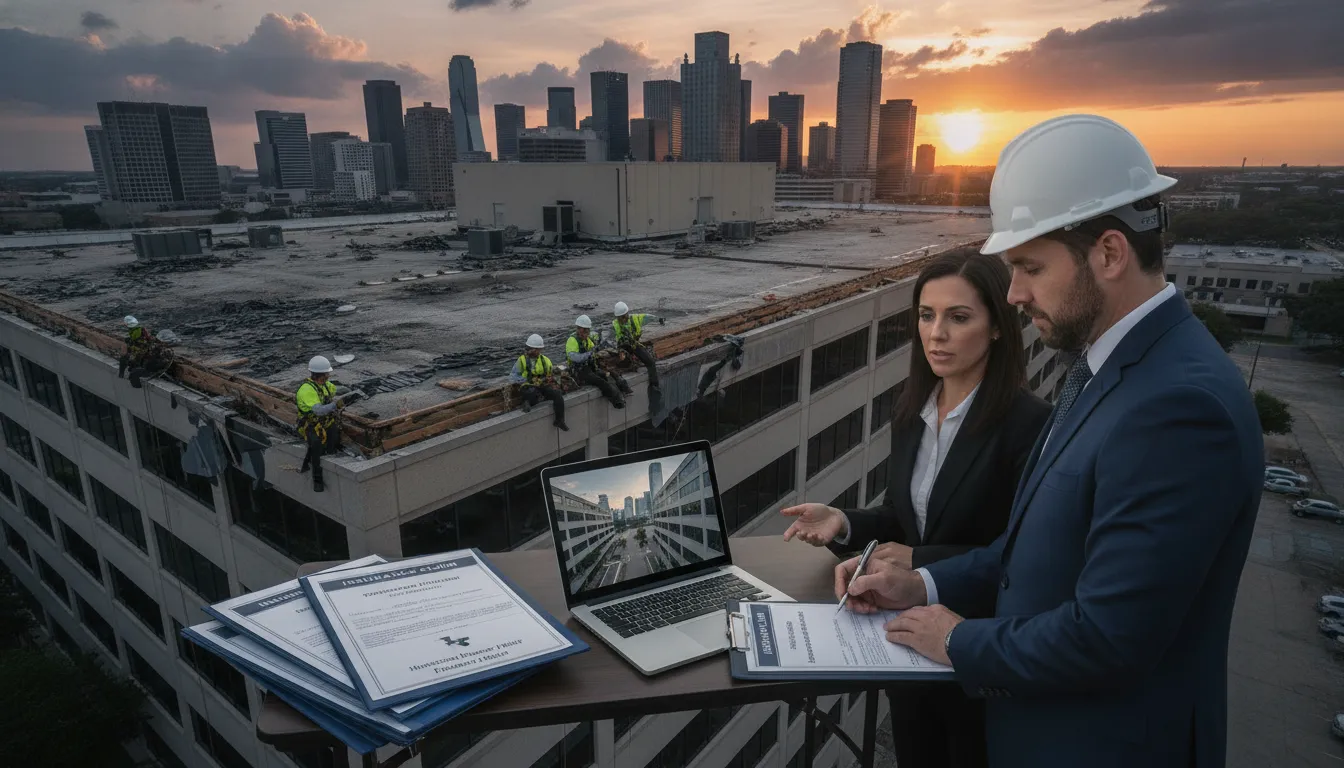
Many Texas carriers use a tactic known as the roof schedule trap. Even if you think you have a full Replacement Cost Value (RCV) policy, a hidden change may limit your coverage. Some insurers quietly switch your roof coverage to ACV once the roof is 10 years old. They do this through small print in policy forms. You might not even know your coverage has changed until you file a claim after a storm.
In North Texas cities like Frisco and Plano, a roof that is 15 years old becomes a large risk rather than an asset. If your policy has shifted to a roof schedule, you are no longer covered for the full cost of a new roof. Instead, the carrier only pays for what a used, 15-year-old roof is worth. This leaves you with a massive bill when the next supercell storm hits your building.
Hidden Costs of Depreciation
The math behind an ACV claim can be a shock for a business owner. For a roof that is 20 years old, an ACV policy might pay nothing at all after the deductible is met. Imagine your commercial roof needs a full replacement after a hail storm. If the total cost is $20,000, an ACV policy might only pay out $8,000 after accounting for age and wear. You would then be forced to find $12,000 in cash just to fix your building and get back to work.
These hidden costs can stop your work or drain your cash. To protect your firm, you must ensure full replacement cost coverage is in place for all vital assets. Without it, you are self-insuring for the most costly part of your property. Review your declarations page now to see if the roof schedule trap has left your business at risk.
Understanding the Replacement Cost Holdback
The replacement cost holdback is the portion of an RCV claim that the insurance company withholds until repairs are completed. The insurer pays the Actual Cash Value upfront, keeps the depreciated amount as a holdback, and releases it only after you finish the repair work and submit proof.
The First Actual Cash Value Payout
Many Texas business owners think an RCV policy means they get a full check right away. But that is rarely how it works in the business world. When you file a claim, an adjuster sent by your insurance firm will look at the damage. They find the total cost to fix the building or site. But they do not give you that full sum at the start. Instead, they take out a set amount for the age and wear of your building. This process is known as depreciation.
The first check you get is mostly for the actual cash value. This sum equals the repair cost minus the depreciation. The insurer keeps the rest of the funds in their own bank. This amount is known as the holdback. They do this to make sure you really fix the site. It also helps the insurer keep their first costs low while the claim is open. Knowing the gap between replacement cost vs actual cash value is vital for your cash flow. If you own a large warehouse or strip center, this holdback can reach hundreds of thousands of dollars.
The Cash Flow Gap
The holdback creates a major hurdle for many Texas firms. You must find a way to pay for the full repair using only a part of the total funds. Most policies state that the insurer will pay the holdback only after you finish the work. You often have to show final bills or a list of work done to get the rest. This means the business owner must carry the money load during the repair phase.
This gap can stall your work for weeks or even months. If you do not have the cash on hand, your business might stay closed for a long time. Insurers use strict rules to decide how much to hold back. They may use old data or unfair math to lower their first check to you. This shift of the load from the insurer to the owner can be hard to manage. For many, it leads to taking on new debt just to get back to work.
Resolving Holdback Disputes Through Appraisal
If your insurer holds back too much money, you can fight their choice. Your insurance policy is a legal contract between you and the firm. Its precise language defines how they must value your loss and how they must pay. If you and the adjuster do not agree on the repair cost or the holdback, you can use the appraisal process. This is a common way to settle a dispute without going to court right away.
This process lets you hire your own expert appraiser. They meet with an appraiser from the insurance firm to review the damage. They work to find a fair value for the loss. If they cannot agree, an umpire makes the final choice. This is often a faster way to get the full funds you need for your building. It helps you get the holdback released sooner so you can focus on your business goals again. A fair appraisal ensures that the depreciation is not used as a tool to avoid paying what the policy owes you.
How to Verify Your Commercial Property Insurance Coverage
Verifying your commercial property insurance coverage requires reviewing your declarations page, checking for roof schedule endorsements, and confirming whether your policy uses RCV or ACV valuation. Taking these steps before a loss helps you avoid unexpected coverage gaps and ensures you know what your policy will pay.
Checking your policy before a loss is the best way to protect your firm. Texas commercial property owners often find out too late that their payout is low. You should check your policy now to avoid gaps during a loss. The Texas Department of Insurance says this helps you know how a firm settles claims. Use these steps to verify your coverage and secure your assets.
Check Your Declarations Page
The first place to look is your declarations page. This page gives a summary of your limits and terms. It will show if your property has RCV or ACV coverage. If you see Actual Cash Value, your insurer will take out money for age and wear. Knowing your valuation method is key to your plan.
Watch for Roof Schedules
Many Texas policies have special rules for roofs. Even if your main policy pays for full cost, a roof schedule may change that. These schedules often switch coverage to ACV for roofs over 10 years old. This shift can turn a big claim into a small check that does not cover your work.
- Read the declarations page. Look for the words Replacement Cost or Actual Cash Value next to your building limits.
- Look for roof schedules. Find forms that list age limits for roof RCV coverage to avoid a surprise during a claim.
- Ask your agent directly. Call or email your agent. Ask if your assets have full replacement cost or if the firm uses a roof schedule limit.
- Review each building. Check the policy for each property you own. Some locations may have different terms than others.
- Contact a property insurance attorney. An experienced lawyer can help you understand the fine print and ensure you have the coverage you paid for.
What to Do If You Discover a Coverage Gap
If you find that your policy uses ACV or has a roof schedule that limits your coverage, you have options. You can request a policy change from your carrier or shop for a new policy that provides full RCV coverage. You can also work with a commercial property insurance attorney to negotiate better terms or challenge an existing policy interpretation.
Taking action now can save your business from a financial disaster when a storm or fire strikes. The time to verify your coverage is before the loss, not after. A single hour reviewing your policy today could save you hundreds of thousands of dollars tomorrow.
Frequently Asked Questions About RCV and ACV for Texas Commercial Property
What is the difference between replacement cost and actual cash value in Texas?
Replacement cost value (RCV) pays to repair or replace damaged property at current market prices without deducting for depreciation. Actual cash value (ACV) starts with the replacement cost but subtracts an amount for age and wear based on the property’s useful life. In Texas, this difference can mean thousands of dollars in claim payouts for commercial property owners.
Do Texas commercial property insurance policies require RCV coverage?
Texas law does not require commercial property insurance policies to use RCV coverage. Insurance carriers can offer either RCV or ACV valuation, and many policies contain roof schedules that convert roof coverage to ACV after a certain age, typically 10 or 15 years. Business owners should carefully review their policy declarations page to understand which valuation method applies.
What is the replacement cost holdback in Texas insurance claims?
The replacement cost holdback is the portion of an RCV claim that the insurance company withholds until you complete the repair work. The insurer pays the Actual Cash Value upfront and keeps the depreciated amount as a holdback. After you finish repairs and submit proof of completion, the insurer releases the holdback funds. This process creates a cash flow gap that many Texas business owners must manage during the repair phase.
How do roof schedules affect commercial property claims in Texas?
Roof schedules are policy endorsements that switch roof coverage from Replacement Cost Value to Actual Cash Value once the roof reaches a certain age, often 10 to 15 years old. This means that even if your overall policy provides RCV coverage, your roof may only qualify for ACV payouts. Given Texas frequent hail storms, this can leave commercial property owners with significant out-of-pocket costs for roof replacement after storm damage.
Can I dispute an ACV payout from my Texas commercial property insurer?
Yes, you can dispute an ACV payout. Your insurance policy is a legal contract, and the insurer must follow its terms. If you disagree with the valuation or the amount of depreciation applied, you can request an appraisal, hire your own independent appraiser, or seek legal representation. A Texas property insurance attorney can help you challenge unfair depreciation calculations and pursue the full payout your policy entitles you to receive.
Ready to Protect Your Texas Commercial Property Claim?
The difference between Replacement Cost Value and Actual Cash Value can mean hundreds of thousands of dollars in your commercial property claim. Insurance carriers use depreciation, roof schedules, and the replacement cost holdback to minimize payouts. Without an experienced legal advocate on your side, you risk leaving money on the table or facing a massive repair bill out of pocket.
At Hoch Law Firm, PC, we represent commercial property owners across Texas in insurance claim disputes. We understand how carriers calculate depreciation, where hidden roof schedule traps lurk, and how to fight for the full replacement cost you paid premiums to receive. Our team works on a contingent fee basis, meaning you pay nothing unless we recover money for you.
Call (817) 731-9703 today to schedule a free consultation with a Texas commercial property insurance attorney. Let us review your policy, evaluate your claim, and help you secure the maximum recovery available under your policy.