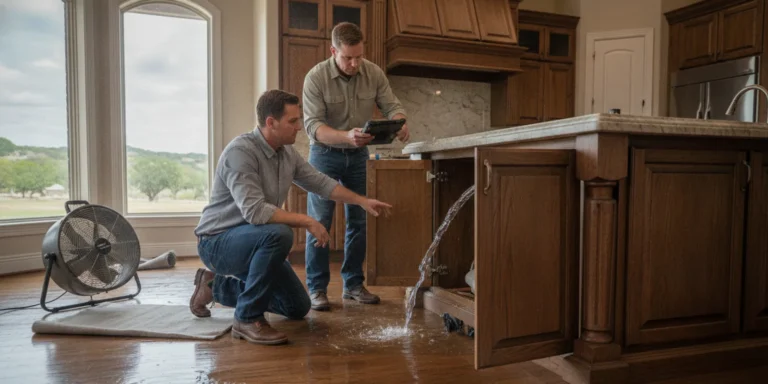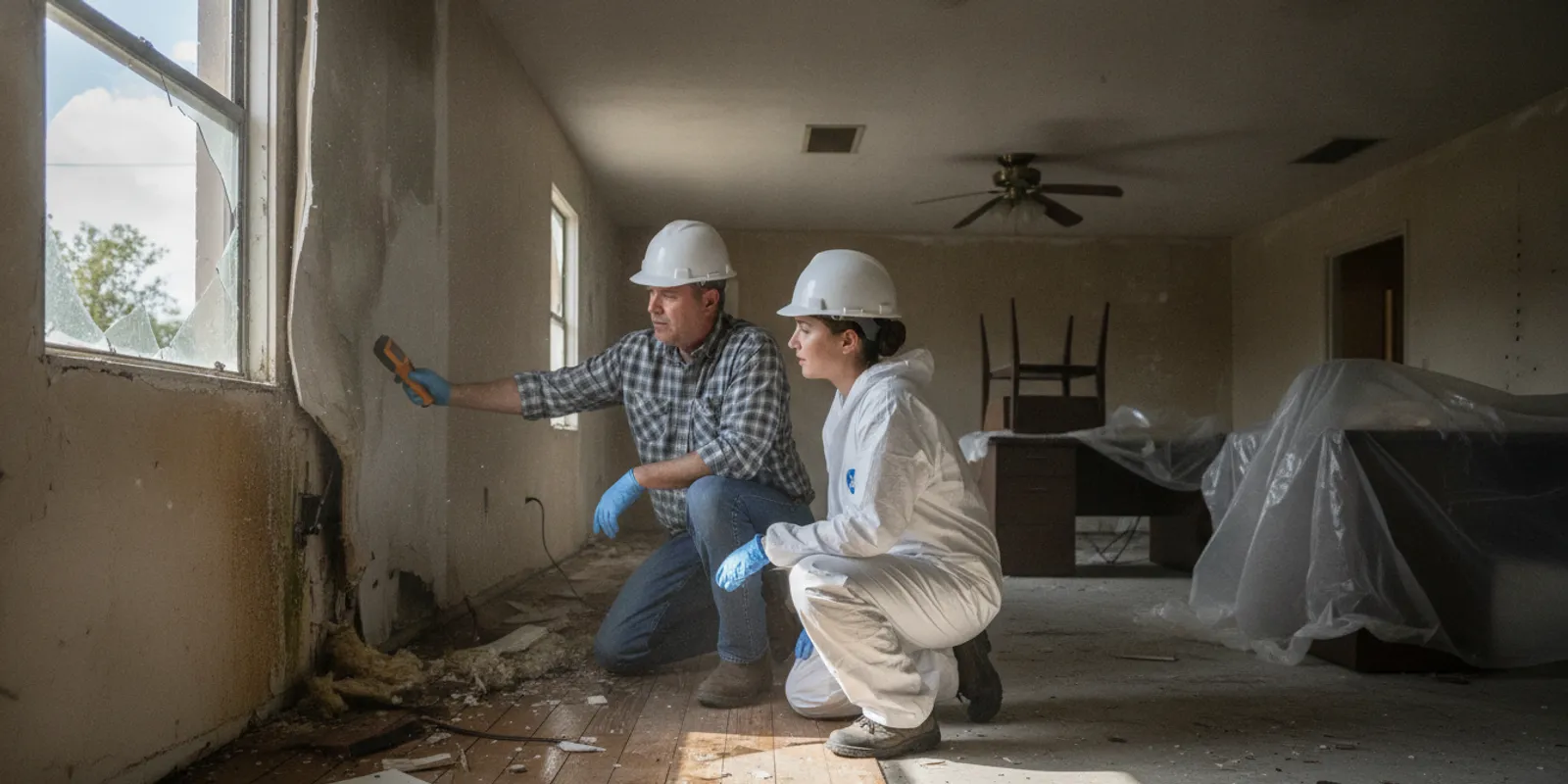
Water damage at a commercial property can affect more than the building itself. A commercial water damage claim attorney can help a Texas business owner assess a dispute involving the structure, contents, mitigation invoices, restoration work, or lost operations. The first task is to preserve a clear record of what was damaged, what was done to limit further harm, and how the loss affected the business.
This guide focuses on commercial property losses and the insurance claim record that supports them. It is not a guide to residential claims or a step-by-step repair manual for a single broken pipe. The policy, cause of loss, property use, and documents all matter. Start by keeping the physical damage, restoration decisions, and financial impact connected in one organized file.
What belongs in a commercial water damage claim?
A commercial loss may involve several distinct categories. A warehouse may have wet inventory and damaged equipment. An office may need drying, demolition, and replacement of interior materials. A retail or apartment property may face repair costs while some areas cannot operate normally. Each category should be documented separately, even when they arise from the same water event.
- Building: Record affected floors, walls, ceilings, fixtures, electrical or mechanical components, and any areas opened for drying or inspection.
- Contents: Create an inventory of stock, furniture, equipment, supplies, and other business property. Note condition, location, and whether an item was moved, cleaned, repaired, or discarded.
- Mitigation and restoration: Keep vendor proposals, work authorizations, daily logs, invoices, payment records, and photographs of work in progress.
- Business interruption: Track operational changes and the financial records that show their effect. Reduced use of a space is not itself a dollar calculation.
- Other expenses: Preserve receipts for temporary measures and expenses that the business believes relate to the disruption.
Do not combine all these figures into one unsupported total. An insurer may evaluate categories under different policy language, limits, conditions, or exclusions. A useful claim presentation explains the connection between the event, the damaged property, the work performed, and each amount requested.
How should owners document building contents?
Begin with photographs and video before items are moved or removed, when it is safe to do so. Capture wide views that establish where the damage occurred, then close views showing the condition of specific materials and contents. Include unaffected surroundings where they help show the location or extent of the affected area.
For business contents, build an inventory rather than relying on memory. Identify each item or group, its usual location, the observed condition, and the action taken. For stock, note product type, quantity, and available purchase or inventory records. For equipment, record make, model, serial number if available, and maintenance or purchase documentation. Keep damaged items available for inspection when practical, unless health, safety, or operational needs require removal.
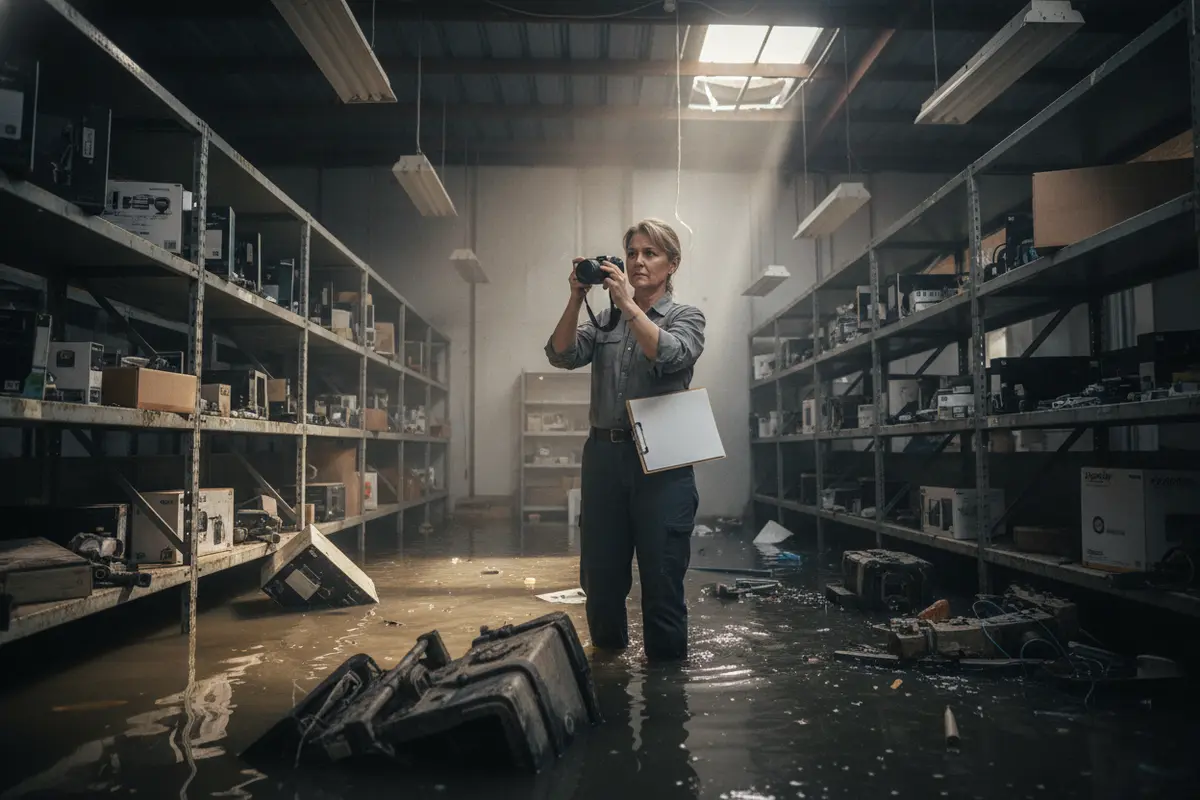
Maintain a simple chronology. Record when the damage was first found, when the insurer and relevant vendors were contacted, when inspections occurred, and when decisions were made. Identify who observed each condition. This helps resolve later questions about whether a condition was present at discovery, appeared during drying, or was found only after materials were opened.
When there is a disagreement about the extent or source of water, preserve records from inspections and testing. Ask vendors to identify the areas and materials they examined and the basis for their observations. Avoid changing or editing original photographs; retain original files and make working copies for annotations. If an item must be discarded, photograph it thoroughly and preserve disposal or replacement records.
Mitigation is urgent, but the record matters
Businesses often need to act quickly to protect people, property, and operations. Take reasonable steps to prevent additional damage and follow appropriate safety advice. At the same time, document the condition before work begins when feasible, and keep a record of actions taken. The goal is not to delay needed work. It is to retain enough information to explain why work was undertaken and what it addressed.
Before restoration begins, ask the vendor for a written scope that identifies affected areas, proposed tasks, equipment, expected duration, and pricing basis. Save revisions and written approvals. During the work, keep daily notes or logs showing equipment placement, readings, removed materials, and changes to the plan. Request photographs of concealed conditions before they are covered again.
Keep mitigation and permanent repair records distinct. Drying, containment, removal, cleaning, and temporary protection may be different from reconstruction or replacement. A clear file identifies the purpose and timing of each cost. Keep itemized invoices, proof of payment, and any explanation for emergency or after-hours charges. If an invoice includes work unrelated to the water loss, ask the vendor to separate it.
Policies and circumstances differ. Do not assume that every vendor charge is covered, or that an insurer’s disagreement means a business should stop necessary protective work. Review the policy and communicate with the insurer about access and inspections while preserving copies of requests and responses.
How do restoration invoices support the claim?
A restoration invoice is easier to evaluate when it can be matched to an observed condition, a work record, and a location. Keep the proposal, change orders, work logs, completion documents, and final invoice together. Where possible, have the vendor describe why a task was needed and which area it addressed.
| Record or cost | What it helps show | Useful supporting material |
|---|---|---|
| Emergency mitigation | Steps taken to limit further damage. | Time-stamped photos, work authorization, logs, and itemized invoice. |
| Building restoration | Materials and areas repaired or replaced. | Scope, measurements, estimates, change orders, and completion photos. |
| Contents | Which business items were affected and their condition. | Inventory, purchase records, photographs, and repair or replacement documents. |
| Temporary operations | Additional arrangements made while areas were unavailable. | Receipts, agreements, dates, and explanation of business purpose. |
| Business interruption | How the covered event affected operations and financial results. | Accounting records, operating calendars, sales reports, and a documented calculation. |
Compare the invoice with the insurer’s estimate line by line if the amounts or scope differ. Mark each disputed item and state the reason for the difference: omitted area, different quantity, work method, material, or price. Attach supporting records instead of relying on a general statement that the estimate is too low.
Changes may be discovered after work starts. Keep the original scope and the revised scope, and ask the vendor to explain what new condition prompted each change. This gives the insurer a way to evaluate the added work, rather than seeing only a final figure that differs from the initial estimate.
How should a business document interruption losses?
Business interruption questions require records of both operations and finances. Identify the dates and locations affected, what activities were reduced or moved, and when normal operations resumed. A building may remain partly usable while a specific area, tenant, or function is disrupted. Describe the actual effect rather than treating the whole property as either fully open or fully closed.
Retain financial documents that may show operating performance, such as relevant accounting reports, sales records, payroll information, leases, and expense records. Keep source records intact and note the period each report covers. Document the method used to calculate any claimed loss, the assumptions involved, and the person who prepared it. A projection should be distinguishable from actual results.
Also record steps taken to continue operations or reduce disruption. For example, note whether business activity moved to another area, hours changed, or a tenant relocated temporarily. Keep related costs and dates. These details help explain the practical effect of the damage and may be important when the policy’s wording and the facts are reviewed.
Coverage for interruption and extra expenses depends on the policy and the facts. Do not assume that a decline in revenue automatically establishes a covered amount. Connect the claimed period and calculation to the damaged property and explain how the interruption relates to the covered event.
What coverage disputes can arise?
Disagreements may concern the cause of loss, the extent of physical damage, the repair method, valuation, policy conditions, or the relationship between building damage and interruption. Water damage and flood damage may be treated differently under insurance wording. The Ohio State University Extension discussion of water damage versus flood damage in farm policies illustrates why the source and the precise policy language matter; it is not a substitute for reviewing a Texas commercial policy.
Read the declarations and relevant policy sections, including definitions, exclusions, conditions, limits, and endorsements. Keep the full policy version applicable to the loss. If an insurer relies on a provision, ask which wording it is applying and how it relates to the facts. Do not assume that a general label such as “water loss” resolves coverage.
Owners may also need to understand whether an appraisal process addresses a disagreement. Appraisal is not a universal solution to every coverage issue. Hoch Law Firm’s Texas appraisal dispute resource offers context about that process. For other types of disputes, review the firm’s information on insurance claim and bad-faith issues and its broader commercial property insurance practice.
Organize the claim before responding to a disagreement
When a carrier questions a portion of a claim, make a focused response. Identify the disputed category, the insurer’s stated position, the requested amount, and the records that support the business’s position. Keep the response factual and avoid mixing an invoice dispute with a separate question about policy coverage.
- Build a dated event and communication timeline.
- Sort documents into building, contents, mitigation, restoration, and interruption folders.
- Compare estimates and invoices by area, task, quantity, and amount.
- Identify missing records or inspection requests and track responses.
- Preserve the policy, insurer letters, vendor records, photographs, and financial source documents together.
Hoch Law Firm’s resources on the property insurance claim process and steps after storm damage provide additional context for policyholder disputes. Owners can also review its insurance litigation overview and commercial property damage documentation guidance as they assemble a claim file.
A lawyer reviewing a dispute may need the policy, claim correspondence, inspection reports, estimates, restoration documents, photographs, and business records. The purpose is to identify what is disputed and whether the available evidence supports the position, not to promise a particular outcome. Hoch Law Firm represents policyholders in property insurance disputes. Its attorney biography provides information about Tim Hoch.
Call to discuss a commercial property claim
Frequently Asked Questions
Should a business wait for the insurer before starting mitigation?
Do not let preventable damage worsen while waiting. Take appropriate protective steps, document the condition and work when feasible, and preserve invoices and communications. Review the policy and coordinate inspection access where possible.
What should be included in a contents inventory?
List each affected item or useful item group, its location and condition, and what happened to it. Add photographs and available purchase, inventory, repair, or replacement records. Keep damaged items available for inspection when practical.
Can a business claim lost income while repairs are underway?
Whether a loss is covered depends on the policy and circumstances. Document the affected operations, dates, financial records, calculation method, and steps taken to continue business. Do not treat a revenue decline by itself as proof of a covered amount.
Does appraisal decide every coverage disagreement?
No. Appraisal may address certain valuation disagreements, but it does not automatically resolve every issue about coverage or policy interpretation. The policy wording and the nature of the dispute matter.
Keep the evidence connected to the loss
A well-organized commercial water damage claim connects the damaged property to the work performed, the costs incurred, and any interruption to business operations. Preserve original records, separate claim categories, and respond to disputes with specific evidence. For a Texas commercial property insurance dispute, contact Hoch Law Firm to discuss the claim file.