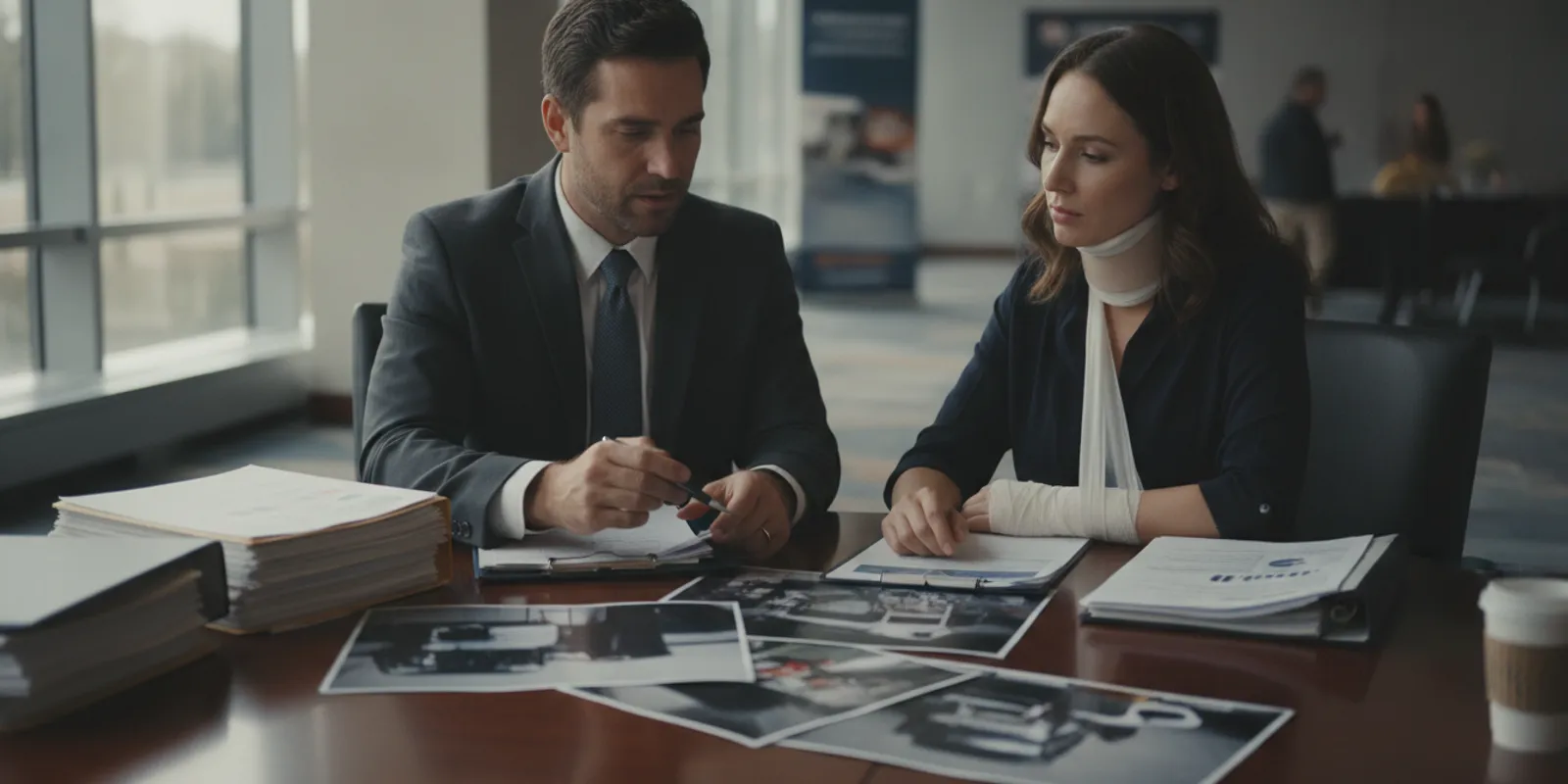
If you were injured by a drunk driver, the proof may involve much more than a police report. An injured by drunk driver attorney Texas victims consult can help organize evidence of intoxication, examine how the collision happened, and evaluate losses before important evidence disappears. Texas claims may also involve negligent-per-se arguments and exemplary damages, but each case depends on its facts and the available proof.
Call 817-731-9703 to discuss your injury claim
What evidence can show that the other driver was intoxicated?
Intoxication is often investigated through several sources instead of one document. A conviction may support an injury claim, but a criminal case and a civil claim have different purposes, procedures, and proof. Do not assume that the absence of an arrest ends the inquiry. The available evidence may still help explain impairment, unsafe conduct, and responsibility.
Useful evidence can include:
- The crash report, officer observations, field sobriety testing, and arrest information.
- Breath, blood, or other test results, including the time and method of testing.
- Video from nearby businesses, traffic systems, residences, or the responding officer.
- Witness statements about drinking, speech, balance, driving behavior, or the minutes before the collision.
- Bar, restaurant, event, delivery, or payment records when the circumstances make them relevant.
- Messages, photographs, social media posts, and other time-stamped material.
- Vehicle data, roadway evidence, photographs, damage patterns, and medical records.
Preserve what you already have. Save original files instead of only screenshots, write down witness names and contact information, and keep every document received from an insurer, hospital, law-enforcement agency, or medical provider. Do not try to obtain restricted records by making false statements or contacting someone in a threatening way.
Testing evidence deserves close review. Timing, collection procedures, chain of custody, equipment, and the relationship between a later test and the time of driving can affect how evidence is interpreted. An academic discussion of DUI litigation describes how counsel may challenge statements and test results in appropriate circumstances: The Consequences of a DUI for a Law Student. That general discussion is not a prediction about any Texas case, but it illustrates why a test result should be examined in context rather than treated as the entire case.
How does negligent per se fit into a Texas injury claim?
Negligent per se is a legal theory that may apply when a person violates a safety statute, the violation causes the type of harm the statute was intended to prevent, and the injured person falls within the protected group. A driving-while-intoxicated offense may be relevant to that analysis. The theory does not eliminate the need to prove other parts of the case, and it does not automatically decide every issue.
A claim still requires careful attention to causation. The evidence should connect the impaired conduct to the collision and then connect the collision to the injuries and losses. Ask whether intoxication affected speed, lane position, reaction time, attention, or decision-making; whether another event contributed; whether the impact caused the claimed injuries; and what records document the resulting losses.
Texas comparative-responsibility rules can make the facts important on more than one side of the dispute. An insurer or defense lawyer may argue that another person contributed to the incident or that a medical condition had another cause. A strong file addresses those arguments with evidence. It does not rely only on the fact that alcohol was suspected.
For a broader explanation of how an injury practice approaches serious losses, review what a personal injury law firm actually does. For a case involving a fatal outcome, the issues may be different; Texas wrongful-death claim guidance explains why surviving family members may need a separate legal analysis.
What should you do in the first days after the collision?
Your first priority is safety and medical attention. Follow emergency instructions, obtain needed treatment, and tell providers about symptoms even when they appear mild. Some injuries become more apparent later. Keep appointments and follow reasonable treatment instructions, while asking questions when a recommended service is unclear.
- Request or identify official records. Note the incident number, responding agency, date, location, and known witnesses.
- Preserve photographs and video. Keep original files and record when, where, and by whom they were made.
- Build a treatment file. Save discharge papers, bills, prescriptions, referrals, work restrictions, and mileage information.
- Report the incident as required. Give truthful basic information, but do not guess about fault, future recovery, or the full value of the case.
- Be cautious with recorded statements. Ask what is being requested and why before providing a recorded account to an insurer.
- Ask for a deadline review. Texas filing periods and notice requirements can depend on the claim and the parties involved.
Do not delete posts, alter photographs, repair or discard damaged property before documenting it, or discuss confidential legal advice in public messages. Avoid posting an argument about fault or a detailed account of injuries. Public content can be copied and presented without the context intended.
How are injury losses evaluated?
A claim may include economic and noneconomic losses when supported by the facts and applicable law. Evaluation should distinguish losses that have already occurred from those that may continue. It should also account for the effect of an injury on work, ordinary activities, relationships, and future treatment.
| Claim area | Examples of supporting proof | Questions for review |
|---|---|---|
| Medical treatment | Records, bills, prescriptions, referrals, and provider opinions | What treatment was needed, and what may be needed later? |
| Income and work | Pay records, employer information, restrictions, and self-employment records | How did the injury affect time worked, duties, or earning ability? |
| Daily-life effects | Witness accounts, journals, photographs, and treatment notes | What activities, routines, or relationships changed? |
| Property and related expenses | Photographs, estimates, receipts, and transportation records | What costs were caused by the incident and documented? |
| Future consequences | Qualified medical opinions and vocational or financial evidence when appropriate | Are ongoing care, limitations, or future losses reasonably supported? |
Do not measure the case only by the first settlement offer or the total of bills collected so far. A quick offer may not account for future treatment, work limitations, or disputed causation. At the same time, a demand should be supported by records rather than an unsupported number.
When can exemplary damages become an issue?
Exemplary damages are different from compensation for medical expenses, lost income, pain, or other injury-related losses. They address particularly blameworthy conduct when legal requirements are met. Evidence of intoxication may be relevant, but it does not automatically establish entitlement to exemplary damages.
The analysis can involve the driver’s conduct, surrounding circumstances, strength of proof, and required level of culpability. A demand for exemplary damages should be based on the record and applicable law. It should not be treated as a guaranteed category of recovery simply because alcohol was involved.
This issue is distinct from negligent per se. One theory may concern the effect of a statutory violation on negligence. Exemplary damages concern a separate question about the nature of conduct and the available remedy. Keeping those issues separate helps prevent an otherwise persuasive injury claim from being overstated.
How does a lawyer approach claim strategy?
Strategy begins with identifying what must be proved and what may be disputed. That means examining the collision, intoxication evidence, medical timeline, financial effect, and applicable deadlines as one connected file.
Preserve time-sensitive evidence
Video may be overwritten, vehicles may be repaired, witnesses may forget details, and online material may change. Early requests can help identify records before they are lost. A lawyer may determine whether formal preservation steps are appropriate. Make a timeline with exact dates: collision, first treatment, reported symptoms, test collection, and any insurer contact. That chronology can reveal gaps to investigate rather than hide them.
Separate criminal and civil evidence
A criminal charge or conviction can matter, but the civil claim still needs its own evidence. The file should explain the collision, injuries, losses, and legal theories without assuming one court proceeding will establish every issue. Keep copies of publicly available criminal case information, but do not contact jurors, witnesses, or prosecutors to influence a separate matter.
Test the insurer’s position
Insurers may ask for broad medical authorizations, recorded statements, or information that requires context. Review the request before signing or responding. A lawyer can help identify missing records, disputed facts, and an appropriate response to a settlement offer. For example, if an adjuster questions a treatment gap, note the actual reason, such as a scheduled follow-up or transportation difficulty, and ask the provider whether the record reflects it accurately.
Prepare for more than negotiation
Many claims are discussed through negotiation, but preparation should account for possible litigation. Organize witnesses, medical proof, expert issues, photographs, testing evidence, and a damages presentation that can withstand questions. Keep a source list: identify who created each record, when it was created, and which fact it supports. A photograph of a scene may establish layout, while a medical note may document symptoms; neither necessarily proves every part of the claim.
Hoch Law Firm handles selective catastrophic-injury matters and represents clients through a personalized approach. Tim Hoch is Board Certified in Personal Injury Trial Law. Learn more at Tim Hoch’s biography, or review reported case results, understanding that past outcomes do not predict a result in a new matter.
What should you bring to an initial claim review?
Bring what you have, even if the file is incomplete. A useful review can identify what remains to be requested. Consider gathering the incident report and any citation information; photographs, videos, witness details, and a short timeline; medical records, bills, restrictions, and missed-work information; insurer letters, offers, statement requests, and releases; and notes about symptoms, daily limits, prior relevant treatment, and future appointments.
Arrange material in three groups. First, put event evidence in date order. Second, group treatment and work records by provider or employer. Third, separate communications and deadlines, marking any date the insurer or court has supplied. A simple index can say “video—intersection—saved October 27” or “clinic note—first report of shoulder pain.” This does not replace legal review; it makes it easier to locate and discuss key items.
Be direct about difficult facts, including prior injuries, medication, alcohol use by anyone involved, or gaps in treatment. Early disclosure allows the legal analysis to address those facts instead of being surprised later. Do not alter a record to make the timeline appear neater. If you do not know an answer, say so and identify what may help verify it.
What issues can make an intoxication claim harder to prove?
Evidence of drinking does not answer every legal question. A defense may focus on whether proof shows impairment at the relevant time, whether conduct caused the impact, or whether another explanation better accounts for the injury. Identifying these questions early can make investigation more useful.
For example, a test taken well after a collision may require a timeline. A witness may remember drinking earlier but not how the driver appeared at the time of driving. A video may show only part of an intersection. Medical records may document treatment without explaining how a condition affects future work. Each limitation affects how evidence should be presented.
The insurer may point to delayed treatment, a prior condition, an inconsistent statement, or an activity that appears inconsistent with claimed limitations. These facts do not automatically defeat a claim. Answer them with accurate context, provider records, witness information, and a clear explanation of what changed after the collision.
Preservation requests should be targeted enough to explain what is sought and why it matters. A lawyer may evaluate police materials, testing records, business records, electronic data, and witness testimony together. The goal is not to collect every possible document. It is to build a reliable account of the event, responsibility, and losses that followed.
A useful way to test the file is to consider competing explanations. If the other driver says a sudden obstacle caused a swerve, what scene evidence or witness account bears on that explanation? If the defense disputes the timing of an injury, what symptom notes or early treatment records help clarify it? If work loss is contested, do restrictions and employer records tell a consistent story? These questions help direct requests toward relevant proof rather than a pile of unrelated documents.
Finally, avoid treating a strong fact as a substitute for a complete case. Intoxication may draw attention to the driver’s conduct, but the claim still needs a coherent medical and damages presentation. A well-organized file makes it easier to respond when the opposing side separates one fact from the rest of the evidence.
Frequently Asked Questions
Does a drunk-driving conviction guarantee compensation?
No. A conviction may be important evidence, but the civil claim must still address causation, injuries, losses, defenses, and requirements for the remedies sought.
What if the driver was not arrested?
The absence of an arrest does not by itself resolve a civil claim. Witness accounts, video, testing information, driving conduct, medical proof, and other evidence may still be relevant.
Can I seek exemplary damages?
Possibly, depending on the facts and legal requirements. Intoxication alone does not guarantee exemplary damages. Conduct and supporting proof need a separate evaluation.
Should I accept an insurer’s first offer?
Do not accept or sign a release until you understand what the offer covers and whether future losses are known. Once a release is signed, additional recovery may be limited.
How soon should I speak with an attorney?
Prompt advice can help preserve evidence and identify deadlines. It is especially useful when injuries are serious, intoxication evidence is disputed, or an insurer requests a statement or release.
Schedule a Texas injury claim review
If you were injured by an impaired driver, gathering accurate evidence early can protect your ability to evaluate the claim and pursue the remedies supported by the facts.