A motorcycle crash can leave a rider facing emergency treatment, missed work, disputed facts, and financial pressure at the same time. The first account may come from a police report, a witness, or an insurer before the full evidence is collected.
Call Hoch Law Firm to discuss your motorcycle injury claim
A claim review by a Texas motorcycle injury lawyer should examine how the crash happened, whether another party was negligent, what evidence supports liability, and how the injuries affect medical care, work, and daily life. Texas responsibility and damages are fact-dependent, so prompt documentation and legal review can matter, particularly after a serious or permanent injury.
Start by separating the visible damage from the questions that require careful analysis. The severity of the injuries, available evidence, and conduct of everyone involved can shape what happens next.
This educational guide is not legal advice. The facts, evidence, and applicable law in each motorcycle injury claim require individual review.
Why Motorcycle Injuries Require a Careful Review
A motorcycle crash can create serious injuries, complicated treatment, and disputed accounts of what happened. Riders have less physical protection than occupants of enclosed vehicles, so a collision can result in fractures, traumatic brain injuries, spinal injuries, deep abrasions, or other life-altering harm. Some injuries are obvious at the scene. Others develop or become clearer after emergency treatment, imaging, surgery, or follow-up appointments.
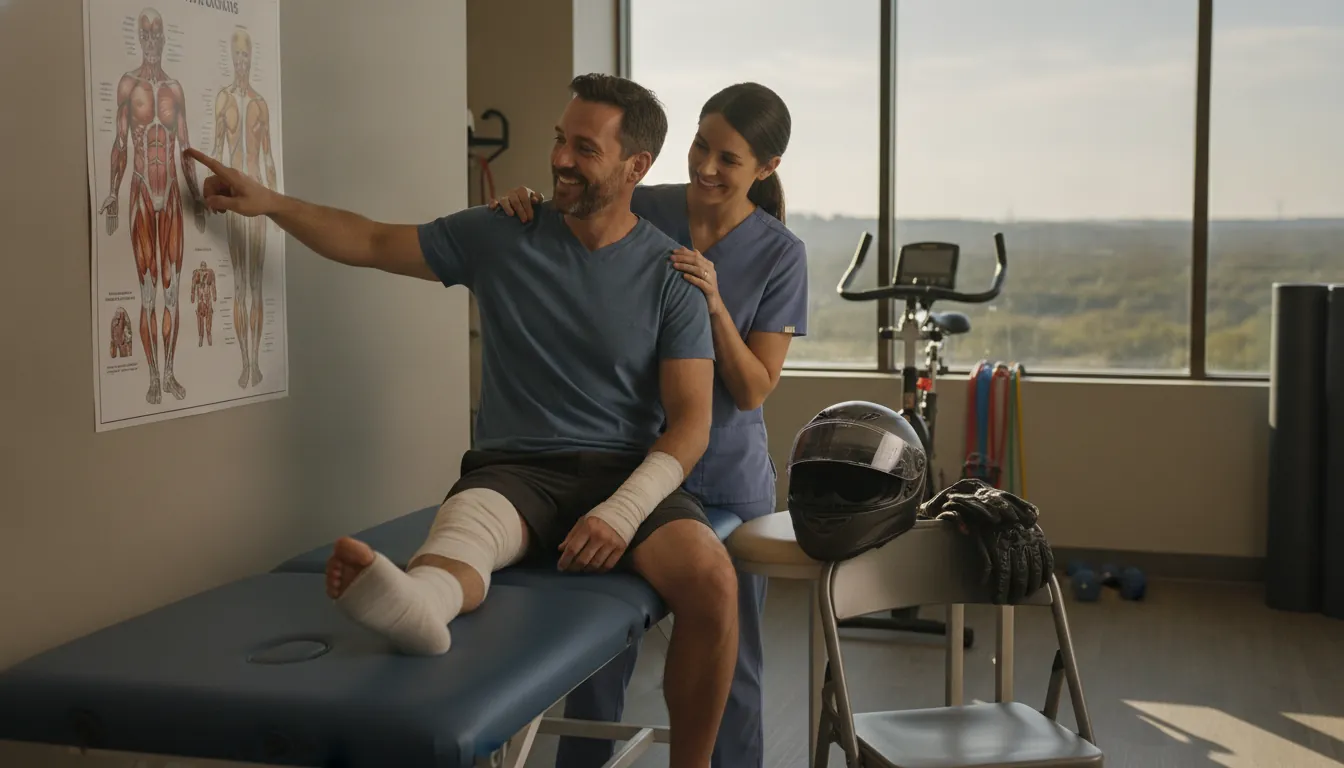
The medical record matters because it documents symptoms, diagnoses, treatment recommendations, limitations, and whether additional care may be needed. A claim should not be evaluated only by looking at the first hospital bill or initial diagnosis. Treatment may involve surgery, rehabilitation, medication, counseling, assistive equipment, or ongoing care. Those needs should be documented as recovery develops.
The account of the crash also may not be settled. A police report, witness statement, driver’s version of events, roadway evidence, and available video may tell different parts of the story. Visibility, traffic movement, speed, lane position, signals, and the timing of each action can affect the liability analysis. An incomplete report or negative witness account does not automatically resolve the issue. It makes evidence preservation and careful reconstruction more important.
Treatment and liability must be considered together. Medical providers can explain how the injuries relate to the force of the collision and how they affect work, mobility, sleep, household responsibilities, and daily life. Employment records may help show lost income or reduced capacity. Photographs, damaged equipment, scene evidence, messages, and witness contact information can help test competing explanations.
A fact-specific review is especially important when injuries are permanent, recovery is uncertain, multiple parties may be involved, or financial pressure is mounting. General information about motorcycle crashes cannot decide an individual Texas claim. The relevant questions include what happened, what evidence supports each account, how treatment is progressing, and what losses may continue.
What Evidence Helps Establish Fault After a Texas Motorcycle Crash?
Evidence should tell a consistent story about what happened, who had the opportunity to avoid the collision, what conduct caused it, and how the crash caused the injuries that followed. That story can be difficult to reconstruct after a motorcycle crash, especially when the rider is hospitalized or a police report does not capture every detail. A Texas motorcycle accident attorney can evaluate the available records, identify gaps, and investigate disputed accounts.
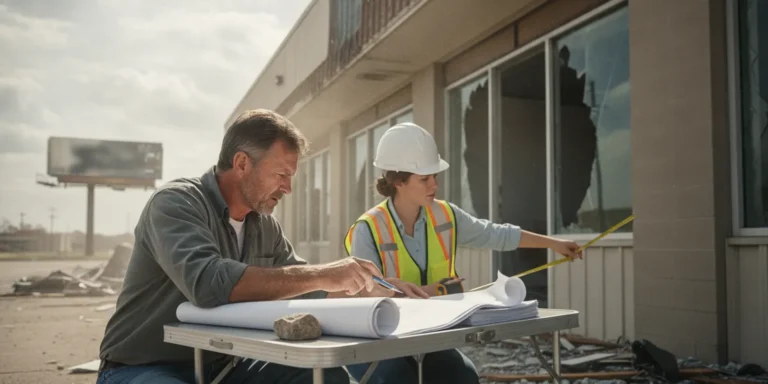
Start with the crash scene whenever it is safe and possible. Photos and video can show vehicle positions, skid marks, debris, lane markings, traffic controls, sight lines, weather, lighting, road defects, and damage patterns. Take wide images that establish location and closer images that preserve details. If you cannot document the scene yourself, ask a trusted person to do so. Conditions can change quickly after a collision.
Witness information is important. Obtain names and contact details for people who saw the impact, the moments before it, or what happened afterward. A witness may clarify whether another driver turned across the motorcycle’s path, failed to yield, changed lanes, followed too closely, or appeared distracted. Witness accounts can conflict, so preserve each account promptly rather than relying on memory months later.
Request and preserve official records, including the police or crash report, citations, 911 recordings, dispatch information, and related investigation materials. A report is useful, but it is not automatically the final word on fault. It may contain an incomplete account, a mistaken assumption, or statements from people who did not see the entire collision. Photographs, vehicle data, witness testimony, and video may support or challenge the report.
Look for video before it disappears. Nearby businesses, homes, traffic cameras, vehicles, and security systems may have recorded the crash or the approach to the intersection. Ask potential custodians to preserve relevant footage quickly because many systems overwrite recordings on a short cycle. Keep the original version and note when, where, and from whom it was obtained.
Preserve the motorcycle, helmet, protective clothing, and other gear. Do not repair, sell, discard, or materially alter damaged items before they can be photographed and evaluated. Damage patterns may help explain the direction and force of the impact. Helmet evidence should be considered separately from the question of who caused the crash. A safety item may reduce harm without deciding liability.
Medical and work records help connect the collision to the claimed harm. Keep emergency records, diagnostic images, treatment notes, prescriptions, therapy records, bills, and instructions from each provider. Wage statements, attendance records, job restrictions, and documentation of missed work can show financial effects. When injuries are serious or permanent, future treatment and work limitations may require additional medical and vocational analysis.
Finally, causation must be examined, not assumed. The evidence should connect the conduct that caused the collision to the physical injuries, treatment, lost income, and other effects. Prior conditions do not automatically defeat a claim, but medical history and timing must be evaluated carefully. Preserve communications with insurers and avoid guessing about fault before the evidence is reviewed.
How a Texas Motorcycle Injury Lawyer Reviews a Claim
A motorcycle injury lawyer Texas claim review is not based on the motorcycle alone or on a single statement made immediately after the crash. It compares the physical evidence, witness accounts, medical records, employment information, and insurance communications. The goal is to identify what can be established, what remains disputed, and what additional investigation may be necessary.
Texas has proportionate responsibility rules in Chapter 33 of the Civil Practice and Remedies Code. The Texas Legislature’s Chapter 33 materials provide the statutory text. Applying those rules to a particular claim requires a fact-specific legal analysis. A general article cannot determine how responsibility would be evaluated in an individual crash, and an insurer’s initial position is not a final finding.
| Issue to review | Why it matters |
|---|---|
| Traffic movement | Lane changes, turns, merging, following distance, and right-of-way can affect how each person’s conduct is understood. |
| Speed and visibility | Road conditions, lighting, weather, sight lines, and vehicle speed may help explain what a driver or rider could observe and avoid. |
| Police report and witness accounts | Statements may be incomplete or inconsistent, so the report should be compared with photographs, physical evidence, recordings, and testimony. |
| Injury connection | Medical records and treatment history can help show which injuries followed the crash and what care may be needed. |
| Available recordings | Traffic cameras, business video, helmet cameras, vehicle recordings, and phone footage may preserve timing or movement that memory cannot. |
Evidence can matter at two separate levels. First, it may help explain how the collision occurred. Second, it may help connect the collision to the injuries and losses that followed. A prompt investigation can be especially important when the motorcycle, roadway, traffic signals, or vehicles are repaired or moved before the evidence is documented.
Helmet use, protective equipment, and prior medical history can also become topics in a claim. Those issues should not be treated as automatic proof that a rider caused the crash. Their significance depends on the facts, applicable law, and relationship between the issue and the claimed injuries. Avoid posting detailed conclusions before the evidence has been reviewed.
Which Damages May Be Part of a Serious Motorcycle Injury Claim?
A serious motorcycle crash can affect nearly every part of a person’s life. Medical treatment may begin with emergency care and continue through surgery, hospitalization, medication, physical therapy, occupational therapy, or other rehabilitation. The injuries may also require changes at home, repeated appointments, and help from family members.
Medical expenses may include ambulance transportation, emergency evaluation, diagnostic testing, physician visits, surgery, prescriptions, durable medical equipment, and follow-up care. Rehabilitation can include physical therapy, occupational therapy, speech therapy, counseling, or treatment for a traumatic brain injury. A complete review should consider care that is reasonably expected in the future, not only bills already received.
Future needs can be significant when an injury causes permanent limitations. A person may need additional procedures, assistive equipment, home modifications, attendant care, or long-term rehabilitation. Medical professionals may help explain the anticipated treatment and its connection to the crash. The evidence should distinguish reasonable future needs from speculation.
Lost income is another common source of financial pressure. A seriously injured person may miss work during emergency treatment and recovery, use paid leave, lose overtime, or be unable to return to the same position. A claim may also consider reduced earning capacity when the injury affects the ability to work, advance, change occupations, or maintain the same schedule. Pay records, tax documents, employer testimony, and vocational or medical opinions may help establish these effects.
Damages are not limited to financial records. Pain, physical limitations, sleep disruption, anxiety, depression, trauma, scarring, disfigurement, and loss of enjoyment of ordinary activities may be relevant. These effects should be described consistently in treatment records and personal accounts. The goal is not to exaggerate symptoms. It is to explain how the injury changed daily life and why those changes matter.
Household limitations may also deserve attention. Someone who once handled childcare, cooking, cleaning, driving, home maintenance, or personal care may need assistance after a crash. Family members may provide that support, or paid services may become necessary. Document the tasks affected, the time involved, and the duration of the limitation.
Property damage is a separate issue that may include motorcycle repairs, replacement value, damaged safety equipment, towing, storage, and other crash-related losses. Preserve photographs, repair estimates, receipts, and the motorcycle itself when its condition may help show what happened. Property evidence does not replace proof of bodily injury, but it may support the overall reconstruction of the event.
When a crash causes a death, the family may face a wrongful death claim and a different set of legal and financial issues. Funeral expenses, lost financial support, household contributions, and the family’s emotional loss may be relevant, subject to Texas law and the facts of the case. Because damages and available claims vary, prompt review can help a family understand its options without relying on assumptions or guarantees.
What Should You Document After a Motorcycle Crash?
After a motorcycle crash, documentation should begin with safety and medical care. Evidence can disappear quickly, while pain and stress can make details harder to recall. An organized record helps preserve what happened, how the injury developed, and how the crash affected daily life. It also gives a lawyer a clearer starting point when evaluating fault, insurance issues, damages, and whether a claim may be appropriate.
Do not put yourself in danger to collect evidence. If you are seriously injured, follow emergency instructions and ask a trusted person to help. Your health comes first. Then use this checklist as conditions allow:
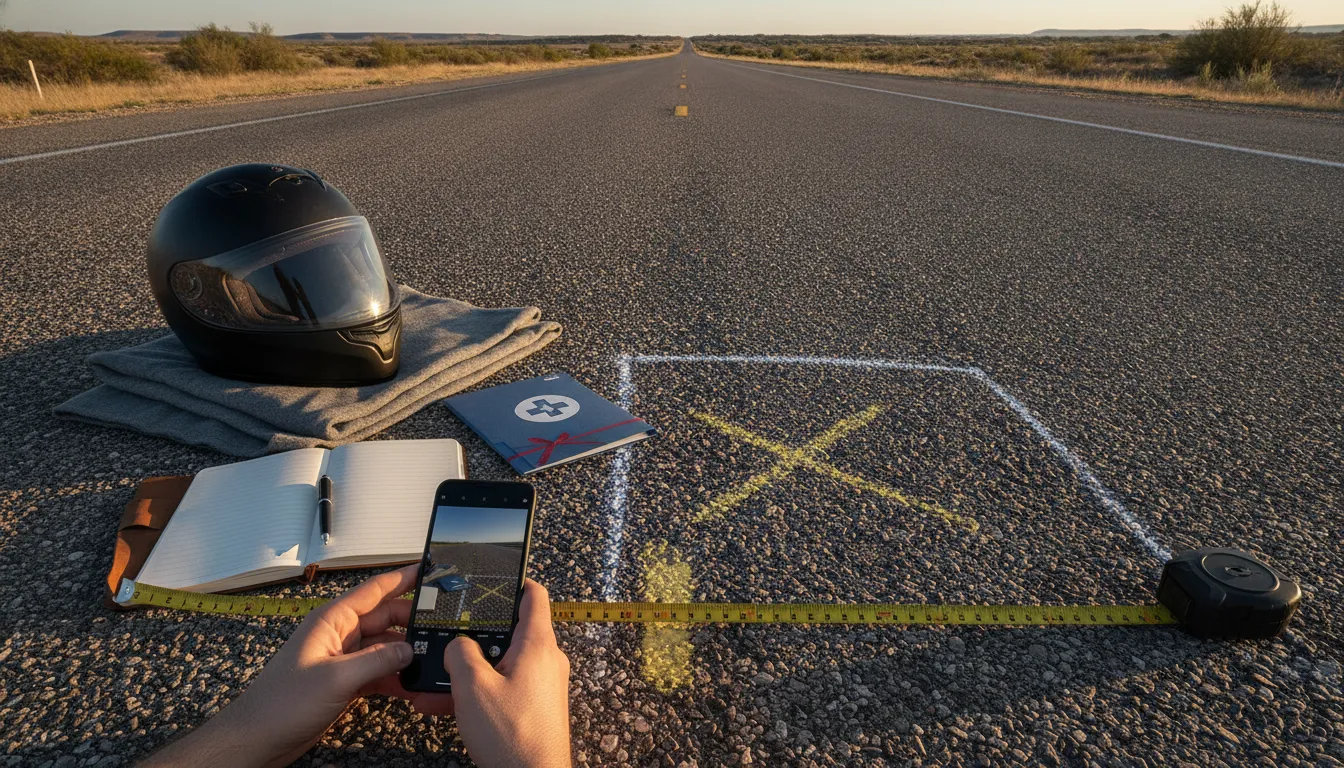
- Protect your safety and obtain treatment. Move away from traffic only if you can do so safely. Call 911 when appropriate, request medical evaluation, and follow discharge instructions. Keep a timeline of symptoms, appointments, prescriptions, therapy, restrictions, and changes in your condition.
- Write down the crash details. As soon as you are able, record the date, time, location, weather, road conditions, direction of travel, traffic signals, lane positions, and what you remember about the impact. Note the identities and contact information of involved drivers, passengers, responding officers, and anyone who helped.
- Take photographs and preserve video. Photograph the roadway, traffic controls, debris, skid marks, lighting, property damage, visible injuries, protective equipment, and nearby businesses. Save original files when possible. Ask nearby businesses, residents, or witnesses whether cameras may have captured the crash because recordings may be overwritten.
- Identify witnesses. Collect names, phone numbers, email addresses, and a brief description of what each witness observed. Avoid arguing with witnesses or pressuring them to adopt a particular version of events.
- Keep medical, work, and financial records. Save bills, explanation-of-benefits statements, pharmacy receipts, diagnostic results, treatment notes, work restrictions, wage documentation, and mileage logs. Keep a daily journal describing pain, sleep, mobility, household limitations, missed work, and assistance provided by family members.
- Organize insurer communications. Keep every letter, email, text message, claim number, estimate, and recorded-statement request. Write down the date, time, representative, and substance of each call. Be accurate and avoid guessing about fault, future recovery, or the full extent of your injuries.
Store these materials in one secure folder with a backup, and update it as treatment continues. Do not sign a release or accept a settlement before you understand what claims and future needs it may affect. A prompt review with Tim Hoch’s credentials can help identify questions for a fact-dependent evaluation.
When Should You Consult a Motorcycle Injury Lawyer in Texas?
You do not need to wait until treatment ends, bills arrive, or an insurer makes an offer before seeking legal guidance. Prompt review can help preserve evidence, identify the parties involved, and clarify whether a serious motorcycle injury claim fits the firm’s practice. The right time to consult a motorcycle injury lawyer in Texas is usually when the crash has created substantial medical, financial, or legal complications.
The injury is serious or recovery is uncertain
Consult counsel when the injury involves surgery, a traumatic brain injury, spinal damage, fractures, permanent impairment, significant scarring, or lengthy rehabilitation. Some effects become clearer only after treatment progresses. A record of emergency care, follow-up visits, therapy, work restrictions, and future-care recommendations can be important when evaluating the full impact.
Fault or evidence is disputed
Prompt legal review may be useful when an insurer blames the rider, a police report is incomplete, witnesses disagree, video may exist, or multiple people or entities may share responsibility. Evidence can be lost, repaired, overwritten, or become harder to locate as time passes. Preserving photographs, damaged equipment, medical records, witness information, and communications allows counsel to evaluate liability and causation while the facts are available.
An insurer is pressing you to act before you understand the claim
Be cautious if an insurer asks for a recorded statement, requests a broad medical authorization, urges a quick release, or presents an offer before the long-term effects are known. Provide necessary information honestly, but do not make major decisions without understanding what rights or future needs may be affected. Legal deadlines and coverage questions depend on the facts, so prompt review is safer than relying on a general rule.
A consultation can clarify whether the case is a fit
A case evaluation can organize the crash timeline, treatment, lost income, household effects, insurance information, and available evidence. It can also explain whether settlement discussions, further investigation, or litigation may be appropriate. Hoch Law Firm’s Fort Worth 18-wheeler accident lawyer page provides related information about the firm’s personal-injury practice. The firm evaluates factors such as injury severity, liability, damages, and available coverage.
Call Hoch Law Firm to discuss your motorcycle injury claim
Frequently Asked Questions
How much compensation can someone recover after a motorcycle accident?
There is no reliable fixed amount. The value of a claim depends on the injuries, medical treatment, future care needs, lost income, pain and suffering, household effects, property damage, liability evidence, and available insurance coverage. A serious or permanent injury may involve needs that are not clear immediately after the crash. A fact-specific review is necessary before discussing potential compensation.
Can a rider recover if an insurer says the rider was partly responsible?
Possibly, depending on the evidence, the applicable Texas responsibility rules, and the percentage of responsibility assigned. The question is not answered simply because a motorcycle was involved. Witness accounts, photographs, video, physical evidence, medical records, and testimony may all affect how responsibility is evaluated.
What if the police report blames the motorcyclist?
A police report can be important, but it is one part of the record rather than the only source of truth. The report may reflect limited information gathered at the scene. Additional evidence may clarify traffic movement, visibility, timing, impact location, or statements that were not included. Preserve the report and related evidence for a complete review.
Should someone accept an insurer’s settlement offer quickly?
Do not accept a settlement or sign a release before understanding the injury, future treatment, lost income, property damage, and legal rights involved. Some effects become clearer only after treatment progresses. Keep the offer and related communications, and obtain fact-specific guidance before making an irreversible decision.
What makes Hoch Law Firm different in serious injury matters?
Hoch Law Firm selectively reviews serious injury matters in Texas and the Dallas-Fort Worth and broader North Texas region. Tim Hoch is Board Certified in Personal Injury Trial Law by the Texas Board of Legal Specialization. Whether a case is a fit depends on its facts, liability evidence, injuries, damages, and available coverage. Prior results do not predict the outcome of a new matter.
This educational guide is not legal advice. Readers should obtain advice about their own circumstances.