When a covered loss leaves a Texas building subject to newer construction requirements, the cost of putting it back the way it was may not be the cost of putting it back legally. A city or county may require changes to electrical systems, safety features, accessibility, demolition, or reconstruction before issuing permits. This ordinance or law coverage claim guidance for Texas property owners explains how to separate those added costs from ordinary repairs and build a clearer claim record.
Ordinance or law coverage may help pay increased repair, replacement, demolition, or reconstruction costs required by current building codes. But coverage depends on the policy language, endorsements, limits, exclusions, and facts of the loss. The Texas Department of Insurance describes this coverage as addressing extra construction or repair costs needed to meet current building codes. TDI guidance does not replace a review of the specific policy.
The first step is separating direct physical damage from added code-compliance work, then comparing both categories with the declarations, endorsements, estimates, and permitting requirements. That distinction matters whether the property is a home, apartment, office, retail building, warehouse, or another Texas property.
What Does Ordinance or Law Coverage Pay After a Covered Loss?
Ordinance or law coverage is designed for a specific gap: a covered loss damages property, and current building requirements make the lawful repair or reconstruction more expensive than a basic restoration. The coverage may address some of the added expense, but the policy controls whether the expense is covered and which coverage part, limit, or condition applies.
The Texas Department of Insurance commercial property insurance guide explains that ordinance or law coverage can pay extra construction or repair costs needed to meet current building codes. That is different from the ordinary cost of repairing physical damage caused by a covered event. A useful claim analysis therefore separates the baseline repair from the code-driven increase instead of combining every cost in one estimate.
Ordinary repair versus code-required work
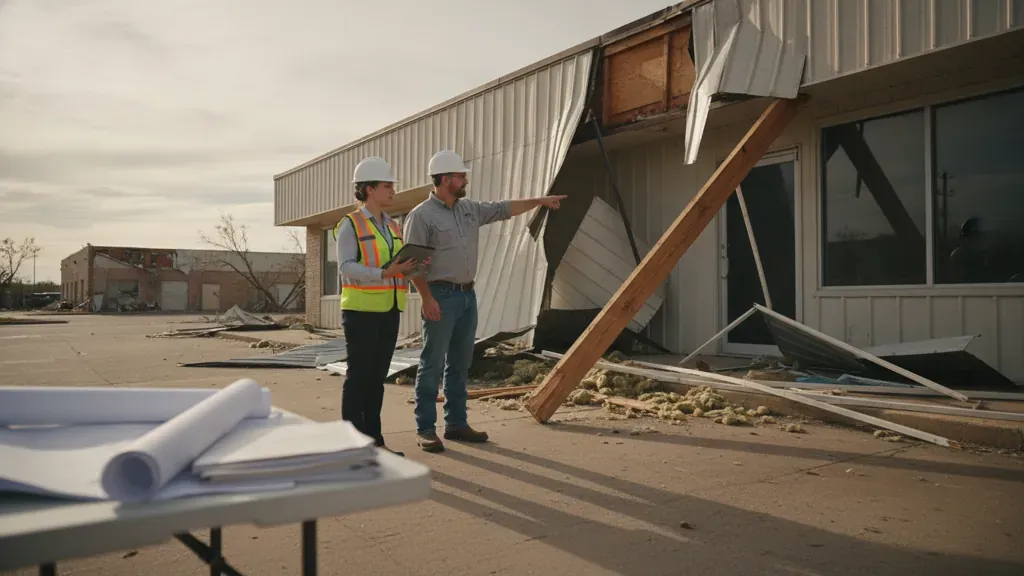
Assume a covered storm, fire, or other event damages part of a roof, electrical system, exterior wall, or structural area. The base claim may involve repairing or replacing the damaged portion with materials of like kind and quality, subject to the policy’s valuation terms. A building official may then require additional structural work, upgraded systems, accessibility changes, or other measures before issuing a permit or approving occupancy.
The additional work may be the type of expense ordinance or law coverage addresses. It is not automatically covered merely because a contractor includes it in an estimate. Ask the contractor, engineer, architect, or building official to identify which work restores direct physical damage, which work is required by current law, and which work is an elective improvement.
Demolition and reconstruction can create separate issues
Some code requirements affect more than the visibly damaged area. An official may require demolition of an undamaged portion, removal of debris, or reconstruction to current standards. Standard property policy forms may exclude loss caused by enforcement of an ordinance or law, including requirements regulating construction or repair or requiring demolition. An endorsement can modify that exclusion and provide additional coverage, but the trigger, limit, and covered categories depend on the policy.
Do not assume that a general replacement-cost limit automatically pays every code-upgrade expense. Review the declarations, ordinance or law endorsement, applicable sublimits, exclusions, deductible, and conditions requiring actual repair or replacement. Keep code notices, permit requirements, inspection reports, photographs, plans, estimates, and invoices because those records help connect the added work to the covered loss.
What Ordinance or Law Coverage Claim Guidance for Texas Property Owners Should Cover
A property owner can organize the claim around three questions: What did the covered event damage? What additional work does current law require? What does the policy promise for that added work? Answering those questions in order helps avoid a claim file that mixes covered damage, upgrades, maintenance, and unrelated improvements.
- Secure the complete policy. Save the declarations, coverage forms, endorsements, exclusions, conditions, schedules, and renewal documents for the policy in effect on the date of loss. A certificate, declarations page, or agent summary is not a substitute for the full policy.
- Report the loss and preserve the claim number. Keep the notice of loss, confirmation, adjuster contact information, inspection dates, requests for information, and every written position from the insurer.
- Obtain code-related documentation. Request written permit requirements, inspection findings, notices from the building department, demolition directives, or other official explanations showing why the proposed work is required.
- Separate the estimate. Ask the contractor or consultant to show the cost of ordinary repair separately from the increased cost caused by current code. Use line items rather than one unexplained percentage or lump sum.
- Compare the estimate with the policy. Identify the applicable ordinance or law coverage part, sublimit, deductible, trigger, proof requirements, and repair or replacement conditions. Confirm whether the policy treats demolition, debris removal, increased construction cost, or undamaged portions separately.
- Respond to disagreements in writing. If the adjuster’s estimate omits required work or uses a different scope, explain the disputed line items and attach supporting contractor, engineering, permit, or inspection materials.
The Texas Department of Insurance claim-help guidance recommends explaining disagreements with an adjuster’s estimate and sending supporting documents such as contractor estimates. That step does not decide the legal dispute, but it creates a record of what the insurer was told and what evidence supported the requested amount.
Ordinance or Law Coverage Claim Guidance for Texas Property Owners
An insurer may accept the damage but dispute whether added work is legally required, reasonable, or covered by an endorsement. Build the record around documents that connect the damage, the code requirement, and the added expense.
Policy and coverage records
Start with the complete policy, declarations page, and all endorsements. The declarations identify limits and deductibles. An ordinance or law endorsement may define whether the coverage applies to undamaged portions, demolition, increased construction cost, or other categories. It may also impose a sublimit, waiting condition, repair requirement, or deadline.
Code and permit records
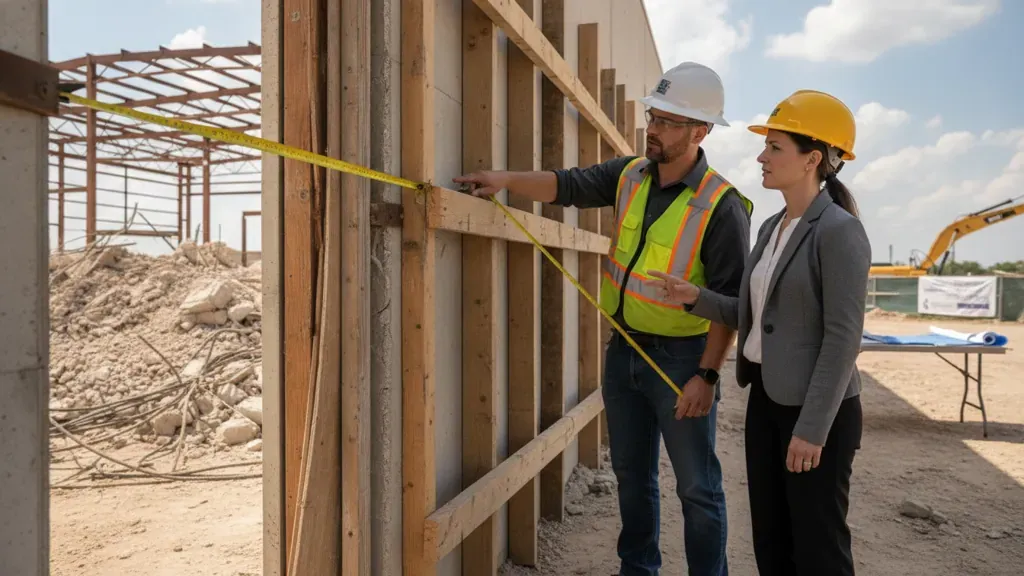
Preserve written notices from the relevant Texas building official, permit requirements, inspection findings, demolition orders, plan-review comments, and correspondence explaining why the prior condition cannot be restored without additional work. Ask the contractor, engineer, or architect to identify the particular requirement connected to each line item.
Cost and condition records
Keep detailed estimates, scopes of work, change orders, invoices, receipts, proof of payment, engineering reports, architectural materials, photographs, and videos. Dated photographs and videos should show the condition after the loss and before repairs change the evidence. Ask vendors to distinguish emergency mitigation, permanent repair, code-required work, and elective upgrades.
Claim communications
Save the notice of loss, adjuster reports, requests for information, inspection records, reservation-of-rights letters, coverage positions, denial explanations, recorded-statement notices, and every response. If an insurer says information is missing, preserve the request and the material supplied in response.
Keep a chronology showing the loss date, notice, inspections, code communications, estimate submissions, payments, supplemental requests, and insurer responses. A clear timeline can reveal whether the disagreement concerns coverage, scope, causation, valuation, proof of loss, timing, or several issues at once.
What If the Insurer Underpays or Denies the Ordinance or Law Claim?
Start by identifying what the insurer is actually disputing. An underpayment may reflect a disagreement about the amount of direct physical damage, the cost of code-required work, or both. A denial may instead rest on a coverage interpretation, exclusion, causation position, missing documentation, or the contention that no ordinance or law endorsement applies.
Those distinctions matter because different tools address different disputes. If the disagreement is primarily about the amount of a covered loss. Review the estimate line by line and provide supporting contractor estimates, code-official communications, permits, and other documents explaining the added work. Your policy may contain an appraisal provision. Appraisal can help determine the amount of a covered loss, but it does not necessarily decide whether an endorsement covers a cost or whether an exclusion applies. Review the policy before treating appraisal as the answer to a coverage dispute. Hoch’s guide to the commercial property appraisal process addresses that distinction in more detail.
If the insurer denies the claim or rejects the code-upgrade portion, ask for the position in writing. Compare the explanation with the declarations, endorsements, definitions, exclusions, and conditions. Preserve the denial, estimate, inspection report, and evidence submitted to the carrier. A written explanation can help clarify whether the next issue is policy interpretation, proof, valuation, causation, or claim handling.
Review Hoch’s information about commercial property policy exclusions when the carrier relies on an exclusion. An exclusion may not be the end of the analysis because an endorsement, exception, or other policy provision may change how the coverage question is evaluated. The exact policy wording and the facts of the loss control.
Texas claim-payment timing
Texas prompt-payment rules include timing requirements, but the deadlines depend on the claim, the information requested, the policy, and applicable exceptions. Texas Insurance Code Chapter 542 generally addresses acknowledgment after notice of a claim, written acceptance or rejection after the insurer receives required proof-of-loss materials, and payment after the insurer agrees to pay. The statute generally provides 15 business days for an acceptance or rejection after the required materials are received, with payment generally due within five business days after notice of acceptance. Extensions and other circumstances can affect the analysis.
These rules do not automatically establish that a denial or underpayment is unlawful. For a practical overview, see Hoch’s page on Texas insurance claim payment deadlines. For the statutory text, review Texas Insurance Code Chapter 542.
Call 817-731-9703 to discuss a disputed Texas property insurance payment with Hoch Law Firm.
Residential and Commercial Ordinance or Law Claims: Key Differences
The same issue can arise after damage to a home, apartment, office, retail building, or warehouse. Current code requirements may make repair or reconstruction more expensive than restoring the property. The policy, endorsements, property use, and local requirements control the analysis. Historical Texas guidance and older policy forms should not be treated as universal rules for every current claim.
Residential and commercial claims also require different questions about how the property is insured and how the claimed work is documented. The comparison below is a starting point, not a substitute for reading the declarations, exclusions, endorsements, and claim correspondence.
| Consideration | Residential property | Commercial property |
|---|---|---|
| Policy structure | Review the homeowners or dwelling policy, declarations, and any building-law or ordinance endorsement. Terms depend on the policy form and endorsement. | Review the commercial property form, declarations, limits, exclusions, and endorsements. The actual wording controls. |
| Code-related work | Identify whether an official requires repair, replacement, demolition, or construction beyond the damaged portion, and separate those costs from ordinary repair. | Identify whether current code requires changes to the building or systems, and separate those costs from ordinary repair, business personal property, and income-loss issues. |
| Evidence | Preserve the policy, endorsements, photographs, inspections, code notices, permits, estimates, invoices, and insurer communications. | Preserve those core records plus plans, engineering or contractor explanations, business-use information, detailed scopes, and records showing each calculation. |
| Primary question | Does the policy provide coverage for the added code-compliance cost, and what limit or condition applies? | Does the policy provide the claimed ordinance-or-law coverage, and are the proposed costs within the applicable coverage parts, limits, and conditions? |
Texas property owners should avoid relying on a generic percentage, dollar amount, or form from another claim. If the insurer treats code-required work as excluded or underpays the added cost, preserve the written explanation and supporting estimate. Hoch’s Texas property insurance lawyer resource explains the firm’s policyholder-focused approach.
When Should a Texas Property Owner Seek Legal Guidance?
Consider a prompt policy review when the insurer denies the claim or disputes whether work is required. A review may also help when the carrier refuses to explain a deduction, demands a release, delays a decision, or closes a supplemental request without a clear policy basis. A review can also help when a contractor’s scope, a building official’s requirements, and the carrier’s estimate do not match.
Hoch Law Firm represents policyholders in commercial property insurance disputes involving office buildings, retail centers, warehouses, manufacturing facilities, apartment complexes, and other commercial operations. The firm does not represent insurance companies. An attorney can review the policy, claim file, estimates, code records, payment history, and supporting evidence together. That review can identify whether the central issue is ordinance or law coverage, scope, causation, valuation, appraisal, business interruption, or a combination.
Legal guidance cannot guarantee coverage or a particular result. The policy language, endorsements, property, loss, claim history, and evidence determine what options may be available.
Call Hoch Law Firm at 817-731-9703 to discuss a Texas property insurance dispute.
Frequently Asked Questions
Does ordinance or law coverage pay for every code upgrade after a loss?
No. It may address added construction, repair, demolition, or reconstruction costs required by an applicable building code, but the policy language, endorsement, covered loss, limits, and exclusions control. Separate the cost of repairing direct physical damage from costs created by code enforcement.
What documents help support an ordinance or law coverage claim?
Gather the complete policy, declarations page, endorsements, photographs, inspection reports, code notices, permits, contractor estimates, invoices, and insurer communications. Ask the contractor or building official to identify which work is required by current code and which work is ordinary repair.
Can I use appraisal if my insurer underpays the claim?
Possibly. Some Texas property policies include appraisal for disagreements about the amount of loss. Appraisal may help determine the value of covered damage, but it may not decide whether an ordinance or law endorsement applies or whether a particular cost is covered. Review the policy before demanding appraisal.
How long does a Texas insurer have to respond to a property claim?
After receiving required information, Texas Insurance Code Chapter 542 generally provides business-day deadlines for acknowledgment, acceptance or rejection, and payment after acceptance. Extensions and claim-specific circumstances may apply. These deadlines and any available remedies depend on the facts, policy, and applicable law.
Should a property owner sign a claim release after receiving a payment?
Do not sign a release without understanding whether it ends the claim or waives additional benefits. Have the release, payment explanation, policy, and supporting estimates reviewed when the amount or scope remains disputed.
Call 817-731-9703 to learn whether Hoch Law Firm can help with your Texas property claim.