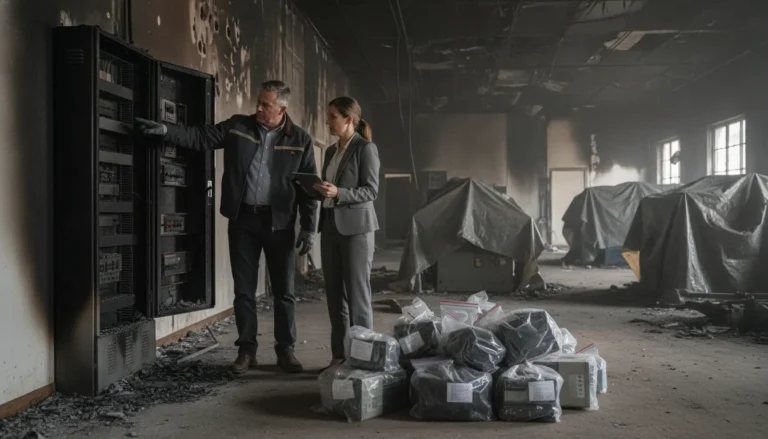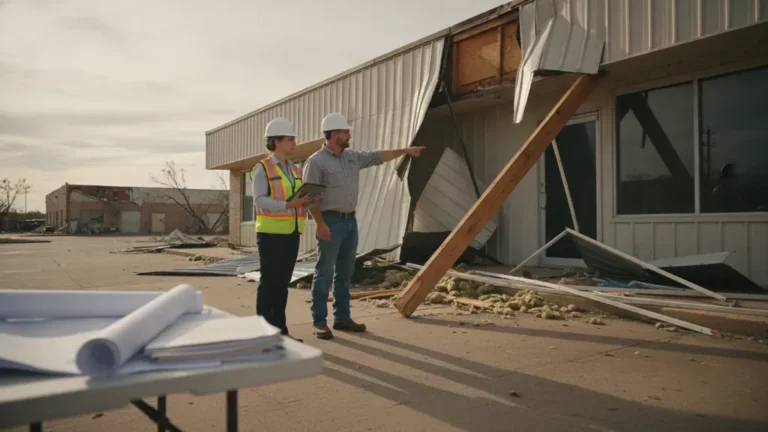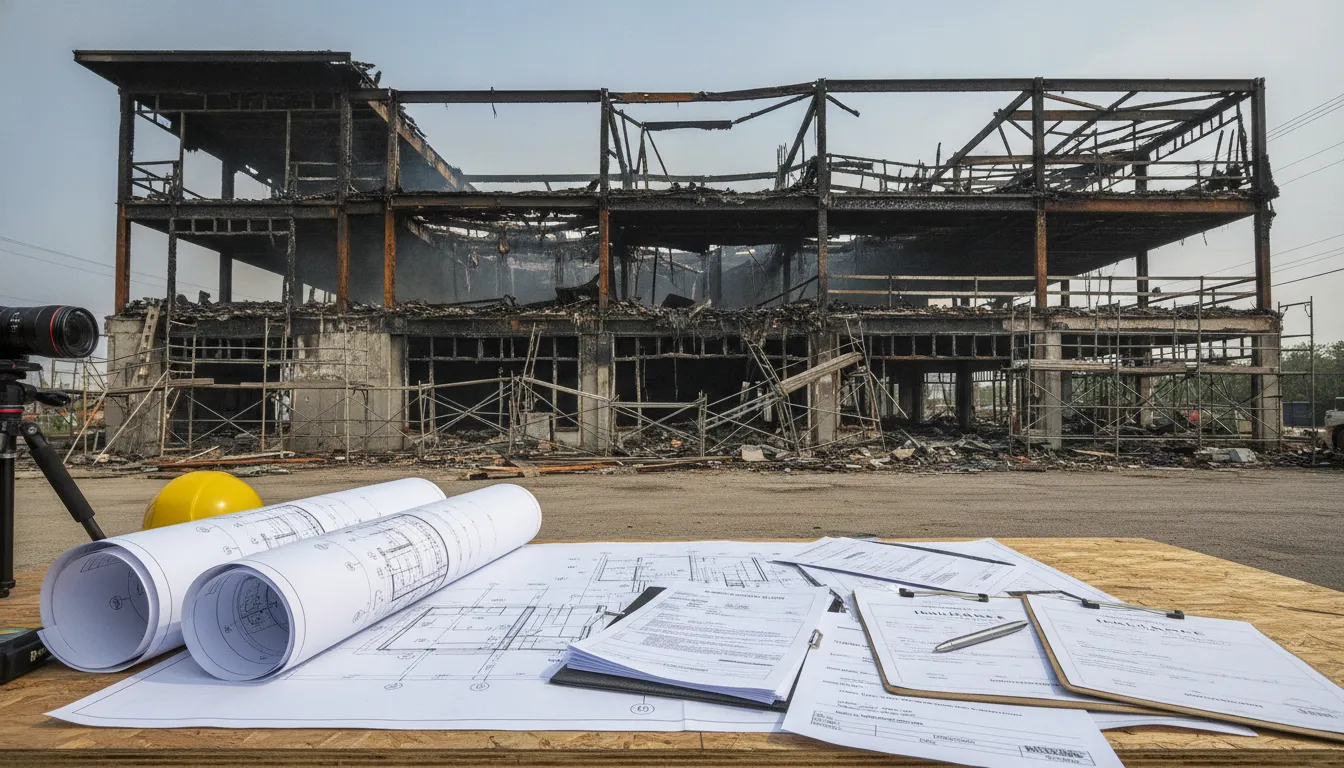
Imagine a fire tears through your commercial building, destroying part of a wall and damaging the roof. Your insurance adjuster tells you the policy will cover the repair costs. But then the city inspector arrives and delivers the real news. Because of updated building codes adopted since your property was built, the entire wall must be replaced. The roof must be upgraded to meet new fire ratings, and the electrical system needs to be brought up to current code. Your standard commercial property policy, which you thought covered the full cost of rebuilding, only covers the damaged portion with materials of like kind and quality. The tens of thousands of dollars in code-required upgrades fall entirely on you.
This scenario plays out more often than most commercial property owners realize. The coverage that bridges this gap is called ordinance or law coverage, and it is one of the most misunderstood yet critical endorsements in commercial property insurance. Understanding how it works before a loss occurs can mean the difference between a fully covered rebuild and a devastating financial surprise.
What Is Ordinance or Law Coverage?
Ordinance or law coverage is an optional insurance endorsement that pays the additional cost of bringing a damaged commercial building up to current building codes after a covered loss. It is also referred to as building code coverage or building code upgrade coverage. It addresses a gap that exists in virtually every standard commercial property insurance policy.
A standard replacement cost policy is designed to pay for repairing or rebuilding damaged property with materials of similar kind and quality. If your building had standard drywall, the policy pays for standard drywall. If your roof was built to the 1990s code, the policy pays to rebuild it to that same standard. The problem is that local building codes evolve constantly. When a partially damaged building must be brought up to modern standards, the additional cost is excluded from standard coverage.
Ordinance or law coverage is typically structured in three parts, often referred to as Coverage A, Coverage B, and Coverage C. Each section addresses a specific cost that arises when local building ordinances force upgrades beyond what simple repair would require. Understanding all three is essential for any commercial property insurance policyholder who wants truly comprehensive protection.
| Coverage | What It Pays For | Why It Matters |
|---|---|---|
| Coverage A | Loss to the undamaged portion of the building | Standard policies only pay for what is directly damaged. Coverage A covers the rest when code requires rebuilding the entire component. |
| Coverage B | Demolition cost | When code requires tearing down sound structures, coverage pays for removal where standard policies pay nothing. |
| Coverage C | Increased cost of construction | The largest gap. Pays the extra cost of rebuilding to modern code standards for fire safety, energy efficiency, and accessibility. |
How Standard Commercial Property Policies Fall Short
To understand why ordinance or law coverage matters, it helps to see exactly where standard policies stop. A typical commercial property insurance policy covers the cost of repairing or replacing damaged property. But insurance policies have long excluded costs associated with complying with ordinances or laws, classifying them as betterment expenses rather than repair costs.
Consider a concrete example. A fire damages 75 percent of a load-bearing wall in your commercial building. Your standard policy will pay to replace the damaged 75 percent of that wall. But if the local building code now requires higher fire ratings for commercial walls, you may need to replace the entire wall to meet the new standard. The 25 percent of the wall that was not damaged must come down and be rebuilt to code, but the standard policy does not cover that cost. Even worse, the higher-grade materials and construction methods required by the new code will cost significantly more than the original wall, and that difference is also excluded.
The scale of this problem is not hypothetical. In a real case involving a Florida condominium complex, the association had ordinance or law coverage with a $250,000 limit. After two hurricanes, the association needed $7 million in code-required upgrades to rebuild, leaving a $6.75 million gap that fell on the property owners. That gap is exactly what adequate ordinance or law coverage is designed to prevent.
For commercial property owners, these gaps are particularly dangerous because the stakes are higher. A commercial building typically has more complex systems, stricter life safety code requirements, and higher reconstruction costs than a residential property. Partial damage from a fire, storm, or other covered peril can trigger code requirements that multiply the total rebuild cost several times over. Our firm regularly handles fire damage claims where code upgrade disputes become a central issue in the claim.
Coverage A: Loss to the Undamaged Portion
Coverage A addresses a quirk in how standard insurance policies calculate what they owe. When only part of a building component is damaged, standard policies pay only for the damaged portion. But when local building codes require that the entire component be replaced to meet current standards, the undamaged portion becomes a loss that the property owner must absorb.
Going back to the wall example. If a fire destroys 75 percent of a wall and the city requires the entire wall to be rebuilt to meet current fire codes, the standard policy pays for 75 percent of the wall. Coverage A pays for the remaining 25 percent of the wall that was not directly damaged by the fire but must still be demolished and rebuilt to comply with the ordinance.
This same logic applies to roofs, foundations, structural supports, and any other building component affected by code requirements after a partial loss. Coverage A ensures that the property owner is not left holding the bill for the portion of the building that was not directly damaged but still must be replaced.
Not sure if your policy covers code upgrade costs?
Many commercial property owners discover the gap in their coverage only after a loss. Hoch Law Firm can review your commercial property insurance policy and help you understand your exposure. We exclusively represent policyholders.
Call (817) 731-9703 or (800) 828-5160 for a free consultation. You pay nothing unless we win.
Coverage B: Demolition Cost
Coverage B addresses the cost of physically removing undamaged portions of a building that must be torn down to comply with current ordinances. This is a separate expense that many property owners do not anticipate until they face it.
There are situations where local building codes prohibit leaving a structurally sound section of a building standing when the rest of the structure is being rebuilt to modern standards. A wall that meets the old code but cannot be integrated into a code-compliant new structure may need to come down entirely. The same applies to foundations, floor systems, and other elements that are physically sound but code-incompatible with the planned reconstruction.
Demolition costs for commercial properties can be substantial. They may include structural removal, asbestos abatement if the building contains older materials, debris hauling and disposal, and site preparation for the new construction. A standard commercial property policy typically excludes these costs because the structure being demolished was not itself damaged by the covered peril. Coverage B fills that gap, ensuring the property owner is not paying out of pocket to tear down parts of the building that code requires to be removed.
Coverage C: Increased Cost of Construction
Coverage C, often called Increased Cost of Construction or ICC, is typically the largest and most important component of ordinance or law coverage. It pays the increased expense of rebuilding to current code standards rather than to the original construction specifications.
Modern building codes are far more demanding than they were even ten or twenty years ago. Fire codes now require sprinkler systems in many commercial buildings, fire-rated doors and corridors, and advanced alarm systems. Energy codes require better insulation, more efficient HVAC systems, and higher-performance windows and doors. Accessibility codes under the Americans with Disabilities Act require wider doorways, accessible restrooms, ramps, and other features that older buildings may lack. Each of these requirements adds cost above and beyond what a simple replacement would require.
The cumulative impact can be staggering. Fire code upgrades alone can add 15 to 30 percent to reconstruction costs. ADA compliance can add another 5 to 10 percent. Energy code upgrades add additional cost. For a commercial building insured for $2 million, a code-required rebuild could easily cost $500,000 to $1 million more than the policy’s replacement cost limit.
This is where the coverage limit matters tremendously. Ordinance or law coverage limits are typically set at 10 to 25 percent of the building’s insured value. A 10 percent limit on a $2 million building provides only $200,000 in code upgrade protection, which may fall far short of actual costs. Commercial property owners should carefully evaluate whether their selected limit is adequate for their specific building type, age, and local code environment.
Why Texas Commercial Property Owners Should Review Their Coverage
Texas commercial property owners face unique risks that make ordinance or law coverage particularly important. The state leads the nation in weather-related insurance claims, with 878 hail events in 2024 alone and $6.5 billion in storm damage from 2012 to 2021. Hail, wind, and tornado events frequently cause partial damage to commercial roofs, siding, and structural components, which in turn can trigger code upgrade requirements during repair.
When a hailstorm damages a commercial roof, the owner expects insurance to cover the replacement. But if local building codes have been updated since the original construction, the new roof may need to meet higher wind uplift ratings, better fire resistance, or improved energy efficiency standards. These upgrades are not covered by a standard policy, leaving the property owner to pay the difference.
Beyond storm risk, Texas cities regularly update their building codes, adopting newer editions of the International Building Code and International Fire Code. Commercial properties built under older code editions may find themselves subject to significantly stricter requirements when repairs or reconstruction become necessary. The combination of high weather exposure and active code adoption makes Texas one of the most important states for commercial property owners to carry adequate ordinance or law limits.
Fire losses present a similar challenge. After a commercial fire, rebuilding often requires upgrading the entire structure to current fire and life safety codes. Business owners already facing lost revenue from the fire, business interruption, and the disruption of relocation may find that code upgrade costs add financial strain on top of an already difficult situation. Ordinance or law coverage helps ensure that a fire does not become a compounding financial disaster.
How to Check Whether Your Policy Includes Ordinance or Law Coverage
Determining whether your commercial property policy includes ordinance or law coverage is straightforward. Look at the declarations page of your policy, which summarizes the coverages, limits, and deductibles you have selected. If ordinance or law coverage is included, it will typically appear as a separate line item with its own sub-limit, often expressed as a percentage of the building limit.
If you do not see ordinance or law coverage listed on your declarations page, it is highly likely that you do not have it. The coverage is almost always an optional endorsement that must be specifically requested and added to the policy. Many commercial property owners assume their replacement cost policy provides full protection, but the standard exclusion for ordinance or law costs is one of the most important gaps in the commercial property insurance form.
For property owners who do find ordinance or law coverage on their policy, the next step is evaluating whether the limit is adequate. The standard 10 percent limit may be insufficient for older buildings or buildings in jurisdictions with frequently updated codes. Commercial property owners should discuss their specific building and local code environment with their insurance agent or an attorney who understands property insurance coverage. Commercial property insurance policies vary widely, and understanding the details of your coverage before a loss occurs is the key to avoiding surprises.
Frequently Asked Questions About Ordinance or Law Coverage
What is ordinance or law coverage in commercial property insurance?
Ordinance or law coverage is an optional insurance endorsement that pays the additional cost of bringing a damaged commercial building up to current building codes after a covered loss. Standard replacement cost policies only cover rebuilding with materials of like kind and quality, not the added expense of code-required upgrades.
What are the three parts of ordinance or law coverage?
The coverage is divided into three sections. Coverage A pays for the undamaged portion of the building that must be rebuilt to comply with code. Coverage B pays the cost of demolishing undamaged sections that must be removed by ordinance. Coverage C, known as Increased Cost of Construction, pays the higher expense of rebuilding to current code standards such as upgraded fire safety, energy efficiency, and accessibility features.
How much ordinance or law coverage do commercial property owners need?
Typical limits are 10 to 25 percent of the building’s insured value, but this may not be sufficient. Property owners should evaluate the age of their building, local code adoption cycles, and the types of upgrades that would be required after a partial loss. Older buildings and those in areas with frequently updated codes typically need higher limits.
Does a standard commercial property policy cover building code upgrades?
No. Standard commercial property policies specifically exclude costs associated with complying with building codes, ordinances, or laws. These costs are classified as betterment expenses and are not covered unless the ordinance or law endorsement is added to the policy.
Why is ordinance or law coverage important for Texas commercial property owners?
Texas leads the nation in weather-related insurance claims with billions in storm damage annually. Partial damage from hail, wind, and fire frequently triggers code upgrade requirements during repair. Without ordinance or law coverage, property owners in Dallas-Fort Worth and across Texas can face significant out-of-pocket costs for code-mandated upgrades that standard insurance excludes.
Protect Your Commercial Property Investment
Ordinance or law coverage is too important to overlook. A standard commercial property policy covers replacement, but it does not cover compliance. When a partial loss triggers code upgrade requirements, the gap between what insurance pays and what rebuilding actually costs can be substantial.
At Hoch Law Firm, we exclusively represent policyholders. We have spent over 30 years helping commercial property owners in Texas navigate complex insurance claims, including disputes over ordinance or law coverage, fire damage, storm damage, and business interruption losses. If you have questions about your commercial property insurance coverage or need help with a denied or underpaid claim, we are here to help.
Call us today at (817) 731-9703 or toll-free at (800) 828-5160 for a free consultation. You pay nothing unless we win.