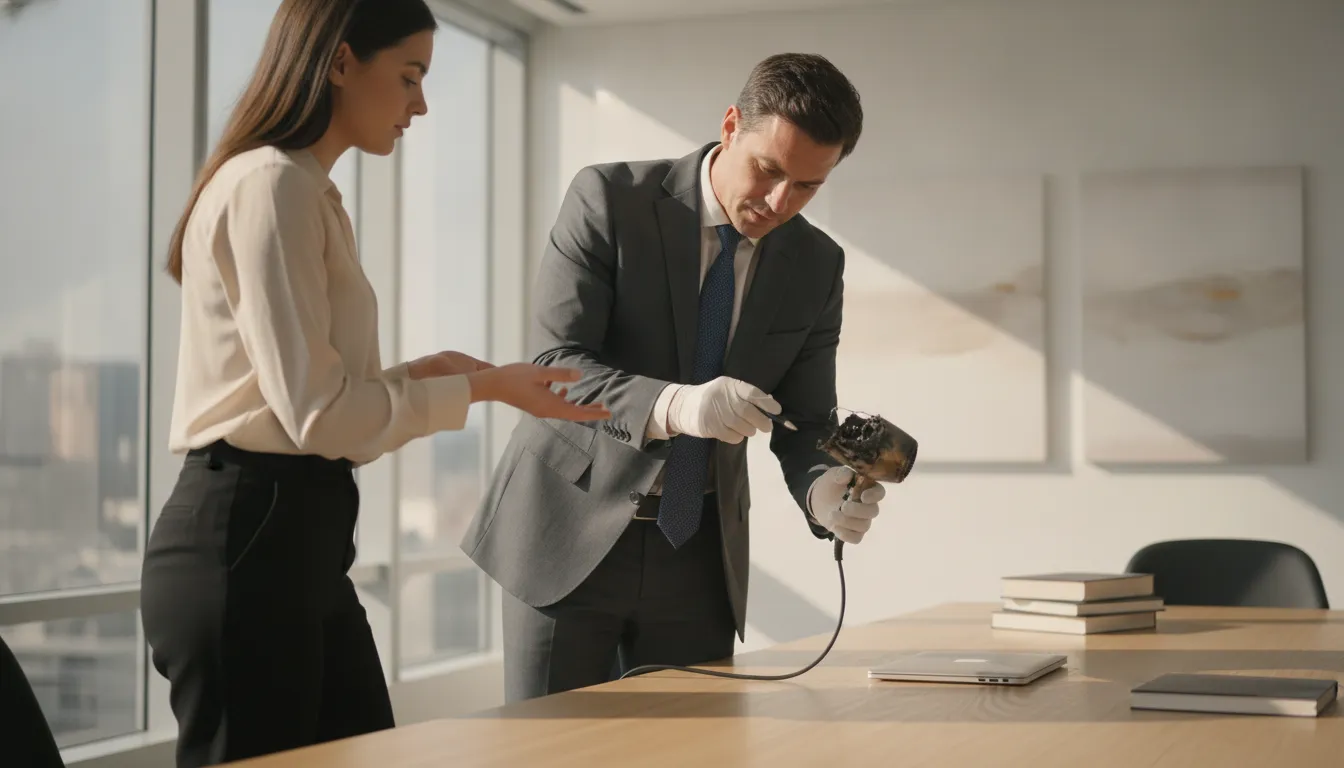
A product that looks ordinary can cause extraordinary harm when a design flaw, manufacturing mistake, or missing warning puts someone in danger. In Fort Worth, the hardest part is often identifying where the product failed and which business in the supply chain should answer for the injury.
A product liability attorney Fort Worth residents trust can investigate whether the claim involves a defective design, a manufacturing defect, or a failure to warn about a hidden danger. Manufacturers, wholesalers, and retail stores may all be potential defendants, depending on their role in bringing the product to market.
Preserve the product, packaging, instructions, receipts, and medical records whenever possible. Those details can help connect the defect to the injury and clarify who may be legally responsible. The investigation begins by understanding what happened at each stage, from design and production through sale.
Call Hoch Law Firm for a free consultation about your defective-product injury.
What Does a Product Liability Attorney in Fort Worth Do?
A product liability attorney in Fort Worth does more than identify the company named on a product label. The attorney investigates how the injury happened, determines which legal theory fits the evidence, and traces responsibility through the product’s chain of manufacture and sale. That work matters because a case may involve a design flaw, a manufacturing error, or inadequate instructions and warnings. Each theory requires a focused investigation and proof that the defect caused the injury.
Investigating the defect and the supply chain
The investigation begins with the product itself, the accident circumstances, and available records. An attorney may examine design specifications, production records, prior complaints, recall information, warnings, instructions, and industry safety standards. The goal is to identify the stage at which the defect was introduced, whether during design, manufacturing, assembly, distribution, or marketing. That analysis can reveal which parties may be responsible, including a component manufacturer, final manufacturer, wholesaler, or retailer. Texas product liability law can reach businesses at different points in the supply chain, not only the company that made the finished item. Texas product liability principles recognize that the role of each commercial seller must be evaluated against the facts.
Preserving evidence before it changes
The defective product may be the most important evidence in the case. Preserve it in its current condition, and do not repair, discard, alter, or return it without legal guidance. Save packaging, receipts, instructions, warning labels, serial numbers, photographs, and messages about the incident. Evidence preservation is essential because testing or inspection may be needed to show what failed and how that failure caused the injury. The product should be secured in a way that protects it from additional damage or changes. Preserving the product in its current state is vital to a potential claim.
Documenting losses and evaluating damages
Your attorney also builds the damages portion of the claim. Keep medical bills, treatment records, prescription costs, mileage, wage information, employer records, and receipts for other injury-related expenses. Detailed documentation of medical expenses, lost wages, and other financial impacts helps establish the losses caused by the incident. The evaluation may also consider the severity and duration of the injury, future medical needs, changes to your ability to work, and other legally recoverable harm. A clear record gives the attorney a stronger basis for negotiations and, when necessary, trial. If you were injured by a product, speaking with a personal injury attorney early can help protect evidence and clarify your options.
The Three Types of Product Defects in Texas Product Liability Claims
Texas product liability claims generally involve one of three defect categories: a product was dangerously designed, something went wrong while it was made, or consumers were not given adequate warnings and instructions. The category matters because it helps identify what evidence is needed and where in the supply chain the problem began. These categories are recognized in the general framework of products liability law.
Design defects
A design defect exists before a product reaches the assembly line. The product is manufactured according to its plans, but the underlying design makes it unreasonably dangerous when used as intended. In other words, the problem is not limited to one item. The same danger may exist in every unit built from that design.
For example, imagine a consumer appliance with a heating element placed too close to a component that can ignite. The appliance may be assembled correctly and may operate exactly as its designers intended, but its basic configuration creates an unreasonable fire risk. A design-defect investigation may examine the product’s intended use, safer alternatives, and whether the risks outweighed the product’s benefits. Texas courts may consider consumer expectations and risk-utility analysis when evaluating these issues.
Design defects can be difficult to establish because the case often requires more than showing that an injury occurred. The evidence must connect the injury to the product’s design and explain how a safer design could have reduced the danger. Testing records, engineering documents, recall information, and expert analysis may all become important.
Manufacturing defects
A manufacturing defect occurs during production, construction, or assembly. The product line’s design may be reasonably safe, but an error causes one or more units to differ from the intended specifications. Unlike a design defect, the problem may affect only some products of the same type.
As a simple example, consider a vehicle part that should have been made from a specified heat-resistant material. If a production error results in one batch being made with an inferior material, those parts may crack or fail under ordinary operating conditions. The defect would concern how that batch was manufactured, not necessarily the design of every part made by the company.
Useful evidence may include the product itself, packaging, purchase records, batch or serial numbers, maintenance records, photographs, and similar incidents involving other units. Preserving the product in the condition it was in after the incident can be important. Altering, repairing, or discarding it may make it harder to determine what failed and when.

Failures to warn and marketing defects
A marketing defect, often described as a failure to warn, occurs when a product lacks adequate instructions or does not disclose a latent danger that a consumer would not reasonably know about. The product may have a sound design and may have been manufactured correctly, yet still be unsafe because critical safety information was omitted or unclear.
Prescription drugs provide one example. A medication may be produced according to its specifications, but the warnings may fail to explain a serious risk, interaction, or necessary precaution. Similarly, machinery may be sold with instructions that omit a lockout procedure needed to prevent a serious injury during maintenance. Injuries from defective machinery on a job site are one common example. In either situation, the focus is on whether the warnings and instructions adequately addressed the product’s hidden danger and foreseeable use.
These categories can overlap. A product may have a dangerous design, a production error, and inadequate warnings at the same time. A product liability attorney Fort Worth residents trust can help determine which defect theory fits the evidence and how the defect caused the injury. The applicable source for the category definitions is Cornell Law School’s products liability overview.
Who Can Be Held Liable for a Defective Product?
Texas product liability law can reach more than the company whose name appears on the product. When a defective product causes an injury, the potentially responsible businesses may include several participants in the commercial supply chain. Chapter 82 of the Texas Civil Practice and Remedies Code addresses products liability actions involving personal injury, death, or property damage. Read the Texas statute.
The key question is often where the defect entered the product and which businesses placed it into the stream of commerce. A product liability attorney in Fort Worth can investigate the records, contracts, warnings, and manufacturing process needed to identify the appropriate defendants.
Component-Part Manufacturer
A component manufacturer may be liable when a defective part contributes to the finished product’s failure. For example, a company that makes a faulty brake component, pressure valve, battery, or safety mechanism may be part of the chain of manufacture. The fact that another company later incorporated the part into a larger product does not automatically remove the component maker from the case. Texas product liability principles recognize potential liability for the manufacturer of component parts as well as the final assembler. Cornell Law’s products liability overview describes these roles in the manufacturing chain.
Assembling or Finished-Product Manufacturer
The company that assembles the components and sells the finished product may also be sued. Its responsibility may involve a manufacturing error, a dangerous design, or inadequate instructions and warnings. An assembly company could be responsible even when the original problem began with a supplied component, depending on the evidence and the legal theories available. The investigation must distinguish between a defect in one part and a failure in the way the final product was assembled or tested.
Wholesaler and Retail Store Owner
Wholesalers and retailers can also be potential defendants. A retailer does not necessarily avoid liability simply because it did not design or manufacture the item. The retail store owner is part of the commercial chain through which the product reached the consumer and may be liable under applicable product liability law. That does not mean every retailer is automatically responsible for every injury. The facts matter, including the product’s condition, the retailer’s role, and the legal basis for the claim.
The Commercial-Seller Requirement
The defendant generally must be a commercial seller of the product. In other words, a person who casually sells or gives away a used item is not treated the same way as a business that regularly places products into commerce. Establishing this commercial-seller element is part of the initial case. A claim must also connect the defect to the injury, rather than merely showing that the product was sold by a business.
Consider a supply chain in which a manufacturer produces a power tool, a separate company supplies a defective battery. An assembler packages the tool and battery together, a wholesaler distributes it, and a retail store sells it. If the battery overheats and injures a customer, the investigation may need to examine each stage before determining which businesses can be held liable. Preserving the product and its packaging can help establish that chain and protect evidence about the defect.
Strict Liability vs. Negligence in Texas Product Liability Cases
Texas product liability claims may rely on strict liability, negligence, or breach of warranty of fitness. Each theory asks different questions about the product and the defendant’s conduct.
Under strict liability, the focus is the defective product itself. A plaintiff generally must show that the product was defective and that the defect caused the injury. The manufacturer’s level of care does not control the analysis. Cornell Law School explains the strict liability standard.
Negligence focuses on unreasonable conduct. The issue may involve inadequate testing, careless manufacturing, or failure to follow applicable safety standards. A safety-standard violation can provide important evidence that the defendant failed to act reasonably.
| Basis of liability | What must be proven | Burden |
|---|---|---|
| Strict liability | The product had a defect, the defect existed when it left the defendant, and the defect caused the injury. | Show the defect and causation. The plaintiff does not need to prove that the manufacturer failed to use reasonable care. |
| Negligence | The defendant owed a duty, acted unreasonably, and caused the injury through that conduct. | Connect the defendant’s conduct to the defect and resulting harm. Safety-standard failures may support the claim. |
| Breach of warranty of fitness | The product was represented or supplied as suitable for a particular purpose, but failed to meet that purpose. | Establish the warranty, the product’s failure to conform, and resulting damages. |
These theories can overlap. A defective appliance, medical device, or piece of equipment may support more than one theory when the evidence supports each required element.
Design defects require a closer safety analysis
A design defect exists before production because the product’s design itself creates an unreasonable danger. Texas courts may consider both consumer expectations and risk-utility factors when evaluating the design.
The consumer-expectation test asks whether the product performed below what a reasonable consumer would anticipate. The risk-utility test weighs the design’s risks against its benefits and considers safer alternatives.
Those tests require evidence about how the product was intended to work, how it actually performed, and whether a safer practical design was available. A summary of product liability standards describes both approaches.
The right theory depends on the evidence, not simply on the type of product involved. A product liability attorney Fort Worth residents trust can investigate the defect, the supply chain, and the conduct behind the injury before selecting the strongest claims.
What to Do After a Defective Product Injures You in Fort Worth
A defective product can leave you facing serious pain, medical treatment, and uncertainty about what happened. The steps you take immediately can protect your health and preserve evidence for a potential claim.
- Get medical care promptly. Call 911 or visit an emergency department if you have a serious injury. Follow your provider’s instructions and attend recommended follow-up appointments. Tell the medical team how the product caused the injury. Accurate medical records connect the event to your symptoms and document the treatment you need. Do not delay care because you are unsure whether the injury is serious.
- Stop using the product and preserve it. Do not repair, clean, alter, discard, or return the product if you can safely keep it. Preserve the defective product in its current state, along with its packaging, parts, manuals, warnings, and purchase information. Evidence preservation is vital because the product may help show what failed and how the injury occurred. Store it somewhere secure where no one will modify or discard it. If the product is too large or dangerous to move, photograph it in place and restrict access.
- Document what happened. Write down when, where, and how the injury occurred while the details remain fresh. Take clear photographs of the product, the accident scene, your visible injuries, and any property damage. Keep receipts, warranty information, recall notices, instructions, messages, and communications with the seller or manufacturer. Do not speculate about the cause in written statements. A product liability case generally requires proving that a defect was an actual and proximate cause of the injury, so precise records matter.
- Track every financial loss. Keep a file for medical bills, prescription costs, travel to appointments, rehabilitation expenses, and other injury-related charges. Save pay stubs, employer records, and dates missed from work to document lost wages. Continue updating the file as treatment progresses. Detailed records help establish the financial effect of the injury and give your attorney a clearer basis for evaluating damages.
- Speak with a product liability attorney promptly. A product liability attorney Fort Worth residents can trust can investigate the product, identify the possible defect, and determine which businesses may be responsible. Do not give a recorded statement or sign a release before obtaining legal advice. Texas generally gives an injured person two years from the injury date to file a personal injury claim. Some circumstances can affect that deadline, so waiting can put your rights at risk. A prompt consultation gives counsel time to preserve evidence, investigate the supply chain, and assess causation before critical information disappears.
Bring your medical records, photographs, purchase documents, product information, and loss documentation to the consultation. These materials help counsel understand the injury and determine the next practical step.
Call Hoch Law Firm to discuss your defective-product injury today.
Frequently Asked Questions
What does a product liability attorney do?
A product liability attorney investigates how the product was designed, manufactured, distributed, or marketed. The attorney identifies potentially responsible businesses, preserves the product and related records, evaluates whether the defect caused the injury, and documents medical expenses, lost income, and other losses. In a complex case, that investigation may require examining the manufacturing process and determining when the defect entered the supply chain.
Who can be sued for a defective product in Texas?
Potential defendants may include the product manufacturer, a component-part manufacturer, the final assembler, a wholesaler, or a retailer. A retailer may face liability even if it did not manufacture the item. The facts matter, including each business’s role in selling the product and whether the product was defective when it reached the consumer. See Cornell Law’s products liability overview.
What is the statute of limitations for a Texas product liability lawsuit?
Texas personal injury claims generally must be filed within two years after the injury. The deadline can depend on the circumstances, and other claim types may follow different rules. Do not wait to investigate a potential claim, because evidence can disappear and the deadline may expire. See the Texas Civil Practice and Remedies Code.
What evidence helps prove a defective product claim?
Keep the product in the condition it was in after the incident, if possible. Preserve packaging, instructions, receipts, photographs, recall notices, and communications with the seller or manufacturer. Also keep medical records and documentation of lost wages or other financial effects. These materials can help establish the defect, how it caused the injury, and the damages involved.
Schedule a Consultation About Your Product Injury
Identifying the responsible party and preserving evidence can help you understand your options after a defective-product injury. Tim Hoch is Board Certified in Personal Injury Trial Law and can review what happened, explain the potential claims, and discuss practical next steps for your situation.
Call Hoch Law Firm for a free consultation about your defective-product injury