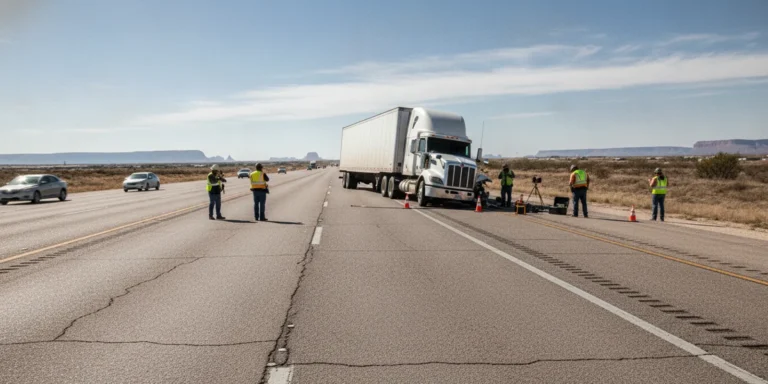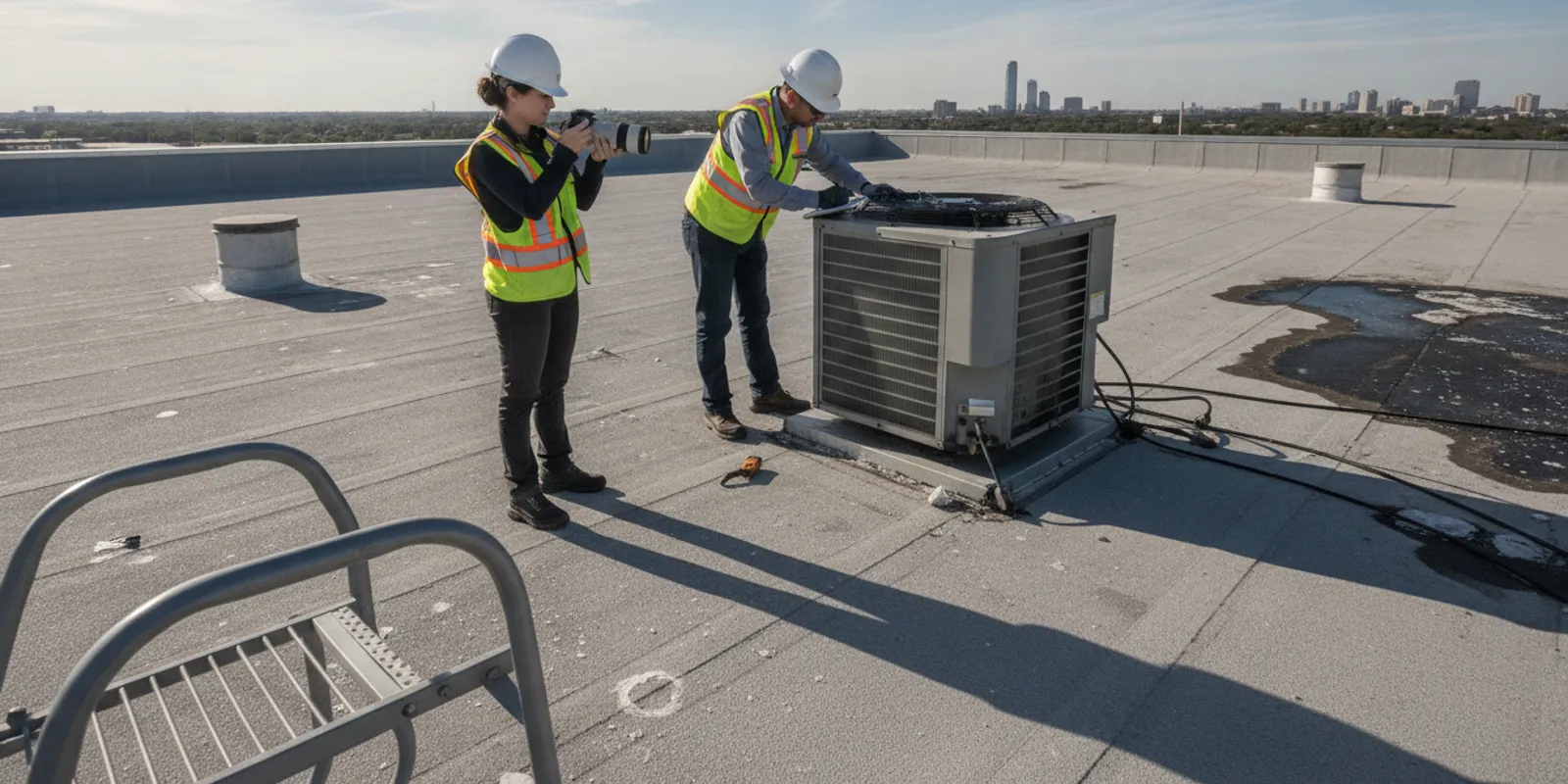
A commercial roof loss can disrupt tenants, inventory, equipment, and daily operations. If you are searching for a property damage law firm, you may already have a disagreement about what caused the damage, what repairs are needed, or what the policy covers. A useful claim record connects the condition on the roof to a date, location, repair scope, and documented impact. This guide explains practical evidence steps for Texas commercial property owners. It is general information, not legal advice.
What should you do first after discovering roof damage?
Start with people and property, not the paperwork. Keep occupants and workers away from unstable roof areas, falling material, wet electrical equipment, or other hazards. If water is entering the building, take reasonable steps to limit additional harm. Use qualified professionals for work that requires training or safe roof access. Do not climb onto a roof or handle damaged materials if conditions are unsafe.
Next, document what is visible before temporary work changes the condition, when it is safe and practical to do so. Take photographs from the ground, interior, or another safe location. Record the date and time, the areas affected, and who observed them. If urgent mitigation must happen first, make a note of why it could not wait and photograph the work as it proceeds.
Notify the insurer according to the policy’s instructions. Save the date, method, and recipient of the notice, along with any claim number. Policy wording differs. Review the actual provisions about notice, cooperation, inspection, mitigation, and proof of loss instead of treating a general checklist as a substitute for the contract.
- Make a short event timeline, including when the damage was found, weather observed, and when water or operational effects began.
- Keep receipts, work orders, and contracts for reasonable emergency measures.
- Photograph the condition before and after temporary protection or removal, if safe.
- Keep removed material when feasible and safe; otherwise photograph it in place before removal.
- Record any area that could not be inspected and why, rather than assuming it was undamaged.
The firm’s storm damage guidance offers additional context for the first steps after a weather event. Temporary work and permanent repairs are different. Record what was done to stop immediate harm and what remains to be assessed. Keep an invoice that identifies labor, materials, location, and dates instead of relying on a single lump-sum receipt.
Which evidence helps explain a commercial roof claim?
Useful evidence makes it possible for someone who has not visited the property to understand the sequence of events. A photograph can show a condition, but usually cannot establish on its own when it developed, what caused it, or how much work is appropriate. Combine images with inspection notes, measurements, maintenance history, and repair records. Preserve original files and avoid replacing uncertain observations with guesses.
Photographs, video, and location notes
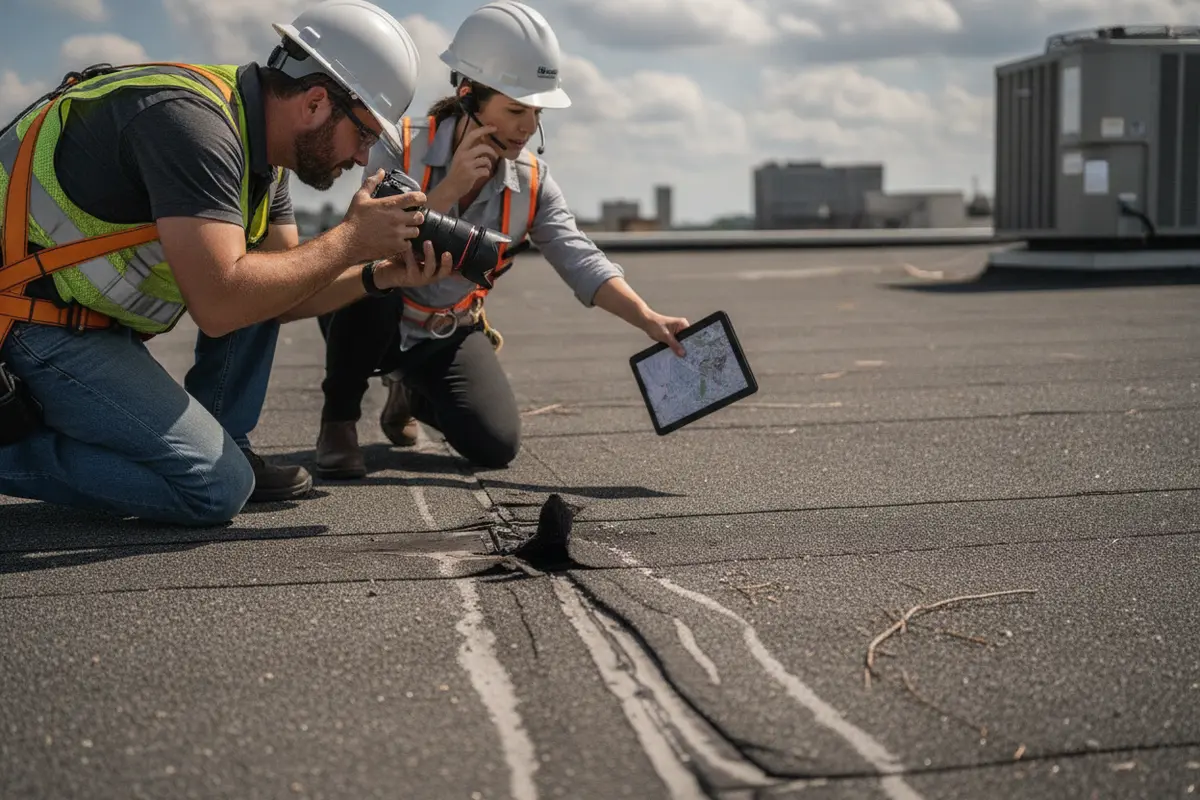
Begin with wide images that identify the building, roof section, and direction of view. Then take medium-distance images showing the area around a condition and close views of the condition itself. A ruler or other scale may help show dimensions when it can be used safely and without altering the evidence. Include a stable landmark, roof plan label, or room number so the image can be located later.
Photograph both exterior and interior effects. For example, images might show a roof opening, a ceiling stain below it, wet insulation removed during work, and equipment moved to avoid water. Those images do not necessarily prove that the same roof condition caused each interior effect. They create a record to compare with inspection findings and the building layout.
Keep original image and video files with their file dates where possible. If someone makes annotations, save them as separate copies. Note who took each image, when it was taken, where the photographer was standing, and whether temporary work had already occurred. A brief note such as “north elevation, above suite 204, before tarp installation” is more useful than a folder full of files named “roof photo.”
Inspection reports and repair proposals
Ask each inspector or contractor for a dated report that identifies the areas examined, observations, measurements, methods, and recommendations. Request diagrams and the original photographs referenced in the report. Ask the author to distinguish direct observations from opinions about cause. If the report discusses wind, hail, water entry, wear, or prior damage, it should explain the basis for that view rather than state a conclusion without context.
Repair proposals should say what work is included, which roof sections it concerns, and how quantities were measured. Ask whether the proposal includes removal, replacement, flashing, drainage, insulation, interior repairs, and cleanup, where relevant. A proposal is not the same as proof that every listed item is covered. It does, however, give the parties a specific scope to evaluate against the observed conditions and policy.
Maintenance, tenant, and building records
Collect prior inspections, maintenance agreements, work orders, repair invoices, warranties, and earlier leak reports. These records can help explain the roof’s history before the reported event and identify work already performed. Include records from property management systems and tenants, such as dated service requests, access notes, and communications about affected spaces.
Retain the complete record, including documents that raise questions about prior conditions. A selective file can make it harder to establish a reliable chronology. If older documents use a different building or roof-section label, note the equivalent location rather than silently changing the original description. Keep the source document intact and add a separate explanatory note.
How can you organize a claim file that others can follow?
Use a central electronic folder with a backup. Divide it into simple categories, such as policy and claim correspondence, photographs, inspections, repairs, maintenance, and business impacts. Name files with a date, location, and short description. For example, “2026-10-28_North-roof-seam_inspection-photo” tells a reviewer more than “IMG_4082.” Use a consistent format, and do not overwrite an earlier version when a report is corrected or supplemented.
A log can serve as an index. Include when an item was created or received, who provided it, what area it concerns, and whether it was sent to the insurer. Record submission dates and delivery methods, and keep copies of everything submitted. If the insurer asks for additional information, note the request, the response, and any unresolved question. This process helps prevent a missing attachment or misunderstood location from being mistaken for a disagreement about the whole claim.
| Evidence category | What it may help clarify | Useful handling step |
|---|---|---|
| Photos and video | Visible conditions, location, sequence, and interior effects | Keep originals; add date, view direction, and roof or room label |
| Inspection reports | Observed conditions, measurements, methods, and opinions | Keep complete reports, diagrams, and referenced images |
| Repair and mitigation records | Urgent work, permanent scope, and documented expense | Separate temporary work from proposed final repairs; retain invoices |
| Maintenance history | Pre-event condition and prior repairs or leaks | Collect agreements, service tickets, warranties, and earlier reports |
| Operational records | How affected areas changed building use or business activity | Keep dated records and explain their connection to the affected space |
Use a timeline with columns for date, event, source document, location, and follow-up. A separate issue list can track questions such as “Which roof slope did this report inspect?” or “Does this estimate include insulation?” This turns a broad dispute into specific points that can be answered. Keep factual notes neutral. If you do not know when a stain first appeared, record the date it was noticed rather than estimating an earlier date.
How should you compare different inspection findings?
Read the insurer’s written position and inspection materials from beginning to end. Identify what is accepted, what is disputed, and the policy language or evidence cited for each conclusion. A disagreement may concern the cause of a condition, the area affected, repair method, cost, or whether related interior work is connected to the roof loss. Those are separate questions. Listing them separately makes a response more focused.
For each disputed item, compare the reports at the level of location and observation. A useful working table might include the roof section, the insurer’s description, the other inspector’s description, evidence both reports considered, and the question that remains. If one report says a seam is open and another says it is intact, identify the exact seam and photographs. If the reports address different roof sections, the apparent disagreement may be a difference in inspection coverage rather than a difference in technical judgment.
Ask professionals to explain the reasoning behind their opinions in writing. Helpful questions include: What conditions did you observe directly? Which measurements support the proposed scope? What records did you review? What limitations affected the inspection? Did you inspect the interior area said to be affected? These questions seek a transparent basis for the assessment, not a predetermined conclusion.
The Independent Insurance Agents of Texas discussion of roof claim issues addresses roof claim questions and policy terms. It is general information and does not decide what a specific commercial policy covers. The actual wording, endorsements, facts, and available evidence matter. Do not treat a general resource as a substitute for reviewing the policy issued for the property.
What should you check when comparing repair scopes?
Two estimates may differ because they assume different measurements, materials, access, or repair methods. They may also address different portions of the building. Before comparing totals, compare their underlying assumptions. Ask each professional to identify the roof sections examined, the condition that supports each line item, and the reason the proposed work is needed.
- Confirm that measurements and quantities correspond to the roof plan or inspection diagram.
- Separate emergency mitigation from permanent repair or replacement work.
- Check whether the proposals address flashing, drains, penetrations, insulation, and interior impacts when those items are relevant.
- Identify differences in material, labor, access, disposal, and sequencing assumptions.
- Match each completed expense to an invoice or proof of payment, and each proposed item to an inspection finding or explanation.
- Ask whether the work can be divided into immediate, temporary, and later phases without compromising safety or causing additional damage.
Consider a hypothetical warehouse with a reported leak near one roof drain. One estimate may include repair at the drain and replacement of wet interior material; another may propose work across a larger roof area. A useful review would map both scopes to the same roof plan, compare inspection photographs, identify measurements, and ask why each included area is necessary. The higher amount alone does not resolve which scope is supported. The narrower amount alone does not show that all related work is unnecessary.
If the policy provides an appraisal procedure, read its terms and consider the potential consequences before using it. Appraisal may address certain disagreements about the amount of loss, but it does not necessarily resolve every coverage, causation, or legal issue. The firm’s page about insurance appraisal disputes in Texas provides related information. The wording in the policy and the nature of the disputed question should guide the analysis.
How can you document business effects without overstating them?
A commercial roof loss may affect more than repair costs. Water entry can require an area to be closed, contents to be moved, or equipment to be protected. Document each operational change with dates and supporting records. Depending on the property and the policy, relevant material may include tenant notices, maintenance tickets, closure records, photographs, cleaning or relocation invoices, and contemporaneous communications.
Connect each record to a specific event and location. A general note that “business was affected” gives little context. A dated entry identifying the suite, the observed water, the action taken, and the period of restricted use is more concrete. Keep the underlying records rather than creating a summary that cannot be checked. If operations continued in part, say so; a precise account is more informative than an absolute statement.
For example, if a tenant moved stock from a room after a ceiling leak, preserve the dated report, photos, labor invoice, and communications about access. If a business records an interruption or added expense, identify the affected activity and the period involved. Do not assume every operational effect is covered. Policy terms and the relationship between the event and the claimed impact require separate review.
When might a property damage law firm help?
Legal review may be useful when a major part of a commercial claim has been denied or limited, the parties have materially different inspection conclusions, the insurer’s requests or policy deadlines are difficult to manage, or the potential repair and operational issues are substantial. Commercial properties can involve owners, managers, tenants, contractors, and multiple buildings. A structured review can help identify the precise disagreements and what documents bear on them.
Before seeking a review, assemble the policy and endorsements, claim correspondence, insurer reports, your inspection materials, repair proposals, maintenance history, and a short chronology. Mark the questions that remain unanswered. This does not need to be a polished legal submission. A well-indexed set of source records helps an attorney understand the history without relying on an incomplete verbal summary.
Hoch Law Firm represents policyholders in property insurance disputes, including commercial property matters. Its information about roof damage claims and insurance litigation provides further context. Whether legal representation is appropriate depends on the policy, evidence, and procedural posture of the specific matter. A review can identify issues and possible next steps; no result should be assumed in advance.
Frequently Asked Questions
Should I wait for the insurer before making temporary repairs?
Do not leave an active hazard or water intrusion unaddressed while waiting. When safe, document conditions first, take reasonable steps to limit further harm, and retain records of the work and expense. Follow the policy’s instructions and notify the insurer as soon as practical. If emergency work changes the evidence, preserve photographs and notes explaining what was done and why.
What if the insurer and contractor disagree about the cause?
Ask each professional to identify the specific observations and reasoning behind the opinion. Compare the locations inspected, photographs, measurements, maintenance history, and assumptions. A focused list of differences can reveal whether the disagreement concerns cause, inspection scope, repair method, or a different issue. Preserve both reports and their supporting material.
Do photographs establish the full amount of a claim?
Photographs are valuable, but they are usually only one part of the record. Reports, measurements, repair proposals, invoices, policy wording, and records of related effects may also matter. Keep documents that explain why each item is included and how it relates to the reported event. An image rarely answers every question about cause, scope, or coverage by itself.
What if important roof material was removed before I documented it?
Record when and why removal occurred, who performed the work, and where the material went if known. Gather any photographs taken before or during removal, the work order, and the contractor’s notes. Do not recreate or alter evidence. Explain the gap honestly and identify other records that may show the former condition.
Can a lawyer tell me whether the insurer must pay?
An attorney can review the policy and available facts and explain potential arguments, risks, and procedural options. The answer depends on the actual policy language and circumstances. A responsible assessment does not promise a result before reviewing the relevant documents and claim history.
Contact Hoch Law Firm about a property claim
A consistent record helps clarify what happened, what work is proposed, and which questions remain disputed. Preserve source documents, follow the policy’s instructions, and seek a closer review when the disagreement or potential impact warrants it.