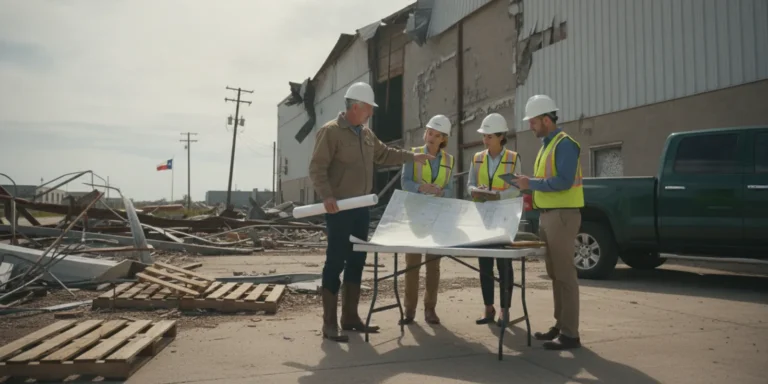
A Texas commercial property insurance water damage claim can turn on more than the visible damage. The source, timing, policy wording, mitigation, and records may all matter. After protecting people and the building, create a clear factual record before memories fade or repairs change the scene.
What should you do first after water damages commercial property?
Start with safety. Keep people away from electrical hazards, unstable materials, and water that may be contaminated. Do not ask employees or tenants to enter unsafe areas to take pictures. If the source is active, arrange reasonable steps to stop or limit further entry when it is safe to do so.
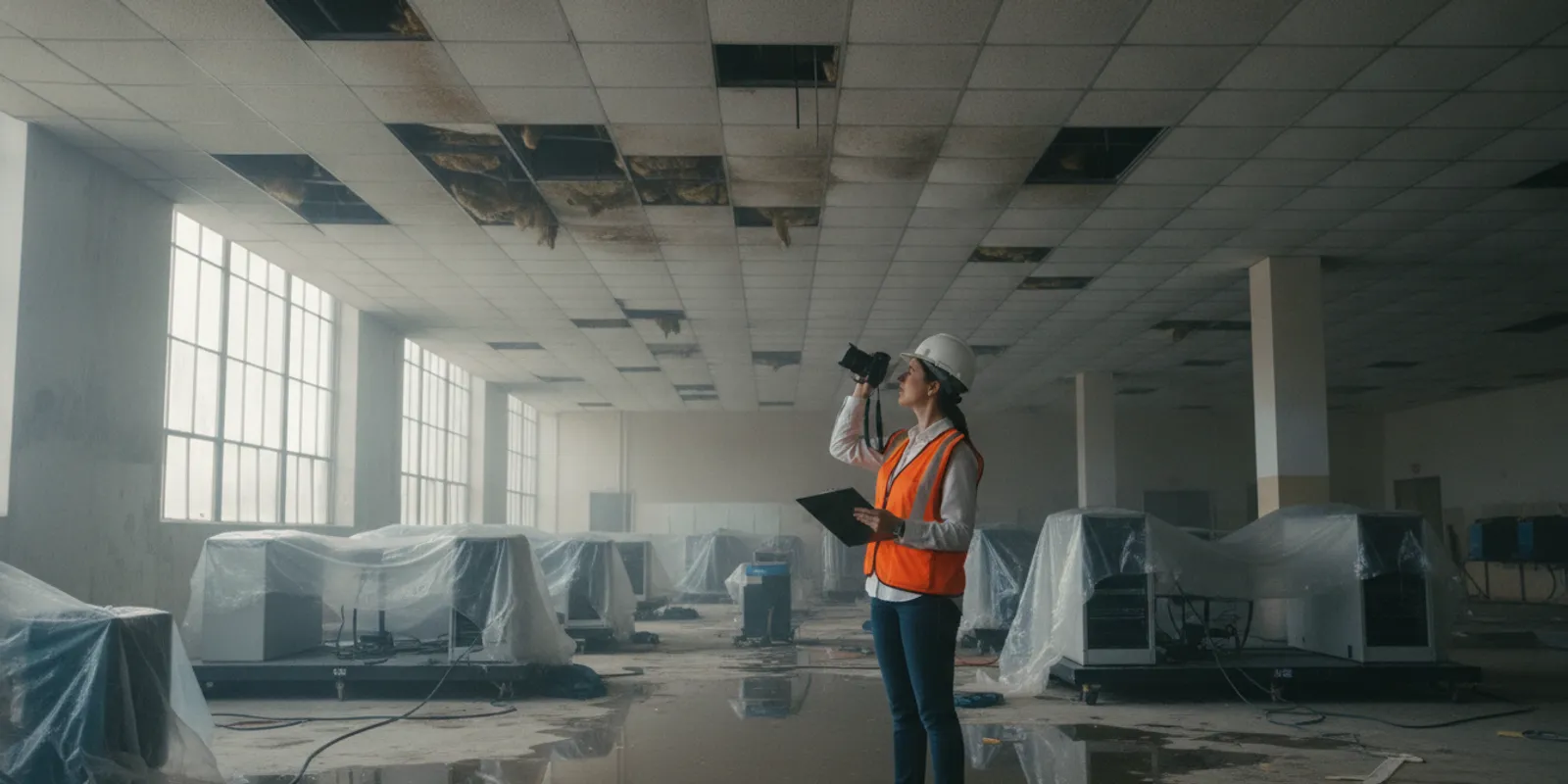
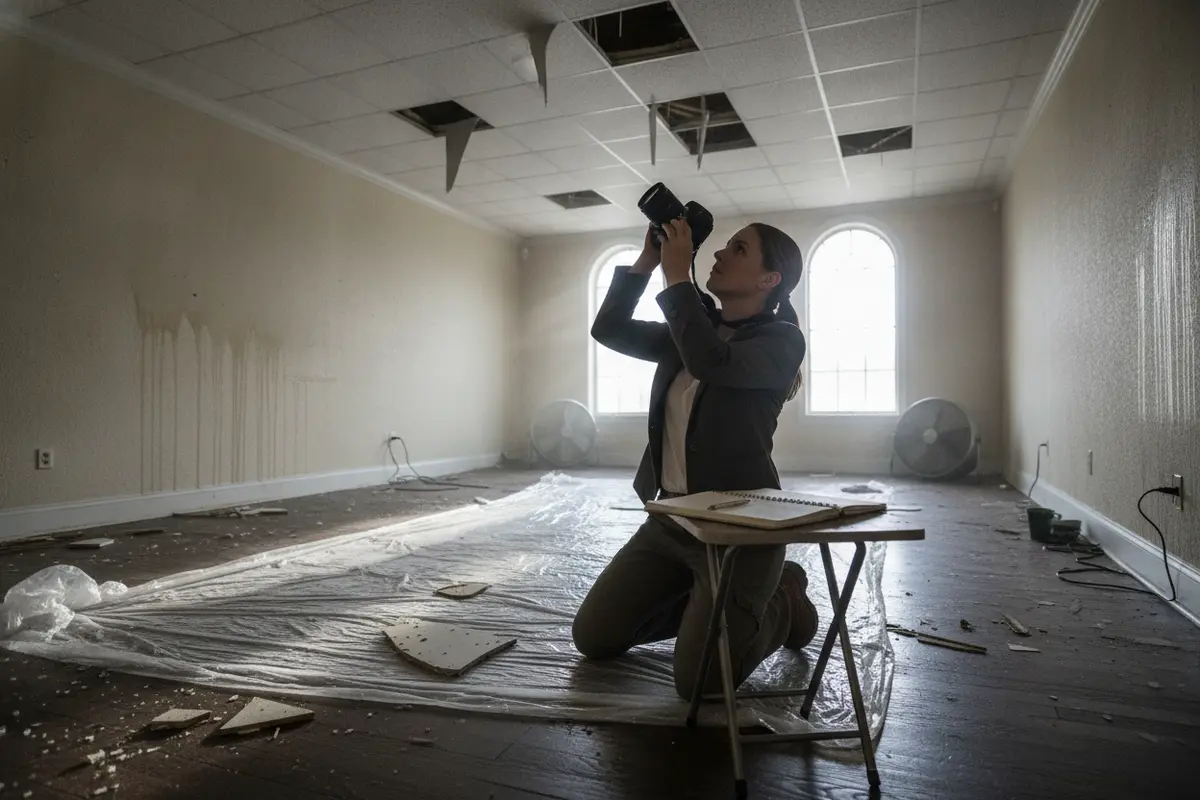
Document conditions before cleanup changes the scene, provided it is safe. Take wide photographs that show each affected room and close views of damaged materials, equipment, and inventory. Note the date, time, location, and photographer. If the apparent source is visible, record it without presenting an uncertain guess as fact.
- Make a brief incident note: when the water was first noticed, who noticed it, and what was observed.
- Notify the insurer as required by the policy and preserve a copy of the notice.
- Photograph affected areas and items before removal or repair when safely possible.
- Keep receipts, work orders, and contractor notes for emergency measures.
- Track inspections, calls, letters, and requested information in a single dated log.
Emergency mitigation and permanent repairs are different work streams. Ask contractors to describe which tasks were temporary, which were repairs, and what conditions they observed. Save itemized invoices, proposals, and before-and-after photographs. If material must be removed, ask whether representative samples or other records can be retained safely and practically.
Use a repeatable room-by-room method. Begin at the building entrance, record each affected area in sequence, and capture both a broad view and close details. A broad image can show how damage relates to the room; a close image can show staining, material separation, or damaged contents. Include a written label or separate note rather than relying on memory to identify the image later.
For contents, make an inventory before disposal when practical. Record the item, location, visible condition, and whether it was moved, cleaned, or discarded. Keep purchase or maintenance records if they are readily available. If an item must be removed quickly for safety or mitigation, photograph it first when safe and keep the related work order or disposal note.
Why can the source and timing of water matter?
“Water damage” describes a result, not a coverage decision. A policy may treat a sudden plumbing escape, rain entering through an opening, surface water, flooding, backup, or ongoing seepage differently. Definitions, exclusions, exceptions, endorsements, and conditions can change the analysis. The label in a contractor’s report does not replace the policy wording or a careful review of the facts.
Make a timeline rather than relying on recollection months later. Include when the problem was found, when the area was last known to be dry, any maintenance or repairs, reports from occupants, and the arrival of mitigation or inspection teams. Distinguish direct observation from information supplied by someone else. If two accounts differ, keep both and note who provided each account.
A timeline can also help identify unanswered questions. Was water present before the visible damage appeared? Did a roof, pipe, drain, or appliance have a recent repair? Were there earlier complaints or work orders? These questions do not establish coverage by themselves. They identify information that a qualified investigator or policy review may need to address.
Organize the chronology in dated entries. For example, a tenant might report a ceiling stain on Monday, maintenance might inspect Tuesday, and a contractor might find wet insulation Wednesday. Preserve each report and identify who made it. Do not silently turn the Monday report into proof that the leak began Monday; it establishes when the condition was reported, not necessarily when water first entered.
| Claim issue | Records to gather | How to use them |
|---|---|---|
| Possible source and timing | Incident notes, maintenance logs, plumbing or roofing assessments, dated photographs | Build a sequence and separate direct observations from theories |
| Physical damage | Room-by-room images, item inventory, repair estimates, inspection notes | Compare the observed scope with the insurer’s estimate |
| Mitigation and repairs | Contracts, work orders, invoices, before-and-after images | Explain what was done, when, and whether it was temporary or permanent |
| Business effects | Closure dates, operating records, expense documentation, customer or tenant notices | Describe actual operational changes if the policy raises a business-income issue |
| Policy and claim handling | Complete policy, endorsements, notices, letters, inspection records | Connect the written coverage position to the contract and claim record |
This table is an organizing aid, not a coverage checklist. For disputes about a different valuation issue, Hoch Law Firm’s insurance litigation information provides context on policyholder disputes; the specific contract still controls the analysis.
How should you organize the claim file?
Use one secure, dated folder structure for the policy, damage evidence, mitigation, business records, and insurer communications. Keep original digital photographs when possible, rather than only edited or compressed copies. Add a short filename or note that identifies the room, date, and subject. Back up the file somewhere separate from the damaged property.
Obtain the full insurance contract, including declarations, forms, and endorsements. A summary page may not contain the wording needed to understand a coverage position. When a letter cites a provision, save the cited pages with the letter and note the response date or request that accompanies it.
- Policy: preserve the complete set of forms and note which version applied to the loss period.
- Damage: list affected rooms, building materials, equipment, inventory, and any items moved or discarded.
- Work: retain estimates, approvals, receipts, contracts, and completion records.
- Communications: save claim numbers, emails, letters, call notes, and inspection scheduling messages.
- Operations: if business interruption is being considered, keep records showing actual operating changes and related expenses.
For example, if a storage area is closed while drying work occurs, preserve the dates it was unavailable, the work performed, and the business records that show what changed. Avoid assuming that every lost sale or expense is covered. The policy, facts, and applicable limits determine whether a particular item is relevant.
Reports and estimates may answer different questions. A restoration proposal may describe immediate work. A building consultant may address physical conditions. An insurer’s estimate may set out its proposed scope. Compare the documents by location and task, and mark where they differ: a missing room, different quantity, omitted material, or assumption about the source. Specific differences are easier to evaluate than a general statement that an estimate is too low.
A practical file index can save time when a new adjuster or reviewer asks for information. Use folders named Policy, Photos, Mitigation, Estimates, Operations, and Correspondence. Keep a simple index with the date, document name, sender, and issue addressed. When sending records, retain the exact version transmitted and a delivery confirmation or email copy. That helps distinguish documents already supplied from new requests.
How can you compare estimates and inspection findings?
Begin with a room-by-room comparison. Use the same location names across photographs, estimates, and work orders. For each disputed item, write down the observed condition, the insurer’s description, the contractor’s proposed work, and the evidence supporting the difference. Keep estimates intact; add a separate comparison sheet rather than altering another party’s document.
Consider a simple example: the insurer’s estimate includes drying and replacement of ceiling panels in one room, while a contractor identifies additional affected insulation and adjacent materials. The useful next step is not merely to repeat that the scope is incomplete. Identify the relevant locations, attach dated photographs or inspection notes, and ask what facts or policy terms explain the difference. This creates a focused record without assuming that either estimate is automatically correct.
Also distinguish disagreement about price from disagreement about scope or cause. A pricing question may concern quantities or repair methods. A scope question may concern which rooms or materials are included. A cause question may require further investigation and policy analysis. Keep these issues in separate sections of your comparison so that a response to one does not obscure another.
When reviewing estimates, compare like with like. Check whether each document addresses the same rooms, materials, quantities, and stage of work. A mitigation invoice describes work already performed; a repair estimate may describe proposed permanent work. An apparent difference in totals may therefore reflect different assumptions rather than a direct disagreement over one line item.
Use a short issue list to focus follow-up. For each item, state the location, the two descriptions that differ, the supporting document, and the question you need answered. For example: “The east storage room photographs show damaged wallboard; the insurer’s estimate lists only drying. Does the estimate exclude replacement, and what evidence supports that scope?” A specific question invites a meaningful response and creates a more useful written record.
Hoch Law Firm’s Texas appraisal dispute information discusses appraisal as a possible process in some insurance disputes. Appraisal is not a universal remedy, and availability or suitability depends on the policy, the nature of the disagreement, and the circumstances.
What if the insurer disputes or limits the claim?
Read the insurer’s written position closely. Identify what it accepts, what it limits or declines, the reasons given, the policy provisions cited, and any information requested. If one part of the loss is accepted and another is disputed, record the items separately. Ask specific written questions when the explanation is unclear, and keep proof of what you send and when.
Do not treat a phone conversation as a substitute for the written position. After a call, record the date, participants, and substance of the discussion. If a point is important, a concise follow-up message confirming your understanding can create a clearer record. Keep the tone factual and correct any misunderstanding promptly.
Pay attention to dates in the policy and correspondence. Notice obligations, requested documents, review periods, and legal deadlines can differ. Do not assume that an ongoing discussion pauses a deadline. If the timing is uncertain or a significant decision is pending, seek advice promptly rather than waiting for a later stage of repairs.
If a disagreement concerns an estimate, compare line items and identify the evidence behind each difference. If it concerns cause, focus on what was observed, what was tested, and what remains unknown. If it concerns policy wording, collect the full contract and the exact letter that explains the insurer’s position. Hoch’s information about bad faith insurance claims concerns a distinct legal issue; a denial or disagreement alone does not establish bad faith.
A written response can be organized into three parts: what you understand the insurer to have decided, the specific point that remains unclear or disputed, and the records that support your question. Attach relevant materials with clear filenames rather than sending an unstructured collection. Keep a copy of the entire package and note the date submitted. If the insurer requests additional documents, track the request and your response separately so that no item disappears into a general email thread.
How can business operations affect the evidence?
Commercial losses can involve more than building materials. A damaged area may affect access, storage, tenant use, equipment, or scheduled operations. Record what actually changed, when it changed, and why. Keep relevant calendars, work schedules, vendor invoices, tenant communications, and ordinary business records alongside the claim file.
Separate the operational facts from estimates or predictions. For instance, note the days a particular area could not be used and the work that prevented access. Preserve the records that show what was relocated, delayed, or paid for. Do not combine unrelated operating costs with loss-related expenses without explaining the distinction. Whether these items matter to coverage depends on the policy and circumstances.
Where several tenants or departments are affected, use a consistent log. Record the location, impact, start and end dates, and supporting document for each entry. This makes it easier to answer questions about the scope and timing of disruption without relying on a broad estimate created long after the event.
Consider a property with offices on one floor and storage space on another. If only the storage area is unavailable, record that distinction rather than describing the whole building as closed. If employees are temporarily moved, note the dates and the reason for the move. If a tenant continues operating with restricted access, preserve communications showing what changed. Precise descriptions can help avoid overstating or understating the impact.
Keep ordinary records in their original context. For example, compare operating schedules before and after the loss, but do not create a summary that hides the source data. If you prepare a spreadsheet to explain a change, identify the underlying invoices, schedules, or accounting records. A reviewer can then trace the explanation back to the source material.
When might a lawyer’s review help?
A legal review may be useful when a substantial portion of the loss is denied or limited, policy wording is disputed, evidence points to an unresolved cause question, or important deadlines are approaching. Counsel can review the contract, claim file, and written position, then explain issues and potential next steps. A review does not promise a particular result.
Hoch Law Firm represents policyholders in property insurance disputes and handles a selective number of cases. Owners considering a conversation can gather the policy, insurer letters, estimates, photographs, contractor records, and a short chronology. The firm’s attorney biography provides background, and its case results page describes past matters. Past results do not guarantee a similar outcome.
For general insurance questions, the Texas Department of Insurance consumer resources offer a government starting point. They do not replace the terms of a commercial policy or legal advice about an individual dispute.
Before a review, assemble a compact packet rather than sending every file without explanation. Include the declarations and policy forms, the insurer’s most recent written decision, the current estimates, key photographs, mitigation records, and a one-page chronology. Add a short list of questions, such as whether a particular exclusion is being applied, what evidence is missing, or which dates need immediate attention. This preparation can make an initial discussion more focused.
Frequently Asked Questions
Does commercial property insurance cover every type of water damage?
No single answer applies to every policy. Coverage can depend on the cause, wording, exclusions, endorsements, conditions, and facts. Review the complete policy and the insurer’s written explanation.
Should repairs begin before the insurer inspects?
Safety and reasonable measures to prevent further harm may require prompt action. Document conditions first when safe, notify the insurer as required, and keep records of work and costs. The policy and circumstances affect any inspection process.
What if the source of the water is unknown?
Record what was observed and preserve maintenance, repair, and inspection records. Avoid stating an unverified theory as certain. A qualified investigation may help clarify what happened.
Can a business challenge a partial payment or estimate?
A business can identify specific differences between the insurer’s estimate and the available evidence, then ask focused questions in writing. The policy, supporting records, and applicable deadlines should be reviewed.
When should an owner speak with a lawyer?
Consider seeking legal guidance when a substantial claim is limited or denied, policy interpretation is disputed, or deadlines and complex operational effects require attention. Counsel can assess the documents and explain options, but cannot guarantee an outcome.
Discuss your commercial property claim
Careful records, a clear timeline, and close attention to the policy can help a Texas commercial property owner understand the insurer’s position and decide what steps to take next.