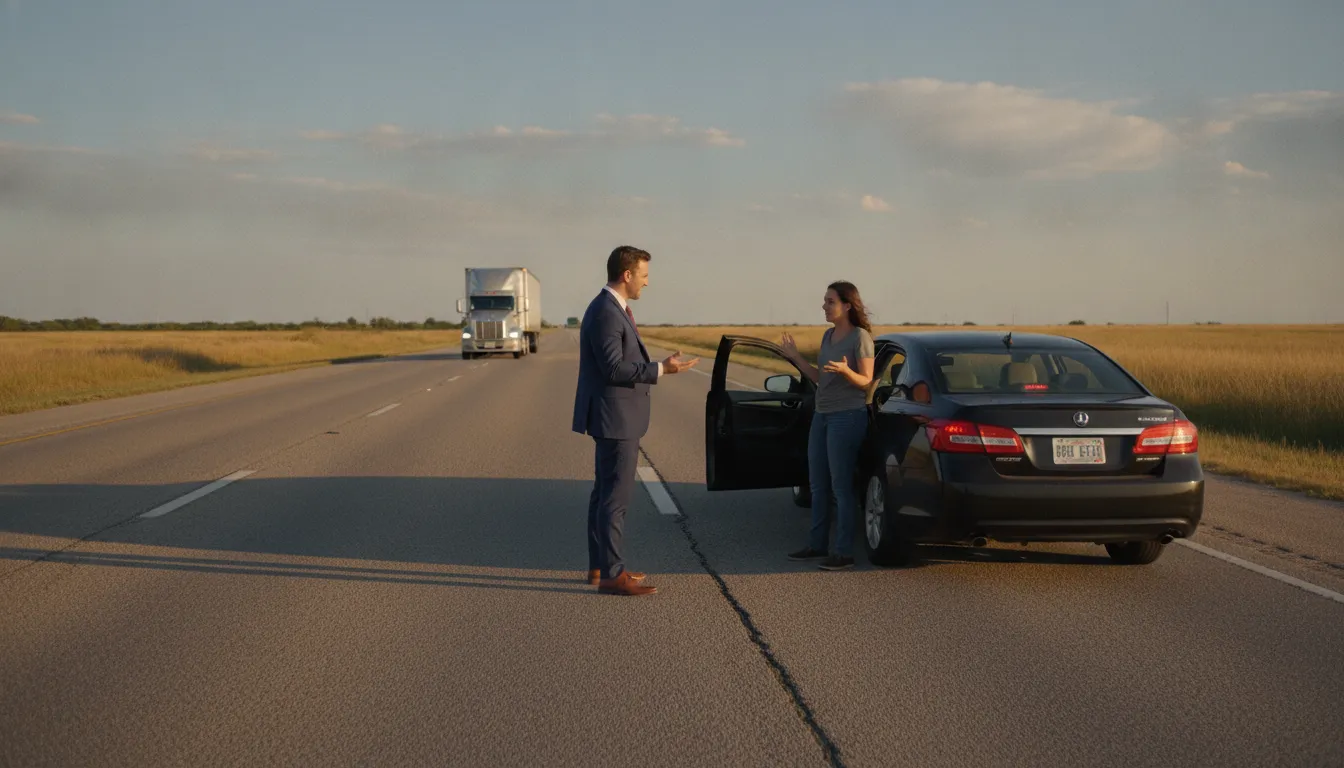
After a serious truck crash, uncertainty can be almost as difficult as the physical recovery. When you are weighing a truck accident settlement timeline Texas case, medical treatment. Lost income, insurance calls, and questions about what happens next can make every delay feel alarming. Written by Tim Hoch, a Fort Worth trial attorney board certified in Personal Injury Trial Law by the Texas Board of Legal Specialization.
Most truck accident settlement timeline Texas cases take about six to 18 months to resolve. A straightforward claim may settle within a few months, while a case involving catastrophic injuries, disputed liability, multiple parties, or litigation may take a year or longer.
That range is not a promise or a deadline. Your timeline depends on how quickly evidence can be preserved, whether your injuries and future needs are fully understood, and how the trucking company and its insurers respond. Before accepting any offer, understand the stages that shape the process. A careful investigation often matters more than speed.
Call 817-731-9703 for a free consultation
Understanding the Truck Accident Settlement Timeline in Texas
For most Texas truck crash claims. Hoch Law Firm guides clients through a realistic path that typically spans about six to 18 months, from investigation through negotiation or litigation. Every case moves on its own facts, and our attorneys help preserve evidence, set clear expectations, and keep the claim progressing at every stage.
Most truck accident claims do not move from crash to check in a straight line. The parties must preserve evidence, understand the full extent of the injuries, identify everyone who may be responsible, and determine whether the insurance coverage is adequate. As a general frame, a straightforward claim may resolve in a few months, while a serious or disputed claim may take a year or longer. There is no guaranteed schedule for every case.
The Three Main Stages at a Glance
- Investigation and evidence gathering: about 30 to 90 days. This stage may include collecting crash reports, photographs, vehicle and driver records, witness accounts, and medical documentation. The exact time depends on how quickly records become available and whether accident reconstruction or other expert review is needed.
- Demand and negotiation: about 30 to 120 days. After the evidence and medical information are developed, a demand can be prepared and sent to the responsible insurer or insurers. Negotiations may take more than one exchange, particularly when the initial offer does not account for the claimant’s medical expenses, lost income, or future needs.
- Litigation: roughly 6 to 18 months if a lawsuit is necessary. Filing suit adds formal discovery, depositions, motions, and court deadlines. A case can still settle during litigation, but the process generally takes longer than a claim resolved before filing.
When these stages overlap or proceed efficiently, many Texas truck accident cases settle in approximately six to 18 months. That range is only a planning estimate. Claims involving minor injuries may fall near the shorter end, while moderate injury cases may take nine to 18 months. Severe or complex cases may take one to three years or more, and a case that proceeds through trial can take longer. These broader ranges are consistent with published Texas truck-accident timeline guidance. Which places minor cases at roughly three to nine months and severe cases at one to three-plus years.
For a more case-specific assessment, a Fort Worth truck accident lawyer can explain which stage your claim is in and what information is still needed. The goal should not be to rush a settlement, but to move the claim forward while protecting the evidence and evaluating the long-term consequences of the injuries.
What Determines How Long Your Truck Accident Case Takes
At Hoch Law Firm, we evaluate injury severity, clarity of liability, the insurer’s response. And the number of parties to explain why a case speeds up or slows down. A straightforward claim may settle in months, while serious or disputed cases can take a year or more depending on the evidence.
No two truck accident claims follow exactly the same schedule. A straightforward claim may resolve in a few months, while a case involving catastrophic or fatal injuries can take a year or longer. The following factors often determine where a case falls on that range.
Severity and long-term impact of the injuries
Settlement discussions are difficult to evaluate before the medical picture is reasonably clear. If treatment is ongoing, doctors may need more time to assess whether an injury will require surgery, rehabilitation, future care, or result in lasting limitations. More serious injuries generally require more extensive medical documentation and evaluation, which can lengthen the process. Rushing before the full impact is understood can create problems later, even when an insurer is pressing for a quick decision. Injury severity is commonly a major timeline factor.
Clarity of liability and the available evidence
A settlement can move more efficiently when the evidence clearly shows who caused the collision and why. Disputes may arise over driver conduct, company policies, vehicle maintenance, or the condition and loading of cargo. A truck accident may involve the driver, trucking company, and cargo loader, with each party and insurer presenting a different position. Identifying every responsible party and preserving the relevant records can take time. For more information about the issues that may arise in 18-wheeler wrecks, review the firm’s related resource.
The insurer’s response and negotiation posture
An insurance company’s willingness to investigate, respond, and negotiate in good faith can materially affect the pace of a claim. A carrier may accept responsibility quickly, or it may dispute liability and question the extent of the injuries. Or make an offer that does not account for documented medical and economic losses. Negotiations can take longer when the parties must exchange additional records, explain the basis for damages, or respond to an inadequate offer. Large, well-resourced insurers may also require multiple levels of internal review before authority is given to resolve a claim.
Litigation, experts, and multiple defendants
If a fair resolution cannot be reached through negotiations, filing a lawsuit usually extends the timeline. The case may then involve formal discovery, written questions, document requests, depositions, and expert testimony. Accident reconstruction specialists may be needed to explain speed, roadway conditions, vehicle movement, or the force of the collision. Medical and economic experts may also address future care and losses. When several defendants are involved, coordinating defenses and determining each party’s share of responsibility can add another layer of work. A semi-truck accident attorney can help identify these issues early, but no lawyer can promise a particular resolution date.
| Case type | Complexity | Typical timeline |
|---|---|---|
| Minor injuries, clear fault | Lower | Roughly 3 to 9 months |
| Moderate injuries, some dispute | Medium | Roughly 9 to 18 months |
| Severe or complex injuries | Higher | Roughly 1 to 3 years or more |
| Litigation through trial | Highest | Roughly 2 to 4 years or more |
These ranges are planning estimates drawn from experienced guidance, not guarantees for an individual claim. Because the picture is different for everyone, request a free case review from our Fort Worth team to see where your claim likely falls.

The Investigation Stage: Building Your Evidence Record
The investigation stage normally lasts 30 to 90 days. Hoch Law Firm works early to preserve crash reports, vehicle data, medical records. And witness accounts so the claim has a strong factual foundation, and we identify missing evidence while witnesses and records are still available.
During the first 30 to 90 days after a truck collision, the focus is usually on preserving and organizing the evidence needed to evaluate liability and damages. This period can feel slow, especially when medical bills and other losses are already accumulating. A careful investigation, however, helps prevent important facts from being lost and gives the claim a reliable foundation.
Preserving the accident evidence
An investigation may begin with photographs, the police report, scene evidence, vehicle damage, and available surveillance or roadway information. In a commercial-truck case, counsel may also seek the trucking company’s electronic logging data, event data recorder information. Maintenance records, inspection records, and other materials that can help show what happened before the collision. These records are not always preserved indefinitely, so identifying and requesting them early can matter.
Accident reconstruction may be appropriate when the collision sequence, speed, visibility, braking, vehicle position, or responsibility is disputed. A reconstruction professional can analyze the available physical and electronic evidence rather than relying solely on conflicting accounts. The need for expert testimony or reconstruction can add time to the process, but those steps may be necessary in a case involving disputed facts.
Documenting injuries and witness accounts
Medical records and treatment documentation connect the collision to the injuries being claimed. That includes emergency care, diagnostic testing, follow-up appointments, therapy, prescriptions, work restrictions, and the opinions of treating professionals. The investigation may also include witness statements, photographs, employment records, and other documentation of how the injuries affect daily life and work.
The quality and completeness of the initial evidence can affect how quickly an insurer evaluates a claim. Gaps may lead to additional questions, delays, or settlement offers that do not account for the full picture. That does not mean a claimant should rush treatment or accept an offer simply to end the process. It means the record should be developed carefully and reviewed as the medical condition becomes clearer. A personal injury lawyer can help identify missing evidence while the relevant records and witnesses are still available.
Truck cases can involve a driver, trucking company, cargo loader, maintenance provider, or other potentially responsible parties. Sorting out those relationships and obtaining discovery can take time. A thorough investigation is not a promise of a particular result, but it is an important step toward evaluating the claim on evidence rather than assumptions.
Demand, Negotiation, and the First Settlement Offer
Demand and negotiation usually run 30 to 120 days. Hoch Law Firm prepares a complete demand package that ties the evidence to your damages. Reviews every offer against the full scope of your losses, and keeps negotiations moving toward a fair resolution.
Once the investigation has produced a reasonably complete record, the claim usually moves into the demand and negotiation stage. This phase often takes about 30 to 120 days, although the timing depends on the injuries, the evidence, the number of parties involved, and the insurer’s response.
What goes into a demand package?
A demand package presents the claim in an organized way. It generally explains how the truck crash happened, identifies the evidence supporting liability, summarizes the medical treatment, and documents financial losses. Depending on the case, it may include medical records and bills, wage-loss information, photographs, witness statements, crash evidence, and information about anticipated care.
The goal is not simply to name a dollar amount. The demand should connect the evidence to the damages and give the insurance carrier a clear basis for evaluating the claim. A complete record can help avoid unnecessary back-and-forth, while missing records or unresolved medical questions may cause the insurer to delay its response.
Why the first offer may not be adequate
An insurer’s first settlement offer is not necessarily a reliable measure of the claim’s full value. Offers can be inadequate when they do not account for all medical expenses, lost income, future treatment, or the broader economic effects of a serious injury. Negotiations may require several rounds of questions, supporting documents, and revised proposals, particularly when a large commercial insurer is involved. The insurer’s willingness to respond promptly and fairly is a significant factor in how long this stage takes.
That does not mean every early offer is made in bad faith, and it does not mean a particular negotiation will produce a specific result. It does mean the offer should be evaluated against the evidence and the likely long-term consequences of the injuries, not just against immediate financial pressure.
Think beyond the immediate medical bills
Accepting an early offer can be risky when doctors have not yet determined whether an injury will require long-term care or affect the ability to work. Some truck accident claims resolve within months, while catastrophic or fatal-injury claims can take a year or longer because the medical and legal issues require more extensive evaluation. A settlement generally closes the claim, so the decision deserves careful review before it is accepted. Consider the evidence, the damages, and the insurer’s position together rather than focusing on one offer or one delay.

When Litigation Becomes Necessary
If settlement is not possible, litigation may extend a case to about 6 to 18 months. Hoch Law Firm handles discovery, depositions, expert work, and court deadlines while continuing to pursue a fair resolution, and we keep you informed at each step.
Most truck accident claims begin with investigation, medical documentation, a demand, and negotiations with the insurer. If the parties cannot reach a fair settlement, the claim may move into a lawsuit. That step can extend the timeline to roughly six to 18 months or more, depending on the injuries, disputed issues, number of parties, and court schedule. A truck accident settlement timeline is not a guarantee, and a case involving serious injuries or complicated evidence may take substantially longer.
Filing the lawsuit and exchanging information
Litigation begins when the injured person files a petition in court and formally serves the responsible parties. The defendants then respond, and the parties begin discovery. During discovery, each side may request relevant records, send written questions, and ask witnesses to provide sworn testimony in depositions.
Truck cases can require records from the driver, trucking company, maintenance providers, cargo loaders, and insurers. Depending on the facts, attorneys may also consult accident reconstruction professionals, medical experts, or other specialists. Gathering and reviewing that material can take time, especially when liability or the full extent of the injuries remains disputed. Extensive discovery is one reason a lawsuit can extend the resolution process.
Motion practice and trial preparation
Before trial, the attorneys may file motions asking the judge to decide procedural or evidentiary issues. The court may also set deadlines, hearings, and a trial date. These steps make the timetable less predictable because scheduling depends partly on the court and the parties’ readiness.
Trial is possible, but it is not the only way a litigated case ends. Many cases settle after a lawsuit is filed, sometimes after discovery clarifies the evidence and the parties better understand the risks of continuing. Settlement discussions can occur throughout litigation, without promising that either side will accept a particular result. Cases that proceed to trial generally take longer, often two to four or more years. These are general ranges, not predictions for an individual claim.
Talk to a Fort Worth truck accident lawyer today
The purpose of litigation is to preserve the claim and pursue a legally supported resolution when informal negotiations are not enough. A Fort Worth truck accident lawyer can explain the procedural steps that apply to the facts of your case and help set realistic expectations about timing.
Why a Fort Worth Truck Accident Lawyer Keeps Your Case Moving
Hoch Law Firm protects your claim by preserving evidence early, identifying every responsible party, and reviewing offers against documented medical and economic losses. We keep each stage organized and grounded in the facts so the claim does not lose momentum.
A truck accident claim can lose momentum when evidence is not preserved, the wrong parties are overlooked, or an insurer controls the pace of communication. Experienced counsel does not promise a faster settlement. Instead, a lawyer helps protect the claim from preventable mistakes while keeping each stage organized and grounded in the facts.
Early evidence can shape the entire claim
Commercial truck cases may involve the driver, trucking company, maintenance providers, cargo loaders, and multiple insurance policies. Important evidence can include vehicle data, driver records, inspection materials, employment records, photographs, witness accounts, and medical documentation. Counsel can identify what matters early, request relevant materials, and build a record before key details become harder to obtain.
That preparation also helps set realistic expectations. Truck accident settlements vary widely. A case involving serious injuries, disputed responsibility, several parties, or extensive discovery may require substantially more time than a straightforward claim. No responsible attorney can guarantee a particular settlement date. And the insurance company’s response is one factor that can delay negotiations, particularly when dealing with a large, well-resourced carrier.
Experienced counsel protects the process
A trial attorney board certified in Personal Injury Trial Law understands how to evaluate liability, communicate with commercial insurers. And track deadlines, and recognize when an early offer does not account for the full scope of a client’s losses. The goal is not to rush a claim to closure. It is to keep decisions tied to medical evidence, legal deadlines, and the strength of the available proof.
Clients should also know who is handling their case and how to reach that person. At Hoch Law Firm, you can learn more about Tim Hoch, board certified in Personal Injury Trial Law, and review how the firm approaches a truck accident claim. Direct access to an experienced attorney gives you a place to ask questions as the case develops, rather than making important decisions based on assumptions about timing.
Frequently Asked Questions
How Long Does a Truck Accident Settlement Timeline Texas Take?
For most claims, the truck accident settlement timeline in Texas runs about six to 18 months from investigation through negotiation or litigation. A minor claim with clear fault may finish in a few months. While a severe or disputed case involving multiple parties can take a year or more, and trial can extend it further.
What is the average settlement for a truck accident in Texas?
There is no reliable average that predicts what an individual case is worth. The amount depends on liability, medical expenses, lost income, long-term impairment, available insurance, and other damages. A settlement should be evaluated against the full impact of the injuries, not only the first medical bills.
How long does a truck accident lawsuit take?
A lawsuit can extend the case substantially because the parties must complete discovery, exchange evidence, take depositions, and possibly use expert witnesses. The litigation phase may take about 6 to 18 months, while cases involving severe injuries or trial can take longer.
What are the stages of a truck accident settlement timeline?
The usual stages are investigation, medical evaluation and documentation, preparation of a demand, negotiations with the insurer, and litigation if the parties cannot reach a fair agreement. Evidence gathering often takes about 30 to 90 days, and demand negotiations may take another 30 to 120 days, depending on the facts and the insurer’s response.
What factors influence the length of a truck accident claim?
The most important factors include injury severity, clarity of fault, the completeness of available evidence. The number of potentially responsible parties, and whether accident reconstruction or other expert analysis is needed. Truck cases may involve a driver, trucking company, cargo loader, or more than one insurer, which can add investigation and negotiation time.
Can a truck accident case settle during litigation?
Yes. Filing a lawsuit does not automatically mean the case will go to trial. The parties may reach an agreement during discovery or later negotiations. Whether accepting an offer is appropriate depends on the evidence, expected damages, remaining legal issues, and the risks and costs of continuing the case.
Ready to Discuss Your Truck Accident Claim?
A clear review of your injuries, evidence, and available options can help you understand what may affect your settlement timeline. Hoch Law Firm can discuss your situation and answer questions about the next step. That conversation can help you approach the process with more clarity. Call 817-731-9703 to schedule a free consultation about your truck accident claim.