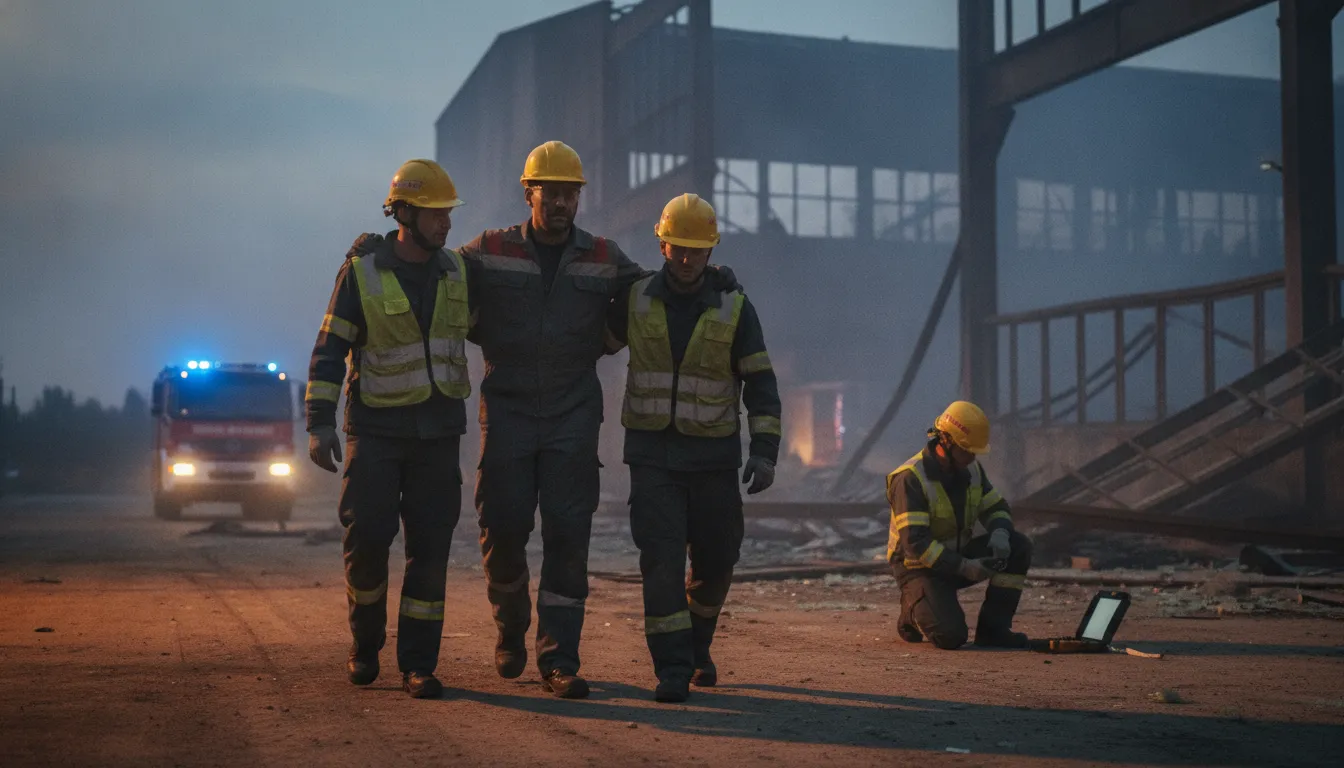
A workplace explosion can change a worker’s life in seconds. Severe burns, traumatic brain injuries, hearing loss, and internal trauma may require emergency treatment, extended rehabilitation, and care long after the incident. Families may also face lost income while trying to understand what happened.
Call Hoch Law Firm for a free consultation about your workplace explosion injury.
A workplace explosion injury attorney can investigate whether unsafe conditions, defective equipment, contractor negligence, or another party caused the event. Workers’ compensation may provide medical and wage benefits, but a separate third-party claim may be available when someone other than the employer contributed to the explosion. The right claim depends on the evidence and the parties responsible.
Explosions are not limited to one industry. Flammable gases, combustible dust, chemical reactions, and machinery failure can create dangerous conditions in Texas oil and gas, chemical, construction, manufacturing, and other industrial workplaces. Understanding the source of the explosion is the first step toward identifying responsibility and protecting your legal options.
What Causes Workplace Explosions in Texas?
Workplace explosions rarely have a single obvious explanation. The event may involve a hazardous material, an equipment problem, unsafe conditions, or several failures occurring together. Identifying the cause matters because it can show whether safety rules were ignored and whether an employer, contractor, manufacturer, or another party may bear responsibility.
Flammable gases and combustible dust
Flammable gases can accumulate in areas where they are stored, transferred, processed, or released. If the gas reaches an ignition source, the resulting explosion can injure workers nearby. Combustible dust can create a similar danger when particles build up in an industrial environment and then ignite. Dust hazards may arise in facilities that handle, process, or store materials capable of producing combustible particles.
Chemical reactions
Some explosions result from chemical reactions involving hazardous or volatile materials. A reaction may occur during production, storage, transfer, or disposal. The investigation should examine which substances were present, how they were handled, and whether the worksite followed applicable safety procedures. Employers working with flammable, explosive, or hazardous materials must comply with relevant OSHA safety standards. OSHA identifies safety requirements involving these materials.
Machinery failure and maintenance problems
Industrial machinery can fail in a way that releases energy or hazardous material. Improper maintenance may also allow a dangerous condition to develop. A failed component, malfunctioning system, or neglected maintenance issue can be part of the causal chain. Workplace explosions often result from improperly maintained industrial machinery, along with flammable gases, combustible dust, and chemical reactions. Hoch Law Firm discusses oil rig explosion claims involving these types of hazards.
Industries with elevated explosion risks
Texas workers may face these hazards in several high-risk industries. Chemical manufacturing, oil and gas, and heavy industrial construction involve volatile materials or demanding industrial processes. Those conditions can increase the danger of an explosive accident, although the specific cause still depends on the facts of the incident.
After an explosion, investigators may need to determine what materials were present, how equipment was operating, and whether required precautions were followed. Workers and families should avoid assuming that the employer’s initial explanation is complete. The physical scene, equipment history, and safety records may reveal a different cause.
OSHA’s historical grain-handling chart documents 503 grain elevator explosions, 677 injuries, and 184 fatalities between 1976 and 2011. That record is specific to grain facilities and does not predict the outcome of any individual claim, but it illustrates why combustible-dust risks deserve careful investigation. OSHA’s explosion chart provides the underlying data.
The broader workplace safety picture also shows why incident documentation matters. The Bureau of Labor Statistics recorded 5,070 fatal work injuries in the United States in 2024. BLS fatal-work-injury data is not an explosion-specific count, so it should not be used to estimate an individual worker’s risk or claim value.
Who Can Be Liable After a Workplace Explosion?
Liability depends on what caused the explosion, who controlled the danger, and which parties had responsibilities at the worksite. An employer may have duties involving hazardous materials, machinery, training, and safety procedures. OSHA standards address workplaces involving flammable, explosive, or otherwise hazardous materials, and employers must follow those requirements.
That does not automatically make the employer the only potentially responsible party. A workplace explosion may involve a defective machine, negligent maintenance, or unsafe conditions created by a company other than the injured worker’s employer. In those situations, a separate civil claim may be possible in addition to workers’ compensation benefits.
Employer safety duties
Investigators may examine whether the employer maintained a safe work environment and followed applicable safety protocols. Relevant questions can include whether equipment was properly maintained, whether hazardous conditions were identified, and whether workers received appropriate safety information. A violation alone does not resolve every legal issue, but it may help establish how the explosion happened and whether preventable conditions contributed to the injury.
The employer’s reporting obligations are separate from an injured worker’s legal deadlines. OSHA states that employers must report work-related fatalities within 8 hours. Employers must report qualifying work-related inpatient hospitalizations, amputations, and losses of an eye within 24 hours after learning of the incident. These are employer reporting windows, not deadlines that require an injured worker to file a claim within the same period.
Third parties, contractors, and equipment companies
Other entities may face scrutiny when they supplied, installed, serviced, or controlled part of the worksite. For example, an outside contractor may have performed negligent maintenance or created an unsafe condition. A property owner, site operator, or subcontractor may also have responsibilities that differ from the employer’s responsibilities. Whether any of these parties is liable requires evidence, not assumptions.
Equipment manufacturers may be involved when industrial equipment was improperly designed, manufactured, or tested. A product investigation may review the machine’s design, warnings, maintenance history, and failure pattern. The responsible company could be a manufacturer, distributor, maintenance provider, or another entity in the equipment chain, depending on the facts.
For workers in the oilfield, a focused review of oil rig explosion claims can help explain how contractor, equipment, and site-control issues may arise. Construction workers and families may also need workplace accident legal representation when multiple companies operate at one project.
How an explosion investigation develops
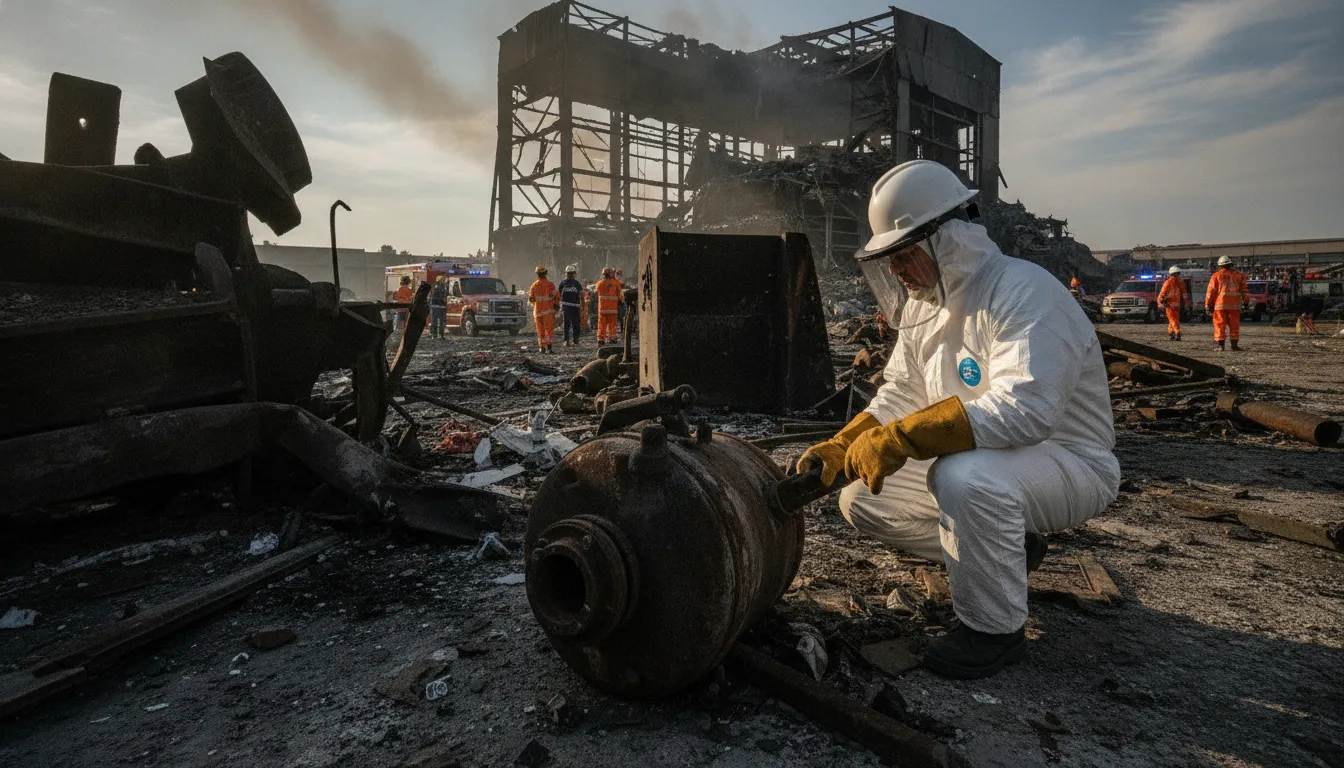
A thorough investigation may include safety audits, regulatory compliance reviews, equipment analysis, and interviews with witnesses. Evidence can disappear quickly after a damaged site is cleaned, repaired, or returned to operation. Scene photographs, equipment records, inspection materials, and witness statements should therefore be preserved as soon as safely possible.
A workplace explosion injury attorney can use that evidence to evaluate competing explanations and identify every potentially responsible party. The investigation may also help separate an employer-based workers’ compensation claim from a third-party negligence or product-liability claim. Because serious explosions can produce burns, hearing loss, traumatic brain injuries, and internal trauma, preserving the evidence early can affect the options available later.
Workers’ Compensation or a Third-Party Claim?
After a workplace explosion, the available legal path may depend on who caused the event and how the injury occurred. Workers’ compensation and a civil claim against a third party are different systems. They can involve different proof, benefits, and defendants, and the facts may support one path or both.
Workers’ compensation is the primary remedy for many workplace injuries. It generally provides benefits for medical expenses and a portion of lost wages. Those benefits can be important after an explosion, especially when treatment is ongoing and the worker cannot immediately return to the job. However, workers’ compensation often does not provide full damages for catastrophic injuries, including compensation for pain and suffering. Serious injury compensation may involve losses that extend beyond medical bills and wage replacement.
| Issue | Workers’ compensation | Third-party civil claim |
|---|---|---|
| Potential defendant or payer | Typically connected to the employer’s workers’ compensation system. | A person or company other than the employer or a coworker, if the facts support a negligence claim. |
| Main proof | Proof that the injury occurred in connection with covered employment, along with medical and wage-loss documentation. | Proof that the outside party owed a duty, failed to act reasonably, and caused the injury and resulting losses. |
| Potential benefits or damages | Generally includes medical benefits and part of lost wages, subject to the applicable system and facts. | May address broader catastrophic losses, which can include damages not covered by workers’ compensation. |
A third-party claim may be possible when an entity other than the employer or a coworker contributed to the explosion. Examples can include an outside contractor, a maintenance company, or a manufacturer whose equipment played a role. That possibility does not mean a third party is automatically liable. The investigation must connect the outside party’s conduct or product to the explosion and the resulting injuries.
These cases can become complicated when workers’ compensation benefits and third-party liability issues overlap. Records, medical evidence, incident details, and the identity of every involved company may affect the analysis. An attorney experienced in catastrophic injury litigation can help evaluate that intersection without assuming the answer before the facts are developed. Hoch Law Firm’s experience and credentials include handling complex injury matters. Eligibility for a third-party claim depends on the specific Texas workplace, parties, evidence, and injury involved.
What Can a Workplace Explosion Injury Attorney Help You Recover?
An explosion injury claim may involve more than the bills received immediately after the incident. The available damages depend on the injuries, the responsible parties, the evidence, and the type of claim involved. A careful evaluation should account for both current losses and the lasting effects on the injured person and family.
Explosion injuries can include severe burns, hearing loss, traumatic brain injuries caused by concussive force, and internal trauma. These conditions may require different forms of treatment and may affect work and daily life in different ways. Serious injury compensation should be evaluated in light of the full medical picture, not just the first hospital records. Hoch Law Firm’s personal injury case evaluation page explains how an initial review can help identify the issues that need investigation.
Medical treatment and future care
Severe burns often require specialized care in a designated burn center. Treatment may involve wound care, infection prevention, skin grafts, reconstruction, and physical stabilization. Recovery can continue through surgeries, rehabilitation, and assistive care over the long term.
A claim may therefore address reasonable medical needs tied to the injury, including care that is expected after the initial emergency treatment. The record should reflect how the injury affects mobility, function, appearance, and the need for continuing support.
Lost income and future earning capacity
An injured worker may be unable to return to the same job, work the same schedule, or perform the same duties. The claim may address lost income and future lost earning capacity when supported by the facts. The analysis should consider the injury’s effect on the person’s ability to work, rather than relying only on the wages missed during the first recovery period.
Pain, scarring, and psychological trauma
Severe burns can cause permanent scarring, long-term medical needs, and profound psychological trauma. Pain and suffering may be part of a serious injury claim, along with the physical and emotional burden of repeated treatment. Scarring can affect comfort, movement, appearance, and confidence. The firm’s burn injury resources provide additional context for documenting lasting physical effects.
Psychological injuries also deserve attention. A workplace explosion may leave a person with post-traumatic stress disorder or other lasting psychological effects. PTSD and related trauma can be relevant compensable damages when the evidence connects them to the explosion.
Loss of quality of life
Compensation may also account for the ways an injury changes ordinary life. Serious injury claims may seek damages for loss of quality of life, including limitations on activities, relationships, independence, and future plans. These effects should be documented alongside medical treatment and income losses so the claim reflects the whole person, not one category of expense.
What Should You Do After a Workplace Explosion?
The first priority is survival and medical care. After the immediate danger passes, deliberate steps can protect your health and preserve information about what happened. Your actions may also help clarify whether the incident involves workers’ compensation, a potential third-party claim, or both.
- Get to a safe location and accept emergency care. Do not return to the explosion site while fire, structural, chemical, electrical, or other hazards remain. Let emergency responders evaluate you, even if some injuries seem minor. Explosion injuries can involve conditions that are not immediately obvious, including burns, hearing loss, traumatic brain injuries, and internal trauma. Tell medical personnel about every symptom and explain how the blast occurred.
- Report the incident through the appropriate workplace channels. Notify your supervisor, safety department, or another designated workplace contact as soon as you reasonably can. Give a factual account without guessing about fault. Keep copies or notes of reports, emails, messages, and the names of people who received your notice. Ask how to obtain your incident and medical records, but do not sign a release or statement you do not understand.
- Understand what OSHA reporting means. OSHA requires employers to report work-related fatalities within 8 hours. Employers must report qualifying work-related inpatient hospitalizations, amputations, and losses of an eye within 24 hours after learning about them. These are employer reporting obligations, not deadlines imposed on injured workers. Do not delay necessary treatment or legal advice while trying to determine whether an OSHA report was made. OSHA explains these reporting requirements.
- Preserve evidence only when it is safe. If you can do so without entering a dangerous area or interfering with responders, preserve photographs of visible injuries, clothing, equipment, and the surrounding scene. Keep relevant documents and identify coworkers or other witnesses who saw the conditions before or after the explosion. Scene photos, equipment records, and witness statements may be important when the incident is later investigated. Do not handle damaged machinery, alter the scene, or discard clothing without first asking for guidance. More information about oil rig explosion claims explains why this documentation matters.
- Track treatment and the effects on your work and daily life. Keep a simple record of appointments, procedures, medications, symptoms, restrictions, and out-of-pocket expenses. Save wage records and communications about missed work or modified duties. Follow your medical providers’ instructions and tell them if symptoms change. A consistent record can help show how the explosion affected your recovery.
Seek legal guidance before important decisions. An explosion may raise questions about your employer, equipment, contractors, property conditions, and available claims. A workplace explosion injury attorney can review the facts, help preserve evidence, and explain your options without assuming liability before the investigation is complete. Avoid posting details publicly and consider getting advice before giving a recorded statement or signing settlement paperwork.
Call Hoch Law Firm for a free consultation about your workplace explosion injury.
How Can a Workplace Explosion Injury Attorney Help?
After an explosion, the central legal question is rarely limited to what happened in the final seconds. A workplace explosion injury attorney can examine the conditions that led to the event, identify the claims that may apply, and protect evidence before it disappears.
Investigating the explosion and preserving evidence
A meaningful investigation may involve reviewing incident reports, inspection records, maintenance histories, safety policies, and communications about hazards. It may also require examining the worksite, equipment, materials, and sequence of events. Photos, video, equipment records, and witness accounts can become harder to obtain after a damaged site is cleaned or altered. Counsel can send preservation requests and coordinate an investigation while evidence remains available.
The investigation should also consider whether another company or individual contributed to the explosion. Depending on the facts, potential issues may include a defective product, negligent maintenance, unsafe work performed by an outside contractor, or another party’s failure to address a known hazard. An attorney can investigate these possibilities rather than treating the employer’s initial account as the complete explanation.
Sorting out workers’ compensation and third-party claims
Claim classification matters because workers’ compensation and a third-party negligence claim can involve different procedures, responsible parties, and types of potential recovery. Workers’ compensation may address medical care and some wage losses. A separate claim may be possible when negligence by a party other than the employer or a coworker contributed to the explosion. These issues can overlap, making early legal analysis important.
Hoch Law Firm’s research describes complex cases as requiring counsel experienced with the intersection of workers’ compensation and third-party liability. The available claims depend on the evidence, the worker’s employment relationship, and the conduct that caused the injury. No attorney can guarantee a particular result, but careful classification can help prevent a potentially responsible third party from being overlooked.
Building leverage for negotiation or litigation
A lawyer can organize medical records, employment information, expert analysis, witness testimony, and documentation of the explosion into a case supported by evidence. That preparation can inform negotiations with insurers or opposing parties. If a fair resolution is not available, the same work can support litigation, including discovery, depositions, and trial preparation.
Tim Hoch is Board Certified in Personal Injury Trial Law. Hoch Law Firm emphasizes a direct, personalized understanding of each client’s situation rather than a high-volume approach. The firm handles catastrophic injury matters on a contingent-fee basis, so legal fees are tied to the firm’s agreement and the outcome of the representation. Discuss the fee arrangement and case costs before moving forward.
Frequently Asked Questions
Can I bring a claim against someone other than my employer?
Possibly. Workers’ compensation may address your employment-related benefits, while a separate third-party claim may exist if an outside contractor, equipment manufacturer, maintenance company, or property owner contributed to the explosion. Liability depends on the evidence, including the equipment involved, worksite conditions, contracts, maintenance records, and witness accounts. A Texas attorney can investigate those relationships before important evidence is lost.
What compensation may be available after a workplace explosion?
Available compensation depends on the claim and the injuries. Workers’ compensation generally provides medical benefits and a portion of lost wages, but it may not cover pain and suffering or the full losses associated with catastrophic injuries. A viable third-party claim may seek damages such as future lost income, pain and suffering, loss of quality of life, scarring, and psychological trauma. See serious injury compensation for related injury considerations.
What evidence matters in an explosion injury claim?
Promptly preserved evidence can help identify what caused the explosion and who may be responsible. Important materials may include scene photographs, equipment and maintenance records, safety documentation, regulatory findings, and witness statements. Do not disturb a dangerous scene or put yourself at risk to collect evidence. Instead, preserve documents you already have and tell your attorney what you observed.
Can an explosion cause injuries besides burns?
Yes. The blast force and resulting debris can cause traumatic brain injuries, hearing loss, and internal trauma in addition to burns. Severe burns may require specialized treatment, reconstruction, rehabilitation, and long-term care. Psychological effects, including post-traumatic stress disorder, may also be relevant to a serious injury claim. Medical evaluation is important even when some symptoms appear later.
Ready to Discuss Your Workplace Explosion Injury?
Workplace explosion claims can involve workers’ compensation, third-party liability, or both. Reviewing what happened early may help identify the responsible parties and the legal options available for severe burns, trauma, and other lasting injuries.
Call Hoch Law Firm to discuss your workplace explosion injury and legal options.