A windstorm insurance dispute lawyer Texas property owners consults may help clarify disagreements about what the storm damaged, how the policy responds, and what repairs the insurer should include. Wind claims can turn on the cause of each condition, the policy’s exclusions and limits, and the evidence gathered before repairs begin. A focused record can make it easier to identify which issues are factual, which depend on policy language, and what steps may come next.
Discuss your windstorm insurance dispute
Call Hoch Law Firm at 817-731-9703
This guide explains practical ways to document wind damage, compare competing inspections, review a disputed repair scope, and preserve records. Every policy and loss is different. Read the actual policy and keep track of any notice or proof requirements that may apply to your claim.
Why can a windstorm claim turn into a dispute?
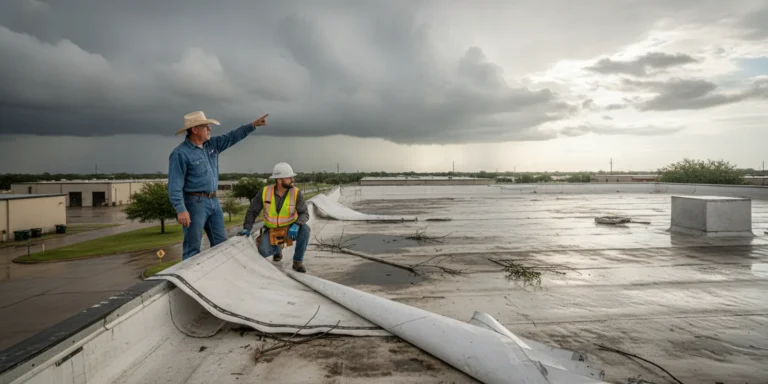
A disagreement often starts with cause. A roof may show lifted materials, displaced flashing, water marks, or older wear at the same time. The insurer and property owner may not agree about which conditions came from a particular wind event, whether another cause contributed, or what repairs are needed to address the documented damage.
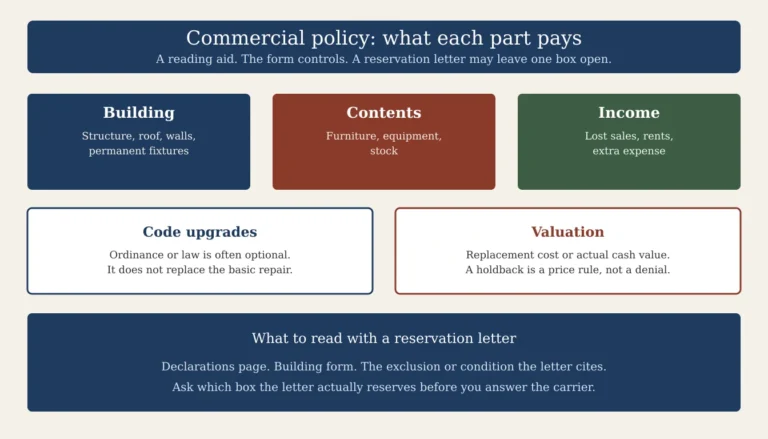
Policy terms matter, too. Wind coverage, exclusions, deductibles, conditions, and limits depend on the specific contract. A policy may distinguish between damage from wind and damage associated with another cause. The exact wording and the facts surrounding the loss matter more than a general description of what wind policies usually cover.
Scope is a separate source of conflict. An inspection may acknowledge damage but include only a small repair, omit related work, or use a repair method that another qualified professional considers unsuitable. The amount in an estimate does not, by itself, explain the difference. Compare the assumptions, measurements, materials, and repair steps behind each figure.
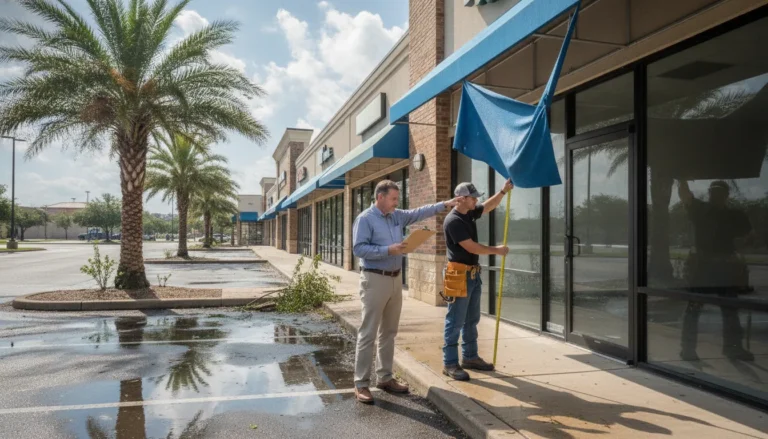
Wind events can affect multiple parts of a building. A dispute may involve roofing, exterior walls, windows, signs, rooftop equipment, interior finishes, or water that entered after an opening formed. For a broader overview of property-insurance issues, see the firm’s commercial property insurance page.
How should you document wind damage?
Start with a dated record. Note when the storm occurred, when you first observed damage, who inspected the property, and what was said or done. If the damage was not noticed right away, write down when and how it came to light. Separate what you personally observed from information provided by tenants, staff, contractors, or other witnesses.
- Photograph each affected area from a distance and up close. Include the building location and a wider view that shows where the detail is situated.
- Save original image files when possible. Keep a copy with the date, photographer, and a short description of the subject.
- Record temporary measures, such as covering an opening or moving contents, and preserve receipts for materials and labor.
- Keep damaged materials when practical and safe. If removal is necessary, photograph them in place and document where they came from before disposal.
- Save inspection reports, estimates, invoices, repair proposals, emails, letters, and notes from calls.
- Ask tenants, employees, or vendors with relevant observations to record what they saw and when, in their own words.
Safety comes first. Do not climb onto a roof or enter a hazardous area to obtain photographs. A qualified professional can document difficult or unsafe locations. If emergency work is needed to protect people or limit additional damage, record the condition before work when feasible, keep invoices, and document what was done.

Make a simple evidence log as the claim develops. A useful entry lists the date, event, person involved, document or photograph saved, and any follow-up needed. This helps avoid relying on memory months later. It also makes it easier to identify missing records before a further inspection or a written response.
What should you look for in the policy and claim file?
Locate the full policy in effect on the date of loss, including declarations, forms, endorsements, and any amendments. A summary page may not show every applicable term. Keep the insurer’s letters and claim documents together with the policy so you can compare the stated reason for a decision with the language cited.
Review the sections that address covered causes of loss, exclusions, duties after loss, valuation, deductibles, limits, and deadlines. Do not assume that a phrase in an estimate is the full explanation for a decision. If the insurer relies on an exclusion or a condition, note the wording it cites and the facts it says support that position.
Build a timeline of important events: the reported loss, inspections, document requests, estimates, payments, decisions, and communications. Record when each letter arrived and any date by which the insurer asks for a response. Policy requirements and legal time limits can differ, so do not treat a general online timeline as a substitute for reviewing the policy and the circumstances of the claim.
The Texas Department of Insurance provides insurance information for Texas consumers. Its materials may help with general questions, but an agency resource cannot decide how a particular policy applies to a specific loss.
How can you compare competing inspections?
Ask what each inspection actually covered. A roof-only visit may not address interior water marks or damage to rooftop equipment. A short visit may not document every elevation. Compare the inspection dates, weather conditions, access limitations, areas viewed, photographs, measurements, and methods used.
Look at the explanation, not just the conclusion. Does the report identify observed conditions and connect them to a cause? Does it distinguish recent damage from conditions described as older or unrelated? Are the assumptions clear? A report that says a condition is present but does not explain its origin may leave the central causation question unanswered.
If you obtain another inspection, give the professional the relevant history and ask for a written report with photographs and a clear account of the areas reviewed. Ask the professional to identify limitations and explain the basis for any opinion. A useful second assessment addresses the disputed points rather than simply repeating a different bottom-line number.
When an inspection is scheduled, make a record of who attended and which areas were inspected. If safe and permitted, have someone familiar with the property available to point out reported conditions without directing the inspector’s conclusions. Keep a copy of any documents supplied or discussed.
How should you prepare for a reinspection or written response?
Before a follow-up visit, make a concise list of the conditions that remain in dispute. Organize the list by location, such as north roof slope, loading area, or interior ceiling, rather than relying on broad labels. For each item, identify the photograph, report page, estimate line, or invoice that relates to it. This lets the discussion stay grounded in particular observations.
Prepare the property access in a practical way. Tell the insurer about known access limits, occupied areas, safety concerns, or recent repairs before the visit. Keep temporary coverings in place when they are still needed for protection. Do not remove evidence or make unsafe areas accessible just to accommodate an inspection. If an area changed since the earlier visit, explain what work occurred and preserve records showing the prior condition.
A written response can be easier to review when it addresses each reason in the decision separately. Use a simple format:
- Quote or summarize the insurer’s stated position for the disputed item.
- State the specific fact or policy term you believe needs further consideration.
- Identify the supporting document by date, author, and page or photograph number.
- Explain what clarification or next step you are requesting.
- Keep the tone factual and retain a complete copy of the response and attachments.
A focused response does not guarantee a changed decision. Its purpose is to make the disagreement understandable and to create a useful record of what evidence was provided. If the insurer asks for additional material, note the request date, what is needed, and any stated response date. If a request is unclear, seek clarification in writing rather than guessing what will satisfy it.
How do you identify a disputed repair scope?
Place the insurer’s estimate beside the contractor’s proposal or other repair assessment. Compare the line items and the work each document includes. Differences can involve quantities, labor, materials, access, removal, replacement, temporary protection, or work needed to complete a repair. A meaningful comparison explains what is missing or different and why that work relates to the reported damage.
Use a comparison table to organize the questions. The entries below are examples of topics to check, not a finding that a policy covers every item.
| Issue | What to compare | Useful supporting record |
|---|---|---|
| Roof area. | Measured area, damaged sections, and repair boundaries. | Annotated photographs, measurements, and inspection notes. |
| Repair method. | Patch, partial replacement, or other proposed work and its stated basis. | Written contractor explanation and product or installation details. |
| Related work. | Removal, access, flashing, interior finishes, or other work tied to the repair. | Itemized estimates, site photographs, and invoices. |
| Cause and timing. | Which conditions each inspection attributes to the wind event. | Dated photographs, witness notes, and inspection reports. |
| Temporary protection. | Emergency steps taken and expenses incurred to protect the property. | Receipts, work orders, and before-and-after photographs. |
Ask for itemized explanations where figures differ. A total alone may not show whether the disagreement concerns measurements, labor, material selection, the amount of damage, or policy treatment. Keep separate records for damage-related repair work and unrelated maintenance so the issues are not blended together.
For a distinct process that may apply to some valuation disagreements, review the firm’s information about insurance appraisal disputes. Appraisal is not a universal answer to every claim dispute; policy wording and the nature of the disagreement matter.
What should you do after an insurer’s decision?
Read the entire written decision and identify what was accepted, what was not accepted, and the reasons provided. Mark any requested information or response date. If a payment was issued, compare the estimate and the explanation to the policy and your evidence. Do not assume that accepting a payment resolves every remaining question; review the accompanying documents and obtain advice when needed.
- Organize the policy, decision letters, estimates, photographs, and invoices in date order.
- List each disputed condition or omitted repair separately.
- For each issue, note the insurer’s explanation, your supporting evidence, and any information still needed.
- Send a clear written response through the channel specified by the insurer, keeping a copy and proof of delivery.
- Track any further requests and dates, and ask for clarification if a request or decision is unclear.
If the dispute concerns the insurer’s handling rather than only the amount or scope, the facts and policy language still need close review. Learn more about issues that may arise in insurance bad faith claims, without assuming that a disagreement alone establishes a legal violation.
For general claim-dispute information, see the firm’s guide to the issues that can arise after an insurance claim denial. A wind claim may involve a partial payment, a causation dispute, or a repair-scope disagreement rather than a complete denial.
When may legal guidance help?
Consider getting legal guidance when the insurer’s explanation is difficult to reconcile with the policy or the inspection record, when a significant scope difference remains after a documented response, or when deadlines and policy duties are unclear. A lawyer can review the contract, decision letters, and available evidence to help identify the remaining questions and possible next steps.
Before a consultation, gather the policy, claim correspondence, estimates, inspection reports, photographs, repair records, and a short timeline. Write down what decision or issue you want reviewed. An organized file can make the discussion more focused and can help distinguish missing information from a genuine disagreement.
Hoch Law Firm represents policyholders in property-insurance disputes. To learn about the firm’s background, visit the attorney biography. No particular result can be promised; whether a matter can be taken depends on its facts and the firm’s review.
Call to discuss your windstorm claim at 817-731-9703
Frequently Asked Questions
Does wind damage automatically mean the policy covers every repair?
No. Coverage depends on the policy wording, the facts about the damage, and any applicable exclusions, conditions, limits, or deductibles. A documented wind condition does not, by itself, answer every coverage or scope question.
What if the insurer and contractor disagree about the cause?
Compare the written explanations, inspection scope, photographs, and assumptions behind each opinion. Ask each professional to address the specific disputed conditions and explain the basis for the conclusion. Preserve the reports and avoid treating a bare estimate as a full causation analysis.
Should I make temporary repairs before the claim is resolved?
Protect people and property from immediate hazards. Document conditions before work when it is safe and practical, save receipts, and keep records of what was repaired or removed. Review the policy’s duties after loss and communicate with the insurer as appropriate.
Can appraisal resolve every windstorm insurance dispute?
No. Appraisal may be relevant to some disagreements over the amount of loss, depending on the policy and circumstances. It may not resolve questions about coverage, causation, or whether a particular condition is excluded. Review the policy and the specific issue before choosing a process.
What documents should I keep for a windstorm claim?
Keep the full policy, claim letters, estimates, inspection reports, dated photographs, repair proposals, invoices, receipts, and a communication timeline. Save copies of documents you send and note when they were delivered.
A clear timeline, detailed photographs, and an itemized comparison can help focus a windstorm dispute on the evidence and policy language that actually matter.