A commercial property restoration dispute lawyer may help when an insurer questions the emergency work, repair scope, invoices, or cause of damage after a loss. For Texas property owners, the first task is often to protect people and the building while preserving a clear record of what happened and why each step was taken.
Request a review of your property claim
Restoration disputes are not always simple arguments over the total estimate. The parties may disagree about which areas were damaged, whether work was needed to prevent further harm, whether a repair method is appropriate, or whether an invoice reflects work actually completed. Keep the analysis tied to the specific loss, the policy language, and the evidence. This guide offers practical claim steps, not a promise that any particular expense will be paid.
Why can restoration work become a claim dispute?
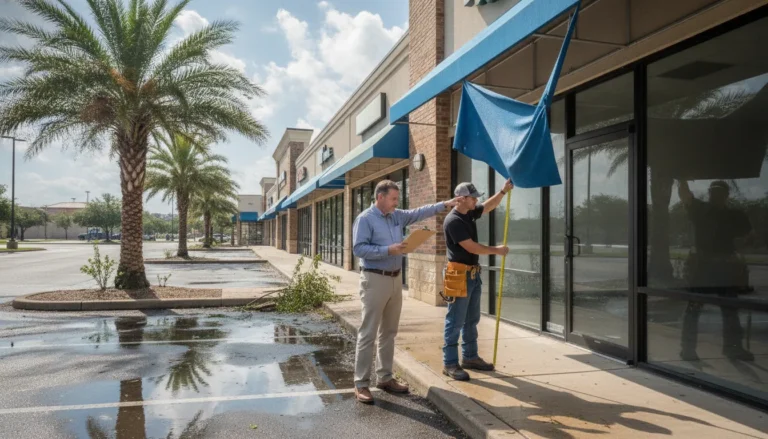
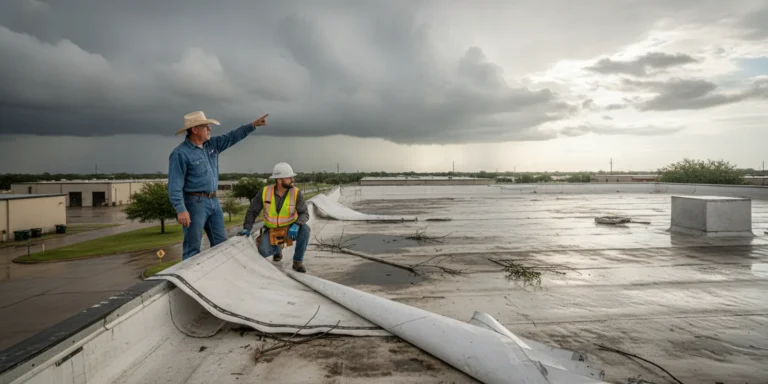
After a storm, water release, fire, or another covered event, a property owner may need to act before the insurer finishes its investigation. A contractor might remove wet materials, cover an opening, dry an affected area, or stabilize part of a building. Later, the insurer may question the need, amount, timing, or connection of that work to the reported event.
Several issues can overlap. One estimate may include emergency services, demolition, drying, cleaning, and permanent repairs. A different estimate may omit some tasks, apply a different repair method, or attribute part of the condition to wear, a prior problem, or another cause. A disagreement over one part does not automatically resolve the others.
Separate the questions. What happened? Which property was affected? What work was done to prevent additional damage? What repairs are needed to return the affected property to its prior condition, subject to the policy? What documentation supports each amount? This structure makes it easier to identify a narrow disagreement instead of treating every line item as one large dispute.
What should you do before emergency restoration begins?
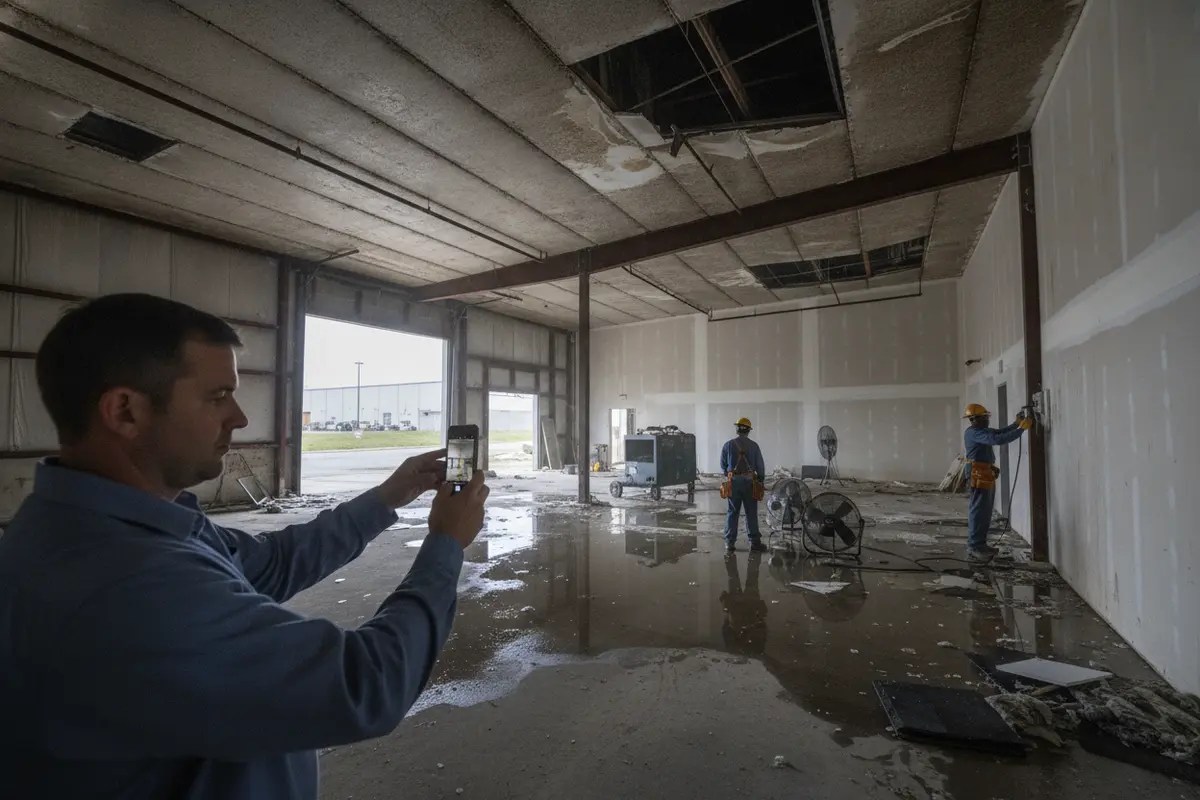
Safety comes first. Follow emergency directions and do not enter an unsafe building to take photographs. If conditions allow, record the damage before materials are moved or removed. Use wide views to show where the damage is, then closer views to capture specific affected materials, equipment, or contents.
- Record the date and time you discovered the condition and when you first observed a change.
- Photograph or video affected rooms, building systems, exterior openings, and visible water paths from more than one angle.
- Make a temporary inventory of damaged materials or contents before disposal, when doing so is safe and practical.
- Keep messages, call notes, work orders, proposals, invoices, receipts, and any written instructions from the insurer or contractors.
- Ask restoration providers to describe the observed condition, proposed work, and reason for urgent measures in writing.
Do not delay reasonable steps to protect the property simply to create a perfect file. Instead, make a record as work proceeds. If a wet component must be removed promptly, photograph it in place when possible, document its location and condition, and keep samples or disposal records when practical. Note who authorized the work and when.
How do you distinguish emergency mitigation from permanent repairs?
Emergency mitigation aims to limit additional damage or stabilize the site. Depending on the conditions, it could involve temporary covering, water extraction, drying equipment, or removal of material that cannot reasonably remain in place. Permanent restoration addresses the lasting repair or replacement of damaged building components.
The distinction matters because each phase can have different tasks, timing, and supporting records. A drying log may help explain equipment use. A temporary cover invoice may describe an immediate protective measure. A later repair estimate may address replacement materials and finish work. Grouping every cost into a single unexplained total makes it harder to see what was done and why.
Ask the provider to separate emergency services from planned repairs and to identify dates, locations, quantities, and methods. Keep changes in scope visible. If conditions discovered during demolition require additional work, request photographs and a written explanation before the new work is performed when circumstances permit. Do not assume that calling work “mitigation” resolves whether the policy covers it; coverage depends on the policy and facts.
What should a useful restoration invoice show?
An invoice is more useful when someone unfamiliar with the project can understand the work from it. Look for a description of the task, the affected area, quantities, unit pricing where provided, dates, equipment duration, and any materials used. The invoice should make it possible to connect the charge to a work order, photograph, daily log, or other project record.
Review invoices for duplicate entries, unclear lump sums, unexplained changes, and charges that do not identify a location or task. If equipment ran for several days, ask for the service dates and relevant monitoring records. If a crew performed demolition, identify what was removed and where. If a vendor used a subcontractor, preserve the subcontractor’s records too.
Do not alter a provider’s original invoice to make it fit an estimate. If a line is unclear, ask the provider for a corrected or itemized explanation and retain both the original and the clarification. Record payments, deposits, credits, and outstanding balances separately. These details help distinguish a disagreement about work from a disagreement about billing.
How should you handle a restoration site inspection?
Before an inspection, identify the areas that remain disputed and gather the records that help explain them. Make a simple room-by-room or area-by-area list. Note when each condition was first observed, what work has already occurred, what remains visible, and whether any area has changed since the last inspection. Share relevant records through the claim process and keep a copy of what you provide.
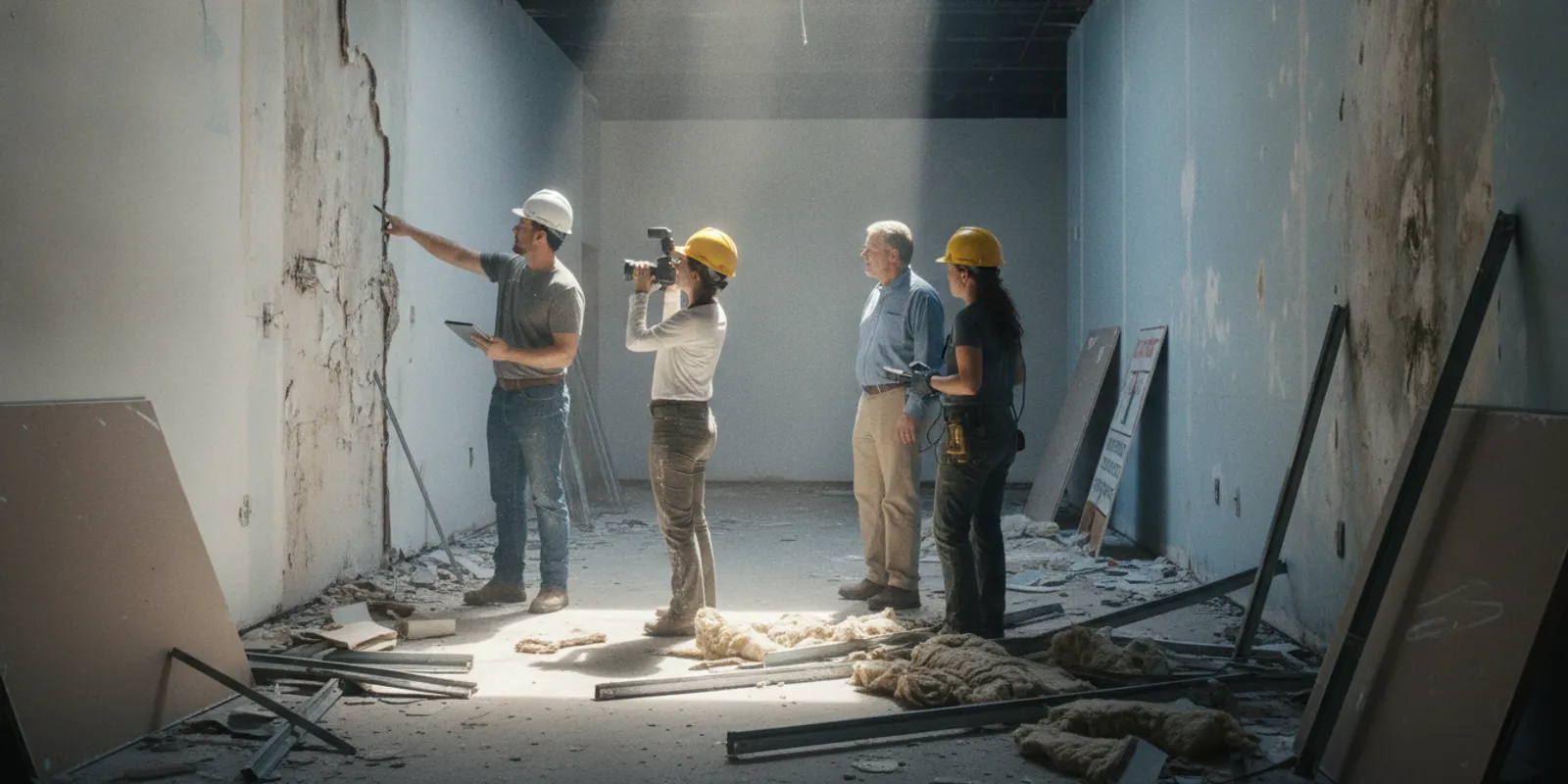
During a site visit, take notes about the date, attendees, areas inspected, photographs taken, and any samples or measurements collected. If a contractor or other professional attends, ask them to explain observations in plain language and distinguish what they saw from their opinion about cause or repair. If an area cannot be inspected because work is ongoing or access is unsafe, record that fact and discuss a practical next step.
Afterward, write down any requests for additional documents or follow-up inspections. Send a concise confirmation if an important point was discussed orally. If new damage becomes visible when work proceeds, photograph it and ask the relevant professionals to document the condition before it is covered or removed when circumstances allow. These habits help maintain a useful chronology without assuming that an inspection by itself resolves the claim.
How can you evaluate a disputed restoration scope?
Compare documents line by line, but first make sure they describe the same areas and the same proposed outcome. One estimate may cover only visible damage while another includes work revealed after opening a wall. One may assume repair; the other may assume replacement. A simple comparison table can flag the differences that need a response.
| Issue | What to compare | Useful supporting record |
|---|---|---|
| Area and quantity. | Room, surface, measurement, and amount included in each scope. | Annotated photographs, measurements, and floor plans. |
| Work method. | Repair, cleaning, drying, removal, or replacement proposed. | Written inspection findings and contractor explanation. |
| Timing and duration. | When the work occurred and how long equipment or labor was used. | Daily logs, work orders, and dated site photographs. |
| Price and totals. | Labor, materials, equipment, taxes, credits, and disputed amounts. | Itemized estimates, invoices, receipts, and payment records. |
| Cause and damage. | How the claimed condition is connected to the reported event. | Inspection notes, photographs, maintenance records, and relevant reports. |
Make a written list of differences rather than relying on a vague statement that an estimate is too low. For each disputed item, state what the document includes, what you believe is missing or inaccurate, and what evidence supports your position. If an item is not disputed, say so. A focused response can help the insurer and the property owner see whether the issue concerns measurements, work method, price, or coverage.
How do causation and prior conditions affect the dispute?
The source and timing of damage can matter as much as its visible extent. An insurer may contend that some condition existed before the reported event, resulted from a different cause, or reflects deterioration rather than covered damage. The property owner may have evidence that the condition appeared or worsened after a particular event.
Preserve records that help establish a timeline: inspection photographs from before the loss, maintenance and repair records, tenant or employee reports, weather or incident information, and communications made soon after discovery. Avoid overstating what a photograph proves. A picture can show a condition at a particular time, but may not establish by itself when or how that condition began.
Where expert or technical evaluation is needed, ask the professional to explain the observations, method, assumptions, and limits of the conclusion. Keep the report and underlying materials. The goal is not to collect opinions that repeat a conclusion; it is to understand how the evidence supports or challenges a proposed cause and scope.
What should you do if the insurer questions mitigation or an invoice?
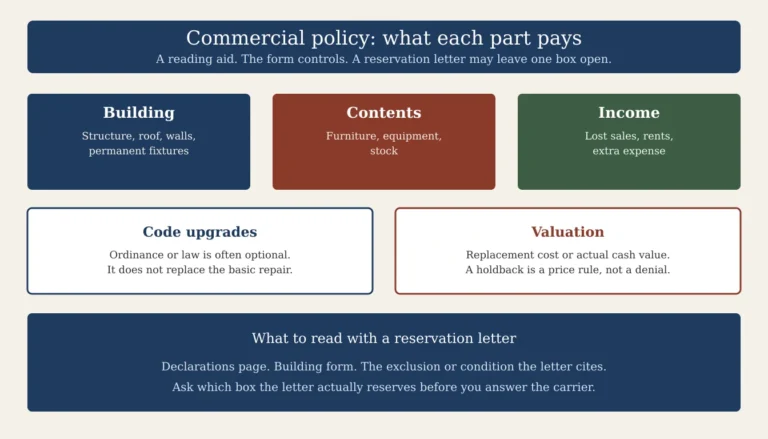
Read the insurer’s written explanation and identify exactly what it disputes. Is the question whether work was necessary, whether it relates to the loss, whether the amount is reasonable, or whether the policy covers the category of expense? These are different issues and may call for different records or explanations.
- Preserve the complete file. Save the policy, claim correspondence, estimates, invoices, photographs, logs, and records of calls or site visits.
- Build a timeline. List discovery, notice, inspections, emergency work, estimate changes, and payment or denial communications.
- Match evidence to each questioned item. Attach the relevant photograph, log, work order, or explanation rather than sending an unorganized document dump.
- Ask focused questions. Request clarification about the particular scope, factual basis, or policy provision at issue.
- Track policy and legal deadlines. Review the policy and any applicable notices. Do not assume an ongoing discussion pauses a deadline.
Keep your response factual and measured. Do not discard damaged materials or records simply because an inspection has occurred. If urgent work continues, document new conditions and retain updated invoices. Texas insurance resources are available through the Texas Department of Insurance; the department’s information is a starting point, not a decision on whether a particular policy covers a specific expense.
For help understanding how a property claim disagreement may be addressed, review Hoch Law Firm’s pages on commercial property insurance claims, the property insurance claim process, and insurance appraisal disputes. Appraisal may address certain valuation disagreements under a policy; it should not be assumed to decide every coverage or causation question.
How can you keep this issue distinct from other claim questions?
A restoration invoice dispute may overlap with a wider property claim, but the issues are not interchangeable. The immediate focus here is the evidence for emergency services, repair scope, charges, and the relationship between observed damage and the reported event. If a separate issue concerns whether the policy applies, an insurer’s conduct, or lost business income, identify that separately and avoid treating one issue as proof of another.
For related context, see Hoch Law Firm’s information about steps after storm damage, documenting roof damage, insurance claim disputes, and contacting the firm. Each claim turns on its own policy wording, evidence, and circumstances. These resources are not a substitute for reviewing the actual policy and claim file.
Frequently Asked Questions
Should I wait for the insurer before starting emergency work?
Do not leave a property exposed to avoidable harm while waiting if prompt protective steps are reasonably needed. Follow safety guidance, notify the insurer as required by the policy, document the condition and work, and keep invoices and logs. Whether a specific expense is covered depends on the policy and the facts.
Can the insurer dispute work that has already been completed?
A completed job does not prevent questions about cause, necessity, scope, or amount. Preserve contemporaneous photographs, work orders, service logs, invoices, and provider explanations. Ask the insurer to identify the specific basis for any disagreement and respond with records tied to that issue.
What if the estimates use different repair methods?
First confirm that both estimates address the same location, damage, and end result. Then ask each estimator to explain the observations and assumptions behind the proposed method. Photographs, measurements, and written inspection findings may help show why one approach addresses the documented condition.
Does appraisal decide whether the insurer must pay?
Not necessarily. An appraisal provision may provide a process for resolving certain disagreements about the amount of loss, but its scope depends on the policy and applicable law. Coverage, causation, and other disputes may remain separate questions. Review the policy before assuming appraisal resolves the entire claim.
When may legal guidance be useful?
Consider asking a lawyer to review the matter when the insurer’s position remains unclear, significant portions of a commercial repair scope are disputed, or policy deadlines and procedures are difficult to assess. Bring the policy, claim correspondence, estimates, invoices, photographs, and a brief timeline so the review can focus on the actual questions.
Call Hoch Law Firm at 817-731-9703
A clear record of the loss, the work performed, and the basis for each disputed amount can help a Texas commercial property owner assess the next step.