A large loss at a plant is not a roof-only claim. An industrial property insurance attorney Texas owners call after a fire, storm, or equipment failure looks at the building, the production line, and the time the line stays down as one file. Hoch Law Firm represents policyholders in those disputes from our Fort Worth office, and we do not represent insurance companies. If the file has already moved into a short payment or a coverage fight, our Texas property bad faith page covers that later stage.
Call Hoch Law Firm at 817-731-9703
Tim Hoch is Board Certified in Personal Injury Trial Law by the Texas Board of Legal Specialization. He handles a select number of cases so the owner works with him, not a rotating team. Property insurance is the core of the practice, including manufacturing and other commercial buildings.
This guide stays on the industrial file: what to preserve, how building and machinery values split, and which disputes show up when those pieces are paid separately. It is not a substitute for reading your policy.
What an industrial property insurance attorney Texas review covers: the plant file
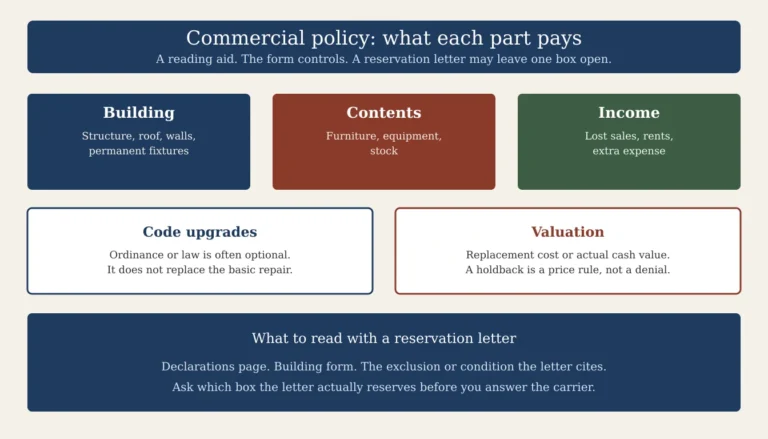
An industrial loss usually sits on more than one coverage part. The building schedule may pay for walls, roof, and electrical service. A separate equipment or machinery schedule may pay for presses, ovens, tanks, and controls. Business-income coverage may pay for the time production is down. Each part can have its own limit, deductible, and valuation method.
The first review is the declarations page, the forms that apply to the plant, and any equipment schedule or statement of values. Those pages tell you whether the insurer is measuring replacement cost or actual cash value, and whether production equipment is listed by item or lumped into contents.
We also look at who has an interest in the payment. A lender, a landlord, or an equipment lessor may be named on the policy. Paying the wrong party, or holding the check until every name signs, can stall repairs even when coverage is not really in dispute.
For the broader commercial practice, start with our commercial property insurance page. This article does not repeat that overview. It stays on the plant file.
Records that belong in a plant loss file
Adjusters ask for paper early, then treat gaps as reasons to pay less. Build the file before the second inspection, not after a denial.
Keep these items together:
- Pre-loss photos of the building exterior, roof, electrical room, and each production line.
- The equipment list with make, model, serial number, and the year it was installed.
- Maintenance logs, calibration records, and the last service invoice for damaged machines.
- Purchase orders, invoices, and shipping records for stock that was in process.
- Utility bills and production counts for the months before the loss.
- The full policy, including endorsements, and every letter from the insurer.
Do not throw out damaged parts until the insurer has inspected them or agreed in writing that you may dispose of them. A scrapped control panel is hard to value later.
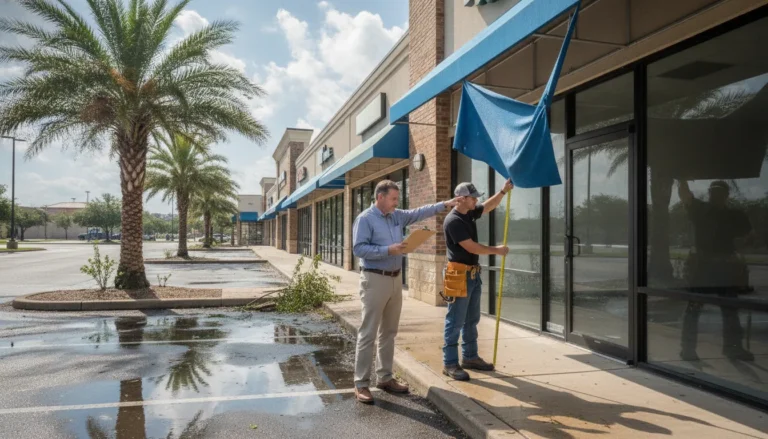
Photograph the same views the contractor will use: wide shots of the bay, close shots of nameplates, and the path water or smoke traveled. Date the photos. If a temporary repair is needed to protect the building, photograph the condition first and keep the invoices separate from permanent work.
Business-income proof is its own project. Sales history, payroll, and extra costs to keep orders moving belong in a business interruption claim documentation file. We link that guide instead of re-teaching the calculation here. Costs to rent temporary space or outsource a process often fall under extra expense, which is covered in our extra expense coverage guide.
How building value and equipment value get separated
Insurers often price the shell and the line on different methods. The building may be on replacement cost. Older machines may be on actual cash value, which subtracts depreciation. A custom jig or a control system built for your process may not have a simple catalog price.
Ask for the estimate in writing and match each line to a coverage part. A number that looks fair in total can still short the line that takes longest to replace. Lead time matters. A roof can be patched in weeks. A specialty press can take months, and the business-income clock often runs while you wait.
| Piece of the loss | What to document | Where disputes usually start |
|---|---|---|
| Building shell and roof. | Pre-loss condition, code upgrades, and contractor scope. | Depreciation, matching, and what counts as a repair versus a replacement. |
| Production equipment. | Serial numbers, service history, and quotes for like kind and quality. | Actual cash value, betterment, and whether the item is scheduled. |
| Stock and work in process. | Inventory counts, invoices, and stage of completion. | Selling price versus cost, and spoilage after a power loss. |
| Time the line is down. | Production records and the repair timeline. | The waiting period and how long the insurer says you should have reopened. |
If the insurer applies a coinsurance penalty, do not guess at the formula in a phone call. The penalty math lives on our Texas commercial property coinsurance page. Your job in the industrial file is to test the values the insurer used: building limit, equipment values, and whether vacant or unused space was counted.
Code upgrades are a separate limit on many policies. A plant that must change electrical service or fire protection to reopen can face costs the base building limit does not cover. That issue is explained in our ordinance or law coverage guide.
Disputes that show up on industrial claims
Four arguments come up again and again on plant losses. None of them is automatic, and each one depends on the form in your policy.
Wear and tear versus a covered event
Carriers point to rust, old roofing, or a tired bearing and call the loss maintenance. A covered storm, fire, or sudden breakdown can still be the cause that made the plant stop. Maintenance records help show the machine was in service, not abandoned. Exclusions are listed in more detail on our commercial property exclusions page.
Equipment breakdown versus the property form
Some policies put mechanical and electrical breakdown on a separate equipment form, with its own deductible. A surge, a seized motor, or a boiler failure may be denied on the property form and never tendered to the breakdown form. Ask which form was reviewed. If only one was, the file is incomplete.
Partial payment while the line is still down
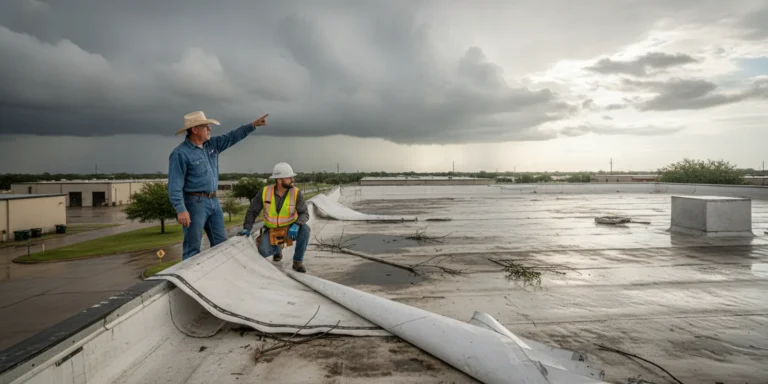
An early check for roof tarps or a temporary generator is not a final number. Note on the draft whether you are releasing the rest of the claim. Keep temporary-repair invoices apart from the permanent scope so the insurer cannot treat a patch as the whole loss.
Cause fights after fire or water
Fire losses add smoke, water from suppression, and heat damage to equipment that never burned. Business fire claims, including code and income issues, are covered on our Texas business fire damage page. Use that page for the fire process, and keep this one for the multi-part industrial file.
Deadlines that still apply while you document the plant
Documentation does not pause the claim clock. The Texas Department of Insurance explains the ordinary first-party deadlines in its commercial insurance consumer rights guide. Texas Insurance Code Chapter 542 states the same sequence for most insurers:
- 15 days after notice. The insurer generally must acknowledge the claim, start the investigation, and request the items it reasonably needs.
- 15 business days after those items arrive. The insurer generally must accept or reject the claim in writing. A denial has to state the reasons.
- More time only with a reason. If the insurer cannot decide in that window, the notice has to explain why more time is needed.
- Five business days after acceptance. Payment of an accepted amount is generally due within five business days after that notice.
Those dates come from Texas Insurance Code Chapter 542. If the insurer is liable for the claim and misses the subchapter’s rules, Section 542.060 can add interest at 18 percent a year. It can also add reasonable attorney’s fees. The statute text is on the Texas Insurance Code Chapter 542 page published by the Legislative Council. Surplus-lines insurers and some weather claims follow different timing, and Chapter 542A can change the remedy. Read the deadlines in context on our Texas Prompt Payment of Claims Act page rather than treating this paragraph as the full clock.
Send your own notice in writing. Keep the date the insurer received the equipment list, the inventory, and any proof of loss. If a request arrives months later for records that were never mentioned at the start, write back with what you already sent and ask what is still missing.
A practical order for the first two weeks
Speed matters because production dates are hard to recreate. Use a simple order so the insurer cannot say a key record arrived too late.
- Tell the insurer in writing on day one, and save the confirmation.
- Photograph nameplates, the electrical room, and the path of smoke or water before cleanup.
- Pull the equipment list, the last three service invoices, and the stock count that was current at the loss.
- Ask the contractor for two scopes: temporary protection, and the permanent repair.
- Send the package once, with a dated list of what is enclosed, and keep a copy.
If the plant must keep running a reduced schedule, write down which lines stopped and which lines did not. That note keeps a partial restart from being treated as a full reopening. It also gives your accountant a clean split between lost output and extra cost.
Share the same package with your lender if the policy names one. Mortgagees often have their own notice rules. A late notice to the lender can hold the check even after the insurer agrees on the building number.
How an industrial property insurance attorney Texas file is handled
Hoch Law Firm is a Fort Worth practice. We represent commercial property owners across Texas, including manufacturing and processing buildings, and we do not take the insurer’s side. Tim Hoch has practiced in Fort Worth since 1988. Clients work with him directly because the firm keeps a small docket.
On a plant loss, the work usually follows this order:
- Read the policy, the equipment schedule, and the claim letters before taking a position on value.
- Compare the insurer’s estimate with your contractor scope and the serial-level equipment list.
- Separate building, machinery, stock, and downtime so a payment on one part is not treated as payment of the others.
- Track Chapter 542 dates and any request for more time.
- Talk with you about appraisal, a corrected proof, or a lawsuit only after the file shows which part is actually in dispute.
You can read Tim’s background on the Tim Hoch page. If the dispute has already moved past documentation into a denial or a short payment, our commercial property insurance dispute page explains that later stage.
A consultation is a review of your policy and the claim file. It is not a promise of a result. Outcomes depend on the forms, the facts, and the proof.
Call 817-731-9703 to review your plant claim
Frequently Asked Questions
When should a plant owner call an industrial property insurance attorney in Texas?
Call when the estimate leaves out production equipment, the insurer blames wear and tear for a sudden stop, or a payment on the building is being treated as the end of the claim. Early help is also useful when a lender or equipment lessor is named on the check.
Does equipment have to be listed on a schedule to be covered?
Not always. Some policies cover machinery as business personal property up to the contents limit. Others cover only scheduled items, or they put breakdown on a separate form. The declarations page and the equipment endorsement answer that question for your plant.
Can the insurer demand tax returns on an industrial claim?
Texas Insurance Code Section 705.003 limits when an insurer may require federal tax returns as a condition of settlement. A fire loss or a claim for lost profits or income is one of the stated exceptions. Ask why the return is needed, and keep the request in the claim file.
Will a temporary repair reduce the final payment?
It should not, if you document the before-and-after condition and keep temporary invoices separate. Trouble starts when a tarp, a generator, or a used replacement part is later described as a full repair. Photograph the damage first and note on any draft what you are not releasing.
Is a manufacturing loss the same as a warehouse claim?
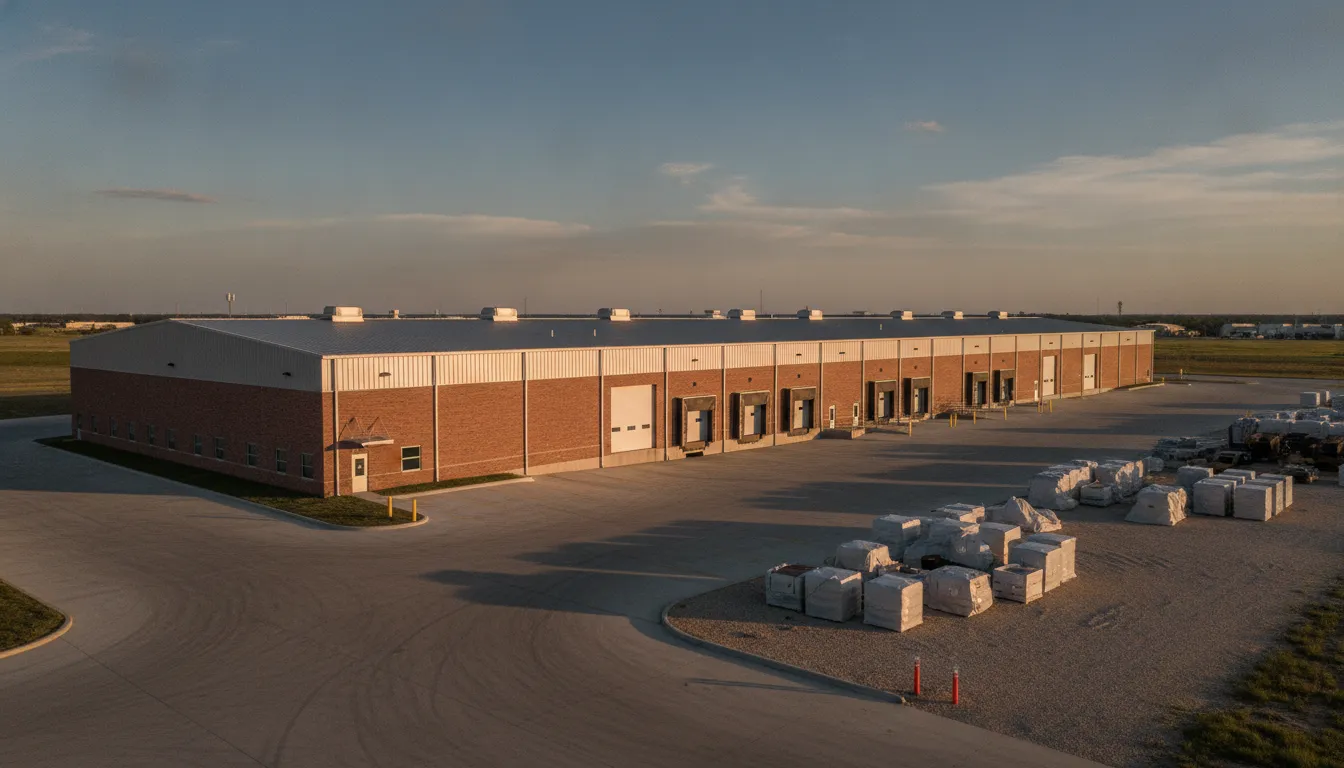
No. A warehouse file is often stock and the shell. A plant file adds production equipment, process utilities, and the time a line cannot run. Those extra pieces are why the values get split, and why a warehouse checklist is not enough.