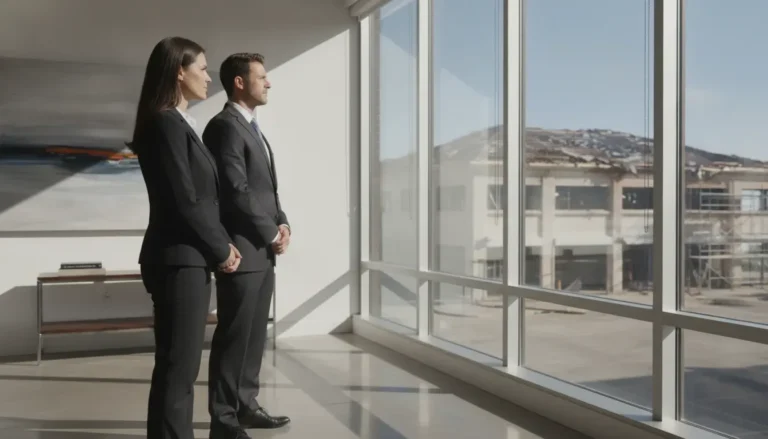
A commercial hail damage insurance claim can turn on evidence gathered long before an insurance company makes its coverage decision. Hail may leave obvious dents, but the most important damage can be harder to see. A persuasive claim file connects a specific storm to the property, documents the roof’s condition before and after it, explains the scope of necessary work, and supports the amount claimed with reliable records.
Request a free case evaluation with Hoch Law Firm if your Texas commercial hail claim has been denied, delayed, or underpaid.
The most useful evidence for a commercial hail claim includes dated photos and video, weather and hail reports, pre-loss maintenance records, prompt professional inspections, repair estimates, the insurance policy, and a complete communication log. Together, these records help establish when the storm occurred, what it damaged, whether the damage is new, and what reasonable repairs may cost.
No single document proves every part of a claim. The strongest file is a coordinated record that tells one consistent story from the date of loss through the insurer’s decision.
Evidence that strengthens a commercial hail damage insurance claim
A commercial property owner generally needs to document four questions: Did a covered storm affect the location? Did that event cause physical damage? What work is reasonably necessary? What is the value of the covered loss? Different records answer different questions, so collecting only photographs or only an estimate can leave important gaps.
Build the file around four proof categories
| Question | Useful evidence | What it helps explain |
|---|---|---|
| Was the property exposed? | Hail reports, radar data, site video, witness notes | The storm’s date, path, and conditions at the property |
| Did the storm cause damage? | Before-and-after photos, inspection reports, maintenance history | Why observed conditions are consistent with a recent event |
| What work is needed? | Detailed scopes, testing, expert opinions, code information | The affected components and proposed repair method |
| What is the loss worth? | Itemized estimates, invoices, inventory records, business records | The cost and operational impact of the loss |
These categories also help a business owner spot weak points before sending a proof-of-loss package. For example, a contractor’s estimate may price a roof replacement but say little about causation. A weather report may confirm hail nearby but not establish what happened to the roof. Each record becomes more useful when it is supported by the others.
Preserve original records
Keep original photographs, videos, estimates, emails, inspection files, and invoices. Originals may contain dates and other metadata that exported or edited copies do not. Save working copies in a separate folder, use clear filenames, and back up the full claim file. A simple index listing the date, source, and purpose of each item can make a large file easier to review.
Document the storm and property conditions promptly
Prompt documentation helps establish what the property looked like close to the reported date of loss. It can also reduce disputes about whether later weather, foot traffic, temporary repairs, or normal deterioration caused the observed condition.
Capture safe, useful photographs and video
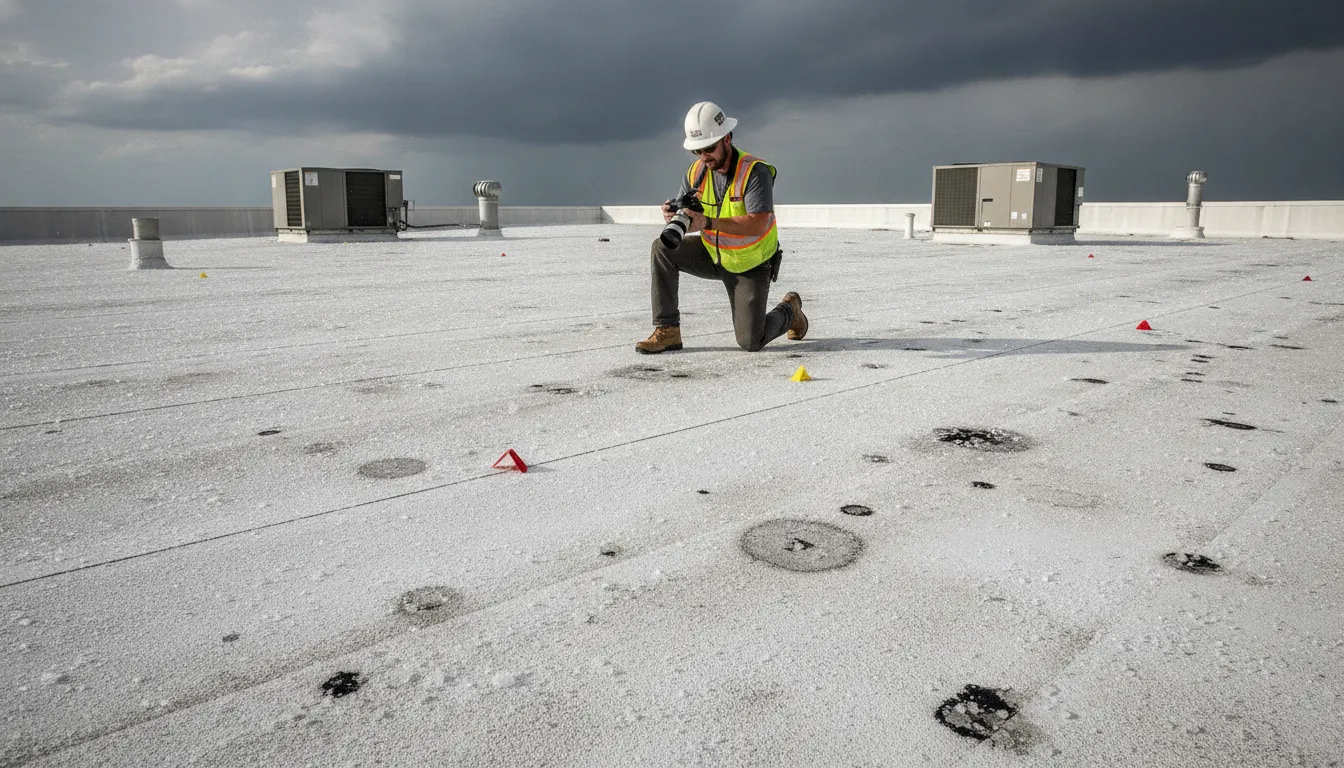
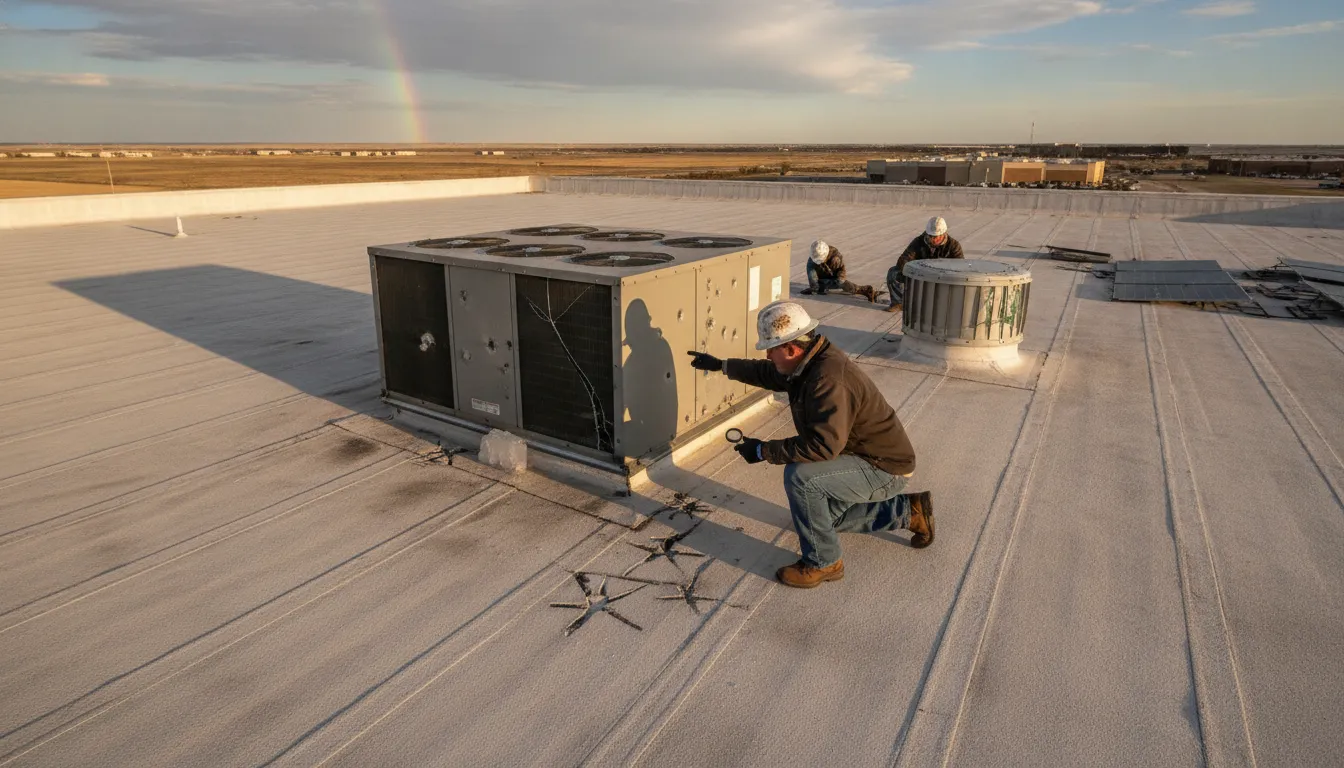
Photograph the building from multiple distances. Wide shots identify the property and show the overall condition. Medium-range images show affected roof slopes, elevations, rooftop equipment, gutters, windows, and exterior finishes. Close images can show specific impact marks or fractures. Include identifying reference points so a reviewer can understand where each image was taken.
Do not climb onto a wet or damaged roof without appropriate training and safety equipment. A qualified professional can document areas that are not safely accessible to the property owner. Preserve any security-camera footage that captured the storm, falling hail, water intrusion, or immediate response.
Record the timeline while memories are fresh
Create a written chronology that identifies when the storm occurred, when damage was discovered, who inspected the property, when the claim was reported, and what temporary measures were taken. Ask employees, tenants, or maintenance personnel who observed the storm or resulting leaks to record factual notes in their own words.
Independent weather information can support the timeline. The Texas Department of Insurance hail guidance also encourages property owners to document damage and contact their insurer. Weather data is most persuasive when paired with property-specific evidence rather than treated as proof by itself.
How do maintenance records help separate hail damage from wear?
Insurance companies may attribute roof problems to age, poor maintenance, installation defects, or ordinary wear instead of a recent storm. Records created before the loss can be especially valuable because they show the building’s condition without the influence of a pending claim.
Gather the roof history
Collect prior inspection reports, repair invoices, warranties, maintenance logs, leak reports, photographs, and records of roof work. Include documents for rooftop HVAC equipment, drainage systems, skylights, solar equipment, and exterior finishes when those components may be involved. A record showing that a prior issue was repaired may answer an argument that the same condition existed before the storm.
Commercial owners should also identify the roof type, installation date, known alterations, and prior loss history. This information gives an inspector a reliable baseline and helps distinguish recent storm effects from older conditions. Hoch Law Firm’s overview of hail damage claims explains why hail size, storm timing, and expert evaluation can matter in a disputed claim.
Do not discard unfavorable records
A complete file is more credible than a selective one. Older repair records or photographs may reveal pre-existing conditions, but they can also define which areas changed after the storm. Preserve them and let qualified professionals assess their significance. Destroying, altering, or withholding records can create unnecessary credibility problems.
What should a professional inspection report contain?
An inspection report should do more than state that hail damage exists. It should identify the inspected property, date, conditions, areas accessed, methods used, observed conditions, photographs, limitations, and the inspector’s conclusions. When possible, it should explain how the observations relate to the reported event and address plausible alternative causes.
Coordinate inspections without altering evidence
Notify the appropriate parties before destructive testing or major repairs when the policy or circumstances require it. Preserve removed materials when practical, document their original location, and record who handled them. Temporary measures may be necessary to prevent additional loss, but photograph conditions before and after that work whenever safety permits.
A qualified roofing professional may assess the roof system and prepare a repair scope. Engineers, building consultants, meteorologists, accountants, or other specialists may be useful depending on the disputed issues. The right professional depends on the property, policy, and insurer’s stated reasons. A lawyer handling commercial property insurance disputes can help assess which expertise is relevant to the claim.
Compare competing reports carefully
If the insurer’s report differs from the property owner’s inspection, compare the reports point by point. Did both inspectors access the same areas? Did they review the same maintenance history and weather data? Did they explain their methods and address contrary observations? Specific differences are more useful than a general disagreement.
If competing inspections or exclusions have stalled your claim, talk with a commercial hail damage attorney about the evidence and the insurer’s position.
Support the repair scope and amount claimed
Evidence of damage and evidence of value are related but separate. Even when an insurer accepts that hail caused covered damage, the parties may disagree about the appropriate repair method, quantities, pricing, code requirements, or whether matching materials are available.
Ask for detailed estimates
A useful estimate identifies labor, materials, measurements, quantities, unit prices, taxes, access needs, and other project-specific costs. It should distinguish temporary work from permanent repairs and explain assumptions. Photographs, diagrams, measurements, product information, and contractor notes can help a reviewer understand why each line item is included.
Compare the property owner’s estimate with the insurer’s estimate rather than focusing only on the totals. Differences in square footage, roof assembly, equipment, repair method, or omitted components may explain a large valuation gap. Keep bids, invoices, contracts, receipts, and payment records together.
Document business interruption separately
A commercial loss may affect operations as well as the physical building. If the policy may provide relevant coverage, preserve sales records, payroll data, expense records, lease documents, closure notices, customer communications, and records of mitigation expenses. Work with an appropriate financial professional to calculate losses using reliable business data and policy terms.
Policy language controls the available coverage and required documentation. Preserve the complete policy, endorsements, declarations, notices, and correspondence. Hoch Law Firm’s property insurance practice overview describes common disputes involving coverage, exclusions, valuation, and claim handling.
Keep communications and deadlines organized
A claim file should show not only what happened to the building, but also how the claim was handled. Save every letter, email, estimate, report, proof-of-loss form, payment explanation, reservation-of-rights letter, and denial. After a material phone call or meeting, make a dated note recording the participants and key points.
Use a simple claim log
- Record the date and method of every communication.
- Identify the sender, recipient, and subject.
- List requested documents and the date each was provided.
- Track inspections, payments, deadlines, and follow-up dates.
- Save delivery confirmations and copies of all submissions.
Read requests and insurer decisions closely. A denial or underpayment letter may identify the exact factual, policy, or valuation issue that needs a response. Address those stated reasons with focused evidence instead of sending a larger but unorganized collection of documents.
Get advice before deadlines expire
Policies and Texas law may impose notice requirements, proof-of-loss obligations, suit limitations, or other deadlines. The applicable deadline depends on the facts and policy language. Do not assume that ongoing discussions automatically extend a deadline. Prompt legal review can help identify obligations and preserve options without promising a particular result.
Common mistakes that can weaken a hail claim
Many evidence problems arise from delay or disorganization rather than a lack of damage. A property owner can reduce avoidable disputes by using a consistent process from the first report.
- Waiting to document conditions: Delay can make it harder to connect observed damage to a particular storm.
- Making permanent repairs before preserving evidence: Emergency mitigation may be necessary, but document conditions and retain relevant materials when practical.
- Submitting only a lump-sum estimate: An itemized scope makes differences easier to identify and evaluate.
- Ignoring pre-loss records: Maintenance history can help distinguish recent damage from wear.
- Relying on one type of proof: Weather reports, photos, and estimates answer different questions and work best together.
- Using inconsistent dates or descriptions: Review the chronology before submitting it and correct factual mistakes promptly.
- Missing policy deadlines: Track all requested actions and seek advice when an obligation is unclear.
A careful file does not guarantee coverage or payment. It does, however, give the property owner, insurer, experts, and counsel a clearer record for evaluating the claim. Hoch Law Firm exclusively represents policyholders and injured parties, and its approach combines direct attorney access with experience handling complex insurance disputes.
Frequently asked questions
What is the most important evidence for a commercial hail damage insurance claim?
The most important evidence is a coordinated file connecting the storm to the property and the claimed loss. Dated photos, weather data, pre-loss records, professional inspection findings, detailed estimates, the complete policy, and claim communications each address a different part of that proof.
Can photos alone prove commercial roof hail damage?
Photos are important, but they rarely answer every question. A reviewer may also need weather information, roof history, inspection findings, and repair documentation to evaluate when the damage occurred, what caused it, and what work is necessary.
Should a property owner repair hail damage before the insurer inspects?
A property owner may need to take reasonable temporary steps to prevent additional loss. When safety permits, document conditions before and after mitigation, keep receipts, preserve relevant removed materials, and follow the policy’s notice and inspection requirements before permanent repairs.
What if the insurance company says the damage is wear and tear?
Gather the insurer’s written explanation and compare it with pre-loss maintenance records, prior inspections, weather evidence, and qualified professional findings. A focused review can identify whether the dispute concerns causation, policy language, the repair scope, or several issues.
Get help presenting a well-supported commercial hail claim
Commercial hail claims can involve technical roof questions, competing reports, detailed policy terms, and significant business losses. Hoch Law Firm, PC represents policyholders, not insurance companies. Tim Hoch is Board Certified in Personal Injury Trial Law and brings trial experience and a business owner’s perspective to complex disputes. Representation is available on a contingent-fee basis where appropriate.
Request a free case evaluation to discuss your commercial hail damage insurance claim and the evidence available to support it.
For tailored guidance on a disputed or high-value claim, speak with a Fort Worth commercial property insurance attorney before important deadlines or evidence issues narrow your options.