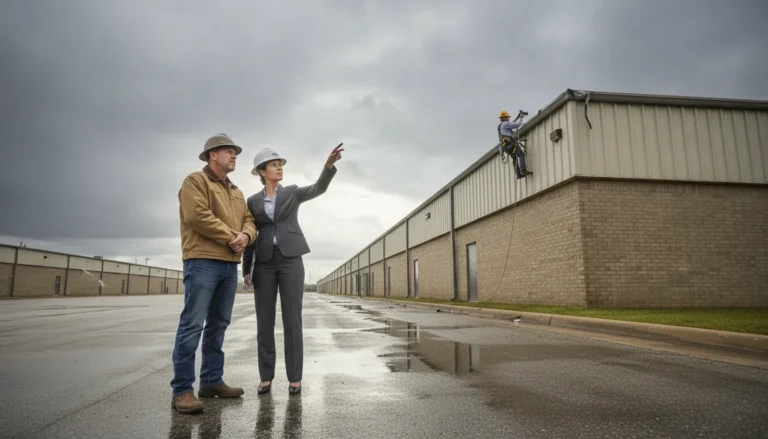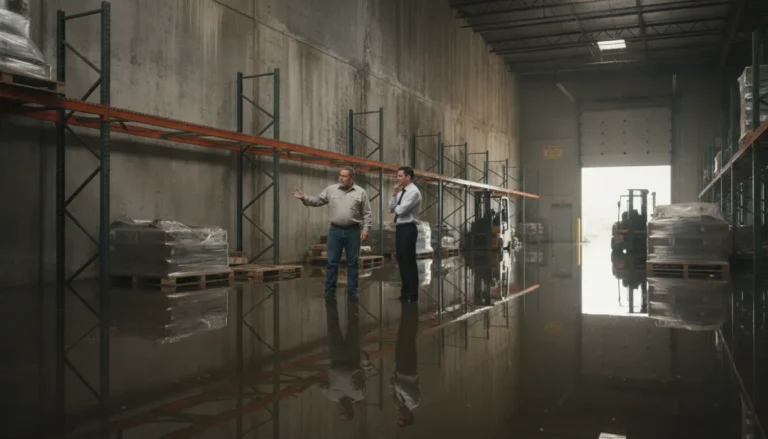
When an insurer denies a substantial building claim, the next step is not always another form or a rushed repair. Understanding commercial property insurance appraisal and coverage after a denial can help a Texas property owner separate a disagreement about the amount of loss from a dispute about whether the policy covers the loss at all. Those issues may require different evidence and different legal strategies.
Discuss your denied commercial property claim
What is the difference between appraisal and coverage after a denial?
Appraisal is generally designed to address the amount of a covered loss. Coverage analysis asks a different question: does the policy insure this type of loss, at this property, during this policy period, and subject to the applicable conditions and exclusions?
An insurer may use the word “denied” for several different positions. It may say the cause of loss is excluded, the damage is below a deductible, the claimed repairs are unrelated, the policy conditions were not met, or the amount requested cannot be supported. A letter may also combine a coverage position with an estimate dispute.
That distinction matters. An appraisal process may help resolve a disagreement over the value of covered damage. It does not necessarily decide every question about exclusions, causation, notice, policy interpretation, fraud, or whether the insurer handled the claim properly. Before demanding appraisal or signing a release, identify what the insurer actually decided.
For example, an insurer might accept that a storm occurred but dispute whether the storm caused damage to a roof membrane. It might also agree that some interior damage is covered while contending that other rooms were affected by long-term maintenance issues. Those are not simply disagreements about a total dollar figure. Each position should be listed separately before choosing a response.
What should a Texas property owner do after a commercial claim denial?
A denial creates pressure to move quickly, but a disciplined first response can protect the record. The following steps are practical starting points, not a substitute for reviewing the specific policy and facts.
- Preserve the denial. Save the complete letter, emails, attachments, claim file materials, estimates, photographs, and delivery information. Record the claim number and the date the decision was received.
- Read the stated reason. Mark every reference to an exclusion, condition, limitation, deductible, valuation provision, late notice, cause of loss, or alleged failure to cooperate. Do not assume the headline conclusion explains every issue.
- Protect the property. Take reasonable emergency measures to prevent additional damage. Keep photographs, work orders, invoices, receipts, contracts, and notes describing what was done and why.
- Separate damage categories. Organize building damage, business personal property, equipment, inventory, loss of income, lost rents, extra expense, debris removal, and code-related work separately. The policy may treat each category differently.
- Avoid admissions and final releases. Statements made during a stressful inspection can later be read narrowly. Ask questions, correct factual errors, and obtain advice before accepting a settlement that purports to resolve all claims.
- Calendar deadlines. Note policy deadlines, contractual notice provisions, proof-of-loss requirements, appraisal procedures, and any potentially applicable limitations period. A deadline can depend on the policy language and the type of dispute.
Texas statutes also recognize that a person with an insurable interest in property may apply for coverage through the Texas Windstorm Insurance Association’s plan of operation. That statute is not a substitute for reviewing a private policy, but it illustrates why the identity of the insured and the property interest should be confirmed early. See the Texas statute addressing insurable interests and coverage applications.
How should you investigate the reason for the denial?
Begin with the policy that was in effect on the date of the reported loss. Gather the declarations, coverage forms, endorsements, exclusions, conditions, schedules, deductibles, and renewal documents. A commercial package policy may contain several forms that change the meaning of a general provision.
Next, compare the denial letter with the policy text. Look for the exact provision the carrier cites and the surrounding language. Important questions include:
- Is the claimed peril listed as a covered cause of loss?
- Does an exclusion apply to the entire loss or only a component?
- Is there an ensuing-loss provision that changes the analysis?
- Does the policy contain a vacancy, protective safeguards, ordinance or law, water, wind, or maintenance provision?
- Are there sublimits, waiting periods, deductibles, or valuation conditions?
- Does the policy require prompt notice, sworn proof, examinations, or cooperation?
- Does the policy contain an appraisal clause, and what does it assign to the appraisers?
Do not review the denial in isolation. The policy may have been amended after the original application, and an endorsement may alter a general exclusion. Compare the policy number, effective dates, named insured, scheduled premises, and limits with the property and the claim notice. A mismatch can create a practical problem even when the physical damage is clear.
Causation often becomes central. For example, a carrier may contend that a roof condition resulted from wear and tear while the owner contends that a covered storm created an opening and allowed ensuing interior damage. A conclusion requires the policy, timing, inspection evidence, repair history, weather information, and opinions that address the actual property.
Ask whether the insurer’s investigation addressed each claimed area. A single inspection may not answer questions about concealed moisture, damaged insulation, electrical components, tenant improvements, or equipment. If access was limited because of safety concerns, document that limitation and explain how a later inspection can be completed.

When can appraisal help with a commercial property claim?
Appraisal may be useful when the parties agree, or can reasonably establish, that a covered loss occurred but disagree about its amount. The appraisal clause may provide a process in which each side selects an appraiser and an umpire resolves items on which the appraisers cannot agree. The exact procedure varies by policy.
Common valuation disputes include the cost to repair or replace a roof, the scope of interior water damage, the value of damaged equipment, debris-removal expense, and the amount of business personal property loss. Estimates should identify quantities, materials, labor, code requirements, depreciation, and assumptions rather than presenting only a single total.
A useful pre-appraisal comparison places the owner’s estimate beside the insurer’s estimate. List each disputed line item, the amount assigned by each side, the reason for the difference, and the document or inspection that supports the proposed figure. This can reveal whether the disagreement concerns quantities, unit pricing, depreciation, matching, access, code work, or whether an item is related to the loss.
Appraisal is not a shortcut around coverage analysis. If the insurer says the loss is excluded, appraisal may not resolve that legal question. If the carrier is disputing both coverage and value, a property owner should understand how an appraisal demand could affect the broader dispute before taking that step. An appraisal award may also leave unresolved issues about policy limits, exclusions, deductibles, and payment obligations.
For a focused explanation of valuation disputes, review Hoch Law Firm’s Texas appraisal disputes guidance. The page should be considered alongside the policy and the particular denial, not as a prediction of an individual result.
What evidence supports coverage and the amount of loss?
A strong claim file connects the policy to the physical damage and then connects the damage to a documented financial impact. A useful file may include the following:
| Issue | Helpful evidence | Question the evidence should answer |
|---|---|---|
| Policy and insured interest | Declarations, endorsements, invoices, ownership or lease records | Who is insured, what property is scheduled, and what terms apply? |
| Cause and timing | Photographs, inspection reports, maintenance records, weather information, witness accounts | What happened, when did it happen, and what damage followed? |
| Scope and value | Detailed estimates, engineering opinions, bids, invoices, contents schedules | What work or replacement is reasonably required, and what will it cost? |
| Business impact | Rent rolls, leases, income statements, sales records, payroll, mitigation invoices | What income was lost or what extra expense was incurred? |
| Claim handling | Notice, adjuster communications, inspection notes, denial letter, proofs of loss | What was submitted, what was investigated, and how did the insurer respond? |
Keep an indexed chronology. For each event, record the date, person involved, document created, action taken, and unresolved question. This helps identify missing inspections, inconsistent estimates, shifting reasons for denial, or a mismatch between the carrier’s stated position and the policy language.
Commercial owners should also preserve records that explain mitigation. If a temporary roof, water extraction, security service, relocation, or emergency equipment was necessary, document the condition before work, the reason for the work, and the expense. Do not discard damaged materials before they are photographed and, when practical, made available for inspection.
Financial losses require the same discipline as building losses. Preserve rent rolls, leases, operating statements, sales records, payroll data, tax records, and schedules showing when the property could not be used. Identify the period affected and separate lost revenue from expenses that continued, expenses that were avoided, and costs incurred to keep the business operating.
Tenant and property-management records may also matter. Ask who reported the condition, who authorized emergency work, who paid the invoice, and whether a tenant’s activity changed access or use of the premises. A property owner should not assume that every document is self-explanatory. Add a short note explaining its connection to the claim.
When several people manage a property, establish a simple communication protocol. Identify the person who will receive insurer requests, the person who can authorize emergency work, and the person who maintains financial records. Keep one shared claim index rather than allowing photographs, estimates, and emails to remain scattered across individual inboxes. Note the source and date of each file so its context is clear.
Review estimates line by line instead of comparing only the bottom totals. One estimate may omit testing, access, temporary protection, code-related work, permit costs, general conditions, or the cost of matching materials. Another may include work that is not tied to the reported event. For every difference, ask whether it is a coverage issue, a scope issue, a pricing issue, or a documentation issue. That classification makes the next request more precise.
Finally, preserve the condition of the property as repairs progress. Photograph concealed areas before they are closed, retain removed materials when practical, and ask contractors to describe what they found. If an emergency requires immediate disposal or replacement, record the reason, take detailed photographs, and preserve invoices and samples when possible. These steps can help address later questions about what existed before the repair and what the repair changed.
How do coverage, appraisal, and bad-faith issues relate?
These are related but distinct questions. A coverage dispute concerns the policy’s promise and limitations. An appraisal dispute concerns the amount of a covered loss or the operation of the appraisal clause. A claim-handling dispute may concern investigation, communication, payment, or the basis for a denial.
One issue does not automatically prove another. A disagreement over value is not by itself proof of improper conduct. Conversely, an appraisal award does not necessarily resolve whether the policy covers every claimed item or whether the insurer’s investigation was adequate.
If the carrier’s position involves an alleged failure to investigate, unexplained delay, inconsistent reasons, or an unsupported refusal to pay undisputed amounts, preserve all communications and seek advice about the available remedies. Hoch Law Firm’s bad-faith insurance claims resource provides additional context for that type of dispute.
Make a three-column list of accepted, disputed, and denied items. Then note whether each item presents a coverage question, a valuation question, or both. This prevents a partial payment from being mistaken for a complete resolution and helps focus later correspondence. It also makes it easier to identify which issues might be suitable for appraisal and which require legal analysis.
What deadlines and policy conditions should owners review?
Do not rely on a general internet deadline without checking the policy and the facts. Commercial policies can require prompt notice, a sworn proof of loss, cooperation with an investigation, protection of the property, and action within a specified period. The policy may also describe how and when a lawsuit may be brought.
The Texas Department of Insurance publishes a standard property policy form that includes language concerning notice after a claim denial and a two-year period stated in that form for disputed determinations. The applicable policy may differ, so use the Texas Department of Insurance standard property policy document as a reference only, not as the governing terms of a specific commercial policy.
Deadlines can be affected by policy wording, amendments, claim correspondence, partial payments, appraisal activity, and the nature of the claim. A property owner who waits for a final estimate or a promised reinspection may lose time without realizing it. Have the denial and policy reviewed promptly.
Create a deadline worksheet with the event that starts each period, the source of the deadline, the date calculated, and the action required. Include dates for notice, proof of loss, supplemental materials, appraisal demands, examinations, and possible suit. If a carrier says that a deadline is extended, keep that statement in writing and do not assume it changes every applicable period.
When should a commercial property owner contact a lawyer?
Early legal review can be useful when the loss is large, the denial cites multiple exclusions, the parties disagree about causation, the insurer requests a broad release, or the property has significant business interruption or rental-income exposure. It can also help when the carrier has already inspected the property and issued an estimate that omits substantial work.
Bring the denial, complete policy, photographs, estimates, repair records, financial materials, and a short chronology to an initial discussion. The purpose is to identify the dispute, not to assume that every denied claim should be litigated. A careful review may show that additional documentation, a corrected proof of loss, appraisal, negotiation, or litigation is the most appropriate next step.
Consider seeking advice before an appraisal demand when the denial raises a broad exclusion, causation dispute, or policy-condition issue. Also consider a review before signing a release, accepting a payment described as full and final, discarding damaged materials, or making permanent repairs that could prevent further inspection. Timing cannot guarantee a result, but it can preserve choices.
Hoch Law Firm represents policyholders in property insurance disputes and focuses on complex litigation. Learn more about the firm’s insurance litigation practice and review the attorney’s background before deciding how to proceed.
Call 817-731-9703 to discuss your claim
Frequently Asked Questions
Can appraisal overturn a denied commercial property claim?
Appraisal usually addresses the amount of a covered loss, not every legal question about coverage. Whether it can proceed after a denial depends on the policy, the insurer’s position, and the nature of the disagreement.
Should I accept the insurer’s estimate before seeking advice?
You are not required to treat an insurer’s estimate as the final value of the loss. Preserve it, compare its scope with the property condition, and obtain advice before signing a release or accepting terms that may resolve additional claims.
What if the insurer denied only part of the claim?
Separate the paid, disputed, and denied items. A partial payment may not resolve the remaining coverage, valuation, business-interruption, or extra-expense issues, and the applicable deadlines still need review.
What documents should I bring to a claim consultation?
Bring the policy and endorsements, denial letter, estimates, photographs, inspection reports, repair invoices, communications, financial records, and a timeline of the loss and claim.
A prompt, organized review can help a Texas commercial property owner understand whether the dispute concerns coverage, valuation, claim handling, or several issues at once.