After a serious commercial truck crash, preserve evidence early, follow medical advice, and avoid guessing about fault or damages. A commercial truck crash lawyer Texas can help assess what records may matter, identify potentially responsible parties, and organize the injury claim while you focus on recovery.
Call to discuss your truck crash
What should you do after a commercial truck crash?
Start with safety and medical care. Call emergency services when needed, accept evaluation, and keep copies of discharge instructions and follow-up recommendations. Symptoms can change after a collision, so report new or worsening issues to a medical professional.
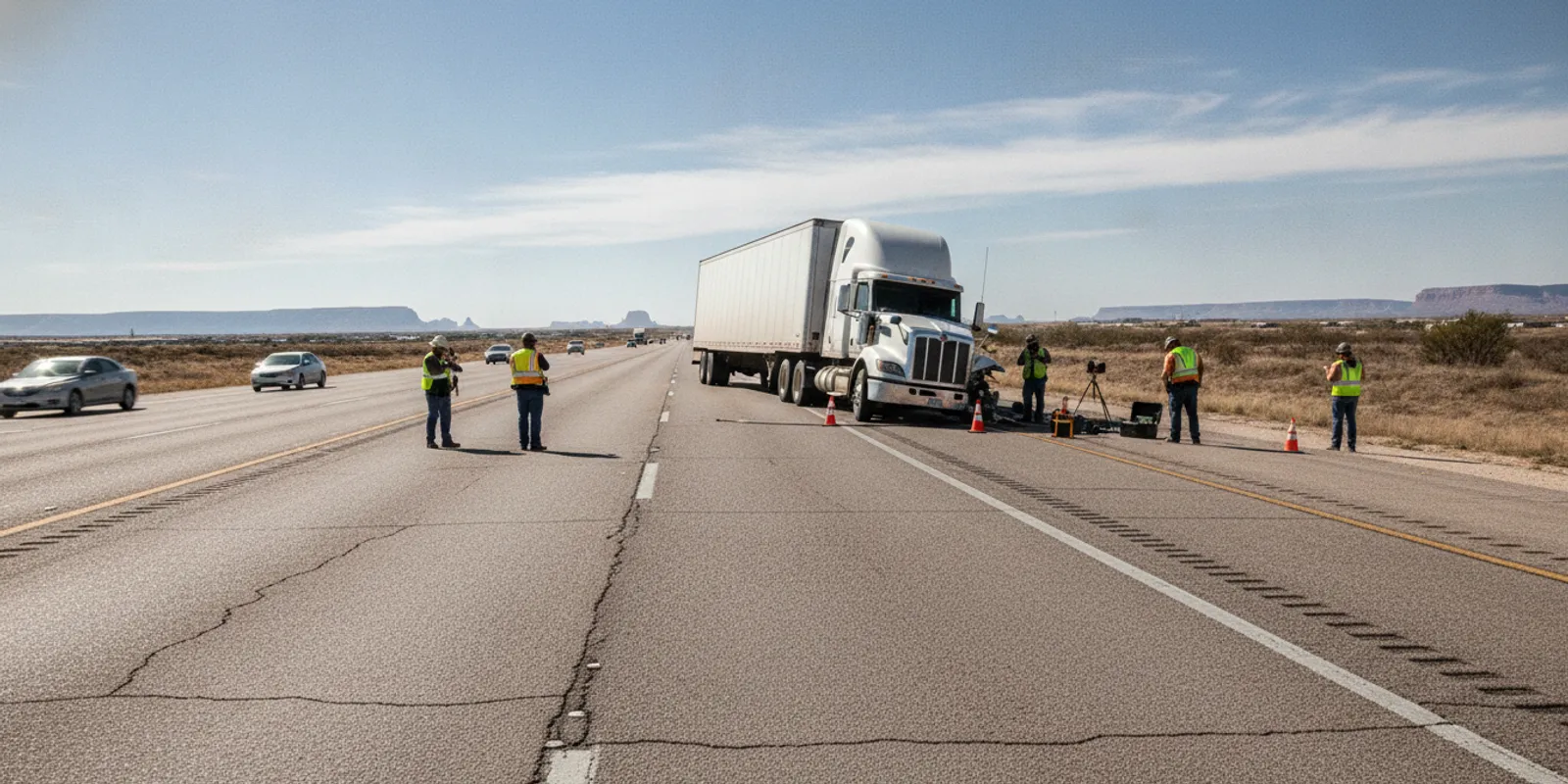
If you are able, preserve basic information without putting yourself at risk. Save photographs, contact details, the crash report number, and any messages about the incident. Do not edit or annotate original images. Keep a separate note of when and where each photo was taken.
- Record the date, approximate time, location, weather, and direction of travel.
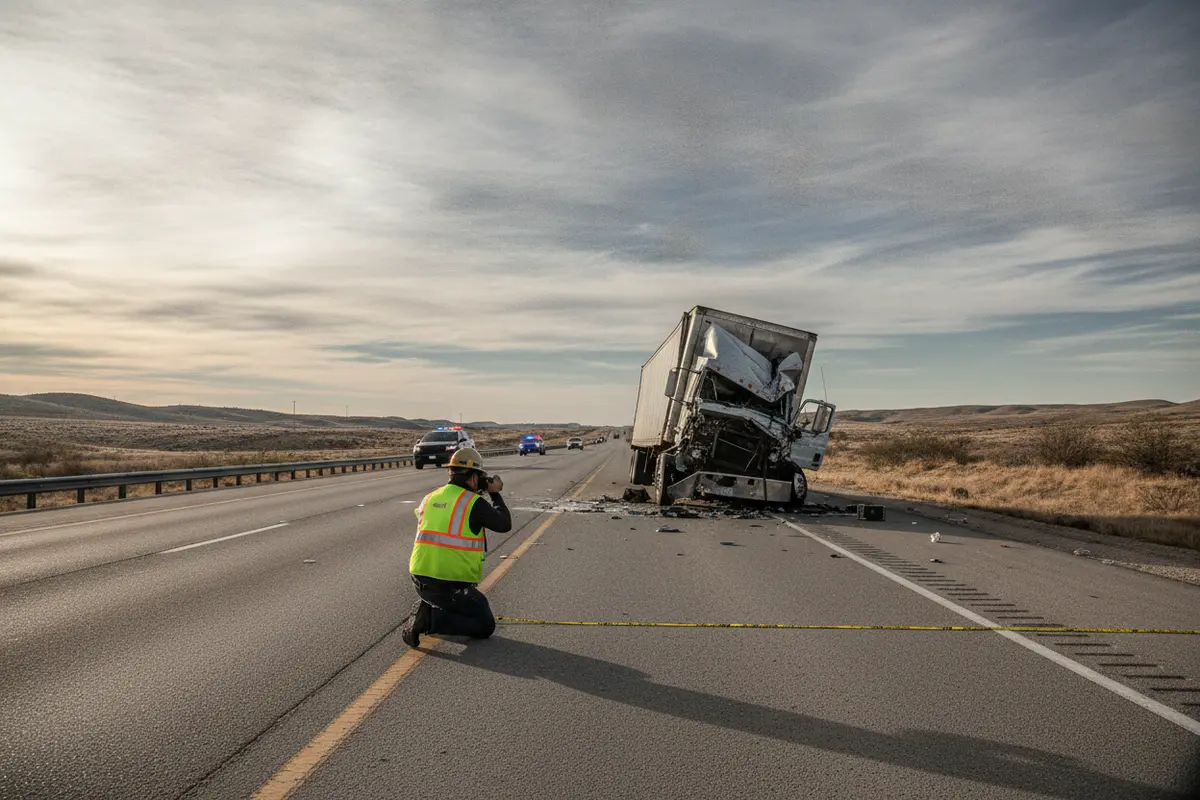
- Photograph vehicle damage, road conditions, debris, traffic controls, and visible injuries when safe.
- Get names and contact information for witnesses and other involved parties.
- Keep receipts and records of medical visits, travel, medication, and missed work.
- Do not speculate in statements about speed, distance, or fault. Say what you know and distinguish it from what you do not know.
A crash scene changes quickly. Vehicles may be repaired, electronic data may be overwritten, and witnesses may become difficult to locate. A prompt, organized record can help make later review more reliable.
Which evidence can help explain how the crash happened?
Truck collision claims may involve several kinds of evidence. No single record necessarily answers every question. The goal is to compare independent sources and establish a clear timeline.
| Evidence | What it may help clarify | Practical next step |
|---|---|---|
| Scene and vehicle photographs | Damage, roadway layout, visibility, and physical conditions | Keep original files and note when and where images were made |
| Police or crash report | Initial observations, parties, witnesses, and reported circumstances | Request the report through the appropriate agency when available |
| Medical records | Reported symptoms, diagnosis, treatment, and follow-up | Keep visit summaries and follow recommended care |
| Truck and company records | Driver activity, vehicle condition, dispatch, or company practices | Identify records promptly for preservation and legal review |
| Witness or video evidence | Movement, timing, and events not captured in a report | Record contact details and the location of any camera |
Commercial vehicles can generate electronic information, including event data or location records, depending on the equipment and circumstances. Access, retention, and interpretation vary. Do not assume a particular device recorded the crash. Identify potentially relevant systems and request preservation through appropriate channels.
Who may be responsible for a commercial truck crash?
Responsibility depends on the facts and applicable law. The truck driver may be a central focus, but the investigation should not stop there. A motor carrier, maintenance provider, cargo handler, vehicle or component manufacturer, or another road user may warrant examination in some cases.
Potential issues may include unsafe driving, inadequate training or supervision, maintenance failures, improperly secured cargo, or a defective component. These are investigative questions, not conclusions. Evidence must connect a person or company’s conduct to the crash and resulting harm.
Federal motor-carrier rules address subjects such as driver qualification, hours of service, vehicle inspection, and maintenance. Which requirements apply depends on the operation and vehicle. A record that appears incomplete or a rule that may have been violated does not, by itself, establish liability; it can be one part of a broader factual review. The FMCSA’s Large Truck and Bus Crash Facts resource provides general information about truck and bus crash data.
State requirements and the details of an interstate or intrastate operation can also matter. A careful review may compare reports, driver and company records, vehicle inspections, maintenance history, cargo documents, and witness accounts. The firm’s 18-wheeler accident information offers a related overview.
How can you preserve company and compliance records?
Some records are held by a carrier or another business rather than an injured person. Make a list of what may exist and who may control it. Depending on the case, relevant material could include driver logs, dispatch records, inspection reports, maintenance documents, onboard-system data, photographs, hiring and training records, and cargo paperwork.
Do not try to obtain restricted company files by misrepresentation or unauthorized access. Instead, preserve what you have and discuss formal preservation and evidence requests with counsel. Timing can matter because ordinary retention practices may not preserve every item indefinitely.
- Write down the truck’s identifying details, carrier name, trailer information, and any visible company markings.
- Keep copies of the crash report, photographs, medical records, and correspondence.
- Note possible cameras near the scene, including businesses or traffic systems, without assuming footage remains available.
- Record any contact from an insurer or company representative, including the date and the request made.
- Before giving a recorded statement or signing a release, understand what it covers and consider getting legal advice.
For questions about formal claim disagreements, Hoch Law Firm also provides information about insurance litigation. An injury claim and a property coverage dispute are not the same issue, so keep the facts and requested relief distinct.
What medical documentation should you keep?
Medical documentation helps show the care you received and the symptoms you reported. Attend appointments as advised, tell providers about relevant symptoms, and keep copies of bills, visit summaries, referrals, prescriptions, imaging reports, and work restrictions. Do not alter records or minimize symptoms to appear resilient.
Make a short, factual recovery log. Note pain or other symptoms, activities that became difficult, appointments, and changes over time. A log is a memory aid, not a substitute for medical records or professional diagnosis. Avoid conclusions about permanent injury unless a qualified provider has addressed that question.
If care is delayed or interrupted, keep a truthful record of why. Practical barriers, scheduling problems, or changes in symptoms may explain gaps, but the explanation should be accurate. Ask your provider about treatment questions rather than relying on assumptions or online advice.
Which losses may be part of an injury claim?
The losses at issue depend on the injury, available proof, and governing law. They may include reasonable medical expenses, lost income, reduced ability to earn, and non-economic harm such as physical pain or limitations. Do not assume every category applies to every claim or that a particular amount is guaranteed.
Keep wage statements, employer verification, invoices, and records of missed work. If your duties changed or you could not perform usual tasks, write down what changed and when. For household or care expenses, retain receipts and note the service provided. A claim assessment should distinguish documented amounts from estimates and unresolved future needs.
Insurers may ask for documents or statements. Read requests carefully, keep copies of what you send, and note delivery dates. Avoid signing a broad release without understanding whether it covers only a specific record or could reach other information.
How do you compare the parties and records?
Build a timeline that connects the crash, investigation, treatment, and communications. This helps identify missing records and discrepancies without treating any one document as conclusive.
- Place the crash report and scene evidence in date order.
- Compare the reported sequence with photographs, witness accounts, and available video.
- Match treatment dates and symptoms with medical records and follow-up instructions.
- List potential record holders, such as the carrier, repair facility, or camera operator.
- Mark unknowns clearly, including uncertain times, missing footage, or disputed accounts.
For a serious injury, a lawyer can assess preservation needs, investigate potential defendants, and explain the claims process. Hoch Law Firm handles selective personal injury matters, including catastrophic injuries and 18-wheeler accidents. Learn more about the firm’s personal injury practice or its attorney background.
What should an early claim review address?
A first review is not a final verdict on liability or value. It is a way to identify urgent preservation needs, gather reliable information, and list unanswered questions. A useful review separates what the records establish from what remains disputed.
Begin with the basic chronology: collision, emergency response, initial medical evaluation, follow-up care, insurer contact, and any vehicle inspection or repair. For each event, note its source. A dated photograph, a provider record, and a witness recollection are different kinds of evidence; labeling them helps prevent an assumption from becoming a claimed fact.
Next, consider whether the available materials support the same sequence. For example, compare the damage locations and roadway photographs with the accounts of vehicle movement. If accounts differ, preserve both versions and identify which records might help resolve the difference, such as nearby video, physical inspection, or additional witnesses. Do not alter original notes to make a timeline appear more certain than it is.
Then make a short open-issues list. It may include missing company records, uncertain vehicle ownership, questions about cargo handling, or incomplete treatment information. Assign each item a likely custodian and a practical next step. This makes discussion with counsel more focused and helps distinguish an urgent evidence issue from an issue that can be addressed later.
How can you organize a claim file for review?
Keep one secure folder for original records and a separate working copy for notes. Use clear file names that include the date and type of item, such as “2026-10-22 scene photograph north shoulder.” Avoid editing originals or sharing sensitive medical information through unsecured channels.
A simple index can make a large file easier to navigate. Record each document’s date, source, and a brief neutral description. If a record is missing, mark it as requested or unavailable rather than leaving a blank that could be mistaken for an oversight.
| File group | Examples | Review question |
|---|---|---|
| Crash materials | Report, photographs, witness details, scene notes | What is confirmed, and what remains an account? |
| Medical materials | Visit summaries, bills, referrals, restrictions | What care occurred and what follow-up is pending? |
| Work and expense records | Wage statements, invoices, travel receipts | Which amounts are documented and for what dates? |
| Communications | Letters, emails, call notes, requests | Who asked for what, and when is a response due? |
| Potential company evidence | Carrier identity, equipment details, record-holder list | Which items may need formal preservation? |
Keep a copy of every item you provide to an insurer or another party, along with the date and method of delivery. If you receive a request that seems broad or unclear, ask what period and records it covers before responding. Do not send an altered summary in place of source documents unless the request specifically calls for one.
How can you assess competing explanations of the crash?
Different accounts may describe the same event in conflicting ways. One person may remember a sudden lane change, while another recalls braking or a change in traffic flow. Record each account separately, including who provided it and when. Avoid blending recollections into a single version before corroborating details.
Separate direct observations from conclusions. A witness might say the truck moved left immediately before impact; that is different from asserting why the driver moved left. A photograph may show where damage occurred, but may not establish the exact speed or sequence. Making these distinctions keeps the investigation grounded in what the source can actually show.
Use a discrepancy list to guide follow-up. For each inconsistency, note the two versions, the source for each, and what additional material could help. Examples include a scene measurement, a complete video recording, a driver log, or another witness. If no reliable source can resolve an issue, label it unresolved rather than presenting an estimate as certain.
Sometimes records use different clocks or time zones, or a report is prepared after initial observations. Note the time shown on the record and whether it is an approximate time, a device timestamp, or a later recollection. Keep the original record intact and put any explanation in a separate note.
What can a useful evidence request identify?
Evidence preservation is more effective when the request is specific enough to identify the incident, vehicle, date, and likely records. A generalized request may fail to make clear which material should be protected. Counsel can determine the appropriate form and scope; injured people should not assume that a casual message guarantees preservation.
Think through the sequence of control and custody. The carrier may have driver or dispatch material; a repair facility may hold inspection or repair photographs; a nearby business may control camera footage; and a public agency may hold a report or traffic-camera material. Record the organization and contact route for each lead, but do not attempt access to a restricted system.
For each potential record, note why it may matter and whether it could be time-sensitive. A video system may overwrite footage on a routine cycle, while an invoice or medical statement may be obtainable later. This practical ranking can help counsel prioritize preservation without treating every record as equally urgent.
Keep a log of preservation efforts: the date, recipient, method, subject, and any response. If someone says a record does not exist or has already been deleted, note the exact statement and source. That information may shape the next inquiry, but it does not itself prove wrongdoing or determine the claim.
How should you handle insurer and company communications?
Write down who contacts you, whom they represent, and what they ask for. Do not assume that a caller’s role is clear from a first name or company logo. Ask for the request in writing when appropriate, and keep the envelope, email, or message with your notes.
Answer factual questions accurately, but do not guess when you do not know. If asked about a time, distance, or sequence you cannot reliably recall, say so. Avoid agreeing to a characterization simply to end a call. A calm, limited answer is more reliable than a confident estimate that later conflicts with records.
Before signing an authorization, settlement paper, or release, read its scope. Identify whose records it covers, the time period, and whether it resolves only a particular expense or the broader injury claim. Ask questions before signing if the effect is unclear. Keep a complete copy of every signed document and any materials submitted with it.
Organized communication records can prevent missed deadlines and repeated requests. A simple contact log can include the date, person, organization, topic, promised follow-up, and next action. If you have counsel, route substantive claim discussions through the agreed channel rather than sending informal updates that may be incomplete.
Frequently Asked Questions
How soon should truck crash evidence be preserved?
Preserve your own records as soon as practical. Company or electronic records may be subject to retention practices, so promptly identify possible evidence and ask counsel about appropriate preservation steps.
Can the trucking company be responsible for a crash?
Possibly, depending on the evidence and applicable law. The investigation may examine company conduct as well as the driver’s actions, but responsibility cannot be determined from the company’s role alone.
Do federal trucking rules prove fault?
No. A potentially relevant rule or record may inform the investigation, but liability requires a fact-specific legal analysis. The rules that apply depend on the vehicle and operation.
What if I did not go to the hospital immediately?
Seek medical guidance about current symptoms and explain the timing accurately to your provider. Keep records of when symptoms began and why care was delayed, without guessing about a medical cause.
Should I accept an early settlement offer?
Before accepting, understand what claims or future rights the release covers and whether the offer accounts for known losses. Consider legal advice, particularly if treatment or the full impact of the injury remains uncertain.
Call to discuss a serious truck crash injury
Organize what you know, preserve original records, and get medical care for your needs. A careful review can help clarify which questions remain and what evidence may be needed to answer them.