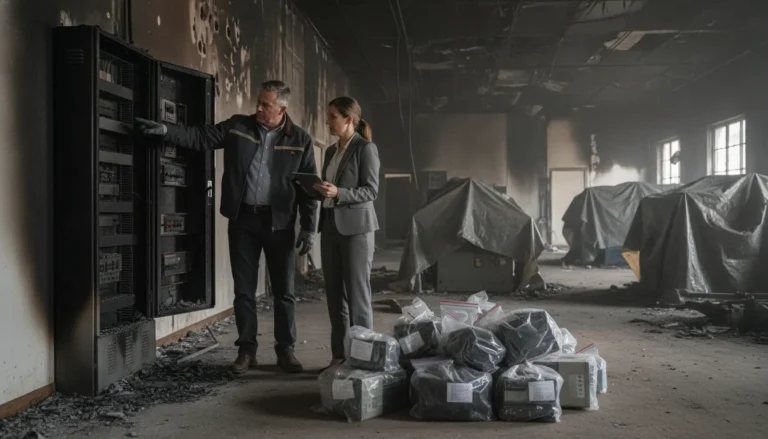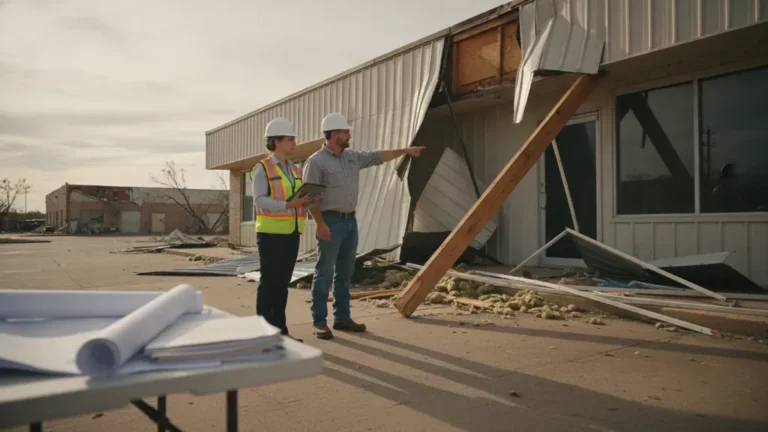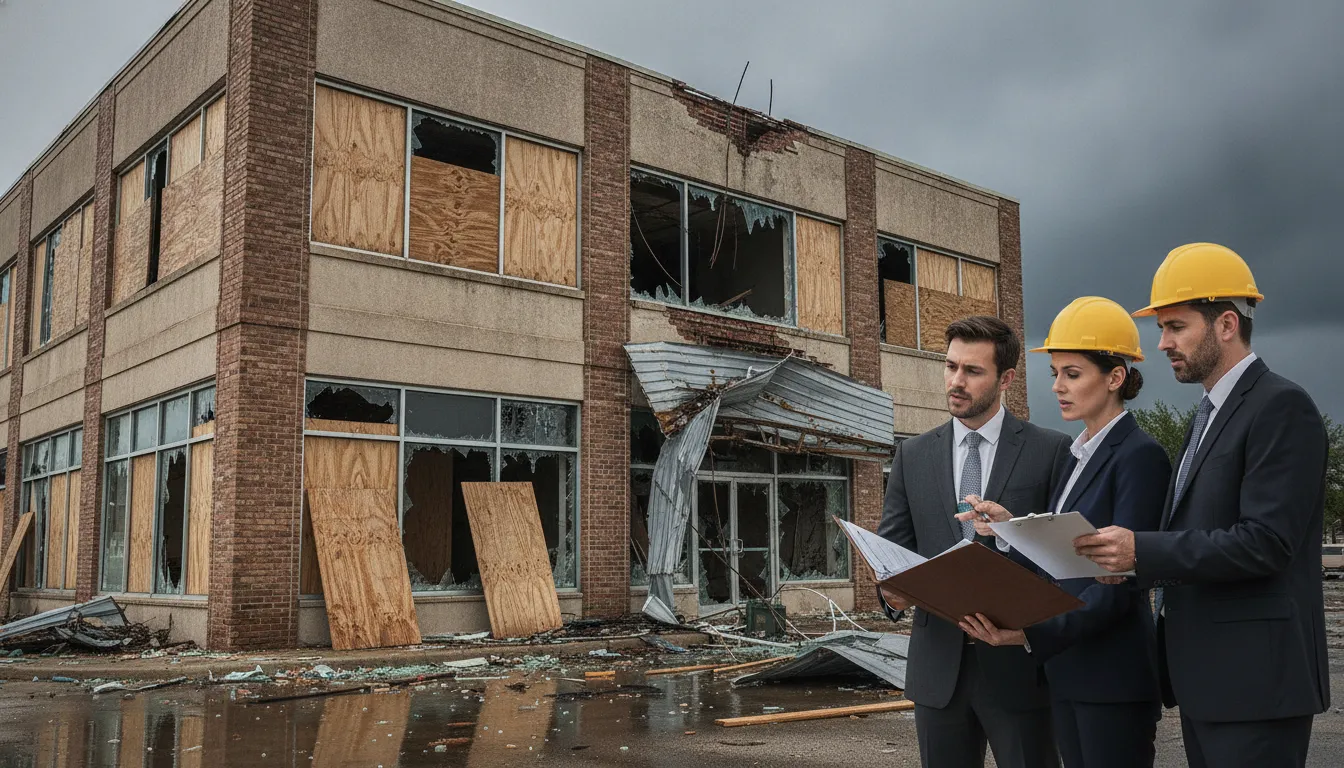
A commercial property claim can turn on a few lines of policy language, especially when a carrier labels the damage excluded and closes the file. That conclusion is not always the end of the analysis. The cause of loss, the exact exclusion, any exceptions or ensuing-loss language, and the condition of the property before the event may all matter.
Understanding commercial property insurance exclusions Texas businesses commonly face starts with the policy itself. Most policies exclude floods, earth movement, war, nuclear disaster, wear and tear, and insects or vermin, according to the Texas Department of Insurance. A lawyer can then assess whether the exclusion actually applies to the facts and whether covered and excluded causes combined to produce the damage.
That review begins by separating broad coverage grants from the exclusions that narrow them, then applying the policy’s wording to what happened at the property.
Understanding Commercial Property Insurance Exclusions in Texas
Commercial property insurance exclusions Texas businesses encounter are the provisions that remove specific causes of loss from an otherwise covered policy. The policy language controls, so a carrier cannot properly deny a claim by pointing to a general exclusion without showing how that provision applies to the documented damage. The Texas Department of Insurance explains that most commercial property policies exclude damage from floods, earth movement, war, nuclear disaster, wear and tear, and insects or vermin. See the Texas Department of Insurance commercial property insurance guide for an overview of common policy forms.
Named-peril policies list the covered causes of loss
Basic and broad form policies are named-peril policies. They cover only the causes of loss identified in the contract, such as fire or certain types of wind damage. Basic form generally offers the narrowest protection, while broad form adds specified perils. If the cause of damage is not named, coverage may not apply even when the resulting repairs are substantial. That makes the complete policy, endorsements, definitions, and exclusions more important than a coverage summary or declarations page alone.
Special form coverage starts broader, but exclusions still matter
Special form coverage, often called all-risk coverage, generally covers damage from all causes of loss except those specifically excluded. This does not mean every loss is automatically covered. The insurer may rely on an exclusion, but the wording, exceptions, anti-concurrent-causation language, and facts surrounding the loss must be evaluated together. A covered event may also contribute to damage that the carrier labels excluded, which can create a coverage dispute rather than a straightforward denial.
Valuation affects the payment even when coverage exists
Exclusions determine whether a loss is covered, while valuation provisions determine how much the insurer may pay. Texas commercial policies may provide replacement cost coverage, actual cash value coverage, or a combination of both. Actual cash value is replacement cost minus depreciation for age and wear. Review the firm’s guide to commercial property insurance depreciation when a carrier applies depreciation to damaged building materials, equipment, or business property. A careful claim review should separate the cause-of-loss question from the valuation question. Because a dispute over depreciation does not by itself prove that the underlying damage is excluded.
The Wear and Tear Exclusion , Maintenance vs. Covered Damage
Wear and tear is one of the most important commercial property insurance exclusions Texas businesses should understand. The Texas Department of Insurance identifies wear and tear among the losses most commercial property policies exclude. A commercial insurance resource also lists wear and tear as its first common exclusion, underscoring how often carriers rely on this language when evaluating property claims.
What the exclusion usually removes
This exclusion generally addresses gradual deterioration rather than a single accidental event. Aging roofs, deteriorated masonry, rust, repeated leaks, and damage caused by failing to perform reasonable maintenance may be treated as maintenance issues. A policy is not ordinarily intended to pay for routine upkeep, replacement of an old component. Or the cost of correcting a condition that developed over months or years.
That does not mean an insurer can label every loss involving an old building as wear and tear. The policy wording, the timeline, the condition of the property before the loss, and the immediate cause all matter. Actual cash value calculations may also account for depreciation, which is different from applying a complete exclusion to a covered loss.
Maintenance problems can lead to covered damage
Consider a corroded pipe. Replacing the corroded pipe may be a maintenance expense, while resulting water damage could depend on the policy’s coverage, exclusions, and causation provisions. By contrast, a roof collapse caused by years of documented neglect may be more vulnerable to a wear and tear or neglect defense. A sudden accidental collapse from a covered peril may present a different analysis, even if the roof was not new.
Preserve photographs, inspection reports, repair invoices, maintenance records, and evidence showing when the damage began. If the carrier applies the exclusion broadly, compare its explanation with the full policy and the facts of the loss. The distinction between maintaining property and responding to sudden accidental damage can determine whether the claim is denied, limited, or covered.
The Flood Exclusion , Why Standard Policies Don’t Cover Rising Water
Flood damage is one of the most important commercial property insurance exclusions in Texas. Most commercial property policies exclude damage caused by floods, along with earth movement, war, nuclear disaster, wear and tear, and insects or vermin. A flood generally means water that rises or accumulates on normally dry land, such as overflow from a river, coastal surge, or widespread surface runoff. It is not automatically the same as every form of water damage.
Texas businesses face meaningful flood exposure from hurricanes and storm surge, intense flash floods, and drainage failures. Utility problems during extreme weather, including the 2021 winter freeze, can create separate losses involving burst pipes, power interruptions, or equipment damage. The cause and sequence matter. Water from a failed pipe or a covered storm-created opening may be analyzed differently from rising outside water, but the policy language and evidence control.
Separate flood coverage usually requires advance planning
The Texas Department of Insurance explains that flood insurance generally must be purchased through a separate policy. The National Flood Insurance Program also warns through FloodSmart.gov that a new policy commonly has a 30-day waiting period before coverage takes effect. That waiting period can leave a business uninsured if coverage is purchased only after a storm is approaching.
Some commercial properties carry a separate flood endorsement or tailored flood coverage rather than relying only on a standard property policy. Review the declarations, endorsements, definitions, and exclusions before assuming the word “water” resolves the question. A carrier may characterize a loss as flood damage, while the available evidence points to another covered cause, or multiple causes operating together. Preserving photographs, repair records, weather information, plumbing records, and communications with the insurer can help establish what actually damaged the property.
The Earth Movement Exclusion , Texas Weather and Policy Language
Earth movement exclusions can become especially important when a Texas commercial property develops foundation cracks, shifting walls, or other structural damage. Commercial policies commonly exclude damage caused by earth movement, which may include earthquakes, sinkholes, landslides, and related ground instability. The exact definition depends on the policy, and the wording may reach beyond the event most business owners initially associate with the exclusion. The Texas Department of Insurance identifies earth movement among the losses most commercial property policies exclude.
Expansive soil and foundation damage
Texas has extensive areas of expansive clay soil. These soils can swell when wet and shrink during dry conditions, creating movement that places stress on slabs, foundations, masonry, and other building components. When an insurer points to an earth movement exclusion, it may argue that soil-related shifting, settlement, or foundation damage falls outside the policy’s covered causes of loss.
That conclusion is not automatically the end of the claim. The policy language, engineering evidence, timeline, and immediate cause of the damage all matter. A foundation report that simply describes movement may not answer whether a covered peril contributed to the loss or whether the exclusion applies as broadly as the carrier contends.
When weather damage contributes to earth movement
Wind and hail are often covered perils under commercial property policies, subject to the policy’s terms and conditions. If a severe storm damages a building, drainage system, roof. Or other property in a way that allows water intrusion or contributes to subsequent ground movement, the concurrent causation doctrine may become relevant. The insurer may still rely on the exclusion, but the claim should be evaluated by tracing the sequence of events rather than isolating the final condition.
Businesses dealing with storm-related structural damage should also review their storm damage insurance claims options. Preserve photographs, repair records, weather information, engineering opinions, and every insurer communication before accepting a causation conclusion. A careful policy review can distinguish excluded earth movement from covered damage that helped cause or aggravate the loss.
The Ordinance or Law Exclusion , The Cost of Code Compliance
A damaged commercial building may have to be repaired or rebuilt under current Texas building codes, even if the original structure complied with an older code. That work can involve upgraded electrical systems, stronger structural components, improved accessibility, fire-safety measures, or other requirements. The added expense is often treated differently from the cost of restoring the damaged property.
That distinction matters when evaluating commercial property insurance exclusions Texas policyholders encounter. The Texas Department of Insurance identifies ordinance or law as a common exclusion in commercial property policies. In other words, a policy may cover the physical damage but exclude the increased cost required solely because the building must meet current code. Review the exclusion, its exceptions, and any ordinance or law endorsement before assuming the entire rebuilding cost is covered.
| Coverage type | What it generally pays | Code-upgrade costs |
|---|---|---|
| Actual Cash Value | Replacement cost minus depreciation, meaning the payment reflects the property’s depreciated value. | Generally does not add coverage for upgrades required by current code. |
| Replacement Cost | The cost to rebuild or replace covered property at current prices, subject to the policy’s conditions and limits. | Generally does not add coverage for code upgrades unless the policy provides it. |
| Ordinance/Law Coverage | Covered rebuilding costs, with additional protection for certain expenses required to comply with applicable building ordinances or laws. | Adds coverage for eligible code-upgrade costs, subject to limits, exclusions, and endorsement language. |
Actual cash value coverage already reduces payment by depreciation, according to TDI. So it may leave an even larger gap between the claim payment and the amount needed to restore a compliant building. A carrier’s estimate that omits code requirements is not necessarily the final measure of the covered loss. Compare the estimate with the building department’s requirements, the policy’s limits, and any ordinance or law endorsement before accepting a settlement.
The Mold and Latent Defect Exclusion , When Gradual Damage Is Denied
Mold claims often turn on how and when moisture entered the building. Commercial property insurance exclusions in Texas commonly address gradual deterioration, defects, neglect, or conditions that develop over time. If mold results from persistent humidity, an undetected leak, poor ventilation, or deferred maintenance. The carrier may argue that the loss was not a sudden accident but a maintenance problem outside the policy’s coverage.
Gradual moisture is different from a sudden covered event
Texas Department of Insurance guidance identifies insects and vermin, along with wear and tear, among the types of damage most policies exclude. The same general distinction can matter in a mold dispute: damage that develops slowly is more vulnerable to an exclusion than damage that follows a specific, covered occurrence. The policy language controls, and mold may have its own exclusion, limitation, or endorsement.
For example, a pipe that freezes and suddenly bursts may create a potentially covered water-loss claim, even if mold appears later as a consequence of that event. That does not guarantee payment. The insurer may investigate whether the pipe failure was covered, whether the policy excludes resulting mold, and whether the business took reasonable steps to limit additional damage. Preserve the failed component, photographs, invoices, moisture readings, repair records, and a timeline showing when the loss was discovered.
How anti-concurrent causation clauses affect mold claims
Many Texas commercial policies contain anti-concurrent causation language. Carriers may rely on that language when they contend that an excluded condition. Such as gradual moisture or a latent defect, contributed to the loss alongside a covered peril. An adjuster’s label is not the final answer. The actual cause of the damage, the wording of each exclusion, and any ensuing-loss provision should be reviewed together.
A denial based on mold or a latent defect should therefore be tested against the complete policy and the physical evidence. A business owner may have a stronger position when a sudden covered water intrusion is documented and the carrier has broadly characterized all resulting damage as excluded.
How to Challenge Commercial Property Insurance Exclusions in Texas
An exclusion denial is not necessarily the end of a commercial property claim. The result may turn on the exact policy wording, the sequence of events, and whether the carrier applied the exclusion to facts it does not actually cover. A careful challenge should proceed methodically.
- Read the entire policy, not just the denial letter. Review the insuring agreement, definitions, exclusions, exceptions, endorsements, and conditions together. If a provision is genuinely ambiguous, Texas courts generally construe an unresolved ambiguity against the drafter and in favor of the insured. Particularly when the carrier’s interpretation would eliminate coverage. That analysis requires more than pointing to an unfamiliar phrase. It requires comparing the competing readings and the policy as a whole.
- Analyze concurrent causes. A covered peril and an excluded peril can contribute to the same loss. Texas commercial policies often contain anti-concurrent causation clauses, which may change the analysis and give the carrier a broader basis for denial. Even so, the policy language and the facts remain critical. Texas courts may require coverage when a covered cause initiated or proximately contributed to the loss, depending on the wording and circumstances. Establishing which event occurred first, and what damage each event caused, can be decisive.
- Question whether the form or endorsement is unfair or deceptive. The Texas Department of Insurance states that policy forms and endorsements may not be unjust, unfair, inequitable, misleading, or deceptive. See the Texas Insurance Code policy-form requirements. A denial strategy that depends on confusing or misleading language deserves careful scrutiny, especially where the carrier’s reading conflicts with the policy’s apparent purpose.
- Confirm the form was properly approved. Texas generally requires a commercial property policy form or endorsement to be filed with and approved by the insurance commissioner before delivery or use. The rule includes exceptions, including certain large risks, so the policyholder should not assume that a filing issue automatically defeats an exclusion. It is a fact-specific issue that can affect the available challenge.
- Build the evidence around causation and damage. Preserve the policy versions, denial letters, photographs, repair records, business records, inspection reports, weather data, and communications with the adjuster. Qualified engineers, contractors, accountants, or other experts may help distinguish covered damage from excluded conditions and explain how the loss developed. A Fort Worth property insurance lawyer can evaluate that record, test the carrier’s causation theory, and identify whether litigation or another response is appropriate.
The strongest challenge connects the policy language to reliable evidence. It does not assume every exclusion is invalid, but it does not accept a conclusory denial without examining the contract and the facts.
Frequently Asked Questions
What are common commercial property insurance exclusions in Texas?
Common exclusions include wear and tear, deterioration from inadequate maintenance, intentional damage, insect or vermin damage, earth movement, flood, and other water-related losses. The exact effect depends on the policy wording, endorsements, the cause of loss, and whether another covered event contributed to the damage. A denial should be evaluated against the full policy rather than an exclusion label alone.
Does commercial property insurance in Texas cover flood damage?
Standard commercial property policies commonly exclude flood damage, including loss caused by rising or overflowing water. Businesses that need this protection generally must obtain separate flood coverage or an applicable endorsement. The definition of flood matters, because water entering a building after a storm may involve several possible causes, such as wind-driven rain, a plumbing failure, or surface water. Preserve photographs, mitigation records, and the insurer’s explanation before accepting the classification.
Can I challenge a denied claim based on a policy exclusion?
Yes. A denial can be challenged by reviewing the complete policy, testing whether the exclusion actually applies, and examining the evidence about how the damage occurred. Texas claims may also involve disputes over concurrent causes, where covered and excluded causes contributed to the same loss. Do not rely only on the adjuster’s summary. Request the written coverage position, keep the damaged property and records available for inspection, and have a property insurance lawyer assess the denial before signing a release.
What should I do after an insurer cites an exclusion?
Notify the carrier promptly, take reasonable steps to prevent further damage, and document the condition of the property before and after mitigation. Gather the policy, estimates, invoices, photographs, maintenance records, leases, and all claim correspondence. Avoid making unsupported statements about the cause of loss or discarding damaged materials until the investigation is complete. These records can help determine whether the exclusion applies and whether the insurer overlooked covered damage.
Ready to review your commercial property claim?
Policy exclusions do not always end the analysis. The language, cause of loss, and available coverage may deserve a closer review. Schedule a free consultation with Hoch Law Firm to discuss your claim and the policy provisions affecting it. Call 817-731-9703 to get started.