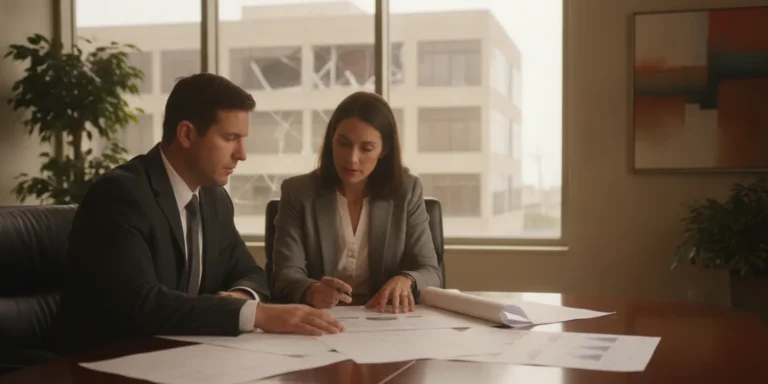
A demand for an examination under oath often signals that your insurance company wants a closer review of the claim.
An examination under oath property insurance claim is a formal, recorded session where an insurance company lawyer asks you questions while you are under oath. This process helps the company check the facts of your loss and verify the details you provided. Many property policies include a cooperation provision that may require attendance when the insurer properly requests an EUO. Failing to respond can put coverage at risk, depending on the policy and circumstances. During the meeting, a court reporter records every word you say. The insurer may compare your answers with documents, estimates, photographs, and earlier communications when evaluating the claim.
While the process can feel like a direct attack on your honesty, understanding the rules of the meeting is the best way to protect your rights. This article breaks down the legal details and explains what is an examination under oath in a property insurance claim? The path begins with…
Examination Under Oath Property Insurance Claim: What is an examination under oath in a property insurance claim?
An examination under oath property insurance claim (EUO) is a formal meeting between you and your insurance firm. In this talk, you must answer questions while you are under oath. The insurer uses this time to get facts about your loss. They want to know if they should pay or deny the claim. This step is a formal part of the check into your claim and not a part of a court case.
How the process works
Your insurance firm has the right to ask for an EUO. Most policies have a rule that says you must show up. If you do not go, the firm might deny your claim. They can only ask for facts that are needed to review the loss. The meeting must happen at a time and place that is fair for you. It should not take too much of your time.
During the talk, a court reporter writes down every word. You are under oath, so you must tell the truth. Telling a lie could lead to a charge of fraud. This would end your hope of getting paid for your storm damage. You should be sure of your facts before the talk starts.
Your rights during the talk
You do not have to go through this alone. You have the right to have a lawyer with you. A lawyer can help you get ready and protect your rights. This is often the best time to know when to call a lawyer to help with your case. They can make sure the insurer stays within the law.
You can also ask for a copy of the notes from the meeting. The insurer must give you these notes and any recordings for free. You have the chance to read the notes later. You can make sure they are right before you sign them. This helps keep the record clear for your property insurance claim. It ensures the firm has the right facts.
EUO vs recorded statement
A recorded statement is much less formal. An insurer often asks for one soon after you report a loss. You are not usually under oath for those talks. But an EUO is a legal tool used for deeper checks. It carries more weight and has stricter rules. You should treat it with great care.
| Feature | Recorded Statement | Examination Under Oath |
|---|---|---|
| Under Oath | No | Yes |
| Court Reporter | Rarely | Always |
| Policy Rule | Often optional | Mandatory |
| Lawyer Allowed | Yes | Yes |
| Legal Weight | Lower | Higher |
In Texas, the EUO is a core part of your policy contract. It is a required first step. This means you must do it before you can sue the firm. If you refuse, a court may toss out your case. It is vital to take the request with care and get property insurance claim legal help if you feel unsure. This ensures you meet all rules for your property insurance claim.
Why does an insurance company request an EUO?
Insurance companies use an examination under oath (EUO) to gather facts about a claim. This formal meeting helps the carrier decide if they should pay or deny the loss. While a request for an EUO can feel scary, it is a standard tool for an insurance investigation. It lets the company ask you questions that are relevant and needed to process your case.
Finding the facts of a loss
The main reason for an EUO is to get more details about what happened. The insurer may want to know who owns the property or how the damage occurred. They use this time to verify the timeline and cause of the loss. An EUO is often used when a property insurance claim has gaps in the story or needs more proof.
A carrier may also check the value of the items you lost. They might ask for receipts, photos, or proof of when you bought them. This helps them make sure the claim amount is right. If there are things that do not match up in your records, the insurer will use the EUO to clear up those issues.
Checking for mistakes and inconsistencies
An EUO gives the insurer a chance to look for inconsistencies in your story. They compare what you say during the meeting to what you wrote on your claim forms. They also check it against what you told the adjuster at the start. Small errors do not always mean fraud, but the company wants to be sure the data is true.
You have the right to have a lawyer with you during the EUO. Under California law, your attorney can help you stay on track and ensure the insurer stays within the rules. The carrier can only ask for info that is reasonably necessary to process the claim.
Clearing up documentation gaps
Sometimes, paper trails are not enough to prove a loss. An insurer might request an EUO if you cannot find certain receipts or titles. Your verbal testimony under oath acts as a formal record that can fill these gaps. It is a way for you to explain the context of your claim in a more personal and detailed way than a form allows.
What happens during the EUO process?
The examination under oath (EUO) process is a formal probe into a property insurance claim legal help. It lets your insurer gather facts before they choose to pay or deny your claim. Unlike a court trial, this path takes place during the search for facts. But your words are formal and given under oath.
The notice and prep stage
The work starts when you get a written notice from your insurance firm. By law, the firm must give you fair notice and pick a place and time that works. This note often lists papers you must bring, such as repair bids or proof of loss forms. It is good to know when to call a lawyer to help you get these items and prep for the questions.
Prep is key because you must give facts that are related and needed to check the claim. Based on the California State Legislature, the firm can only ask for facts that help them handle or check your loss. Reading your plan and your past words can help you stay on track during the real meeting.
The talk and questions
During the talk, a lawyer for the insurance firm will ask you questions while a clerk writes down each word. You will be put under oath, which means you must tell the truth just as if you were in a court. You have a legal right to have your own lawyer there to keep you safe and make sure the questions stay fair.
- Swearing in: The clerk gives an oath to tell the truth.
- Opening words: The firm’s lawyer may tell you the goal of the work.
- Direct questions: You will answer questions about the cause of loss, the worth of your items, and your claim past.
- Paper review: The lawyer may ask you to explain specific parts of the records you gave.
- Closing the talk: The lawyer will end the questions and tell you the next steps in the claim work.
The goal of this talk is to help the firm decide to allow or deny the claim. A key point from the Maryland Court of Special Appeals is that an EUO has a goal that is not the same as a legal deposition. While it feels formal, it is still part of the firm’s check rather than a real law case.
Reviewing the script
After the talk, the clerk makes a written script of all that was said. You have the right to get a free copy of this script and any sound or film made by the firm. This is your chance to look for any slips made while the clerk wrote the words down.
If you find a slip, you can make sworn fixes to the script. This makes sure the file of your property insurance claim denials and facts is right. Once you sign the script, it becomes a final part of your claim file that the firm will use to make its last call.
How should a policyholder prepare for an EUO?
Preparing for an examination under oath property insurance claim is a key step in protecting your rights. This formal meeting helps the insurer decide whether to pay or deny your claim. You must be ready to talk about the facts of your loss in detail. Use this guide to organize your files and mental state before the date of the talk.
Check your policy and notice
Start by reading your full insurance policy and the EUO notice you got. The EUO notice must give you enough time to prepare and happen at a fair place. Your policy will list your duties, such as sharing records and showing the damage. Knowing these rules helps you avoid mistakes that could lead to property insurance claim denials later. Look for deadlines or specific items the insurer wants to see.
Gather and organize your records
Find every document related to your claim and put them in order. This includes repair bids, photos of the damage, and letters from your adjuster. Building a clear timeline of events will help you stay calm and clear during the talk. If you do not have a fact in front of you, it is better to say you do not know than to guess. You can request a free copy of the EUO transcript later to fix small errors in your testimony.
Talk to legal counsel
A lawyer can help you understand what to expect and how to answer hard questions. You have a legal right to have a lawyer with you during the session. If you feel the insurer is acting in bad faith or asking for things that are not needed, you should know when to call a lawyer for help. A lawyer will make sure the questions stay relevant to your loss. They also help you build a case for property insurance claim legal help if the insurer fails to pay what they owe.
Give clear and true answers
When you are under oath, you must tell the truth. Listen to each question and give a short, direct answer. Do not offer extra details that were not asked for by the insurer. If a question is not clear, ask for it to be said again before you speak. Being honest and brief is the best way to move your claim forward. This helps the insurer finish their search and make a final call on your payout.
Can refusing an EUO affect a property insurance claim?
Refusing an examination under oath (EUO) is a huge risk for any home owner. Most insurance plans list this meeting as a duty you must follow after a loss. If you do not show up, the company may say you broke the contract rules. This can lead to a quick denial of your examination under oath property insurance claim.
It is vital to know that the law often backs the company when they ask for these talks. If you skip the meeting, you might lose the chance to get any money. This is true even if your loss was real and huge.
Why insurers use the EUO process
The main goal of the EUO is to get facts about your loss while you are under oath. This means you must tell the truth, just like in a court of law. The company uses this time to study your claim and see if they should pay.
According to a court ruling, the purpose is to help the company search for truth during the check. It is not the same as a court deposition used in a lawsuit. Even if you give a deposition later, it will not count as your EUO.
The risk of losing your claim rights
If you refuse to go to the meeting, you could lose all your rights to get paid. Many courts see the EUO as a “condition precedent.” This means you have to do it before you have the right to sue the company or get a check.
You might feel the company is picking on you, but they have a right to ask. Under California law, the company can only ask for facts that are needed to study the loss. They must also give you a fair notice and pick a place that is easy for you to reach.
Your duties after a loss
Most policies have a section on your duties after a loss occurs. This often includes giving the company records and proof of your loss. During an EUO, the company can ask you to bring these papers. They may look at bank notes, tax forms, or repair bills.
You have a duty to help the company with their search. If you hide facts or refuse to share papers, the company can claim you are not helping. This lack of help is a common reason for property insurance claim denials. It is much better to be open and give the facts they need to move the claim forward.
How to protect your interests
You do not have to face the company alone. You have a legal right to have a lawyer by your side. A lawyer can help you prepare for the hard questions and keep the company from overstepping. They can also make sure the company stays within the rules of your state.
The company must also tell you that you can get a free copy of the notes or tapes from the talk. Getting property insurance claim legal help early is the best way to stop small errors from hurting your case. It is often wise to learn when to call a lawyer if the insurer seems to be making things hard.
When should you contact a property insurance attorney?
You should call a lawyer as soon as you get a notice for an examination under oath property insurance claim request. An EUO is a formal meeting where your insurer asks you questions under oath. This helps them decide whether to pay or deny your claim. While it may feel like a simple chat, it is a key part of their legal work. Having a lawyer from the start helps you know when to call a lawyer to protect your rights.
Reviewing the request and scope
An insurer can only ask for facts that are relevant and needed to process your claim. A lawyer can check the scope of the request to make sure the company does not overstep. Under state law, an EUO must take place at a fair time. It must also be in a place that is easy for you to reach. Your attorney can review all document requests and the notice to ensure the insurer follows these rules.
Your lawyer also helps you get ready for the day of the meeting. They can look at your claim files and find any weak spots that might lead to a denial. This prep work ensures that you go into the room with a clear head. Tim Hoch is Board Certified in Personal Injury Trial Law. He brings years of trial experience to these claim reviews.
Guidance during the questioning
During the meeting, you have a legal right to have counsel with you. Your lawyer sits by your side to watch the questions and make sure the record stays fair. They can object if a question is not proper or falls outside what the law allows. This layer of support is vital. What you say during an EUO can be used by the insurer later to fight your case.
A lawyer also makes sure the process stays on track. They ensure the questioning does not go on for too long. If you need a break or have a question, your attorney is there to give you direct advice. At Hoch Law Firm, you get direct access to your lawyer during this entire phase of your property insurance claim legal help journey.
Protecting the record and next steps
After the meeting ends, the work is not yet done. Your insurer must give you a copy of the transcript and any recordings if you ask for them. Your lawyer will read every page of the transcript to find any errors. You have the right to make sworn changes to the text. This ensures it shows your true words. It also helps prevent the insurance company from taking your words out of context.
Finally, your attorney helps you handle any follow-up tasks. If the insurer asks for more documents or proof, your lawyer can manage that flow of info. This helps you avoid new delays or mistakes that could hurt your chances of a payout. Working with a firm that knows how to handle these claims can make a big difference in the final result.
Frequently Asked Questions
What happens after an examination under oath?
After the meeting, a court reporter creates a transcript of the testimony. You have the right to get a free copy of this file and any recordings. According to the California State Legislature, you can make sworn corrections to the text to ensure it is accurate. The insurance company then reviews all evidence to decide if they will pay or deny the claim.
What questions are asked in an examination under oath?
Insurers ask questions about the cause and date of the loss, ownership of the property, and the value of damaged items. They may also ask about your claims history or financial records. Under state law, the insurer can only ask for facts that are relevant and needed to check the claim. You should answer every question truthfully while under oath.
Can you bring a lawyer to an examination under oath?
Yes, you have a legal right to have a lawyer represent you during the proceeding. A lawyer helps you prepare for the meeting and ensures the insurer stays within the law. They can also record the entire session to protect your rights. Having legal help is vital because an EUO is a formal insurance investigation tool that can lead to a claim denial if handled poorly.
Is an examination under oath the same as a deposition?
No, they serve very different purposes. An EUO is part of the insurer’s private check of a claim before they decide to pay. A deposition occurs during a lawsuit after a court case has already started. As noted by the Maryland Court of Special Appeals, giving a deposition for a court case does not count as finishing your duty to provide an EUO under your policy.
Are you ready for your examination under oath for your claim?
If you try to handle this meeting on your own, you could say something that gives the insurance firm a reason to deny your claim. Starting your prep work now gives you the time you need to find the facts and the proof that will help you win your case. When you have a plan, you can check when to call a lawyer to see how to keep your home safe and your claim moving.
Ready to prepare for your examination under oath? You do not have to face the insurance firm alone. Call 817-731-9703 to request a free case evaluation from a board certified trial lawyer who can help you win your case today.
For tailored guidance on a disputed or high-value claim, speak with a experienced property insurance attorney in Fort Worth before important deadlines or evidence issues narrow your options.