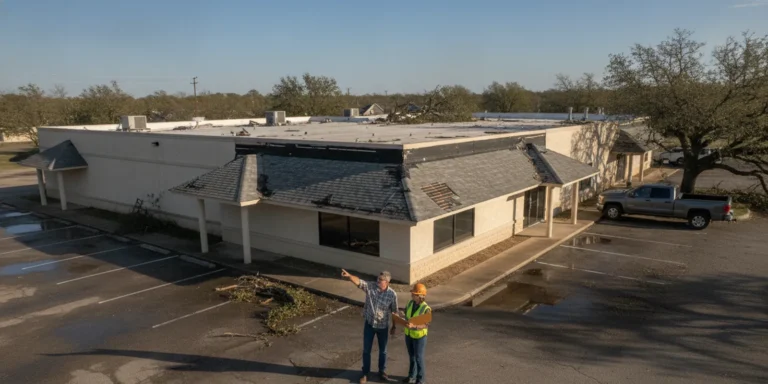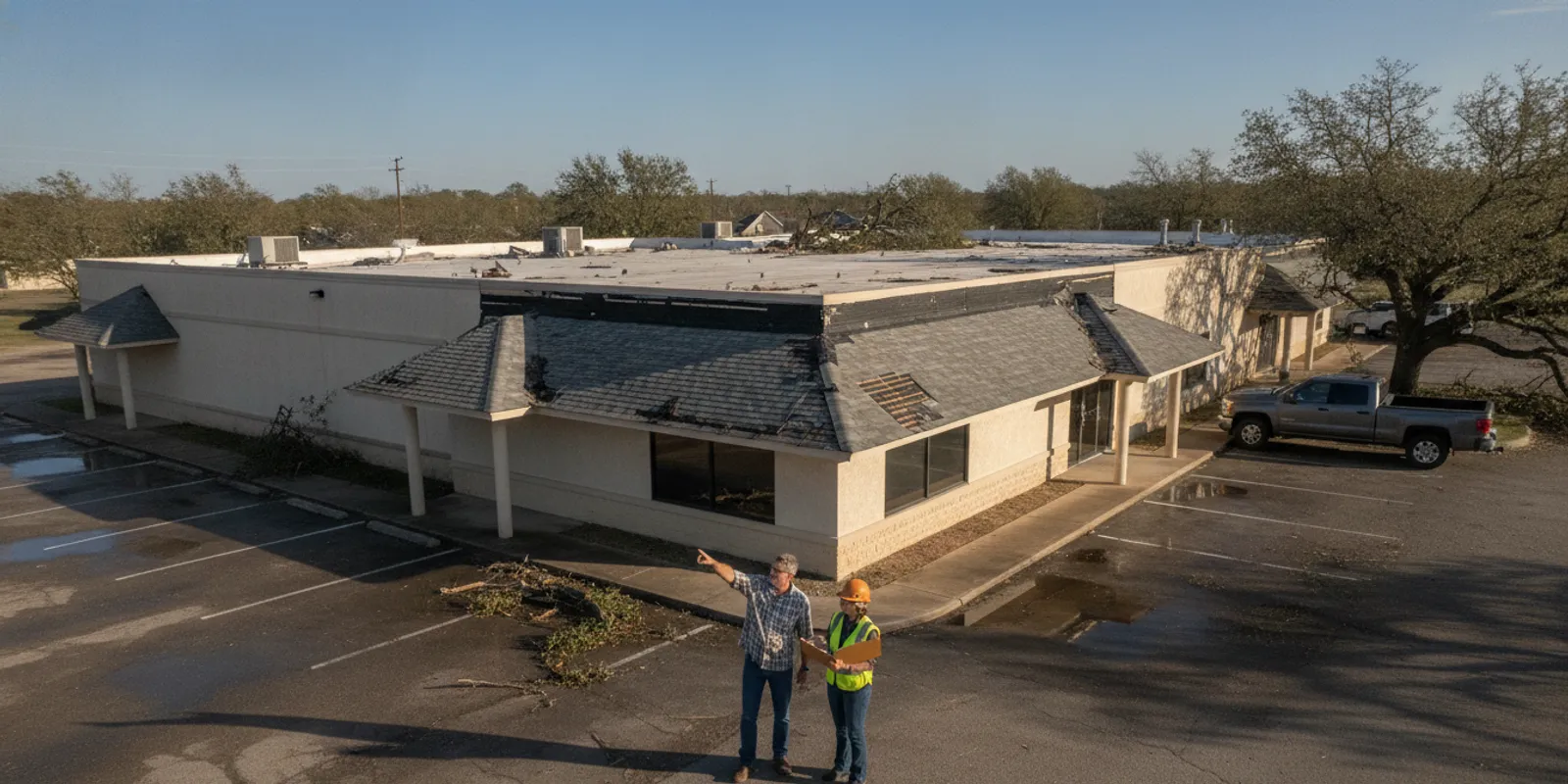
How do insurers handle preexisting damage in a Texas property claim? They generally compare the reported loss with the policy, the condition of the property before the event, and evidence about what happened afterward. The details matter: a prior condition does not automatically explain every new area of damage, and a new event does not automatically make every existing condition covered.
Discuss a Texas property claim
For a commercial property owner, the central issue is often separating the condition that existed before the reported event from any additional damage that may have occurred later. The insurer may ask for records, inspect the building, and assess the cause and extent of the claimed damage. The policy language and the evidence available can affect the analysis. This guide explains common steps and practical ways to organize your information. It is general information, not legal advice about a particular claim.
What does preexisting damage mean in a property claim?
Preexisting damage is a condition or physical impairment that was present before the event for which a policyholder is seeking coverage. It might involve a prior roof leak, an older area of water intrusion, a worn component, or damage from an earlier storm. The term describes timing; it does not, by itself, answer whether the insurer owes coverage for any part of a current claim.
A building can have more than one condition at once. For example, a roof may have older deterioration in one section and a newly displaced component after a later wind event. An insurer may investigate whether the reported event caused additional physical damage, whether an existing condition contributed to the observed result, and how the applicable policy addresses those circumstances. The analysis depends on the specific facts and policy wording.
It is also important to distinguish preexisting physical damage from a prior repair, a maintenance issue, or an earlier insurance claim. Those records can help establish the building’s history, but the mere existence of an earlier repair or claim does not establish what caused damage reported after a later event.
How may an insurer evaluate an existing condition?
The claim process can differ by policy and loss. In many disputes, the insurer reviews several kinds of information rather than relying on one item. Its investigation may include the following:
- Policy provisions. The adjuster may review the coverage grant, definitions, exclusions, conditions, limits, and any endorsements that may relate to the reported damage. The exact wording matters; policy forms are not all the same.
- Reported timeline. The insurer may ask when the property owner first noticed a problem, when the event occurred, when the damage was reported, and whether symptoms changed over time.
- Inspection findings. An inspection may document visible conditions and help evaluate the location, pattern, and apparent character of damage. The scope and conclusions of an inspection can be disputed.
- Earlier records. Prior inspection reports, maintenance logs, invoices, photographs, repair documents, and earlier claim materials can provide context about the property’s condition before the reported event.
- Cause and scope. The insurer may assess whether the claimed damage is consistent with the reported event and whether the event caused new damage, affected an earlier condition, or left some areas unchanged.
- Estimate and proposed work. Repair estimates can help identify what work is requested and why. The insurer may compare the proposed scope with inspection findings and policy terms.
These steps describe common claim-investigation topics, not a guaranteed sequence or a conclusion about any individual claim. A policyholder should read the actual policy and insurer communications rather than assume that one general rule controls every loss. For a related event-specific example, see Hoch Law Firm’s guide to a commercial hail damage claim.

Which records can help show what changed?
A useful record set can make a timeline easier to understand. It need not be elaborate. Start with documents created before the event, then add materials that record the reported damage and the steps taken afterward. Keep original files when possible, and note the date and source of each item.
- Dated photographs and video: Images from routine inspections, leasing or property-management records, and post-event visits may show conditions at different points in time. Preserve original files and their dates when available.
- Maintenance and repair history: Work orders, contractor invoices, inspection notes, and warranty documents may show what was repaired, what remained unresolved, and when work occurred.
- Prior claim documents: Earlier estimates, inspection reports, payment records, and correspondence can clarify the history of a location. Compare those materials with the current claim rather than treating the prior file as a complete answer.
- Event and discovery timeline: Write down when the event occurred, when anyone first observed a change, who was notified, and what temporary measures followed. Distinguish what someone observed from what they later inferred about the cause.
- Current inspection materials: Keep the insurer’s inspection communications, photographs, reports provided to you, estimates, and any independent evaluations. Record who prepared each item and the areas inspected.
- Repair and mitigation records: Save invoices, receipts, contracts, and photographs of temporary work. Identify the reason for the work and the areas addressed. Follow the policy’s applicable requirements and seek qualified help for safety concerns.
Organize information by date and location. For a multi-building property, label each building and area consistently. A simple spreadsheet can list the date, document, location, what it shows, and any question that remains. This makes it easier to compare an insurer’s position with the underlying records.
How can you separate older damage from a later loss?
Begin with the specific location in dispute. A broad statement that a roof is old, or that a storm occurred, does not necessarily establish the cause of every condition. Map the areas identified in the insurer’s inspection and in your own records. Ask what evidence supports each conclusion, including the timing and the nature of the observed condition.
Then build a side-by-side timeline. Set out the last reliable record of the area before the reported event, the event date, the first observation afterward, and any inspection or repair dates. If there is a gap in the records, identify it honestly. Do not present an estimate or an assumption as a confirmed fact.
Where the cause is uncertain, a qualified building or damage professional may be able to assess the physical conditions. The scope of any evaluation should be clear: which areas were inspected, what records were considered, what methods were used, and which conclusions are limited by missing information. A professional opinion can inform the discussion, but it does not replace review of the policy or resolve every coverage question.
If prior work covered or altered a location, preserve what documentation exists. If physical materials are removed during necessary repairs, take reasonable photographs and keep relevant invoices or other records. Do not delay urgent safety or mitigation work just to preserve evidence; document conditions as safely and practically as circumstances allow, and follow the policy’s terms.
What is the difference between a prior condition and new damage?
The distinction is factual and policy-specific. A prior condition refers to what existed before the reported event. New damage refers to a change attributed to a later event. The challenge is often determining whether a change happened, where it happened, and what caused it. The insurer’s assessment may differ from the property owner’s or a contractor’s assessment.
| Issue | What the record may show | What it cannot establish alone |
|---|---|---|
| Older inspection photo | Visible condition at the photographed location and approximate date | The full condition of unphotographed areas or the cause of later damage |
| Repair invoice | Work described, location, and billed date | Whether all related damage was repaired or whether a later event caused new damage |
| Post-event photograph | Visible condition after the reported event | By itself, the exact date or cause of the condition |
| Inspection report | The inspector’s observations and stated conclusions within the inspected scope | Conditions outside the inspection or issues not addressed by the report |
| Repair estimate | Proposed work and estimated costs for listed items | Coverage, cause, or agreement that the listed scope is owed |
| Prior claim file | Earlier reported conditions, communications, and claim activity | That current damage is identical to the earlier condition |
The table is a document-review aid, not a rule for deciding coverage. Evidence may support more than one interpretation. The policy, the full record, and the insurer’s stated reasoning all matter.
Consider a hypothetical retail building with a documented roof repair from a prior year and a later report of water intrusion after a storm. The old invoice may establish that work took place, but it may not show the condition of every roof section on the later event date. A dated inspection from before the storm, photographs taken afterward, and a location-specific repair estimate could help explain what changed and where. If those records do not answer the cause question, the gap should be identified rather than filled with an assumption.
For a property with several buildings, make a separate timeline for each structure and label roof areas or interior locations consistently. That avoids blending an earlier issue in one location with a newly reported condition elsewhere. It also makes it easier to see whether the insurer’s written explanation addresses every disputed area or only part of the claim.
What can you do if the insurer attributes damage to an earlier condition?
Read the written claim decision closely. Identify each area or item the insurer discusses, the reason it gives, and the policy provisions it cites. If the decision refers to an inspection, estimate, or other document that you do not have, ask how to obtain or review it. Keep communications in writing and save copies in one claim file. If the dispute also involves the amount offered, this overview of a low insurance settlement offer addresses related response considerations.
- Make a list of disputed items. Separate locations and repair items rather than treating the claim as one broad disagreement.
- Compare the stated basis with your records. Note where dates, photographs, invoices, or observations appear to support a different timeline. Flag missing information rather than guessing.
- Ask focused questions. For each disputed area, ask what condition the insurer says existed before the event, what evidence supports that conclusion, and how it evaluated the reported event’s effect.
- Provide relevant materials in an organized way. Use a short index and identify what each document relates to. Keep a record of what you sent and when.
- Review the policy and deadlines. Check the policy and claim correspondence for applicable procedures and time limits. Do not assume that ongoing discussion changes a deadline.
- Consider whether professional or legal review is appropriate. A qualified evaluator may assist with physical-cause questions. A lawyer can assess a coverage dispute in light of the policy, the record, and the insurer’s position.
In Texas, the details of an insurance dispute depend on the policy and circumstances. United Policyholders’ Texas property-owner claim guidance offers general background on rights and the claim process, and advises readers to consult a qualified attorney for individual legal questions. It is not a substitute for reviewing the policy or getting advice about a specific dispute.
A useful response is specific and supported. For instance, rather than saying simply that the entire property was damaged by a storm, identify the building, area, observed change, relevant dates, and records that support your account. If there is uncertainty, state what is known and what remains to be evaluated.
When may legal review help?
Legal review may be useful when the insurer’s decision raises a substantial coverage question, attributes a disputed area entirely to an earlier condition, or relies on policy language that is difficult to apply to the evidence. It may also help when the parties disagree about what the investigation addressed or what policy procedures apply. Whether to seek counsel depends on the claim and the owner’s goals.
Before a discussion with counsel, gather the policy and endorsements, the insurer’s decision and correspondence, the claim timeline, photographs, earlier repair and inspection records, and estimates or reports. Prepare a short list of disputed issues and questions. This helps focus a review on the actual policy language and facts rather than general assumptions.
Hoch Law Firm represents policyholders in property insurance disputes. You can learn more about insurance litigation, review information about bad-faith insurance claims, or read about appraisal disputes. These pages describe related topics; they do not determine whether a particular claim is covered.
Contact Hoch Law Firm about a property claim
Frequently Asked Questions
Does preexisting damage mean the whole claim is denied?
Not necessarily. The insurer may address individual areas or items differently, depending on the policy and evidence. Review the written decision to see what was accepted, disputed, or excluded and why.
Can an insurer use an earlier claim to evaluate current damage?
An earlier claim file may provide context about a property’s history. It does not, by itself, prove that current damage is unchanged or arose from the earlier event. Compare the earlier records with the current inspection and timeline.
What if I have no photographs from before the event?
Use other reliable records where available, such as dated inspections, maintenance documents, repair invoices, management notes, or prior claim materials. Be clear about what each record does and does not show. Do not create a retrospective record or guess at dates.
Should I start repairs while the claim is under review?
Safety and preventing further damage can require prompt action. Check the policy for applicable duties, document conditions as safely as possible, and retain relevant records and invoices. For questions about a specific policy obligation, seek advice based on that policy and situation.
Is an inspection report the final word on coverage?
An inspection report may record observations or opinions, but coverage also depends on policy language and the full claim record. If you disagree with a report, identify the specific conclusion and evidence at issue, then consider an appropriate response or review.
When an insurer identifies preexisting damage, focus on the particular location, the timeline, the policy language, and the evidence behind each position. A well-organized record can help clarify what is known, what remains disputed, and what questions deserve further review.