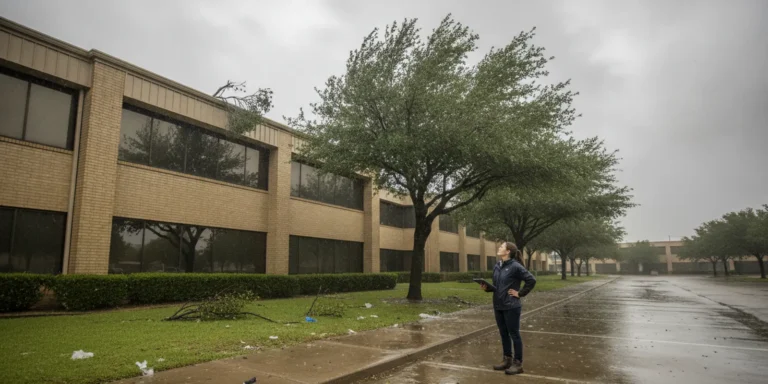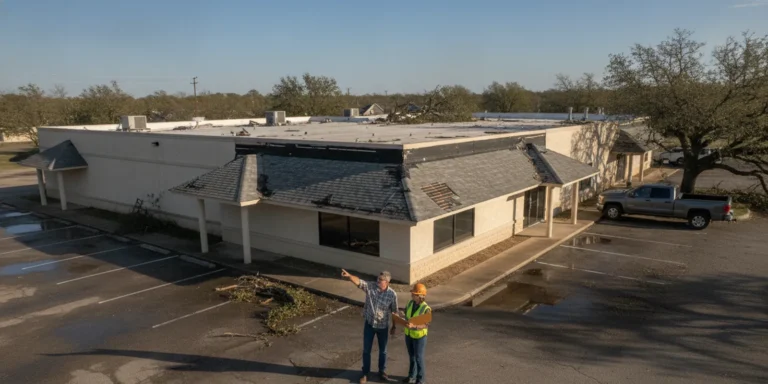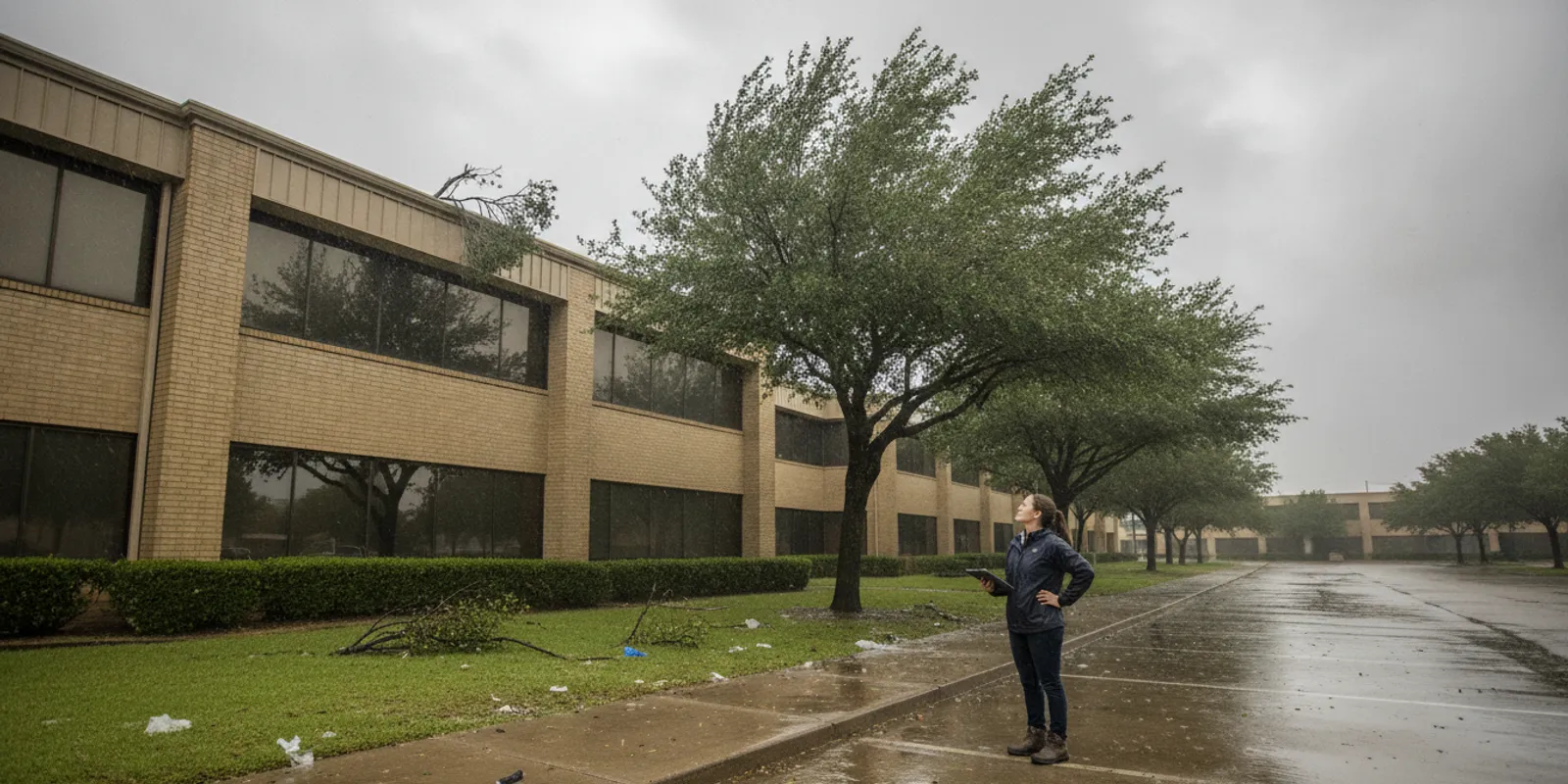
Is wind-driven rain covered in a Texas commercial property claim? It may be, but the answer depends on the policy in force, how water entered, what caused the opening or damage, and the evidence available. A useful review connects the contract to the building’s condition and the sequence of events, rather than treating the storm’s name as a coverage decision.
Request a consultation about your property claim
What does coverage for wind-driven rain depend on?
Wind-driven rain is rain pushed against or into a building by wind. A commercial property policy may address resulting damage through its covered causes of loss, exclusions, conditions, limits, and endorsements. Some forms distinguish rain entering through an opening created by a covered event from water entering through a pre-existing defect or an opening that was not caused by the storm.
That distinction is only a starting point. One policy may require wind to damage a roof or wall and create an opening. Another may define water damage differently, or an endorsement may alter the analysis. The wording in another owner’s policy does not establish what your policy covers.
Start with a sequence of questions. What changed during the storm? Where did water enter? Was a building component newly damaged? What property was affected? Which provisions apply to those facts? Answering them may require comparing inspection findings, photographs, repair records, and the complete policy in force on the loss date.
Separate the coverage question from the amount question. The parties may agree that rain entered but disagree about whether a covered event caused it. Or they may accept the stated cause and dispute which rooms, contents, or repair work belong in the estimate. Naming the disagreement precisely helps identify the records that matter.
How can the water’s path affect a claim?
Where water appeared can help explain a loss, but location alone does not decide coverage. Rain may enter through a roof, flashing, window, door, or wall. Water may also come from a pre-existing leak, drainage issue, or unsecured opening. More than one condition can contribute at once.
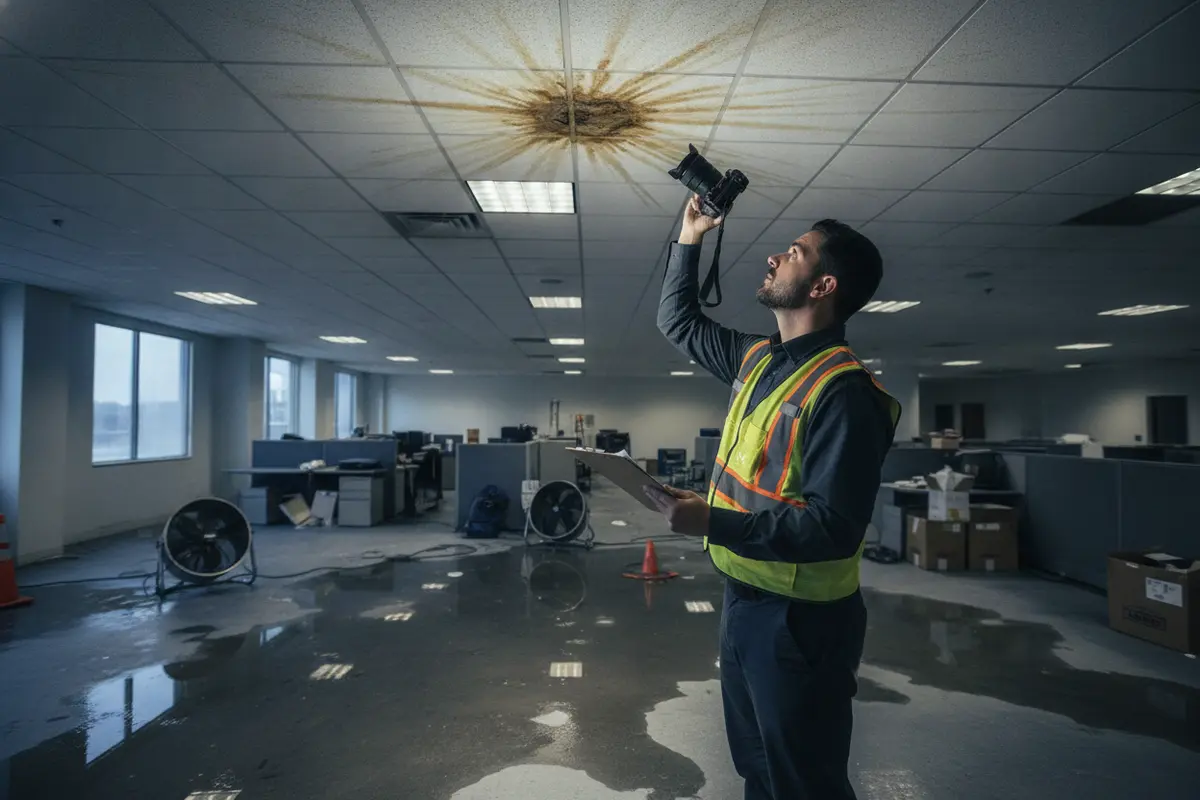
For example, wind may lift roofing material, rain may enter through the opening, and water may travel along a roof deck or wall before appearing indoors. A ceiling stain several rooms away does not necessarily identify the entry point. A timeline and physical observations can help connect interior damage to the storm.
Evidence of an older maintenance issue does not automatically establish that every part of a later loss is unrelated to a storm. The insurer may focus on deterioration or a long-standing leak; the owner may have evidence of newly damaged materials. Evaluate both the facts and the policy without assuming either explanation resolves the entire claim.
Map the building area by area. Record the first place water was seen, where it spread, and what was above or beside that location. Compare the map with exterior observations and inspection findings. Note whether a stain was fresh, whether materials felt damp, and whether water appeared during rainfall or only afterward. Those observations do not prove coverage by themselves, but they can reveal where accounts agree or differ.
Use a simple room log. For each affected space, write the date and time discovered, visible condition, nearby exterior wall or roof area, affected contents, and any action taken. If water was first noticed in a ceiling, record whether the stain expanded, whether dripping occurred, and whether the area was already marked before the storm. Distinguish what someone directly observed from what they later inferred.
Which policy terms should you review?
Use the complete policy that applied on the date of loss. Gather the declarations, forms, endorsements, exclusions, and conditions. A summary page or isolated sentence may omit a definition, exception, or related limitation elsewhere in the contract.
- Covered causes of loss: Identify terms addressing wind, rain, water, and physical loss or damage. Check whether the policy uses defined terms.
- Exclusions and exceptions: Find provisions about water, wear and tear, faulty maintenance, openings, and any exceptions to those exclusions. Read the full provision and cross-references.
- Endorsements: Check whether added terms change coverage, impose a limit, or create a sublimit for a particular type of water damage.
- Duties after loss: Note requirements for notice, protecting property, records, inspection access, and requested information.
- Valuation and timing: Identify applicable valuation provisions, claim procedures, and deadlines stated in the policy or correspondence.
Keep the policy together with insurer letters. If a letter cites a provision, compare its quotation with the complete section and related terms. Write down the specific language and the facts the insurer says it applies to. A focused comparison is more useful than trying to resolve the dispute from a short excerpt.
A practical way to do that is to make a two-column worksheet. In the first column, copy the insurer’s stated reason and the policy provision it cites. In the second, list the facts and records that appear relevant. For example, if the letter says water entered through a deteriorated roof, note the roof’s repair history, the inspection observations, and any evidence of a new opening. Do not edit the policy language into a shorthand that removes qualifying words.
Also check who is insured and what property is identified. A commercial site may include multiple buildings, tenant spaces, equipment, inventory, or outdoor property. The declarations and schedules can help define what the policy covers and which location or property is being evaluated. Avoid assuming that a single limit or deductible applies identically to every item; read the terms and endorsements.
What evidence can help explain the loss?
Useful evidence creates a dated record of the building before and after the storm, the suspected water path, and actions taken afterward. Preserve original files where feasible. Label records by date and location, and avoid discarding damaged materials before documenting them when safe.
- Photographs and video of roof, exterior, interior, contents, and water marks, with wide views and close details.
- Inspection reports, contractor observations, repair proposals, invoices, and records of temporary protection.
- Maintenance and repair history for the roof, windows, walls, and drainage system.
- Contemporaneous weather or business records that help establish timing and affected areas.
- Claim forms, notices, emails, letters, and notes of calls with the insurer or its representatives.
- Records identifying affected equipment, inventory, rooms, and any interruption associated with physical damage.
Ask an inspector or contractor to describe observations specifically: the component, location, visible condition, and date. A dated description of what was seen can be more informative than a bare conclusion. Photograph the same area from several angles and note which images show the interior and exterior sides of a suspected entry point.
When taking pictures, include context and detail. A wide image can show which room or building face is involved; a closer image can capture a seam, displaced material, stain, or damaged contents. Keep unedited originals and make separate annotated copies if labels or arrows will help explain them. Record who took each image and when, if that information is available.
If urgent work is needed to protect people or prevent further damage, safety comes first. Document the condition before work when possible, retain removed materials when feasible, and keep receipts and a short explanation of why the work could not wait. Review the policy duties promptly and preserve copies of all records. Do not delay a necessary safety measure just to obtain photographs.
Organize cost records by purpose. Separate emergency protection, investigation, repair, replacement, and cleanup charges. Keep proposals as well as paid invoices, and note whether the work was completed, deferred, or changed after inspection. This helps explain what each document supports without assuming that every proposed amount will be accepted.
What steps should a Texas property owner take?
- Make the site safe. Address hazards and protect occupants. Do not climb onto a roof or enter an unsafe area to collect evidence.
- Record conditions. Take dated photos and video of visible damage and water paths. Create a location-by-location list before cleanup changes the scene.
- Give notice as required. Follow the policy’s reporting process promptly. Save the notice and record when and how it was sent.
- Organize the claim file. Keep the full policy, maintenance history, storm records, estimates, invoices, and insurer correspondence together.
- Track inspections and requests. Log dates, attendees, areas inspected, questions asked, and documents provided. Keep copies of submissions.
- Compare the insurer’s position with the contract. Identify whether the disagreement concerns cause, water entry, extent of damage, amount, or a policy duty.
- Seek guidance where appropriate. A lawyer can review a disputed commercial property claim and explain possible next steps based on its policy and record.
These steps do not guarantee coverage or payment. They can preserve information and clarify the disagreement. For general storm-related claim guidance, see the firm’s storm damage claim resource and its information on roof damage claims.
Keep a communication log in a single file. For each call or inspection, write the date, names or roles of participants when known, the subject, any documents requested, and the next expected step. If a conversation includes an important explanation, consider sending a brief written follow-up that accurately summarizes your understanding and invites correction. Save sent messages and responses together.
When providing materials, create an index and retain a copy of the exact packet. If the insurer asks for records, note the request date, its scope, the response date, and what was included. If an item is unavailable, identify that rather than silently leaving a gap. This makes later review more orderly and helps distinguish missing evidence from evidence that was never requested.
How do common situations compare?
These are general illustrations, not coverage decisions. The policy terms and evidence can change the analysis.
| Situation | Evidence to examine | Why it may matter |
|---|---|---|
| Wind visibly damages roofing before interior rain | Photos, inspection findings, repair records, timing | May help assess whether storm damage created an entry point under the policy |
| Water appears near an older leak | Repair history, recent observations, moisture pattern | May help distinguish an earlier condition from newly observed damage |
| Rain enters around a window or wall | Exterior photos, component condition, contractor notes | Cause and route may be treated differently by the policy |
| Insurer disputes interior damage extent | Room-by-room photos, estimates, itemized scope | May clarify affected property and proposed work |
| Temporary work occurs before inspection | Before-and-after photos, receipts, materials, work description | Can document the original condition and reason for urgent work |
Consider a worked example. A warehouse manager discovers wet insulation and a ceiling stain the morning after a storm. The roof had been serviced months earlier, but no one had documented the exact condition immediately before the event. The manager should preserve the service record, photograph the interior before removal if safe, and ask the contractor to describe what was observed at the roof and how the water may have traveled. The record can help frame the question; it cannot substitute for policy analysis.
Now consider a different sequence: rain appears at a window with a history of water intrusion, and there is no obvious storm-created damage. The file should still distinguish the prior condition from what changed during this event. Compare old repair records and dated interior photographs with current observations. The goal is not to label the event in advance, but to document what the evidence does and does not show.
A third situation involves agreement on the entry route but disagreement over the repair scope. In that case, a room-by-room estimate, measurements, material descriptions, and photographs may be more useful than repeating arguments about the storm. The owner can identify each line item under dispute and ask what information would clarify it.
How should you respond when an insurer questions the claim?
Read the insurer’s written position closely. Determine whether it disputes the cause, water route, building condition, amount of loss, or compliance with a policy requirement. Those are different issues and may call for different evidence.
If the explanation is unclear, ask for clarification in writing. Identify the disputed area, the provision cited, and the information you believe should be considered. Keep a copy of the request and response. Do not assume a phone conversation changes a written position or a deadline.
Deadlines and policy requirements can matter, so do not let an ongoing repair project postpone reviewing the contract or seeking advice. The firm provides information about insurance claim disputes and appraisal disputes. Appraisal may address certain disagreements about the amount of loss, depending on the policy; it does not automatically resolve every coverage question.
Before responding, prepare a short issue list. For each point, quote or identify the insurer’s reason, state the factual question in neutral terms, and attach the record that addresses it. If the letter concerns the roof, for instance, avoid sending a large unindexed collection of unrelated business records. A focused submission is easier to review and easier to preserve for later evaluation.
If the parties disagree about damage scope, compare estimates line by line. Note differences in quantities, materials, repair methods, and areas included. Ask whether the disagreement is based on a measurement, an assumption about the cause, or a policy limitation. A side-by-side comparison does not settle the dispute, but it can make the disputed points concrete.
A concise file can make a consultation more productive. Gather the policy, insurer letters, photographs, estimates, inspection reports, and a short timeline. For a commercial building, include a list of affected areas and repairs completed or still needed. The firm also explains insurance litigation and storm-related disputes.
For weather context, the National Weather Service provides local forecasts and alerts at weather.gov. Weather information can help establish timing, but it does not by itself determine what a particular insurance contract covers.
When may legal review help?
Legal review may be useful when the insurer’s explanation does not address important evidence, when the parties disagree about how policy language applies, or when the scope and amount of damage remain contested. A review can begin with a defined question rather than a broad request to reconsider everything.
Prepare a short chronology: date of storm, first discovery, mitigation, inspection dates, claim communications, and any decision. Attach only clearly labeled core documents at first, then note what additional records are available. This helps identify whether the dispute concerns facts, policy language, process, or more than one issue.
A useful meeting packet can be modest. Include the declarations and relevant forms, the insurer’s latest position, a one-page timeline, a photo index, estimates, and key repair records. Add questions you want answered, such as whether the dispute is about the cause of the opening, the scope of interior repairs, or a stated policy condition. Keep originals and bring copies when practical.
For a broader overview of resolving an insurance dispute, review the firm’s property damage claim information. Every claim remains fact-specific, and no article can predict the result for a particular policyholder.
Discuss a disputed commercial property claim
Frequently Asked Questions
Is wind-driven rain automatically covered?
No. Coverage depends on the policy and facts, including cause, water route, exclusions or exceptions, and the damage claimed. Review the complete contract.
Must the roof show visible damage?
There is no universal answer. Some policy language may make storm-created openings important, while other wording differs. The inspection record and policy control the analysis.
Should I make temporary repairs before inspection?
Protect people and take reasonable steps to prevent additional damage. When safe and practical, document conditions first, keep receipts, and retain removed materials. Check the policy’s requirements.
What if the insurer says the leak was pre-existing?
Gather maintenance records, dated photographs, inspection observations, and a timeline of discovery. Compare those materials with the insurer’s reasoning and the provisions it cites.
Can appraisal decide whether the loss is covered?
Appraisal may address some disagreements about the amount of damage, depending on the policy and dispute. It does not necessarily decide whether a cause of loss is covered.
Get advice on a wind-driven rain dispute
Wind-driven rain questions require attention to the policy, building condition, storm evidence, and insurer’s explanation. A clear record can help a Texas commercial property owner understand the dispute and evaluate possible next steps.