When is a first party insurance claim necessary? It is necessary when you need your own insurer to investigate a loss and pay benefits the policy may provide. For a Texas property owner, that usually means a storm, fire, sudden water event, or similar covered cause damaged insured property. It also means the repair cost, replacement cost, or lost income is large enough that silence could forfeit the coverage you bought.
Call Hoch Law Firm at (817) 731-9703 to review whether a first-party claim should be opened
When is a first party insurance claim necessary?
The question is practical. You already paid a premium. A claim is the formal request that the insurer look at a loss and pay what the contract requires. It becomes necessary when three things line up. The loss happened during the policy period. The damaged property or lost income is something the policy may cover. And you want the insurer, not only a contractor or a neighbor, to address it.
A first-party claim is a claim against your own carrier. A third-party claim is a demand against someone else’s insurer because that person may be responsible for your damage. If wind tears membrane off your roof, the first call for coverage is usually your property policy. If a contractor’s crane drops a load on that same roof, you may have a liability claim against the contractor. You may still need to tell your own insurer, depending on the notice condition in your form.
Hoch Law Firm’s Fort Worth property insurance lawyer page is the practice home for these disputes. This guide stays on the earlier decision: whether the loss belongs in a claim at all.
Small, clearly excluded damage does not become a claim just because it is annoying. A worn seal, ordinary aging, or a maintenance item the policy excludes is often a repair, not an insured loss. The line is the policy wording plus the facts. It is not a rule of thumb about dollar amounts.
Owners also confuse a conversation with a claim. A text to your agent, a photo in a group chat, or a contractor who says he will “send it to insurance” may not satisfy the policy’s notice clause. If you want benefits, put the notice where the policy says it goes, and keep a copy.
Which losses usually belong with your own insurer?
Texas owners most often face this decision after weather, fire, sudden water, or a business shutdown tied to physical damage. The policy, including endorsements, controls the answer. These are the situations where opening a first-party claim is commonly necessary if you want the coverage you bought:
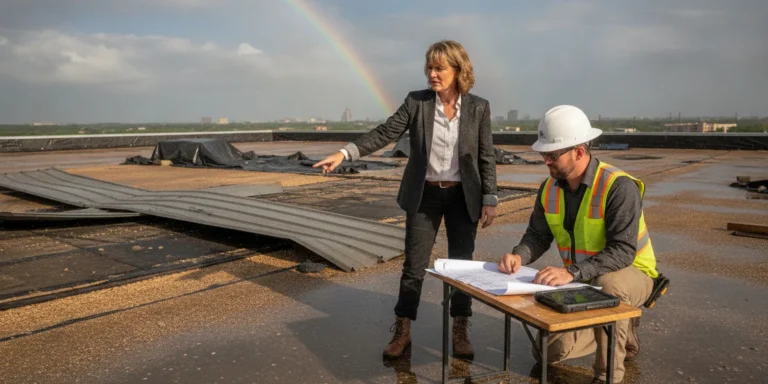
- Wind, hail, or another storm damages a roof, exterior, or interior that the policy may cover.
- Fire or smoke damages a building or contents, including a loss that also involves a tenant or neighbor.
- A sudden pipe break or other covered water event damages finishes, equipment, or inventory.
- A covered physical loss shuts down or slows a business that bought business-income or extra-expense coverage.
- The insurer has already heard an informal report, and you need a dated claim so inspections and deadlines start from a clear notice.
Commercial policies often split building, contents, and income coverages. A retail owner can have building damage that is modest and income loss that is not. Read the declarations page for what was purchased. Then read the forms for what must happen before payment. The firm’s commercial property insurance overview is the place for that broader coverage map.
Do not wait for a contractor to see whether insurance will care. Many policies require prompt notice of a loss. Notice is not an admission that every dollar is owed. It is how you preserve the right to have the loss evaluated.
Location matters inside the policy, too. A form may cover the building at a scheduled address and say little about a vacant outbuilding, a tenant’s trade fixtures, or property in transit. If the damaged item is not clearly scheduled, say so in the notice instead of assuming the carrier will sort it out later. A clean description now prevents a fight about whether you hid the loss.
Theft and vandalism can also belong on a first-party file when the policy includes those causes. A police report helps, but it does not replace notice to the insurer. Give the date you discovered the loss if you do not know the date it happened, and say which is which.
First-party claim versus other paths
Owners mix up four different conversations. Naming the right one keeps the file cleaner and avoids a late-notice problem. Use the table as a sorting tool, then confirm the result against your own form.
| Situation | Who you ask to pay | Is a first-party claim necessary? |
|---|---|---|
| Your insured building is damaged by a covered event. | Your property insurer. | Yes, if you want policy benefits for that loss. |
| Someone else’s negligence damages your property. | That person’s liability insurer, and sometimes yours. | Often yes as notice, even if you also pursue the other party. |
| A tenant or vendor owes you money unrelated to your policy. | That person or their insurer. | No, unless your own policy also covers the loss. |
| You only need a maintenance repair the policy excludes. | Your contractor. | No. A claim will not create coverage the form excludes. |
| The carrier already opened a claim and you disagree. | Your property insurer. | The claim exists. Next is the dispute, not a second claim for the same loss. |
If the disagreement is about scope, cause, or the amount owed after a claim is open, that is a coverage or valuation dispute. It is a different question from whether a claim was necessary in the first place. The property insurance process page describes how a file moves once it exists.
A short note on speed: moving a file quickly can matter for rent and repairs. Speed is not the test for whether to open the claim. Open it when the loss may be covered. Then keep the timeline tight.
Two claims for one event can be appropriate when two different policies apply, such as a building policy and a separate tenant policy. Two claims on the same policy for the same damage usually create confusion. If you already have a claim number, use it. Ask the carrier in writing to add the newly found damage to that file.
What should you check before you report the loss?
A careful notice is short and factual. You do not need a legal brief. You do need enough detail that the insurer can find the policy, the property, and the date.
- Confirm the policy was in force on the date of loss, including the right named insured and location.
- Photograph conditions before temporary repairs hide them, and keep samples only if it is safe.
- Make reasonable temporary repairs to prevent more damage, and save invoices.
- Write the date, what you saw, and which areas were affected. Separate what you observed from what a roofer later concluded.
- Report the loss the way the policy describes, and keep a copy of what you sent and when.
Mitigation is not the same thing as a full rebuild. Board a window, dry a room, or tarp a roof if that is what safety requires. Avoid throwing away damaged materials until the insurer has had a fair chance to see them, unless leaving them creates a hazard.
Keep a simple log. Date, who you spoke with, what they asked for, and what you sent. If a portal upload fails, send the same packet by the backup method the policy allows and note the failure. Adjusters change. A log survives the handoff.
The Texas Department of Insurance publishes general consumer guidance on reporting a loss. Its tips for filing a claim page is a useful public starting point. It does not interpret your form. It does not decide whether your loss is covered.
If you share the building with tenants, tell them not to discard debris or start cosmetic work in the damaged areas until you have photos and, when practical, an inspection. Their goodwill repair can erase the only record of water lines, impact marks, or smoke patterns. Give them a short written request so the instruction is not just a hallway conversation.
When waiting creates the real problem
Owners sometimes delay because the estimate is still moving. A tenant may be arguing about access. Or they hope the carrier will just know from a phone call to the agent. Delay is risky when the policy requires prompt notice, a proof of loss, or an inspection before repairs.
Texas also has claim-handling deadlines that can apply once a claim is properly presented. Many of those rules sit in Insurance Code Chapter 542. Those deadlines are not a reason to file a weak or excluded claim. They are a reason not to leave a real loss sitting in email. The firm’s Texas Prompt Payment of Claims Act page is where those timing rules are explained. This article does not restate them.
Business-income losses are especially sensitive to the start date. If operations stopped because of covered physical damage, the claim file should show when the shutdown began. It should also show what could not be done, and what extra costs you paid to keep going. See the firm’s business interruption claims page for that coverage. Do not treat a pure slow season as if it were a covered shutdown.
Fire and hail have their own evidence patterns. A fire file needs the origin information you actually have, not a guess. A hail file needs dated photos and a clear list of elevations, not a single wide shot of the lot. Related pages: fire damage claims and hail damage claims.
There is a second kind of waiting that is reasonable. If you are still making the building safe, finish the emergency work and document it, then report. Reasonable mitigation is not the same as parking the loss for weeks while you collect competing bids. Once you know the damage is more than a maintenance item, notice should go out.
Watch renewal dates. A loss just before or just after renewal can raise a question about which policy applies. Report the date you first saw the damage, and attach the policy that was in force that day if you have it. Do not let a renewal conversation replace the claim.
When is a first party insurance claim necessary to involve a lawyer?
You can report many losses yourself. A lawyer becomes useful when the carrier’s questions, the policy conditions, or the money at stake make a casual notice a poor idea. Common points include the following:
- The loss is large, involves more than one building, or includes business income.
- The insurer requests an examination under oath, a sworn proof of loss, or a broad set of records on a short deadline.
- You already know the carrier disputes cause, pre-existing damage, or the extent of repairs.
- Another party, such as a tenant, contractor, or neighboring owner, is also involved.
- You are unsure whether a notice, appraisal, or lawsuit deadline is already running.
Tim Hoch is Board Certified in Personal Injury Trial Law by the Texas Board of Legal Specialization. He represents policyholders in property insurance disputes from the firm’s Fort Worth office. A consultation is a review of your facts and policy questions. It is not a promise of any result.
If a claim is already open and the fight is about the insurer’s conduct, read the bad faith page separately. If the policy offers appraisal for an amount-of-loss dispute, the appraisal page covers that route. Neither topic answers whether you should open a claim.
Bring the policy, photos, any written denial or reservation, and a one-page timeline to that call. The goal of the first conversation is to identify the decision in front of you: notice, a supplement to an open claim, or a dispute about what is already owed.
Call (817) 731-9703 before a deadline or a coverage dispute decides the claim for you
Frequently Asked Questions
Is every property repair a first-party insurance claim?
No. A first-party claim is a request that your own insurer pay for a loss the policy may cover. Ordinary maintenance and damage the form excludes are repairs you handle outside the claim.
Should I call my insurer if someone else caused the damage?
Often yes. You may still need to notify your own carrier while you pursue the other party. Read the notice condition before you assume the other person’s insurer replaces yours.
Does reporting a loss guarantee payment?
No. Notice starts the claim. Coverage still depends on the policy, the cause of loss, the proof you can provide, and any conditions you have to meet.
Can I repair everything before the inspection?
Make temporary repairs that limit further damage and protect people. Hold off on a full tear-off or a rebuild that erases the evidence until the insurer has a fair chance to inspect, unless safety leaves you no choice.
Where do I start if I am unsure the claim is necessary?
Gather the policy, the date of loss, photos, and a short description of what changed. Then call Hoch Law Firm at (817) 731-9703 or use the contact page so someone can help you sort notice from a dispute.