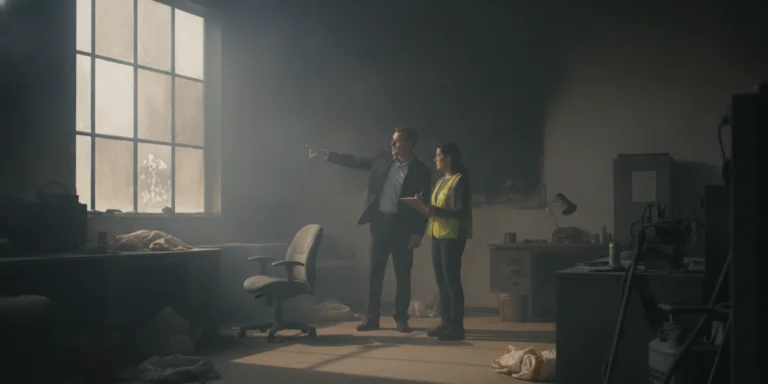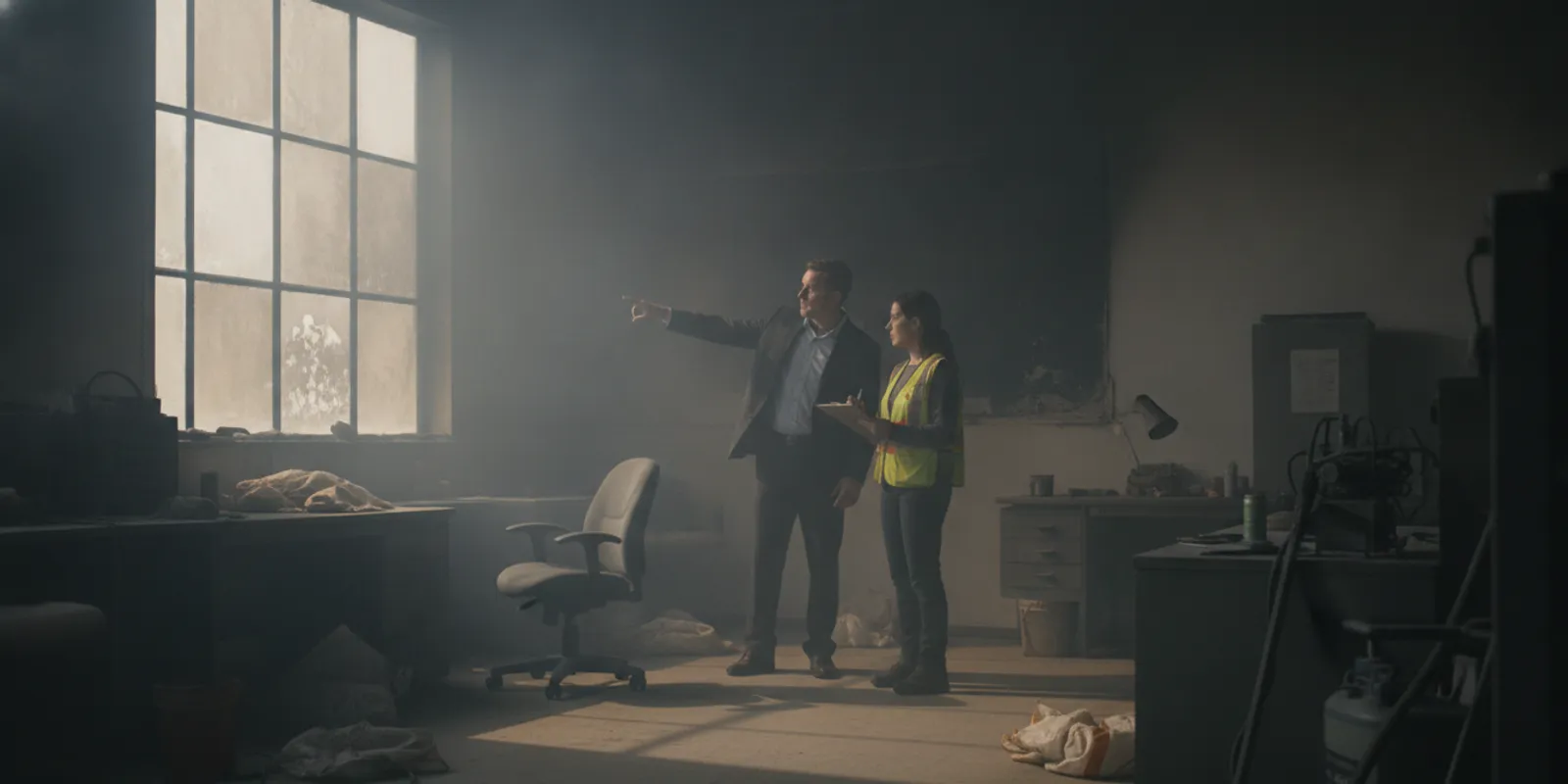
Smoke odor can remain after visible residue has been removed, but an odor alone does not automatically establish what an insurance policy covers. A smoke damage insurance claim attorney can help an owner connect reported conditions to the event, preserve useful records, and compare the evidence with the policy and insurer’s explanation. The practical issue is to document what is present, when it appeared, where it is strongest, and how it affects use of the property.
Can smoke odor support a property insurance claim?
It may be relevant evidence, particularly when the odor followed a specific fire or smoke event and is accompanied by other observations. The source, path, timing, and extent of smoke movement can matter. So can the policy language, the insurer’s investigation, and whether there are reasonable alternative explanations for the smell.
Odor is difficult to capture in a photograph. That does not make it unimportant. A useful claim record can combine dated observations with photographs of visible residue, witness accounts, inspection notes, cleaning records, and professional findings. Those records help explain a condition that may change after ventilation, cleanup, repairs, or renewed occupancy.
Coverage depends on the facts and the policy in force. A building owner should not assume that every lingering smell is covered, or that a lack of visible soot means there is no issue to report. Read the relevant policy provisions and ask the insurer to explain how it evaluated the reported conditions.
Why can odor be difficult to document?
Odor is perceived by people rather than photographed directly. Its intensity may vary by room, time of day, ventilation, temperature, and whether doors or windows have been open. People can also differ in how strongly they notice a smell. These variations do not prove or disprove a claim by themselves; they make consistent, time-specific notes more useful.
Conditions can change quickly once cleanup begins. An initial walkthrough may show residue or identify rooms where odor is strongest. Later, cleaning, air exchange, replacement of materials, or ordinary business activity may alter what an inspector can observe. Keep the original records even when the building changes.
Be precise rather than dramatic. Record what you notice in plain language: the room, date and time, whether the smell is faint or strong, and what activity was taking place. If a visitor or employee independently notices it, ask whether they are willing to write down their own observation, in their own words, with the date. Avoid telling witnesses what they should report.
What should an owner document first?
Start with a dated record before making non-urgent changes to affected areas. Do not delay urgent steps needed to protect people or prevent further property damage. Keep notes about why immediate work was necessary and what was done. If a condition seems hazardous, prioritize safety and use qualified professionals.
- Make a room-by-room log. Note the location, time, odor description, visible residue, and any change since the last check. Keep entries factual and identify who made each observation.
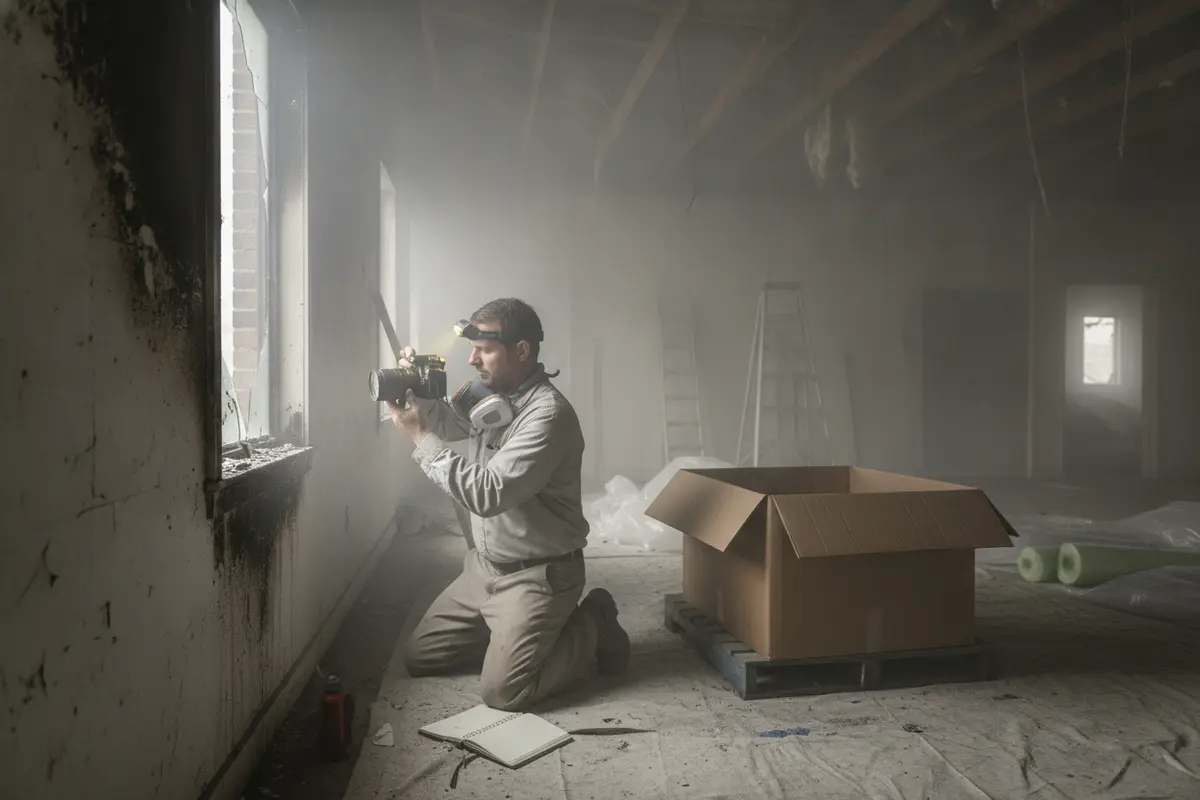
- Photograph observable conditions. Take wide views and close-ups of residue, staining, affected contents, or cleaning work. Include dates and retain original files when possible. Images cannot record smell, but they can show related conditions and the state of the property.
- List affected areas and items. Identify rooms, equipment, inventory, furnishings, or building materials that may have been exposed. Note whether each item is still in place, was cleaned, or was removed.
- Preserve event and building records. Keep incident reports, maintenance logs, visitor or employee observations, and any available records that help place the event in time. Avoid editing originals; store working copies separately.
- Save communications. Keep the claim number, adjuster correspondence, inspection dates, written requests, and copies of everything sent to the insurer. Make a dated note of calls, including who participated and what was discussed.
For a commercial building, disruption and access restrictions can affect tenants, staff, customers, and operations. Record affected spaces and practical impacts without turning an estimate into a conclusion about coverage. If business interruption is also at issue, keep the operational records separate and organized. Hoch Law Firm’s smoke odor claim guidance provides a related starting point for understanding commercial property insurance disputes.
For a larger property, use a floor plan or a simple room list to make the record easier to follow. Mark the areas where an odor was noticed and distinguish direct observations from information reported by another person. If a tenant reports a condition, record the date and the tenant’s words rather than rewriting the report as a verified finding. This small distinction can help keep a claim file accurate.
Also make a contents list for items that may have absorbed smoke or require cleaning. Include a description, location, approximate age if known, current condition, and any action taken. Keep purchase or maintenance records when available. Do not discard an item solely because it seems difficult to clean without first documenting its condition and checking what the insurer requires, unless immediate safety concerns call for removal.
How can cleanup and repairs affect the evidence?
Cleanup may be necessary, but it can alter or remove conditions that would otherwise help explain the reported loss. Before non-urgent cleaning, photograph the affected areas and make a written inventory. Keep proposals, work orders, invoices, product details, and notes identifying which rooms or materials were treated. Ask contractors to describe observed conditions and work performed, rather than speculate about policy coverage.
There is no need to leave a property in an unsafe or unusable state just to preserve evidence. If prompt action is needed, record the reason, the condition beforehand, and the steps taken. When feasible, retain samples or removed materials only under the direction of an appropriate professional and with a clear label showing where and when they came from. Do not interfere with safety instructions or professional advice.
Ask any inspection or remediation professional to distinguish observations from conclusions. A report is more useful when it identifies the rooms inspected, methods used, limits of the inspection, and findings. If a professional did not test a particular area, the report should not be treated as though it did.
Keep an orderly file that includes work performed, what remains unresolved, and any post-cleaning odor observations. A claim review can be harder if the record says only that the odor continued, without explaining where, when, or under what conditions it was noticed.
What should you review in the policy and claim file?
Use the complete policy documents for the relevant period, including declarations, forms, endorsements, and any amendments. Do not rely only on a summary or a short description of coverage. The applicable terms and facts determine how a reported smoke condition is evaluated.
Look for provisions addressing covered causes of loss, exclusions, duties after a loss, property valuation, and any time requirements. The wording and effect can vary by policy. If a clause is unclear, note the question and ask for an explanation rather than assuming how it applies. The Texas Department of Insurance is an official Texas resource for insurance information; it is not a substitute for reviewing the language of the specific policy.
Then compare the insurer’s written position with the record. Does it identify the observed conditions? Does it explain why the insurer accepted or rejected a connection to the reported event? Does it describe what was inspected and what remains uncertain? If a payment, partial denial, or request for more information arrives, save the full document and note the date received.
Build a question list before responding. For example, ask which rooms were inspected, whether the review considered the owner’s odor log, what documents support the stated cause, and whether additional information could be considered. Ask for the response in writing when appropriate and keep the tone neutral. A focused question may clarify whether the disagreement is about the event, the observed condition, the policy wording, or the scope of work.
For related issues, review information about fire damage insurance disputes and the firm’s property claim steps after an event. These links offer context, but the facts of a smoke condition and the language in a particular policy still need their own review.
How can you organize the claim evidence?
A simple timeline can help keep observations, inspections, and work in order. Use one row for each important event, and attach the supporting item rather than relying on memory. Keep a copy of the original documents and identify later additions by date.
| Record | What to capture | Why it may help |
|---|---|---|
| Odor log | Date, time, room, description, conditions, and observer. | Shows how the reported condition changed over time. |
| Photos and video | Room views, visible residue, affected items, and cleanup stages. | Preserves visual conditions that may later change. |
| Inspection records | Who inspected, areas reviewed, methods, findings, and limits. | Clarifies what an inspection did and did not assess. |
| Cleanup documents | Scope, dates, materials treated, work notes, and invoices. | Connects completed work to locations and observed conditions. |
| Claim correspondence | Requests, responses, estimates, decisions, and dates. | Helps track the insurer’s questions and stated reasoning. |
| Witness notes | Independent observations in the witness’s own words. | Adds dated context beyond the owner’s recollection. |
Back up digital records in a secure location and use descriptive file names, such as a date followed by a room name. Avoid overwriting original photographs. If a document is revised, keep the earlier version and label the revision. A neat file makes it easier to answer questions consistently and identify missing information.
How should you respond to an insurer’s inspection or decision?
Before an inspection, ask what areas will be reviewed and what records the inspector would like to see. Have the odor log and a room list ready. Point out the locations where the condition has been noticed, including if it varies by time or circumstance. Do not overstate certainty about the source if you do not know it.
Afterward, write down the date, participants, areas viewed, questions asked, and any next steps discussed. If the insurer requests documents, make a copy of the response and note when it was sent. Ask for clarification when a request is broad or unclear. Keep communication factual and avoid discarding relevant records.
If the insurer says the odor is not related to the reported event, compare that explanation with the timeline, inspection scope, and any professional findings. If the insurer relies on a policy provision, read the full provision and the surrounding language. A disagreement does not resolve itself simply because the owner or insurer states a conclusion; the supporting documents matter.
For questions about a disputed coverage position, an owner may consider legal review. A Texas insurance dispute attorney can assess the claim record and the insurer’s stated position in light of the applicable policy. The firm represents policyholders in property insurance disputes. Whether a particular matter is appropriate for representation depends on its circumstances.
When may a smoke damage insurance claim attorney help?
Consider seeking legal review when the insurer disputes whether smoke reached the property, questions the cause of an odor, declines to evaluate affected areas, or issues a decision that does not address key records. Review may also be useful when cleanup has changed the conditions, several parties have different explanations, or the claim includes both building damage and operational effects.
A focused review can compare the policy documents, chronology, inspection findings, communications, and repair records. It can also help identify unanswered questions: Were relevant rooms inspected? Are there contemporaneous notes? Does the written decision explain its reasoning? Is more documentation needed to describe the affected property?
Bring the full policy if available, the insurer’s written position, photographs, logs, estimates, invoices, inspection reports, and correspondence. A lawyer cannot promise a particular outcome based solely on the presence of odor. The goal is to understand the facts and options, not to treat an assumption as a coverage determination.
Before a meeting, write down the sequence of events and identify the most important unanswered questions. Bring both the documents that support your concern and any information that may point to another explanation. A balanced, complete file gives counsel a clearer basis to discuss strengths, uncertainties, and practical next steps.
Hoch Law Firm represents property owners in insurance disputes. Its stated fee arrangement for these matters is contingent: clients pay nothing unless the firm wins, and the firm advances litigation costs. The initial case evaluation is complimentary and carries no obligation to proceed. For background about the attorney, see Tim Hoch’s biography.
Request a consultation about your claim
Frequently Asked Questions
Does smoke odor alone prove an insured loss?
No. Odor can be part of the evidence, but it does not by itself establish the source, cause, extent, or coverage of a loss. A policy review and the full set of observations and records matter.
Should I clean the property before the insurer inspects it?
Address urgent safety or damage-prevention needs without delay. For non-urgent work, document the conditions first when practical, notify the insurer as appropriate, and keep records of all work. Follow safety guidance from qualified professionals.
What if the odor fades before an inspection?
Preserve dated notes and original photographs or records made while the condition was present. Identify when the odor changed and what occurred beforehand, such as ventilation or cleaning. Do not recreate conditions or exaggerate what you observed.
Can a business claim include smoke odor affecting operations?
It may be worth reporting the condition and keeping separate records of affected spaces and operational effects. Whether a policy responds depends on its wording and the facts. Keep relevant business records and ask the insurer to explain its evaluation.
What is the practical next step?
Make a dated record of the odor, preserve related observations and documents, and review the insurer’s explanation alongside the complete policy. If the evidence or coverage position is disputed, an attorney can review the claim-specific record and help you understand possible next steps.