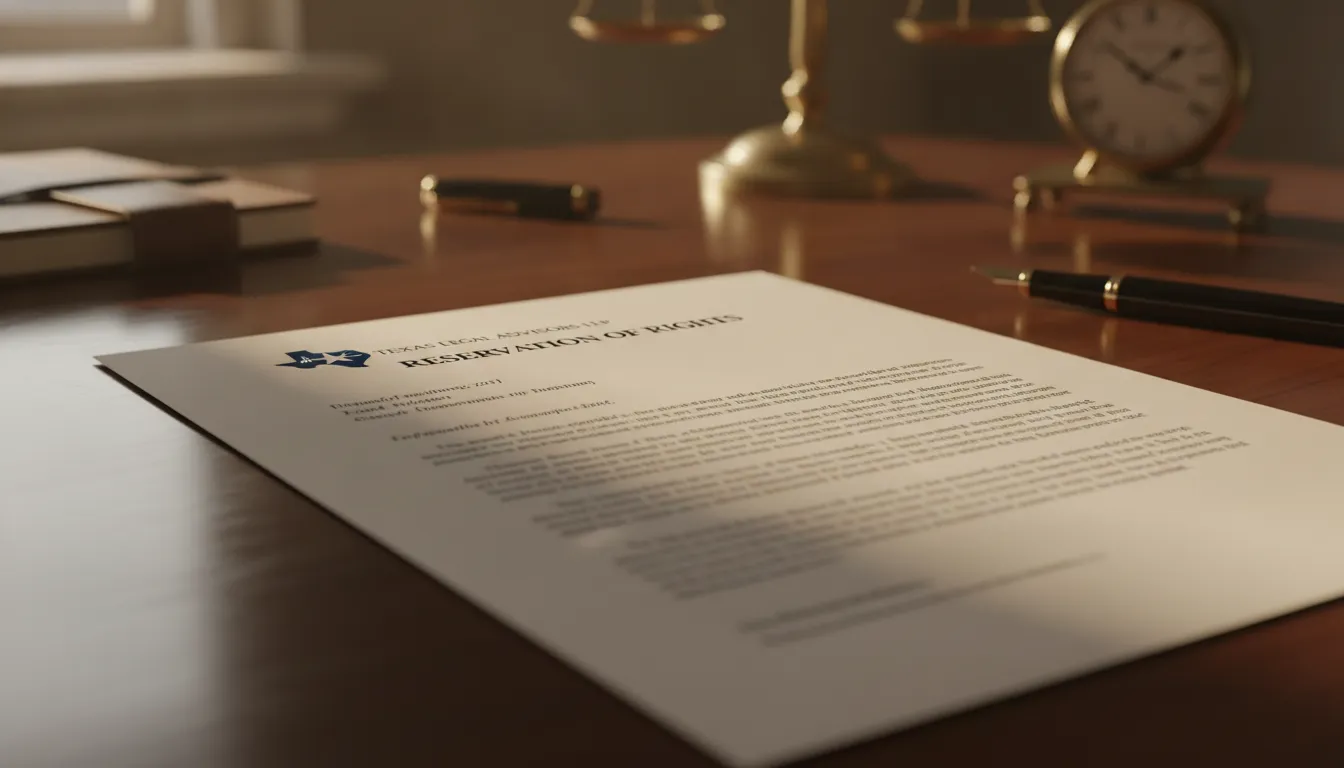
A reservation of rights letter is often the first sign that an insurer plans to deny your claim. When you get this notice, your insurance carrier is already looking for ways to avoid paying for your property loss.
Need help responding to a reservation of rights letter?
Hoch Law Firm represents Texas policyholders in complex insurance disputes. Get a free claim evaluation from a Board Certified Personal Injury Trial Lawyer. You pay no fee unless we win.
A reservation of rights insurance claim notice is a formal letter from your insurance company stating that they might not cover your loss. While the company may start working on your claim, they use this letter to keep their right to deny payment after their review. This notice tells you that the insurer has found a reason to reject the claim based on policy rules. According to the New York Department of Financial Services, these letters differ from denials because the insurer is still active while they check the policy. This is a warning that the carrier is already building a case against your coverage. You must treat this as a shift that needs expert review to protect your rights.
If you get one of these letters, you must understand the legal terms. Most owners are unsure how to act when their company asks hard questions. To protect your claim, you need to know what this document means. The first step is to define What Is a Reservation of Rights Insurance Claim Letter? and the path begins with…
What Is a Reservation of Rights Insurance Claim Letter?
A reservation of rights insurance claim letter is a formal notice from your insurance company. It says the company is looking at your loss but might not pay for it. This letter tells you that your coverage may be limited. It is a tool used by insurers during an insurance claim dispute to keep their options open.
When you file a claim, the company mostly has three choices:
- They can accept the claim and pay it.
- They can deny the claim.
- They can accept it under a reservation of rights.
This last choice lets them work on the claim while they check the facts. It is an insurer’s way of saying they are not yet sure if your policy covers the loss.
A formal look at the facts
Getting this letter does not mean the company has said no. It means they have doubts. The company uses this notice to tell you they are checking the policy terms. They want to see if the claim fits the rules. This is a key step in a commercial property insurance claim where the facts are not simple.
This letter is different from a denial. A denial is a final no. A reservation of rights letter is just a warning. State offices like the New York State Department of Financial Services discuss these letters. They allow insurers to defend you while protecting their own rights.
Protecting the firm’s legal stand
Insurers send these letters to protect their legal stand. If they pay without this letter, they might lose the right to deny the claim later. The letter lets them check the facts without giving up their rights. The company may agree to defend you in court but still keep the right to fight coverage if they find new facts.
Courts have found that payments made under this letter are not a full acceptance of liability. The money you get might not be final. This means the insurer could try to get their money back later. This often leads to a conflict of interest between you and the company. You want the claim paid, but the company is looking for reasons to avoid it.
Why these letters matter
You should read a reservation of rights insurance claim letter with care. It is often the first sign of a larger insurance claim disputes. The letter lists parts of your policy that might limit your pay. Reading these parts helps you see where the company is looking for a way out. It shows you where the company might try to deny your claim.
These letters are hard to read. You may need a lawyer to look at them. An expert can tell if the company is acting in good faith. They can help you reply and protect your rights. At Hoch Law Firm, we focus on helping you. We work on a contingent fee basis, so you do not pay us unless we win.
Why Insurance Companies Issue Reservation of Rights Letters
When you file a claim, your insurer has work to do. They must read your policy and check facts. At times, they are not sure if your policy covers the loss.
Instead of saying no right away, they send a notice. This is called a reservation of rights insurance claim letter. It lets the company move forward while they keep their options open.
Protecting the Right to Deny a Claim
The main goal of this letter is to stop a legal “waiver.” If an insurer handles your claim without this notice. They might lose the right to say no later. Courts might rule that the company accepted the claim just by starting the work.
To avoid this, the company sends a formal letter. This notice says they are not giving up any rights. It is a warning that their help now does not mean they will pay in the end.
By issuing this letter, the company can look into the claim. They may need to check if the damage happened during the right dates. They might also look for policy rules that stop a payout.
This check can take many weeks. During this time, the letter keeps the company safe. It gives them the time they need to find reasons to deny the claim later.
Duty to Defend vs Duty to Pay
One big reason for these letters is your legal defense. In many cases, the insurer must pay for a lawyer if someone sues you. This is known as the “duty to defend.”
This duty is often broader than the duty to pay for the loss. The company might hire a lawyer for you even if they think they might not pay the final bill. They do this to follow the law and avoid an insurance claim dispute.
The New York Department of Financial Services says these letters let an insurer defend you while still fighting the claim. If they did not send the letter, they could be stuck paying for everything. By sending it, they can pay for your lawyer now but refuse to pay the final court debt.
This often creates a conflict. You want the case settled. Yet the company may be looking for a way out.
Managing Risks and Facts
Insurers want to lower their costs. When a claim is big, they use every tool to protect their money. A reservation of rights letter is a key part of that plan.
It tells you that the company is still checking the facts. They want to make sure every part of the claim fits the policy rules. If they find one part that does not fit, they will use the letter to deny it.
Many find that these letters are the first sign of a fight. If you get one, you may need a lawyer to help you. In Texas, these letters must follow strict rules to be fair to you.
How a Reservation of Rights Affects Your Texas Property Claim
Receiving a reservation of rights letter is a key moment in your insurance claim. This letter is a formal notice that your insurer is looking into your loss but might not pay for it. The company says they will work on the claim now while they check the policy rules. However, they are “reserving” their right to deny you later based on what they find during their search. It means the company has doubts about your coverage and wants to protect its own funds.
In many cases, this letter arrives when the insurer sees a possible reason to say no. They might think the damage happened before the policy started or that a specific exclusion applies. By sending this notice, the company avoids giving up its rights. In Texas, if an insurer acts like a claim is covered without this letter, they might be forced to pay it later. The Texas Department of Insurance sets rules to make sure these notices are clear and fair to the owner.
The first sign of a future insurance claim dispute
A reservation of rights letter is often the first sign of an insurance claim dispute. It differs from a total denial, which ends the claim right away. Instead, it puts your claim in a gray area where the company is still in control. While they check the facts, they may ask for more records or more time. This delay often helps the insurer by giving them more time to build a case against your payout.
You should view this letter as a warning. It signals that the company is already looking for ways to limit what they owe you. Many people make the mistake of thinking the claim is safe because the insurer is still talking to them. But in reality, the company is often preparing to use your own words or facts against you. This is why you should track every step and stay ahead of the adjuster after you get this letter.
Conflict of interest and your right to a lawyer
When an insurer sends this letter, it can create a major conflict of interest. This is common in third-party claims where the company must defend you in court. They may hire a lawyer to help you while at the same time looking for reasons to drop your defense. In Texas, this conflict may give you the right to choose your own lawyer at the company’s expense. This ensures that the person defending you is not also looking for ways to help the insurance company save money.
Texas courts have high standards for these letters. They must be sent in a timely way and state the exact reasons for the doubt. If a letter is too vague, it may not stand up in a legal fight. If the company fails to point out the specific policy terms, they may lose their right to use them later. A legal review can check if your letter meets these strict state rules and helps you plan your next move.
Why you need a Board Certified expert now
Do not ignore a reservation of rights notice. It is a legal move that requires a legal response. You need an expert who can read between the lines of the insurer’s fine print. Tim Hoch is Board Certified in Personal Injury Trial Law and knows how to handle these complex property disputes. His firm works for owners, not big insurance companies. They can spot bad faith tactics before they ruin your chance at a fair recovery.
Waiting until you get a final denial is a risk you should not take. By the time the company says no, they have already built their defense. An early review helps you set the record straight and shows the insurer you are ready for a fight. Your lawyer can handle all the talks with the company and make sure you do not say anything that hurts your case. This level of care is vital for protecting your business or home after a major loss.
What to Do When You Receive a Reservation of Rights Letter
Getting a letter like this can feel scary. It means your insurer has some doubts about your reservation of rights insurance claim. They are telling you that they might not pay for all your losses. They might help with your legal costs for now but could stop later. You must act fast to keep your rights safe.
Look at the Letter Closely
The letter will list the parts of your policy that may not cover you. It shows that the firm is looking for reasons to say no to your claim. A reservation of rights letter is not a full “no” yet. But it is a big warning sign. It means they are checking your claim closely to find a way out of paying you.
Check Your Own Policy
Find your insurance policy and read it. Look for the same parts the letter talks about. See if the facts of your loss match what the policy says. Often, firms make mistakes about what happened. You need to know your rights before you talk to them again. If you have a commercial property insurance claim, every word in the policy matters. Even small rules can change how much you get paid in the end.
Steps to Take Right Away
You need to be careful when you deal with your insurer after you get this note. They are watching what you say and do. Follow these steps to keep your case strong:
- Read the full note. Look at every page. Find the exact reasons they say they might not pay.
- Save all your papers. Keep every email, letter, and photo. Write down who you talk to and what they tell you on the phone.
- Check the facts. Compare the letter to your policy. Make sure the insurer has the right facts about your damage.
- Get legal help. A lawyer who knows these cases can find flaws in the insurer’s plan. They can help you handle an insurance claim dispute.
- Watch what you say. Do not agree with their doubts. Do not say you were at fault. Talk to your lawyer before you send a reply.
Why You Need a Lawyer Now
The rules for these letters are not the same in every state. A lawyer can tell if the firm is trying to cheat you. They know the tricks firms use to lower your payout. They can build a strong case to show that you should be paid. Do not wait until they deny your claim to get help. It is better to have a pro on your side from the start.
Reservation of Rights vs. Disclaimer Letters
A reservation of rights (ROR) letter is not a final denial. It is a formal notice from your insurer that they may limit or deny coverage later. This happens while they continue to investigate your commercial property insurance claim. A disclaimer letter is different because it is a direct denial of liability.
The Main Differences
The primary difference is the status of the insurer’s duty to defend you. In an ROR letter, the company agrees to defend you but keeps its right to contest coverage. A disclaimer letter states that the company has no duty to defend or pay the claim at all. According to the New York Department of Financial Services, these letters serve two very different legal purposes.
An ROR letter keeps the investigation open while a disclaimer letter usually closes the file on the carrier’s end. If you receive either notice, it may lead to an insurance claim dispute. You should act quickly to protect your rights before the insurer makes a final move.
Key Features Comparison
Knowing which letter you have helps you decide your next steps. The following table compares how these two letters affect your policy and the insurer’s actions during a claim.
| Feature. | Reservation of Rights. | Disclaimer Letter. |
|---|---|---|
| Defense Duty. | Accepted with conditions. | Denied entirely. |
| Coverage Status. | Under investigation. | Formally denied. |
| Claim Status. | Remains active. | Usually closed. |
| Right to Deny. | Preserved for later. | Already exercised. |
| Conflict Risk. | High risk of conflict. | Direct dispute. |
Responding to These Letters
When you get an ROR letter, you still have some leverage. The insurer must fulfill its duty to defend you while it looks for reasons to deny the claim. This can create a conflict of interest between you and the insurance company. Experts note that local laws and rules vary by state, so you must check your specific policy terms.
A disclaimer letter requires a much more aggressive response. Since the carrier has already said no, you may need to file a lawsuit to get the benefits you paid for. In either case, having an attorney review the letter early can prevent costly mistakes in your insurance claim disputes.
The Danger of Going It Alone Against Insurance Adjusters
Handling insurance claim disputes without a lawyer can be a trap. When you get a reservation of rights letter, the clock starts. The insurance adjuster is not your friend. Their goal is to protect the company’s bottom line, not yours. They often look for ways to pay as little as possible.
Adjusters search for ways to deny coverage
Insurance adjusters are trained to find reasons to deny your claim. When they send a reservation of rights letter, they are telling you they have doubts about your coverage. They may ask for recorded statements or records of the loss. These requests often aim to find facts that let them deny your insurance claim dispute later.
Anything you say can be used against you. A simple mistake in a statement can lead to a full denial. The New York Department of Financial Services notes that insurers use these letters often. They do this to keep their right to deny coverage while they look into the case. This creates a conflict of interest between you and the company. You need someone on your side who knows how to spot these tricks.
Trust a board certified trial lawyer
You should not face a big insurance company alone. Tim Hoch is Board Certified in Personal Injury Trial Law by the Texas Board of Legal Specialization. This rank is held by only a small group of lawyers in the state. He knows how firms try to use a reservation of rights to avoid paying what they owe. His team only works for policyholders, never for the insurance firms.
Our firm treats your case with personal care. We do not use a volume-based model like some larger firms. You get direct access to a lawyer who knows the law. We work on a contingent-fee basis for a commercial property insurance claim. This means you do not pay us unless we win your case. This style lets you fight back without the stress of upfront legal costs.
The legal rules for insurance claims are complex and change based on where you are. Handling these matters by yourself puts your pay at risk. We review your policy and all letters from the company to build a strong case. Having an elite trial lawyer on your side sends a clear message to the insurer. We are ready to take your case to court if they do not treat you fairly.
Frequently Asked Questions
What is a Reservation of Rights letter in an insurance claim?
A reservation of rights letter is a formal notice from an insurance company. It tells you they are looking into your claim but might not pay for all parts. According to the experts at Bates Parsons James, it notifies you that coverage for a claim may not apply. This letter protects the company so they can deny the claim later if they find a reason. The company still agrees to help you for now while they check the rules.
Why do insurance companies issue reservation of rights letters?
Insurance companies send these letters when they have doubts about your coverage. They want to avoid a legal rule called “waiver.” This rule says that if they start helping you, they might lose the right to say “no” later. By sending this letter, they can look into the facts without giving up their power to deny parts of the claim. It allows them to help you while still protecting their own interests under the policy terms.
Does a reservation of rights letter mean my claim will be denied?
No, receiving this letter does not mean the company will deny your claim. It only means they are still deciding. They are checking if the damage matches what your policy covers. Many claims that start with this letter still end with a fair payment. However, it is a sign that the company is looking for reasons not to pay. You should read the letter carefully to see which parts of your policy they are questioning.
What are the legal implications of receiving a reservation of rights letter?
This letter can create a conflict between you and your insurer. Since the company might not pay for your loss, they may not have your best interests in mind during the claim. The New York State Department of Financial Services notes that this conflict often appears during the duty to defend. Owners often have an expert review the letter to ensure their rights stay safe while the company finishes its review.
Ready to schedule a free case evaluation for your claim?
Insurance firms use these letters to protect their own goals. Your claim may stay in limbo while they look for ways to deny you. If you wait too long to act, you may lose the chance to get full pay for your repairs. Starting now helps you build a strong case before the firm can cut your payout. You should not face a complex insurance claim dispute alone. The clock is ticking on your policy rights every day. Our team will read your letter and help you plan your next steps. We want to help you get your property back to normal as fast as we can. Getting an expert review today can stop the firm from getting the upper hand later.
Ready to schedule a free case evaluation? Call 817-731-9703 to schedule a free case evaluation.