A roof claim can become a business problem quickly when an insurer treats storm damage as ordinary wear, offers less than the property needs, or denies coverage altogether. For a commercial property owner, the disputed amount may affect tenant operations, repairs, cash flow, and the building’s long-term value.
A roof damage insurance claim lawyer can help a Texas policyholder evaluate the policy, challenge a denial or underpayment, and build a supported demand for the benefits the covered damage requires. Legal counsel is especially important when the carrier’s position depends on complicated policy language or the insurer’s valuation does not match the scope of the loss.
Hoch Law Firm represents policyholders, never insurance companies, and handles property insurance coverage disputes on a contingent fee basis. Meaning clients pay no legal fees unless the firm achieves a recovery. The right time to seek counsel depends on what the carrier has done and what is at stake. The next step is understanding the warning signs that a claim needs focused legal attention.
Call Hoch Law Firm for a free consultation about your roof claim.
When to Hire a Roof Damage Insurance Claim Lawyer in Texas
Many roof claims begin with a straightforward question: did a covered storm cause the damage? They can become substantially more complicated when the insurer disputes the cause, applies a limitation or exclusion. Delays its investigation, denies the claim, or offers less than the property needs for covered repairs. A Texas property owner should consider legal counsel when the carrier’s position does not match the policy, the evidence, or the scope of the damage.
For a commercial property owner, the stakes can extend beyond the roof itself. Water intrusion may affect inventory, equipment, tenants, operations, and the building’s ability to generate income. If the insurer has denied or underpaid the claim, a property insurance lawyer can analyze the policy language. Evaluate the carrier’s adjustment, and advocate for the policyholder in the coverage dispute. The right time to seek advice is often before signing a release or accepting a payment as a full settlement.
Consider counsel after a denial or underpayment
A denial letter is not necessarily the final word on coverage. Nor does an initial payment always represent the full amount available under the policy. The insurer may characterize the condition as age or wear rather than storm damage. Overlook related interior damage, or calculate the loss under a different coverage provision than the policyholder expects. A lawyer can help distinguish maintenance issues from damage caused by a covered peril and identify what documentation is needed to support the claim.
This does not mean every roof issue requires litigation. It does mean a policyholder should understand the consequences of responding to a denial or accepting an inadequate adjustment without reviewing the policy and claim record. Results depend on the facts, the policy terms, and the available evidence.
Choose an advocate for the policyholder
Hoch Law Firm serves property owners in Fort Worth and throughout North Texas. The firm represents policyholders only, never insurance carriers. Tim Hoch founded the firm and is Board Certified in Personal Injury Trial Law. Hoch Law Firm focuses on complex litigation and property insurance coverage disputes, including storm-related claims involving commercial properties.
The firm works on a contingent fee basis, meaning clients pay nothing unless we win. That arrangement can allow a policyholder to obtain a legal evaluation without taking on hourly legal fees at the outset. Before making a decision, discuss the claim’s facts, policy language, evidence, and potential costs with counsel. You can also learn more about the firm’s work as a storm damage insurance claim lawyer.
How to Prove Roof Damage After a Texas Hail or Wind Storm
-
Document the Damage Immediately
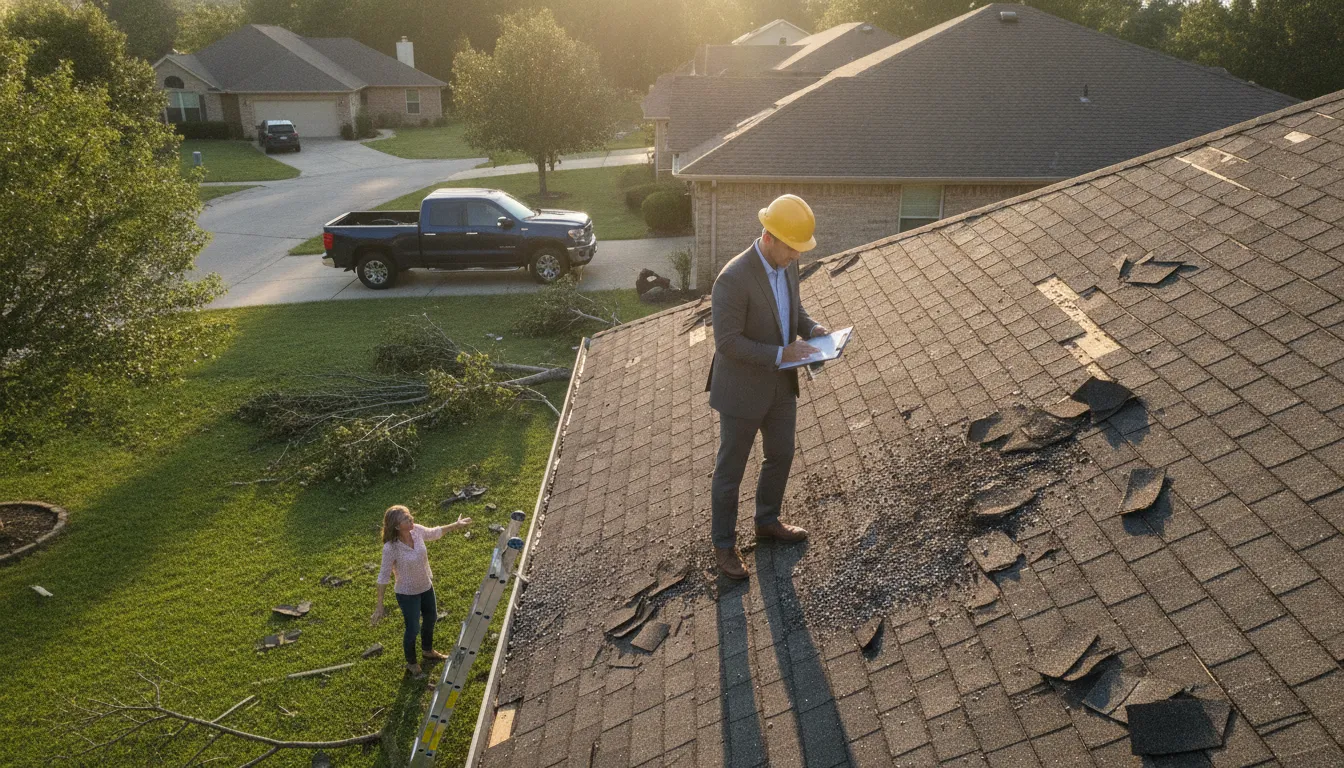
Photograph the roof and every visible sign of storm damage before moving debris, removing materials, or beginning repairs. Capture wide images that show the overall roof and close-ups of lifted shingles, punctures, dents, exposed underlayment, damaged flashing, interior stains, and water intrusion. Photograph affected equipment, inventory, ceilings, walls, and flooring inside the property as well. Add the date, location, and a short description to your claim file while the condition is still easy to establish. The Texas Department of Insurance advises taking pictures before doing any work.
-
Make Only Temporary Repairs
Protect the property from additional damage, but avoid turning an emergency response into a permanent repair before the carrier has an opportunity to inspect. A temporary tarp, board-up, or other reasonable measure may help prevent further water intrusion. Keep every receipt, work order, photograph, and contractor note connected to that work. Do not replace the roof or remove damaged materials. Do not authorize permanent repairs until you have contacted the insurance company and preserved the evidence it may need to evaluate the loss. TDI states that temporary repairs are generally acceptable, while permanent repairs should wait until you have talked to your insurer.
-
Get a Professional Roof Inspection
Arrange an inspection by a qualified roofing professional who can identify storm-related damage that may not be visible from the ground. Ask for a written report that distinguishes hail or wind impact from age, wear, and pre-existing conditions. A professional inspection can also document damaged components, explain how water entered the building, and identify related interior or structural effects. TDI recommends hiring a roof inspector periodically to find problems before they become major damage. For a claim, an inspection performed promptly after the storm is especially useful because weather and subsequent repairs can obscure the original condition.
-
Preserve Repair and Payment Records
Keep the inspection report, estimates, invoices, photographs, correspondence, adjuster reports, and proof of completed work together. This documentation matters when the insurer issues an initial payment based on Actual Cash Value, or ACV. For many claims, the remaining Replacement Cost Value, or RCV, is released only after repairs begin or are completed and the policyholder provides proof. TDI explains that the first check may reflect ACV, with the balance paid after repair documentation is submitted. Review the payment carefully, follow the policy’s deadlines, and ask questions before signing a release or accepting a payment as full resolution.
Why Roof Damage Insurance Claims Get Denied or Underpaid
A roof claim may be denied or valued below the cost of a proper repair for several different reasons. The dispute often turns on whether the policy covers the cause of damage. Whether the evidence connects the damage to a covered storm, and whether the insurer’s valuation accounts for the full scope of work.
Wear and tear is different from covered storm damage
Texas insurers generally do not have to pay for a roof replacement solely because the roof is old or worn out. The damage must result from a covered event, such as wind or hail, rather than ordinary deterioration. The Texas Department of Insurance advises that an old roof, by itself, is not a reason for the insurer to pay for a new one. However, an insurer may still need to evaluate whether a recent hail or wind event caused distinct damage to the roof.
That distinction can become difficult when a roof has both age-related deterioration and storm damage. An insurer may attribute all of the observed condition to wear and tear, while the policyholder believes the covered event caused substantial additional damage. Photographs, inspection findings, repair records, weather information, and the policy language can help clarify the cause.
Missing documentation can weaken the claim
Failure to document the roof before repairs is another common problem. Take photographs of the damage before doing any work, as recommended by the Texas Department of Insurance. Temporary repairs may be appropriate to protect the property, but permanent repairs should generally wait until the policyholder has spoken with the insurance company. Without clear evidence of the roof’s condition, the timing and extent of damage may be harder to establish.
Texas frequently leads the nation in hail events, so property owners may face recurring storms and multiple possible sources of damage. A professional inspection can help distinguish storm damage from maintenance issues and provide a more reliable basis for evaluating the claim.
Deductibles and low valuations can produce an underpayment
Even when an insurer accepts some coverage, the payment may not reflect the policyholder’s actual recovery. Wind and hail deductibles may be structured differently from other property deductibles, potentially increasing out-of-pocket costs after a storm. Review the policy and ask how the applicable deductible is calculated before assuming the initial payment is the amount available for repairs.
Underpayments can also result from a narrow scope of damage, omitted repairs, depreciation, or a low appraisal of the work. A partial payment does not necessarily resolve the dispute. For commercial property owners, the first payment may be based on Actual Cash Value, with additional Replacement Cost Value released after repairs and proof of repair. If the insurer’s scope or valuation is materially below the cost of restoring the roof, the policyholder should examine the estimate, policy provisions, and supporting inspection evidence.
When a claim is denied or underpaid, a property insurance lawyer can assess the policy language. Challenge unsupported causation conclusions, and advocate for the policyholder in the coverage dispute. This is especially important when the amount at stake is significant or the insurer relies on a low appraisal. Also review the deadlines for roof damage claims before waiting to pursue a dispute.
Texas Roof Coverage: Deductibles, ACV, and Replacement Cost
Understanding how a policy values roof damage can prevent an unpleasant surprise after a Texas storm. The payment may arrive in stages, and the deductible may be different from the amount that applies to other property damage. Coverage also depends on the cause of the loss, not simply the roof’s age.
Replacement Cost vs. Actual Cash Value
Actual Cash Value (ACV) generally reflects the roof’s replacement cost minus depreciation. Replacement Cost Value (RCV) is the amount needed to repair or replace covered damage, subject to the policy’s terms and limits. For many claims, the insurer issues the initial check on an ACV basis. After repairs begin and the policyholder provides proof of repair, the insurer may release the remaining amount needed to reach the covered RCV.
This is often described as a two-check process. First, review the insurer’s estimate and confirm what damage, depreciation, and deductible were used to calculate the ACV payment. Second, preserve contracts, invoices, receipts, photographs, and other proof showing that covered repairs were completed. The carrier’s deadline and documentation requirements matter, so the policyholder should not assume the second payment is automatic.
| Payment basis | When it is commonly paid | What the policyholder should verify |
|---|---|---|
| Actual Cash Value (ACV) | First payment, before repairs are completed | Depreciation, covered scope, limits, and deductible |
| Replacement Cost Value (RCV) | Remaining payment after repair proof is submitted | Eligible repair costs and the policy’s submission deadline |
Deductibles and the Cause of Damage
Wind and hail deductibles may be structured differently from other property deductibles. The Texas Department of Insurance advises policyholders to ask whether a separate wind or hail deductible applies, because it can increase out-of-pocket costs after a storm. Review whether the deductible is a flat dollar amount or a percentage, and determine how it applies to the covered loss.
A policy does not ordinarily pay to replace a roof solely because it is old or worn. The covered event, such as wind or hail, must cause the damage. Maintenance also matters: keeping gutters clean and removing tree limbs near the roof can help prevent damage and disputes over whether poor maintenance contributed to the loss. For the state’s consumer guidance on ACV, RCV, deductibles, and roof condition, see the Texas Department of Insurance storm-damage FAQ and its roof replacement guidance.
How a Property Insurance Lawyer Handles a Denied Roof Claim
A denied roof claim is not necessarily the end of the process. A property insurance lawyer first examines the policy, claim file, photographs, inspection reports, estimates, and denial letter to determine whether the carrier applied the policy language correctly. That review can clarify whether the dispute concerns a covered peril, excluded wear and tear, the scope of damage, the deductible, or the amount owed.
Reviewing coverage and building the claim record
The lawyer compares the carrier’s position with the policy’s definitions, exclusions, conditions, and endorsements. The evidence may include weather information, roof age and maintenance records, expert inspections, repair estimates, and communications with the insurer. Texas guidance explains that a carrier does not owe for a roof replacement merely because a roof is old or worn out. Wind or hail damage, however, may present a different coverage question. A careful review separates preexisting wear from damage that may have resulted from a covered storm.
Because coverage disputes often turn on precise policy language, the lawyer can identify what additional documentation is needed and communicate a supported demand to the insurer. Hoch Law Firm represents policyholders only, never insurance companies, so its analysis is directed toward protecting the insured’s interests.
Choosing appraisal, negotiation, or litigation
If the disagreement is primarily about the amount of covered damage, appraisal may be an option under the policy. Appraisal is different from a lawsuit and may address valuation rather than every legal question in the dispute. Learn more about litigation for roof insurance claims and how it compares with appraisal.
In other cases, counsel negotiates with the carrier using the policy, expert findings, and a documented estimate. If the insurer maintains an unsupported denial, undervalues covered damage, or mishandles the claim, the lawyer may evaluate potential bad-faith issues and whether litigation is appropriate. The available path depends on the policy, evidence, deadlines, and claim history. No attorney can guarantee a particular result.
Making legal help accessible
Tim Hoch founded Hoch Law Firm and is Board Certified in Personal Injury Trial Law. The firm works on a contingent fee basis, meaning clients pay nothing unless the firm achieves a recovery. If you need to hire an insurance lawyer, a focused review can help determine the next step for your denied roof claim.
Reach Hoch Law Firm for a free roof claim consultation before the deadline passes.
Frequently Asked Questions
How do I prove my roof damage claim in Texas?
Photograph the roof and related interior or exterior damage before making repairs. Preserve damaged materials when practical, keep repair estimates and receipts, and request a professional inspection. Texas Department of Insurance guidance also recommends documenting damage before work begins and using temporary repairs to protect the property while you discuss permanent repairs with the insurer. Texas Department of Insurance guidance supports these steps.
When should I hire a roof damage insurance lawyer?
Consider legal counsel when the insurer denies the claim, offers substantially less than the documented damage, delays a decision, or disputes whether the policy covers the loss. A lawyer can analyze the policy, challenge the insurer’s damage assessment, and protect your position in a coverage dispute. Results depend on the policy language and facts of the loss.
What documentation is needed for a roof insurance claim?
Keep dated photographs, inspection reports, contractor estimates, invoices, receipts for temporary repairs, weather information, prior maintenance records, and every letter or email exchanged with the insurer. Organize the records by date and keep copies of all materials you submit. A clear file helps compare the claimed damage with the insurer’s estimate.
Will insurance cover wear and tear on my roof?
Generally, a policy does not pay to replace a roof solely because it is old or worn out. Coverage usually turns on whether a covered event, such as wind or hail, caused sudden damage. The policy’s exclusions, deductible, roof condition, and evidence of the storm event all matter. Texas Department of Insurance guidance explains that age alone is not a basis for replacement coverage.
Ready to Discuss Your Texas Roof Damage Claim?
Roof damage claims can involve disputed cause, incomplete documentation, or disagreements about the amount needed for repairs. A focused review of your claim materials can help clarify the next step and protect your position as a policyholder. Call Hoch Law Firm today for a free consultation about your Texas roof damage claim at 817-731-9703.