An Uber crash in Fort Worth is rarely a one-policy auto claim. The app status at the moment of impact can change which insurer answers, which records matter, and how fast those records disappear. An Uber accident lawyer Fort Worth can sort that local file before a recorded statement locks in the wrong version.
Call Hoch Law Firm about your Fort Worth Uber claim at 817-731-9703.
This guide stays on the Fort Worth claim: app status, local evidence, Tarrant County venue, and the Texas filing deadline. The statewide explanation of how rideshare claims work lives on the Texas Uber accident guide. Use that page for the broader process, and use this one for the local file.
What Should You Confirm After a Fort Worth Uber Crash?
Start with the ride, not the argument about fault. A digitally prearranged ride is different from a driver who only had the app open, and both are different from a personal trip. Texas law ties required coverage to those periods. Getting the period wrong can send the claim to a personal auto policy that never applied.
Save the trip screen before you close the app. Photograph the pickup or drop-off address, the time, the driver name, the vehicle, and any in-app message about the crash. If you were the other driver, a passenger, or a person on foot, write down the license plate and whether a phone mount or rideshare sticker was visible.
Then get medical care and ask for the crash report number. Fort Worth police, a Tarrant County precinct, or the Texas Department of Public Safety may hold that report, depending on where the crash happened. Do not treat the first adjuster call as the time to explain the whole trip. You can report that people were hurt and that you are getting records.
- Photograph vehicles, the street, signals, and visible injuries before the scene is cleared.
- Save the Uber trip receipt, driver details, and any in-app crash report.
- Get names of passengers and nearby witnesses, plus a way to reach them.
- Request the crash report number and keep every medical discharge paper.
- Call counsel before a recorded statement if coverage or fault is already in dispute.
Which App Status Changes the Fort Worth Claim?
Texas Insurance Code Chapter 1954 sets the minimum auto coverage for a transportation network company driver. The driver or the company, or both together, must keep primary coverage while the driver is logged on and while a prearranged ride is underway. A personal auto policy often excludes app driving, so the company policy may be the one that actually applies.
The amounts are not the same in every period. Between ride requests, while the driver is logged on and waiting, the floor is lower. It is $50,000 per person and $100,000 per incident for bodily injury or death, plus $25,000 for property damage. During a prearranged ride, the floor is a $1 million aggregate limit for death, bodily injury, and property damage for each incident. Those figures are minimums in Insurance Code sections 1954.052 and 1954.053. They are not a promise of what any claim will pay.
Uninsured or underinsured motorist coverage and personal injury protection are also required where those Texas auto rules require them. A Fort Worth file should still identify every real policy: the rideshare company, the driver, another at-fault driver, and a passenger’s own auto policy if it applies. The Texas Department of Insurance ride-sharing guide warns that many personal policies do not cover app driving and that the company must disclose its coverage and limits.
| Driver status at impact | What the Fort Worth file should capture | Coverage question to answer |
|---|---|---|
| App off, on a personal trip | No active trip receipt. Keep the crash report and the driver insurance card. | Does a personal auto policy apply instead of a rideshare policy? |
| Logged on and waiting for a request | Save a screenshot showing the driver was available, with the time and location. | Do the between-ride minimums apply instead of the $1 million ride limit? |
| Prearranged ride in progress | Keep the trip receipt from acceptance through the last rider’s exit. | Is the $1 million per-incident aggregate the operative floor? |
| Passenger, other driver, or person on foot | Record the plate, vehicle, app clues, and independent witness names. | Which of several policies is primary for that person’s injuries? |
Do not rebuild the statewide insurance lecture here. Once the period is known, the practical Fort Worth question is which insurer must answer and which local records prove that period.
Write the status down the same day. Note whether a rider was in the vehicle, whether the driver had accepted the trip, and whether the app showed the driver as available. If you only remember a logo on the windshield, say that. A later guess is weaker than a same-day note that admits what you do not know.
Passengers should also save the payment screen and any rating or support chat. Other drivers should save dash-camera clips before the card overwrites them. People on foot should note the crosswalk, the signal, and the direction the vehicle was heading. Those facts decide which row in the table fits the crash.
What Local Evidence Should an Uber Accident Lawyer Fort Worth Preserve?
Rideshare evidence moves faster than a typical two-vehicle file. Trip data, driver GPS, and in-app messages can be limited by the company’s retention settings. Ask early for the trip receipt and for preservation of driver status, route, and communications. A lawyer can send a preservation letter. A passenger usually cannot force that retention alone.
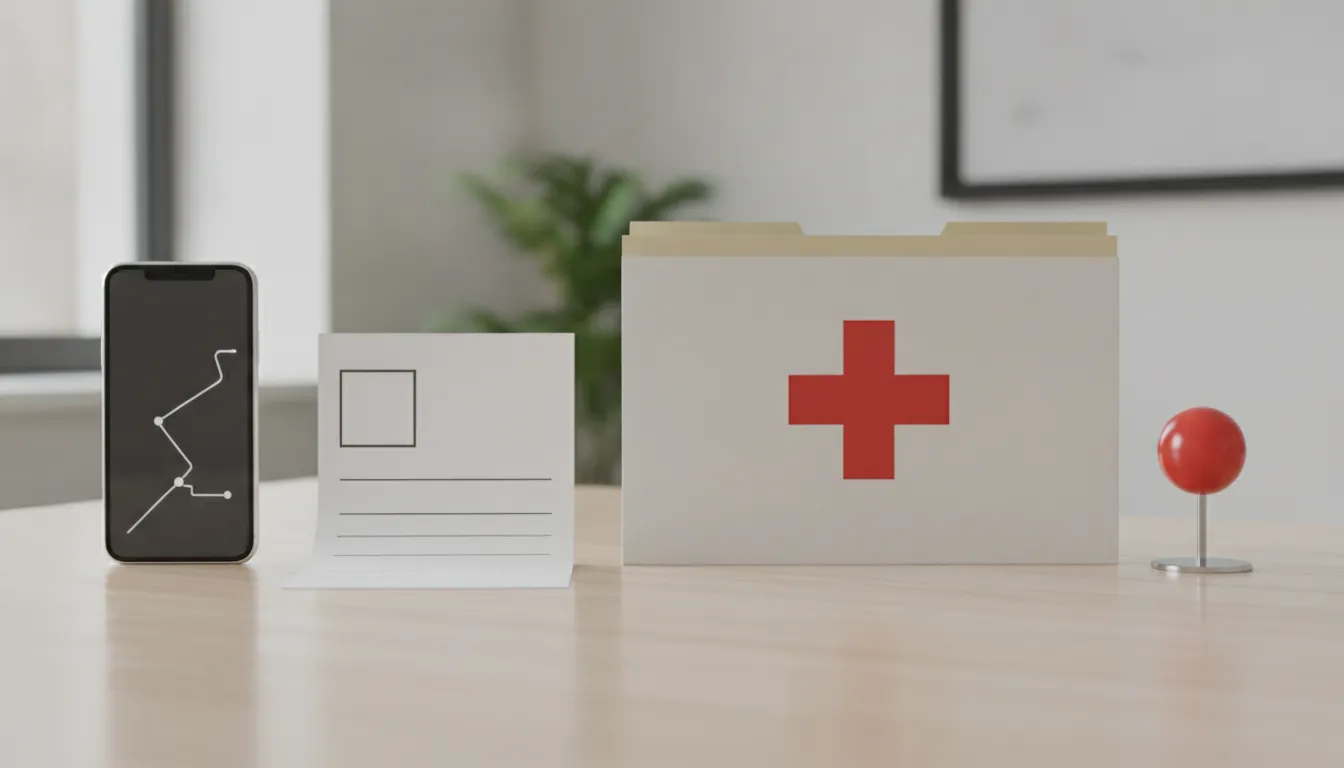
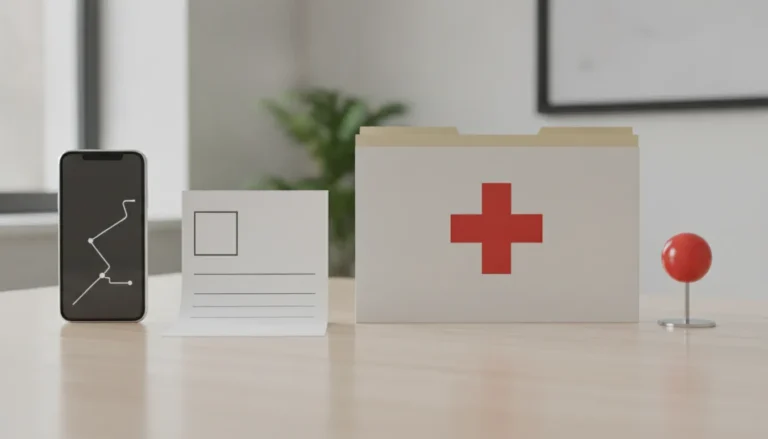
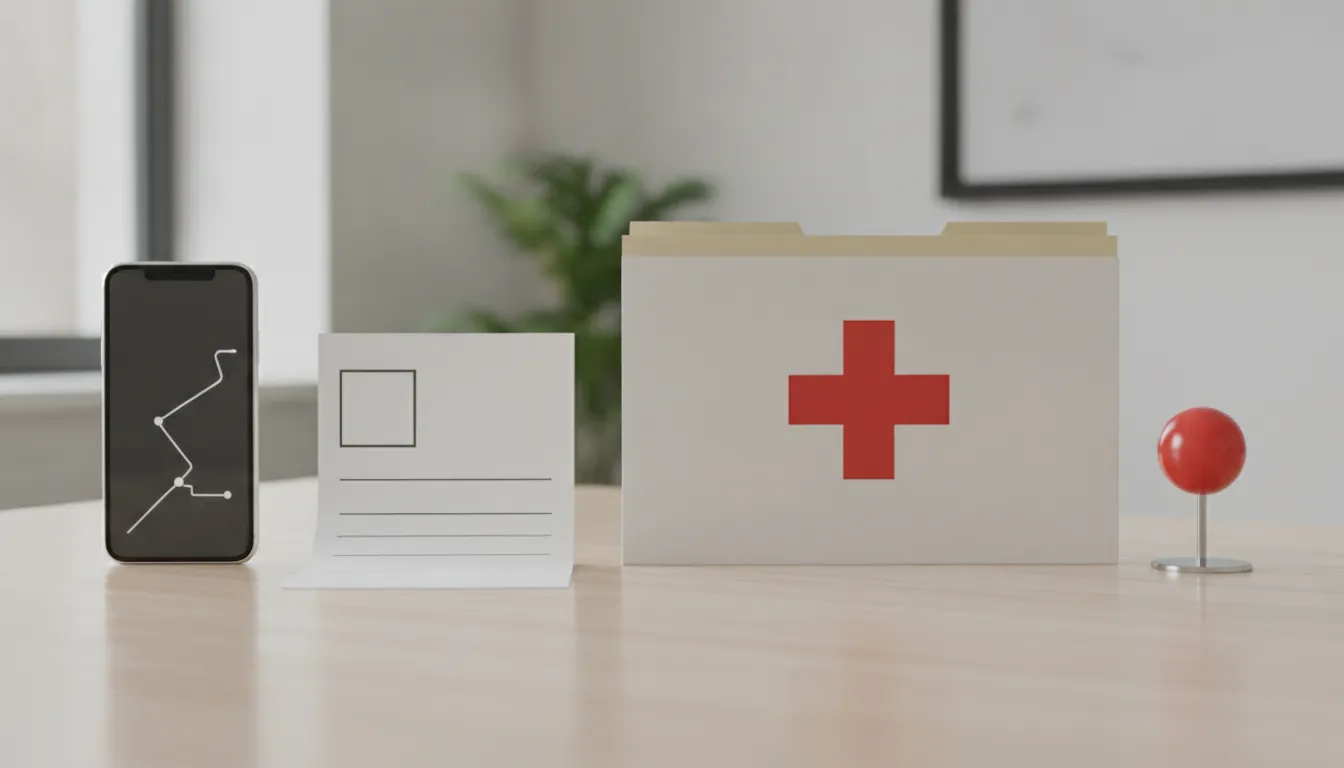
The image above is a working list, not a mood shot. From left to right it stands for the trip route on the phone, the written crash report, the medical folder, and the location pin. Keep each of those four items before you talk fault with an adjuster.
Match the digital record to the street. Keep photos of the signal, lane, and sight line at the crash location. If the impact happened at a Fort Worth intersection, use the Fort Worth intersection evidence guide for right-of-way facts. Do not copy that article into this one. If someone on foot was hit, start with the pedestrian claim overview and bring those facts back to the rideshare file.
Medical records should track the injury, not just the first urgent-care visit. Serious harm, including fractures, head injury, or burns, may need the broader serious injury overview so the claim does not stop at the emergency bill. Keep wage records, ride receipts showing missed work, and a short daily note of limits. Those papers are what a Tarrant County adjuster or jury can actually test.
Ask the body shop or tow yard not to discard the vehicle until photos of every corner are saved. If a nearby business or apartment camera faces the block, request that clip within days, not months. Fort Worth corridors such as Camp Bowie Boulevard, Interstate 35W, and the streets around the cultural district have different sight lines. The useful photo is the one that shows what the driver could see, not a generic skyline.
Keep a single folder for the claim. Put the trip receipt, the crash-report number, insurance cards, and medical papers in it. When a new bill arrives, add the date of service and the provider name. Scattered screenshots are easy to lose when more than one insurer calls.
When Should an Uber Accident Lawyer Fort Worth Review Venue?
Many Fort Worth rideshare claims settle without a lawsuit. If a suit is necessary, venue is a local decision, not a detail to copy from a Dallas practice page. Texas venue rules generally allow a personal-injury suit in the county where the crash occurred or where a defendant resides, among other grounds. For a crash in Fort Worth, that often points to Tarrant County.
Larger Tarrant County civil cases are heard in district court at the Tom Vandergriff Civil Courts Building, 100 North Calhoun Street, Fort Worth. Smaller cases may stay in a justice or county court, depending on the amount and the claims. The county lists its district courts on its district court directory. Those courts include the 17th, 48th, 67th, 96th, 141st, 153rd, 236th, 342nd, 348th, and 352nd. Which court receives a filing depends on local assignment. A blog cannot pick the court.
Filing in the right county does not decide fault. Texas comparative responsibility still asks whether the injured person was also negligent and, if so, by what percentage. A Fort Worth consultation should separate that fault question from the coverage question. The Dallas hub at Dallas rideshare and collision claims is a different page for a different city. It does not set Tarrant County venue.
Bring a map pin or a cross street to the review. A crash on a Fort Worth freeway, a city street, or a private lot can change which agency wrote the report. If a defendant lives outside Tarrant County, say so. Venue can sometimes be proper in more than one county, and the choice should be made from the statutes and the facts, not from a web headline.
Also list every person who may be a claimant. A passenger and a driver in the other vehicle can both be hurt, and their insurers are not always the same. Children and spouses may have separate claims. Naming them early keeps the Fort Worth filing from leaving someone out.
How Long Do You Have to File in Texas?
Texas Civil Practice and Remedies Code section 16.003 generally gives two years to file a personal-injury suit, measured from the day the claim accrues. A wrongful-death suit also has a two-year period, measured from the death. Waiting for an insurer to finish a review does not pause that clock.
Two exceptions matter in a Fort Worth rideshare file, and neither is a reason to wait. If the injured person was under 18, or of unsound mind, when the claim accrued, section 16.001 excludes that disability time from the limitations period. A disability that starts later does not stop a clock that has already begun. Death claims and claims by a child should be calendared on their own facts.
The practical deadline is earlier than the lawsuit deadline. Body-shop video, app data, and witness memory fade within weeks. Medical gaps are used to argue that the crash did not cause the pain. Call while the trip receipt, the crash report, and the first treatment records still exist.
Put the crash date on a calendar and count two years forward. Then mark an earlier date for records. A reasonable working target is the first 30 days for the report, the trip data, and the first round of medical papers. If surgery or specialist care is already scheduled, note that date too. An insurer review can run past it.
Do not sign a broad release just to get a vehicle out of a tow yard. Read what the paper waives. A form that releases injury claims is different from a form that lets a shop start repairs. If the wording is unclear, ask before you sign.
Speak with Hoch Law Firm about your Fort Worth Uber claim at 817-731-9703.
What Does a Fort Worth Consultation Cover?
Tim Hoch is Board Certified in Personal Injury Trial Law by the Texas Board of Legal Specialization. A consultation is a review of your facts, not a promise of a result. Bring the trip receipt, photos, the crash report number, insurance cards, and medical papers you already have.
Expect five questions. What was the driver doing in the app at impact? Who was hurt, and where did treatment start? Which insurers have already called? Where in Fort Worth or Tarrant County did the crash happen? What deadline is closest, the two-year lawsuit date or a record that is about to disappear?
Counsel can then decide whether to send preservation letters, request the report, and notify the right insurer. You can read more about Tim Hoch before that call. If injuries are severe, say so at the start so the review includes future care, not only the first bill.
The call is also the place to sort what not to do. Do not post the crash on social media. Do not guess at speed or fault in a text to the driver. Do not ignore a letter that sets a short reply date. Bring that letter to the review so the response matches the Fort Worth facts you can actually prove.
Hoch Law Firm answers at 817-731-9703. The consultation reviews the facts you bring. If the firm takes the injury claim, the fee terms are explained before you hire counsel. Nothing on this page is a promise that a claim has a certain value or that a suit will be filed.
Frequently Asked Questions
Can I bring a Fort Worth Uber claim if I was a passenger?
Yes. Passengers are often the people with the most direct trip record. Your claim can involve the rideshare policy, the driver, and another motorist, depending on app status and fault. Save the receipt and get medical care before you give a recorded statement.
Does a Dallas Uber page cover my Fort Worth crash?
No. A Dallas practice page does not decide Tarrant County venue, local crash reports, or which Fort Worth records to request. Use the statewide guide for the general Texas process, and use a Fort Worth review for the local file.
What if the driver says the app was off?
App status is a fact, not a label the driver gets to choose after the crash. Trip receipts, GPS, messages, and witness observations can test that claim. Ask that those records be preserved before they age out.
How much does Uber pay for a Fort Worth accident?
There is no set payment. Texas law sets minimum coverage, including a $1 million aggregate floor during a prearranged ride, but payment depends on fault, injuries, policy language, and other available insurance. A consultation can identify the sources. It cannot quote a result.
When should I call a lawyer?
Call when an insurer wants a statement, when medical care is ongoing, or when you are unsure whether the driver was on a trip. Earlier is better if app data or intersection video may be lost. Hoch Law Firm can review the Fort Worth facts at 817-731-9703.