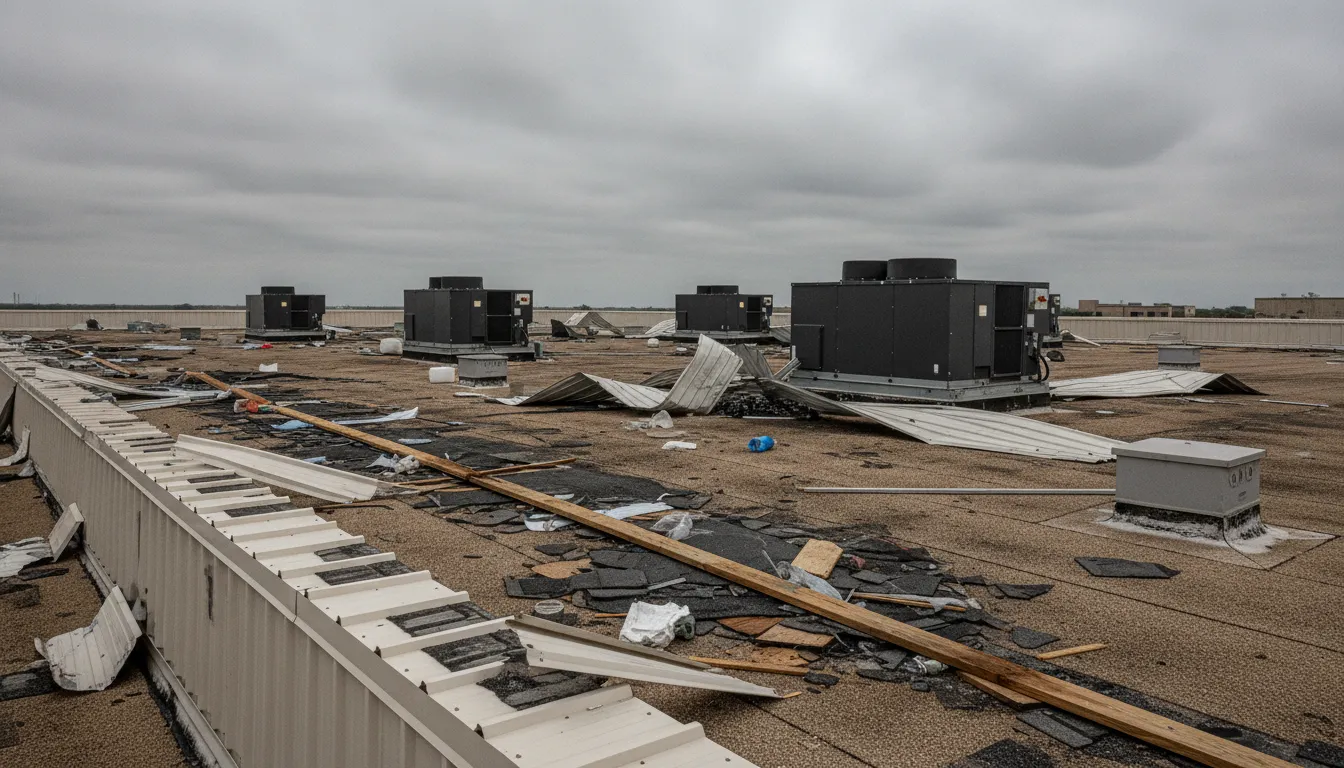
A single Texas windstorm can rip shingles from a business roof and leave assets exposed to the weather. These events lead to costly delays when insurers slow-walk the recovery process.
A wind damage to roof insurance claim is a formal request for your carrier to pay for repairs after a storm. This process begins with an inspection to find proof of lifted shingles or structural shifts that allow water to enter the building. Because Texas has frequent storms, insurers often try to reduce payouts by blaming the damage on the age of the roof. You must provide photos, repair bids, and the exact policy parts that cover the loss to get a fair result. If your carrier denies the case or offers too little, you have the right to appeal the choice. Working with a law firm helps you skip the stress of fighting a large carrier alone while you focus on running your business.
Handling the insurance system needs a firm grasp of both your policy terms and the actual loss to your building. Following the right steps from the start helps you prepare for the advice in Wind damage to roof insurance claim: first steps. Your path to recovery starts with
Wind Damage To Roof Insurance Claim: What does wind damage look like on a commercial roof?
Wind damage to a commercial roof is not always easy to see from the ground. In Texas, high winds can hit a building with enough force to lift parts of the roof or move heavy gear on top. This leads to a storm damage insurance claim that may be hard to prove without a close look. You must know what signs to check for to protect your property and your business from leaks and water loss.
Visible signs on the roof surface
The most common sign of wind damage is a loose or torn roof cover. On flat roofs, the wind can get under the edge and pull the cover away from the deck. This is called wind uplift. You might see parts of the cover that look like they are bubbling or lifting up. If the wind is strong enough, it can tear the cover at the seams or the edges where it is held down. You should look for small tears or holes that might seem minor but can let in a lot of water over time.
Metal parts like flashing and trim are also at risk. These pieces keep water out of the most weak spots of the roof. If they are bent, loose, or missing, the roof can no longer do its job. Texas leads the nation in wind events which puts a lot of stress on these parts of a building. Check the corners and the edges of the roof first. These areas often take the most hit from high gusts.
Hidden damage and interior signs
Not all damage is on the outside. Some wind damage is hidden from view but still causes big problems. Strong winds can shake or move rooftop gear like fans and AC units. This can crack the base of the gear or pull on the roof cover where it meets the unit. Even if the gear still works, the seal around it may be broken. This creates a path for rain to enter the building. It may not show up as a leak right away.
Inside the building, look for water stains on the ceiling or walls. These stains often show that the roof cover has failed. You should also check for a sudden rise in humidity or a musty smell in the attic or top floor. These are signs of slow leaks that could lead to mold or rot. State reports show that insurance claims for these types of losses can be very complex. You may need a professional look to find the exact spot where the wind hurt the roof.
The need for a professional look
Proving a wind damage to roof insurance claim requires good proof. A pro can find small issues that a building owner might miss. They will check the seams, the gear, and the edges for signs of lift or stress. This is vital to show that the damage came from a storm and not just old age. Having a full report makes it much easier to talk to your insurance company and get the funds you need to fix the roof.
How to document a commercial roof wind claim
Strong proof is the core of any wind damage to roof insurance claim. You must show that a specific storm caused the harm. Insurance firms often try to blame old age or lack of care. To avoid a denial, you need to build a clear record of the event and your losses.
Capture visual proof after the storm
Start by taking photos of all damage from the ground and the roof. Look for missing tiles, torn metal, or loose parts. Do not forget to check the inside of your building. Water spots on the ceiling are often the first sign of a leak.
Clear, dated images help you lawyer for a wind damage claim and prove when the harm happened. Take videos to show the full scale of the issue. Walk through every room to find new leaks or cracks.
If you can safely reach the roof, take close-up shots of lifted edges. This visual data makes it hard for the firm to say the damage was already there. Keep all files in a safe digital folder for your team.
Gather weather and repair data
You need to link the damage to a specific date and time. Get local weather reports that show high wind speeds on the day of the storm. The Texas Department of Insurance tracks how these storms affect the market. Using this data adds weight to your case and supports your timeline of events.
Collect old repair bills to show the roof was in good shape before the wind. A history of steady care proves you did not ignore the building. Expert checks can help split storm damage from normal wear.
If you had a check-up lately, find that report to show the roof was strong. This record protects you if the firm claims the roof was too old to cover. Having proof of upkeep makes it hard for the firm to deny your claim based on age.
Track money and work losses
Wind damage can stop your business from running. Keep a list of all lost gear or stock. Save every invoice for quick fixes like tarps or plywood. These costs are part of your claim.
You must act fast to stop more damage, and the insurer should pay for these quick repairs. Do not wait for an adjuster to arrive before you shield your property from rain or debris. Track any days you had to close or move work.
Record how much money the business lost while the roof was being fixed. Keep a log of all calls and emails with your insurance agent. Write down the names of people you talk to and the dates of those chats.
Detailed logs of lost income and talks help you get a full payout. Having all these facts ready will make the process much smoother for your legal team. This step is vital to recover all the money your firm needs to thrive again.
Commercial policy terms that can change the outcome
For a business owner, the details of a property policy often stay hidden until a storm hits. In Texas, where extreme weather is common, these terms dictate the success of a storm damage insurance claim. Knowing how insurers define coverage can mean the difference between a full roof replacement and a denied file.
Replacement cost versus actual cash value
The method used to value your roof is a major factor in your recovery. A policy with replacement cost value (RCV) helps pay to fix or replace the roof with new materials of like kind and quality. This does not factor in the age of the roof or its prior state. It is often the best choice for protecting the long-term value of a commercial building.
In contrast, actual cash value (ACV) policies only pay for the worth of the roof at the time of the loss. The insurer will subtract for age and wear. For an older commercial roof, an ACV payout might not cover even half of the cost of a new system. Property owners should review their paperwork to see which rule applies before a wind damage to roof insurance claim arises.
Wind and hail deductibles in Texas
Many commercial policies in Texas use separate deductibles for specific types of storms. While a fire or theft claim might have a flat dollar amount, a wind and hail deductible is often a part of the building’s total insured value. For a large office park or warehouse, a 2% or 3% cost can create a high out-of-pocket bill for the owner.
Business owners must also watch for “cosmetic damage” rules. Some insurers try to deny claims if the wind or hail only changed the look of the roof but did not cause a leak. However, even surface damage can shorten the life of a roof or lead to future breaks. When a claim is complex, you may need to hire an attorney for wind damage to ensure the insurer follows the policy terms.
Common commercial insurance policy terms
| Policy Term | What it Means | Impact on Your Claim |
|---|---|---|
| Replacement Cost | Pays for new materials. | Higher payout that covers the full cost of a new roof. |
| Actual Cash Value | Pays for old value. | Lower payout that factors in the age of the roof. |
| Code Upgrades | Covers costs for laws. | Helps pay for needed safety or energy changes. |
| Business Loss | Covers lost income. | Provides funds if the damage stops your work. |
| Matching Clause | Covers matching parts. | Ensures the entire roof looks the same after a fix. |
Business loss and extra expense
A damaged roof can do more than just hurt the building. It can stop a business from working. Many commercial policies include loss of income coverage. This helps pay for lost profit while the building is being fixed. It may also cover extra costs, such as the price to rent a temporary space or move items to a safe spot.
Proving these losses needs clear records. You must show how the storm damage led to the loss of money. Because these claims are hard, insurers often look for ways to limit the payout. If you face a delay, getting contingent-fee representation can help you fight for the full value of your policy without paying upfront legal costs.
Why are roof wind damage claims denied or underpaid?
Many business owners think a wind damage to roof insurance claim is simple. They expect the insurer to pay for repairs or a new roof after a storm. However, many owners in Texas find that their claims are denied or underpaid. Insurers often look for ways to limit their risk or avoid paying large sums. Knowing why these denials happen can help you build a stronger case.
The “wear and tear” argument
The most common reason for a claim denial is wear and tear. Insurers often claim the roof was in bad shape before the wind hit. They may argue that shingles are missing because they were old, not because of the storm. Insurers use this logic to shift the blame from the weather to the owner. This tactic is common because Texas insurance market data shows high risks for wind and hail damage across the state.
To avoid this, you should keep records of your roof care. If you can prove the roof was in good health before the storm, the “old age” excuse is harder to use. Expert checks and photos taken each year are great tools. They show that the damage is new and linked to the recent high winds.
Late notice and poor proof
One more big hurdle is late notice. Most policies require you to report damage within a set time. If you wait too long, the insurer might say you made the damage worse by not acting fast. They may also claim they can no longer see the true cause of the loss. This is why you must check your roof right after any major wind event in Texas.
A lack of proof also leads to low payouts. Insurers may offer a sum that only covers a small patch job when the whole roof needs work. They might miss leaks inside the building or hidden frame issues. If you feel the offer is too low, you may need to hire an attorney for wind damage to review the adjuster’s notes. Having an expert on your side helps ensure all damage is found and valued well.
When the insurer says no
Getting a denial letter can be a shock, but it is not the end of the road. You have several ways to challenge the insurance firm. You can ask for a second check by a different adjuster. Many policies also include an appraisal clause. This lets a neutral third party help settle a dispute over the cost of the damage. This process can be faster than going to court.
If the insurer still refuses to pay a fair amount, litigation may be needed. Sometimes, insurance firms act in bad faith by missing clear proof of damage. In these cases, a law firm can help you file a lawsuit to get the money you are owed. Tim Hoch and his team work on a contingent fee basis. This means you only pay if you recover money from the case.
This lets you fight for your rights without paying high costs up front. Proving a storm damage insurance claim requires a firm hand and deep knowledge of the law. We use our 36 years of work to help Texas owners get the recovery they deserve.
What should a Texas business do after a denial or underpayment?
Texas leads the nation in wind and hail events that damage large buildings. These storms often lead to a wind damage to roof insurance claim to fix or replace a roof. But many business owners face a hard road when they file. Insurance companies often deny these claims or offer much less than the repair cost. A business owner must take clear steps to fight back and get the money they need.
A denial is not the final word on your claim. You have the right to fight the choice made by the insurance company. Many companies look for any reason to pay less. They may blame the damage on the age of the building or poor care. You must stay calm and follow a clear plan to show the truth about the storm damage.
Review your denial letter and policy
First, you must read the letter from your insurance company with care. This letter should tell you why they denied your wind damage to roof insurance claim. It may say the wind was not strong enough. Or it may claim the damage was there before the storm. Compare these reasons with the text in your insurance policy. You need to see if the company is keeping to the rules they set.
Insurers in Texas manage complex risks that change how they handle claims. These market factors often lead to more denials for property owners. The Texas Department of Insurance tracks how these risks affect the local market. Knowing that insurers are under pressure can help you see why they might underpay. You must be ready to point out any errors in their logic or their math.
Gather expert proof of damage
Next, you need to get your own proof from a third party. Do not rely only on the person the insurance company sent. Hire a local roof expert who knows about wind damage. They should do a full check of the roof deck and the shingles. A good expert can tell if a storm or old age caused the loss. Their report will be a key tool in your fight for a fair payment.
Make sure to take many photos of the damage as soon as you can. Look for signs of a leak inside like stains on the ceiling. You should also keep all records of past roof care. These files prove that the roof was in good shape before the wind hit. Having a strong file of facts makes it much harder for the insurer to deny the truth. It shows you are serious about your claim.
Consult with a property insurance lawyer
If the company still will not pay what they owe, you should hire an attorney for wind damage. A lawyer who knows about property law can spot bad faith. They know how to read the fine print that companies use to hide behind. A lawyer will talk to the insurance team for you. This takes the stress off your team so you can run your business.
Most property owners can use contingent-fee representation for these cases. With this plan, you do not pay any legal fees upfront. The firm only gets paid if they win money for your claim. This aligns your goals with the goals of the lawyer. It gives you a way to stand up to a big insurance company without a large cost. A lawyer can help you win the full amount needed for your roof.
When should you speak with a policyholder attorney?
Filing a wind damage to roof insurance claim can be simple, but many cases become hard to solve. Insurance companies often look for ways to pay less than what a repair costs. You may need a lawyer when you face a slow process or a full denial. Texas leads the nation in storm events, which puts a lot of pressure on the private insurance market in the state. If your insurer stops giving you clear answers, it is time to seek help from a legal expert.
Signs of a hard claim process
One major sign you need help is when the insurer blames the damage on old age instead of the storm. This is called a causation dispute. They might say your roof was already weak before the wind hit it. A lawyer can help you find experts to prove the storm caused the new harm. You should also watch for long delays in the claim. If weeks go by without a word, your rights could be at risk. It is best to hire an attorney for wind damage when the company fails to act fast.
You may need legal help if you face these issues:
- The insurer gives you a mixed or confusing reason for the denial.
- There is a major gap between your repair bids and the insurer’s low offer.
- The company asks you to sit for a formal examination under oath.
- You are close to the legal deadline to file a lawsuit in Texas.
The examination under oath is a formal meeting where you must answer questions while under a legal vow to tell the truth. These meetings can be tricky and may lead to a claim denial if you misspeak. A policyholder lawyer can guide you through this step and protect your interests. They ensure the insurer stays within the rules of your policy and the law.
Managing business and legal risks
For business owners, a wind storm can stop your work and cost you a lot of money. Business interruption claims are very complex and hard to prove without help. You must show how much money you lost while your doors were shut. If you see a big scope dispute where the insurer misses whole sections of damage, a lawyer can step in. They handle the hard talks so you can focus on running your firm again. Timely action is also key because Texas law sets strict deadlines to file a lawsuit.
The benefit of Board Certified counsel
Choosing the right law firm matters a lot in your case. At Hoch Law Firm, you work straight with Tim Hoch. He is a Board Certified trial lawyer who has run his own business for years. This gives him a unique view of the risks you face every day. Our firm only works for policyholders and never for the insurance companies. We use a contingent-fee representation model to help you seek justice. This means you do not pay us unless we win your case and get you the money you need.
Frequently Asked Questions
Will insurance pay for wind damage to a roof?
Yes, most business and home insurance plans in Texas cover wind damage. These plans pay for fixes or the cost to replace the roof if wind is the main cause of the loss. According to the Texas Department of Insurance, many firms handle risks about wind and hail. You should check your plan for set costs and terms to see how your wind damage to roof insurance claim works.
Is it smart to submit an insurance claim for your roof?
It is often smart to file a wind damage to roof insurance claim if the cost to fix your roof is much more than your set cost. For Texas business owners, a wind event can cause hidden damage that leads to leaks or major issues later. A firm like Hoch Law Firm can help you look at your loss and decide if a claim is the right move. Filing can help you get the funds needed to keep your property safe.
What should you not say to a roof insurance adjuster?
You should not guess about the age of your roof or the exact date the damage took place. Avoid saying the roof was old or in poor shape before the storm. Such words can give the firm a reason to deny your wind damage to roof insurance claim based on wear and tear. Stay calm and only state the facts you know for sure. If you are not sure, it is best to say you need to check.
How do roof insurance claims work for storm damage?
The steps start when you find damage and tell your insurance firm you want to file a wind damage to roof insurance claim. They will send a person to look at the roof and see how much they will pay. You should also have your own expert or a lawyer from Hoch Law Firm check the roof to make sure the firm’s offer is fair. If the firm pays too little, you can challenge their choice.
Are you ready to handle your Texas roof insurance claim now?
Insurers use time to say no to your claim, so waiting just makes it easy for them to say your roof was just old and worn. Start your case now to get the best proof to hold the firm to their word while you focus on your daily business work. Act today to get an expert Texas lawyer on your side who knows how to fight for the money you need to fix your roof now.
Are you ready to get the most for your business and move on? Call 817-731-9703 today to schedule a free case evaluation and talk with Tim Hoch about how we can help your claim win.
For tailored guidance on a disputed or high-value claim, speak with a property insurance lawyer serving Fort Worth before important deadlines or evidence issues narrow your options.