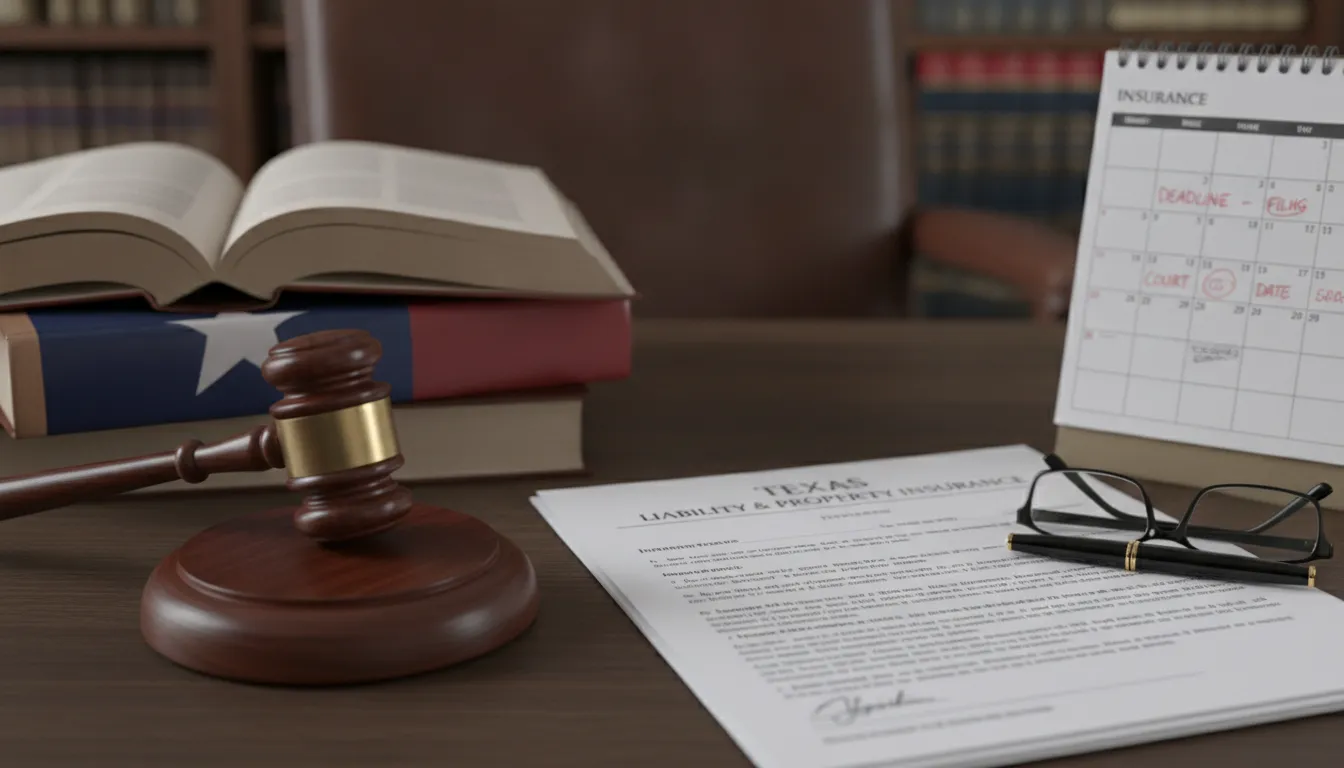
Texas law prevents insurance companies from stalling on commercial property damage claims for a long time. The Texas Prompt Payment of Claims Act forces carriers to follow strict timelines. If your insurer misses a deadline, they may owe you large interest fees.
The Texas prompt payment of claims act is state law that requires insurance companies to follow strict deadlines for commercial property damage claims. Found in Chapter 542 of the Texas Insurance Code, this law protects owners from delays by requiring carriers to respond to claims within 15 days. Carriers must then provide a final decision to accept or reject the claim shortly after they receive all requested items from the owner. If an insurance company fails to meet these legal timelines, they may be liable for the full claim amount plus 18 percent interest. This law ensures that Texas business owners get the funds they need to repair assets and resume work without facing unfair delay tactics.
Many business owners ask how they can enforce these rules when a carrier remains silent after a loss. Understanding the specific legal framework is vital for any owner who feels stuck in a long delay. To protect your company, you should first ask what the Texas Prompt Payment of Claims Act actually requires and how its deadlines can work in your favor. The path begins with
What Is the Texas Prompt Payment of Claims Act?
The Texas prompt payment of claims act (TPPCA) is a state law designed to stop insurance companies from stalling. When you file a claim for damage to your business or home, you expect the insurer to act. However, some companies use delay tactics to hold onto their money longer. This law, found in Chapter 542 of the Texas Insurance Code, sets clear rules to prevent that from happening.
State leaders passed this act in 2003 to protect people and firms from slow claim handling. It requires insurers to follow a strict timeline when they get a first-party property claim. If they miss these dates, the law allows you to collect extra money as a penalty. This keeps the process fair and ensures that carriers treat policyholders with respect.
The legal framework of Chapter 542
The TPPCA is codified under Chapter 542, Subchapter B of the Texas Insurance Code. This part of the law governs how first-party claims must be managed from start to finish. A first-party claim is one you file against your own insurance policy, such as for storm damage or fire at your building. The statute applies to most types of property insurance in the state.
The act does not just suggest that companies work fast. It creates a legal duty for them to do so. This duty is separate from the “common law” duties that insurers have. While common law requires an insurer to act in good faith, the TPPCA provides a more direct way to hold them accountable. It uses specific days to define what is too slow.
How the act protects policyholders
The main goal of the law is to give policyholders leverage. Without it, an insurance company could drag out a claim for months without a clear reason. For a business owner, a delay often means lost profit or an inability to fix vital tools. The TPPCA helps by making sure the company starts its work and makes a final choice within a set time.
If an insurer fails to meet a deadline, they may owe you more than just the value of the claim. According to the Texas Insurance Code, a company that breaks these rules must pay the claim amount plus high interest. They also have to pay your legal fees. These penalties are meant to punish the insurer for being slow and to make sure you do not lose money while waiting.
Distinction from bad faith claims
It is vital to know how the TPPCA differs from a bad faith claim. A bad faith claim usually focuses on the insurer’s actions. You have to prove they knew they had no good reason to deny or delay the claim. This can be hard to show in court because it relies on what the company thought or felt.
The TPPCA is much simpler because it is a strict law. You do not need to prove the insurance company had a bad plan. You only need to show that they missed a date set by the law. This makes it a strong tool for Texas property owners. Even if the company has an excuse, they can still be liable for penalties if they do not follow the steps in Chapter 542.
Key Deadlines Insurers Must Follow Under Chapter 542
The Texas Prompt Payment of Claims Act sets a fast clock for every step of a claim. These rules stop firms from sitting on files for months. If you own a shop or home in Texas, you should know these dates. They help you protect your rights under Texas insurance laws. Most standard firms must act within 15 days of your first notice. But some special firms, like surplus lines, get 30 business days to start. The state passed these laws to keep the work fair for the person who pays for the plan.
Starting the claim and asking for proof
The first part of the timer starts when you file your claim. Within 15 days, the firm must send a note to say they got your notice. In that same time, they must start to check the loss. They will also ask for all the forms and proof they need. This part is key because it sets the speed for the whole case. If they do not ask for what they need now, they might not be able to ask for it later without a good reason.
The firm can ask for more facts later on. This often feels like a way to stall for many shop owners. In real life, the clock for the next step only starts when the firm has “got all items” they asked for. This means the firm might add time by asking for more files. For example, a shop owner might send in a list of lost goods. The firm might then ask for old sales tax files to prove the value. If you think the firm is just buying time, you may need to sue your insurance company for delay to make them move.
Time limits for a final choice
Once the firm has all they need, they move to the next step. Under Section 542.056 of the law, they have 15 business days to tell you their choice. They must send this choice in writing. If they say no to your claim, the law says they must tell you why. They cannot just say “no” without a reason. They must point to the part of your plan that says they do not have to pay.
Some cases are hard and need more work. The firm can ask for a 45-day wait if they need it. They must send you a letter before the first 15-day limit is up. This letter must say the exact reason why they need more time. They cannot just say they are busy. They must have a real need for more facts or a deep look. If they think a fire was set on purpose, the law gives them 30 days to choose. For a shop owner, these weeks can be the difference between staying open or going bust.
Payment and late fees
If the firm says yes to your claim, the law gives them very little time to pay. They must send your check or wire the funds within five business days. This is one of the fastest turns in the whole law. It stops firms from holding your cash after they admit they owe it. If they miss this date, they have broken the law.
The best shield for you is the 60-day rule in Section 542.058. If a firm takes more than 60 days to pay after they get all your files, they face big costs. They may owe the full claim amount plus 18 percent interest each year. They also have to pay for your lawyer. These fees exist to keep firms honest and moving fast. These rules apply even if the firm does not turn you down but just fails to pay.
A practical look for shop owners
Imagine you own a warehouse in Fort Worth. A storm hits and rips off the roof. You tell your firm right away. They have 15 days to start the work and ask for proof. You send them photos and a cost for the fix. Then they ask for more info about the roof’s age. This resets the main timer. You get them the age of the roof. Now they have 15 business days to say yes or no.
If they say yes but then wait two months to pay, they may owe you much more money. The law sees this delay as a wrong that must be fixed. The 18 percent interest starts from the 61st day after you gave them all the proof. This extra cash helps you pay for the delay and the cost to keep your business going. It is why you must track every letter and call.
| Deadline | Action Required | Law Section |
|---|---|---|
| 15 days (30 for surplus lines) | Acknowledge claim, start investigation, request forms | 542.055 |
| 15 business days | Accept or reject claim in writing after receiving all items | 542.056 |
| Up to 45-day extension | Notify claimant in writing with reasons for delay | 542.056(b) |
| 5 business days | Issue payment after accepting the claim | 542.057 |
| 60 days | Penalty trigger if no payment made after receiving all items | 542.058 |
How Weather-Related Claims Affect TPPCA Deadlines
Texas leads the nation in many types of weather-related claims. From large hail storms to high winds and tornadoes, the state faces frequent natural events. When these storms hit, insurance companies often receive a huge number of claims all at once. To help insurers handle this volume, the rights under Texas insurance laws allow for some extra time under certain rules.
The 15-day catastrophe extension
In most cases, the deadlines for the Texas prompt payment of claims act are very strict. But when a claim comes from a weather-related catastrophe, the law gives insurers a small break. Under the Texas Insurance Code, all deadlines are pushed back by 15 calendar days. This gives the company more time to send out adjusters and process files when a major storm causes widespread damage.
It is vital to note that these are calendar days, not business days. This means weekends and holidays count toward the total. Even with this extra time, the insurance company must still act in good faith. They cannot use a storm as an excuse to ignore your claim for months.
If they miss these new dates, they may still owe you penalty interest and fees. While the law gives them more time, it does not give them a pass to delay for no reason. You still have the right to a fast and fair process even after a major disaster.
Special rules for arson reviews
Not every delay is due to a storm. If an insurance company has a good reason to think that a fire was set on purpose, they get extra time to look at the claim. The law changes the rules for arson cases to make sure the company can check all the facts before they pay. This protects the pool of money for other people with insurance who have real losses.
For an arson case, the insurer must tell the insured in writing if they accept or reject the claim within 30 days. This clock starts once the company has every form and item they asked for from you. While this is longer than the usual 15 business days, it is still a firm deadline that the company must meet. If the company fails to follow these rules, they may face legal action.
Deadlines in the aftermath of a storm
Widespread damage can make it hard for a business to get back to work. While the 15-day extension helps the insurer, it can hurt the person who needs funds fast. Many business owners do not know that these dates can shift. Knowing the exact rules can help you hold the company to the law and ensure you get paid as soon as possible.
If your insurer is taking too long after a storm, you may need to take action. The state laws are there to protect you from unfair delays. Even after a big catastrophe, the company must follow the rules. Keeping track of every date and form you send is the best way to prove that the company is taking too much time.
Penalties Insurers Face for Violating the TPPCA
The Texas Prompt Payment of Claims Act exists to stop insurance companies from stalling. When an insurer misses a legal deadline, they face steep costs. These penalties serve as a way to punish bad behavior and help policyholders get the money they need to fix their property. Under Section 542.060 of the Texas Insurance Code, the law is clear about what happens when a carrier fails to follow the rules.
Three Legal Penalties for Carriers
A violation of the act triggers a set of financial costs. The carrier does not just owe the first claim amount. They must also pay for the harm caused by the wait. This legal structure protects businesses and homeowners across the state. If you find your carrier is not meeting their duties, you may want to speak with a bad faith insurance attorney about your case.
- Full claim amount payment. The insurance company must still pay the full value of the covered loss. Violating the act does not let them off the hook for the debt. They must honor the policy and pay for the damage as they should have done from the start.
- High annual interest. Carriers must pay interest on the claim amount at a rate of 18 percent per year. This interest builds up from the date the payment was due until the day they pay it. This high rate is meant to make it very costly for carriers to hold onto your money.
- Reasonable legal fees. The law allows you to get back money spent on legal help. Section 542.060 requires the insurer to pay your reasonable and needed attorney fees. This ensures that you do not lose a large part of your funds just to fight for what you were already owed.
Why the Penalty Rate Matters
Most interest rates are much lower than 18 percent. The high rate in Texas law acts as a strong tool for the policyholder. It creates a real cost for every day an insurer lets a claim sit. Many carriers try to save money by delaying large payments, but this law makes that a poor choice for their business. It helps property owners who need their funds now.
Recovering Costs and Fees
Legal fees can be a big worry for property owners. Many fear that hiring a lawyer will cost more than the claim is worth. But because of the penalty interest and fee rules, that is often not the case. The insurer must cover your legal costs if they are found to be at fault. This makes it possible for more people to take a stand against big firms and win.
What Commercial Property Owners Should Do If Their Claim Is Delayed
A slow insurance claim can cause real harm to your firm. When the check does not arrive, you may find it hard to pay your staff or fix your shop. Texas rules help you when a firm takes too long to pay out. You have clear rights if they miss the dates set by state law. Knowing what to do will help you get the cash you need to stay open.
Do not wait for the company to act on its own. Many firms use delay to save money or hope you will go away. You must take a lead role in the process. If you stay on top of the dates, you can force the company to follow the rules. This helps you get a fair deal for your loss.
Keep a clear record of every step
You should track every talk you have with your insurance firm. Save every note and write down the time of each phone call. If a person comes to see your property, take notes on what they say. This log shows how the claim has moved over time. It can prove if the firm is not following the law.
Record the damage to your site with clear photos and video clips. If you must buy parts to stop more damage, save all of your receipts. These records are vital if you need to sue your insurance company for delay. A clear paper trail makes it hard for the firm to hide its errors.
Try to keep all your talk in writing. If you speak on the phone, send a short email after the call. Briefly state what you spoke about and any plans that were made. This creates a fact based record that the firm cannot deny later. It keeps everyone on the same page and helps your case.
Monitor the legal deadlines for your claim
The Texas Prompt Payment of Claims Act gives firms strict dates to hit. You should check if your firm missed a day. They must tell you they got your claim in 15 days. They must also start their work in that same time. If they fail, they may owe you more money later.
- Record all files sent to the firm. Keep a list of all forms and facts you give them. The law says the firm has 15 days to ask for what they need.
- Note the day they accept or deny your claim. Most firms have 15 days to decide after they get all your files. If they need more time, they must tell you in writing.
- Track the 60 day penalty clock. If a firm does not pay or deny you in 60 days, they may face a fine. This fine is a high interest rate added to your claim.
- Review the date you get paid. Once a firm agrees to pay, they usually have just five days to send the check. If the check is late, the law is on your side.
- Talk to a legal expert. If dates pass with no word, talk to a property insurance lawyer. They can look at your case and help you take the next step.
Get help from a policyholder lawyer
Insurance firms have teams of experts to protect their cash. You should have an expert on your side too. A lawyer can help you appeal a denied commercial claim or push for a faster pay out. They know how to hold the firm to the state rules.
Most business owners do not know their full rights. A lawyer will check if you can get the 18 percent interest penalty allowed by law. They will work to get you the full value of your loss plus extra costs for the delay. Acting fast helps you protect your firm and its future.
Large losses need deep study to get the right value. Your lawyer can hire pros to look at the damage and find the true cost. This ensures the firm does not underpay your claim. Having a pro lead the way gives you peace of mind during a hard time.
Frequently Asked Questions
Does the Texas Prompt Payment of Claims Act apply to commercial property?
Yes, the Texas Prompt Payment of Claims Act applies to most first-party insurance claims, including those for commercial property and businesses. The law ensures that insurers do not unfairly delay payments that companies need to stay open or fix damage. These legal deadlines protect your right to a timely review and payout, whether you own a small shop or a large office building.
What interest rate applies to a late insurance payment in Texas?
Under Section 542.060 of the Texas Insurance Code, a company that misses its payment deadlines is liable for an 18 percent annual interest penalty. This interest is paid on top of the full claim amount. The insurer must also cover the policyholder’s reasonable legal fees if the case goes to court. These penalties encourage insurance companies to process claims fairly and pay what they owe without long delays.
How many days does an insurer have to pay an accepted claim in Texas?
Once an insurer accepts a claim and tells the policyholder they will pay, they usually have five business days to issue the funds. If the insurer is an eligible surplus lines carrier, they have 20 business days to make the payment. Business owners must know this deadline to plan for repairs and keep their operations running while they wait for insurance money to arrive.
Can a Texas insurer delay payment because of a weather catastrophe?
Yes, insurers get a 15-day extension on all deadlines if the claim arises from a weather-related catastrophe. This extra time helps companies handle a large surge in claims after a major storm or flood. However, the insurer must still follow the rest of the legal rules and cannot ignore a claim indefinitely. Even with the extension, the company must act in good faith to resolve the claim for the policyholder.
Ready to hold your insurance company accountable?
Insurance companies often use long delays to save money while you struggle to keep your business running. Every day you wait for a fair check is a day that costs your company more in lost time and stress. You do not have to let them control your future or your finances any longer. The law is on your side and gives you the power to demand the payment you are owed right now. Taking legal action today stops the clock on their excuses and starts the clock on your recovery. Our team will fight to get you every cent the law says you are owed.
Ready to get the payment you are owed? Book a free meeting to discuss your delayed or underpaid insurance claim.