If you are looking for a boat accident lawyer Texas residents can consult, start by protecting people, preserving evidence, and avoiding guesses about fault. A boating collision can involve injuries, property damage, several witnesses, and questions about who operated or maintained each vessel. The right next steps depend on the facts, so keep a clear record and get medical attention when needed.
Call Hoch Law Firm at 817-731-9703 to discuss your situation
What should you do first after a Texas boating collision?
Put safety first. Move away from immediate danger if it is safe to do so, use available flotation equipment, and call emergency services when anyone is hurt or the situation requires urgent help. Do not delay necessary medical care while trying to sort out insurance or responsibility.
Once people are safe, exchange contact and vessel information with the other operator. Record names, phone numbers, vessel descriptions, registration details if available, and the location and approximate time. Ask witnesses for their contact details. Keep the conversation factual. Do not speculate about speed, visibility, intoxication, or who caused the collision.
Reporting obligations may depend on the incident and applicable rules. Texas boaters can consult the Texas Parks and Wildlife Department for official boating information. If you are uncertain whether a report is required, promptly ask the appropriate authority or a qualified attorney rather than relying on assumptions.
After the immediate response, make a short checklist: confirm everyone is safe, note the location and time, identify witnesses, and record which authorities or insurers you contacted. This sequence can keep practical tasks from getting lost during a stressful day. If another person is in danger, emergency needs come before collecting details.
How can you preserve useful evidence?
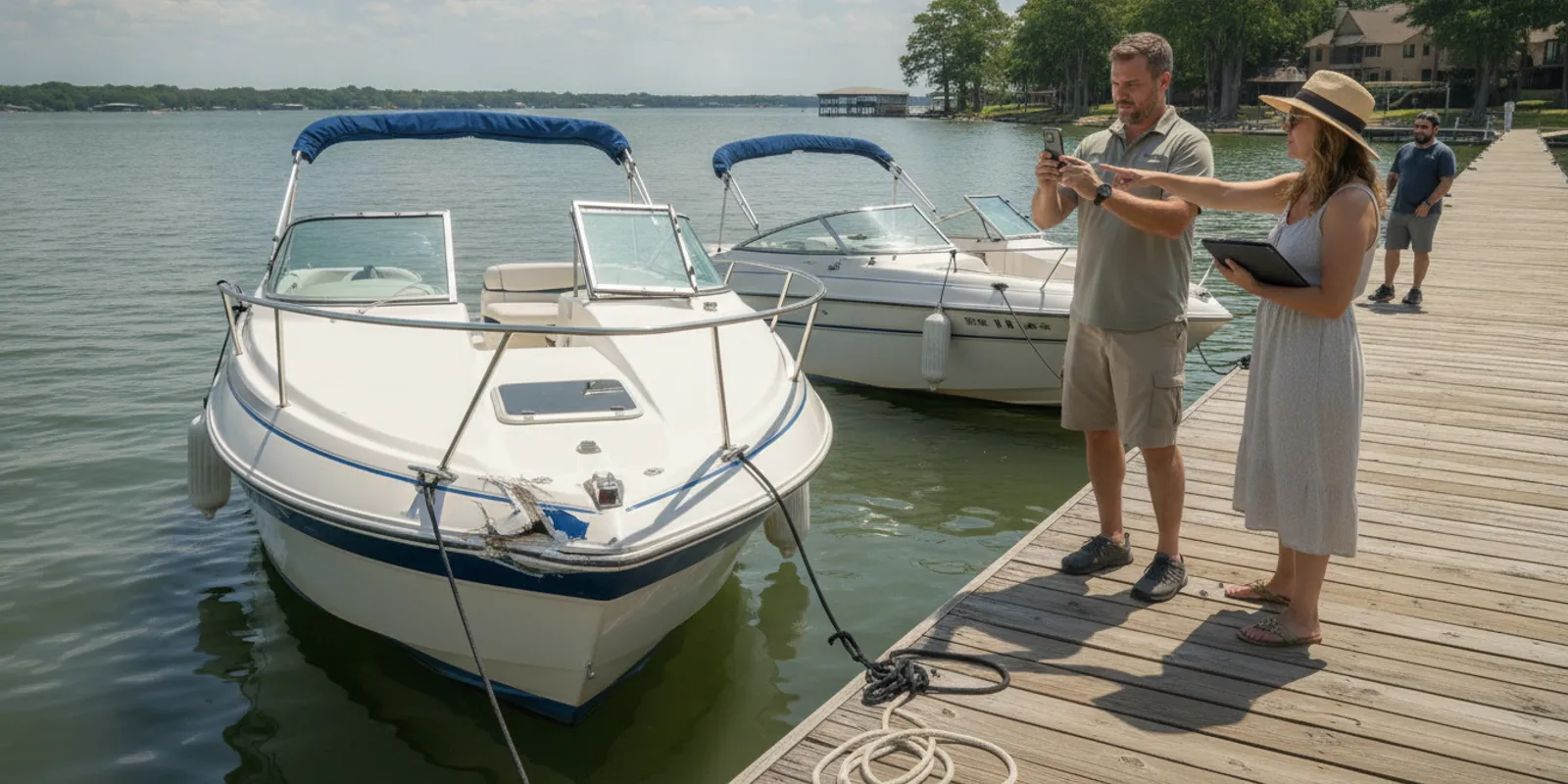
Evidence can change quickly. Weather shifts, vessels are repaired, and memories fade. If it is safe and lawful, make a record soon after the incident. Photograph the overall scene and close details, including damage, safety equipment, docking areas, nearby markers, and any visible conditions that may matter. Do not put yourself at risk to take a picture.
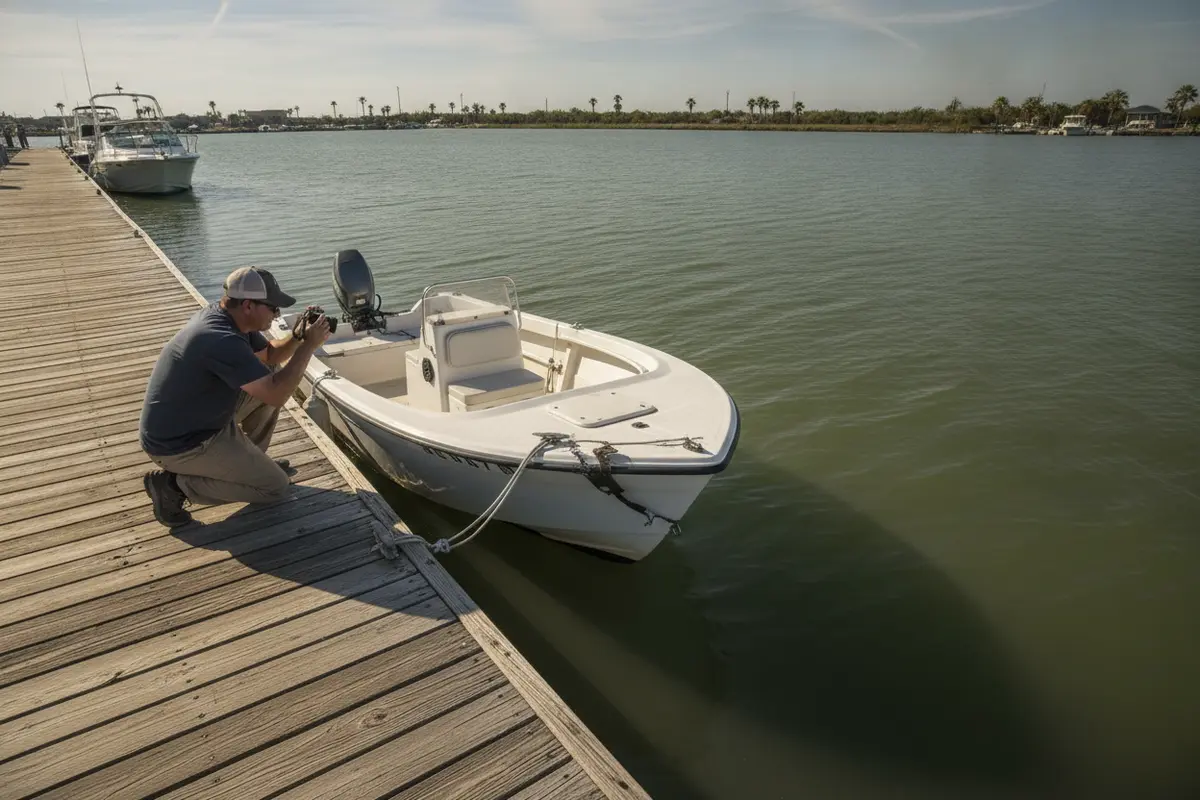
Save the original files and note when and where each image was taken. Keep copies in more than one secure place. Do not edit the originals; if you make annotated copies for your own reference, preserve the unaltered versions too. Write down what you remember in your own words, separating what you observed from what someone else told you.
- Keep repair estimates, invoices, towing or storage records, and receipts related to the event.
- Save medical records and instructions, and keep a dated account of symptoms and treatment.
- Preserve messages, emails, and letters from operators, witnesses, insurers, and marina personnel.
- Record the names of responding agencies and any report or incident reference number you receive.
- Ask promptly about preserving relevant video or electronic records, since some systems may overwrite data.
Do not trespass, interfere with a vessel, or access another person’s account or equipment to obtain evidence. A lawyer can advise about appropriate ways to request records and preserve material in a dispute. Keep a simple evidence log: list each item, its source, when you obtained it, and where the original is stored. This helps distinguish original records from later notes or copies.
For example, keep a full-resolution scene photograph in an unaltered folder, then make a separate working copy if you want to mark where each vessel appeared to be. Label any estimate as an estimate, not a final repair bill. A clear record of what a document is—and what it is not—reduces confusion when accounts differ.
Which details may affect responsibility?
A collision does not automatically establish who is legally responsible. The relevant facts may include the vessels’ positions and movements, visibility, operator actions, warnings, equipment condition, and what happened immediately before and after impact. The account of each operator may differ, so independent evidence can be important.
Responsibility may also involve more than one person or entity. Depending on the circumstances, questions could concern an operator, an owner, a person responsible for maintenance, or another party. These are possibilities to investigate, not conclusions about any particular incident. A careful review considers the evidence and applicable law rather than relying on a single photograph or an early impression.
Keep a timeline while events are fresh. Note when the collision occurred, when you sought care, who you spoke with, and when repairs or inspections took place. Identify uncertainties honestly. For example, if you did not see the other vessel until impact, say so rather than filling in the gap with a guess.
A useful timeline separates direct observations from later information. Write “I heard a horn just before impact” if that is what you recall, rather than concluding why it sounded. If a witness gives a different account, record the person’s name and words as accurately as possible without trying to reconcile the difference yourself.
Also note conditions that could be checked later, such as visibility, lighting, wake, nearby traffic, and the location of markers. Do not assume that a condition mattered legally simply because it was present. The purpose is to preserve potentially relevant details for a later review.
How should you handle medical care and insurance communications?
Follow medical advice and keep records of appointments, symptoms, and changes in your condition. Some injuries may not be obvious immediately. If new symptoms arise, contact a medical professional. This article cannot diagnose an injury or replace individualized medical care. Hoch Law Firm discusses types of serious injuries as general information, not as a substitute for a clinician’s evaluation.
Notify the appropriate insurer as required by the policy, and review the policy’s instructions for prompt notice and cooperation. Keep a copy of what you submit. Be accurate and concise. If asked for a recorded statement, broad medical authorization, or a signed release, understand what is being requested before agreeing. You can ask for the request in writing and seek advice about its scope.
A request for information does not by itself decide whether a claim is covered or who is responsible. Read communications carefully and note response dates. Avoid posting detailed commentary or images about the incident publicly while facts are being reviewed. Do not destroy records or conceal information.
Make a communications log with the date, the person or organization contacted, the subject, and any requested follow-up. Save the envelope or electronic notice with a letter, since delivery dates may matter. If you speak by phone, write a neutral summary soon afterward. This is an organizational practice, not a replacement for complying with policy terms or seeking advice about a legal notice.
For physical damage, document the vessel before repairs when it is safe and practical. Ask the insurer how it wants an inspection coordinated, and retain estimates and invoices. If urgent work is needed for safety or to prevent further damage, keep a record of why it could not wait and what work was done.
What should you compare as a claim develops?
Keep the major issues separate. Injury-related losses, vessel repairs, and questions about insurance may require different records and explanations. A simple working chart helps identify what is documented and what still needs attention.
| Issue | Records to organize | Questions to check |
|---|---|---|
| Injury and treatment | Visit records, bills, instructions, symptom timeline | What care was received, and what follow-up was advised? |
| Vessel damage | Photos, inspection notes, estimates, repair invoices | What damage is visible, and how was the repair amount assessed? |
| Incident facts | Witness details, photos, timeline, agency information | Which details are firsthand, and which remain uncertain? |
| Insurance handling | Policy, notices, letters, forms, claim reference | What deadlines or response requests appear in the documents? |
This chart is an organizing aid, not a valuation method or legal finding. Do not assume that a repair estimate or an insurer’s initial position resolves every issue. If the explanations conflict, preserve the underlying records and ask what additional information could clarify the difference.
Consider a hypothetical example: a photograph shows damage near the bow, but a later estimate lists work to several areas. Keep the image, inspection notes, and estimate together, then ask which line items correspond to observed damage and whether further inspection is recommended. That method does not determine coverage; it simply makes the disagreement concrete and easier to discuss.
For an injury matter, place bills and visit records alongside—not in place of—a symptom and treatment timeline. A bill shows a charge; it may not explain the care received or the follow-up plan. Keeping these records in separate, clearly labeled folders makes it easier to see what has been collected and what remains outstanding.
One practical way to check whether the file is complete is to compare it against the event in sequence: before impact, the moment of impact, the immediate response, and later care or repairs. For each stage, note the supporting source, such as your own recollection, a witness, a photograph, or a written record. Mark gaps as questions rather than filling them with assumptions. This makes it easier to identify whether a missing item may still be available from a witness, marina, responding agency, or insurer.
What deadlines and reporting questions deserve attention?
Time limits can apply to reporting, insurance notice, and legal claims. The governing deadline may depend on the type of claim, the parties involved, and the facts. Do not assume that speaking with an insurer pauses a legal time limit. Keep any notice, demand, or court document and seek advice promptly if you receive one.
Likewise, reporting rules can vary with the circumstances. Consult an official source such as the Texas Parks and Wildlife Department for boating information, and ask the relevant authority about the specific incident if needed. An official website can provide general guidance but cannot determine the obligations for your individual case.
Write down every stated date and the document where it appears. Distinguish an insurer’s requested response date from a statutory or court deadline; they are not necessarily the same. If you cannot tell what a date means, ask the sender for clarification and promptly consult a qualified professional rather than waiting until the date has passed.
When may a boat accident lawyer in Texas help?
Legal review may be useful when someone suffered a serious injury, accounts of the collision conflict, multiple parties may be involved, an insurer disputes responsibility or coverage, or a request asks you to sign away rights. A lawyer can review available records, explain potential issues, and help identify sensible next steps. Whether a firm can take a matter depends on its facts and review.
Hoch Law Firm handles select litigation matters and represents clients in serious injury cases. The firm’s attorney, Tim Hoch, is Board Certified in Personal Injury Trial Law. You can learn more about the firm’s personal injury practice, its practice areas, or Tim Hoch’s background. These resources do not guarantee that a particular claim will be accepted or produce a particular result.
Before a discussion, gather a concise timeline, the incident report information you have, photographs, insurer correspondence, and records of treatment or repairs. You do not need to resolve every factual disagreement before asking questions. Be prepared to describe what is known, what is uncertain, and any upcoming deadline you have identified.
If a claim also involves an insurer’s position on coverage, keep the relevant policy and decision letter together. The firm’s insurance litigation information provides context about the firm’s work, while a consultation can help determine whether a particular issue fits its practice. Do not assume that a general page describes the outcome of an individual boating incident.
When considering whether to speak with counsel, focus on practical questions: What documents should be preserved? Which facts are still unclear? Is there a response date in a letter? What additional inspection or records might help explain the dispute? Organizing these questions can make a discussion more useful, even if you do not yet have every document.
Call Hoch Law Firm at 817-731-9703 to discuss your situation
Frequently Asked Questions
Should I get medical attention even if I feel mostly fine?
If you have symptoms or are concerned about an injury, contact a medical professional. Some problems may not be apparent right away, and prompt evaluation can help address health needs. Follow professional advice and keep records of care.
What if the other operator will not share information?
Do not escalate the confrontation. Record what you can safely observe, note the vessel’s description and location, and contact the appropriate authorities when warranted. Preserve witness details and any incident reference information. An attorney can discuss lawful ways to seek additional records.
Should I repair the vessel before an insurer inspects it?
Address urgent safety concerns, but document the damage first when it is safe and practical. Review the policy and contact the insurer about inspection and repair procedures. Keep estimates, photographs, invoices, and replaced parts or components when feasible and appropriate.
Does an insurance payment establish who caused the collision?
Not necessarily. A payment or claim decision may address a policy issue without resolving every question about responsibility or losses. Read the decision and supporting explanation, preserve it, and ask for clarification if its meaning is unclear.
Can a law firm promise a particular result?
No responsible review can promise a specific outcome before the facts, evidence, and applicable law are assessed. A consultation can help explain potential issues and possible next steps, but each matter depends on its own circumstances.
After a Texas boating collision, careful documentation and timely attention to health, reporting, and insurance communications can help you make informed decisions about what to do next.