After a storm, fire, or pipe break, the paper trail often starts before anyone has decided what the policy pays. A tarp invoice, a hotel bill for a displaced tenant, a dumpster receipt, and a contractor deposit can all look equally urgent in the same inbox. Which receipts matter after a Texas commercial property loss depends on what each document proves. Look for the date of the work, the part of the building, who ordered it, and whether it was paid. A receipt is not a coverage opinion. It is a dated record an adjuster, accountant, or lawyer can match to a specific cost.
Call Hoch Law Firm at 817-731-9703 to review a commercial property claim file.
This guide sorts the vendor paper that usually shows up while repairs are still underway. It does not replace a hail-inspection file, a rent ledger, or a post-denial response. Those records answer different questions, and they belong in their own folders. For the coverage question behind the paper, start with the firm’s commercial property insurance page.
Which receipts matter after a Texas commercial property loss
A useful receipt answers four questions without a long explanation. What was bought or done? Where on the property? On what date? Who was paid, and has the bill been paid? If a document answers none of those, it can wait. If it answers one of them, keep the original even when the dollar amount looks small.
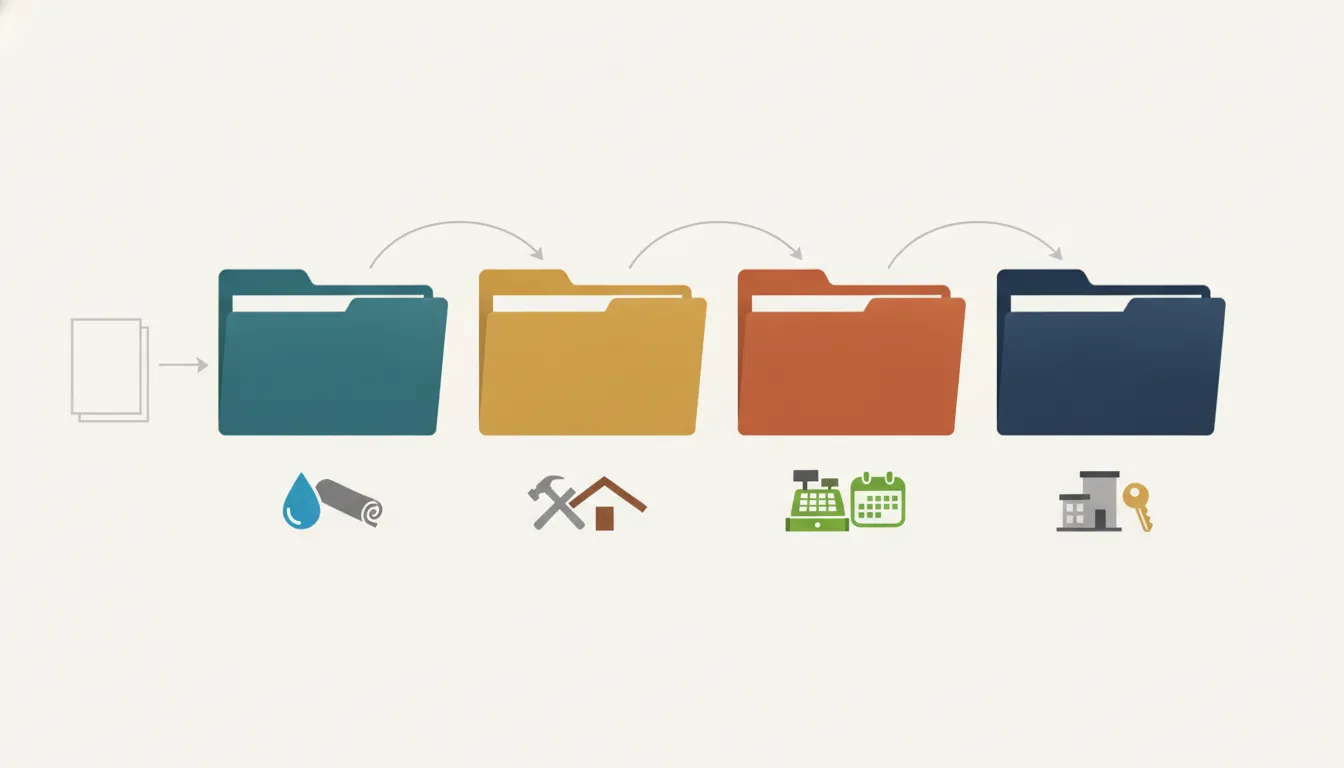
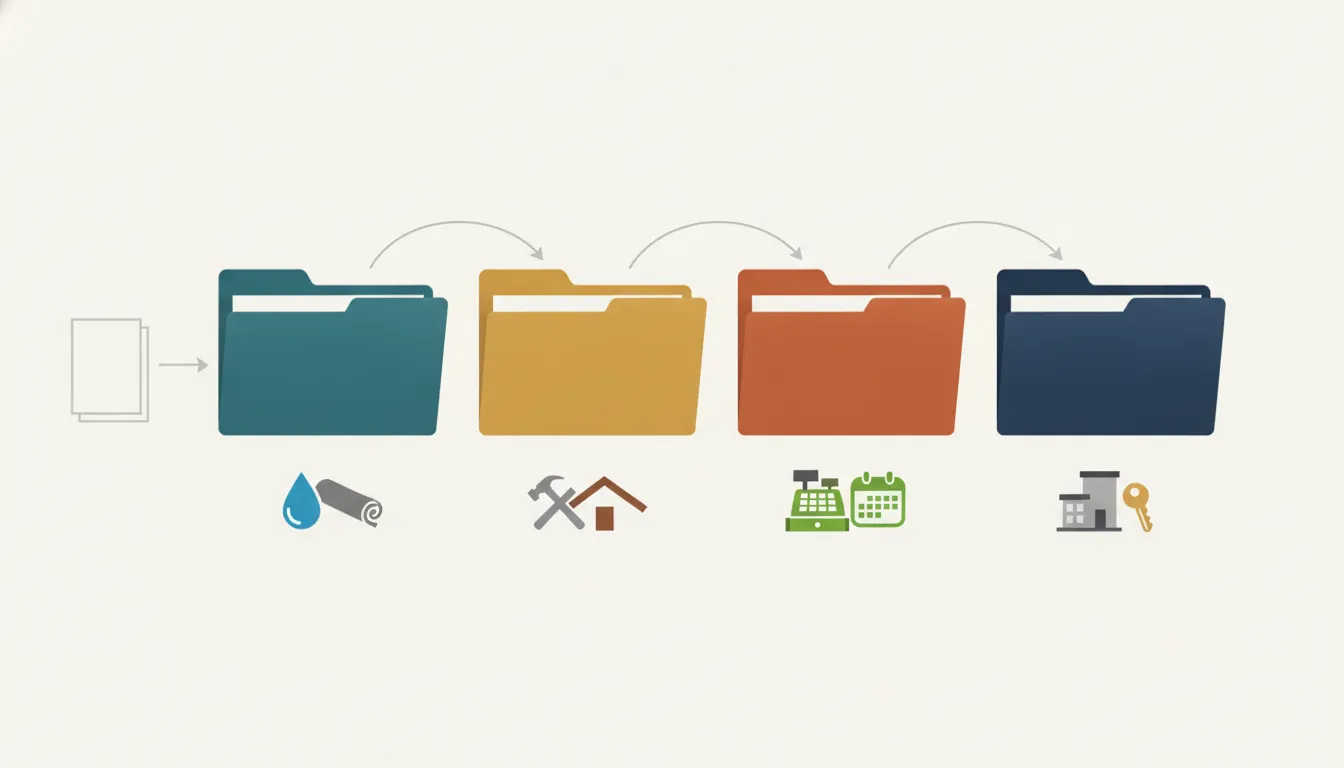
Owners often mix three different jobs into one stack. Mitigation paper shows what was done to stop further damage. Repair paper shows what it cost to put the building back. Income paper shows rent or sales that did not come in. Mixing them makes a later review slower, because a board-up invoice does not prove lost rent, and a rent roll does not prove the cost of a roof.
Keep a short index at the front of the file. One line per document is enough: vendor, date, amount, building or unit, and the folder it lives in. The index is what you hand someone who was not on site the week of the loss.
Use the same five fields every time, in this order:
- Vendor name, copied from the invoice rather than from memory.
- Date of the work or the purchase, not only the date you paid.
- Amount billed, and a separate note if a deposit is only part of it.
- Building, roof section, or unit the work covered.
- Folder name, so the original has one home.
A receipt that fails one field is still worth keeping. Mark the gap in the index instead of guessing. “Unit unknown” is more useful than a unit number you add a month later.
Sort which receipts matter after a Texas commercial property loss
The table below is a sorting tool, not a list of costs every policy pays. Coverage still depends on the policy, the cause of loss, and the facts. Use the folder names so a reviewer can see why a document was kept.
| Receipt or record. | What it usually shows. | Keep with. |
|---|---|---|
| Emergency dry-out, tarp, board-up, or pump invoice. | Date, location, and scope of work done to limit further damage. | Mitigation folder, with before-and-after photos. |
| Paid check, card statement, or ACH confirmation. | That the invoice was actually paid, and by whom. | Same folder as the matching invoice. |
| Temporary fence, security, or generator bill. | Protection cost while the building was open or without power. | Temporary protection folder. |
| Contents, equipment, or inventory invoice. | Identity and cost of damaged business property, separate from the building. | Contents folder, with serial numbers or photos. |
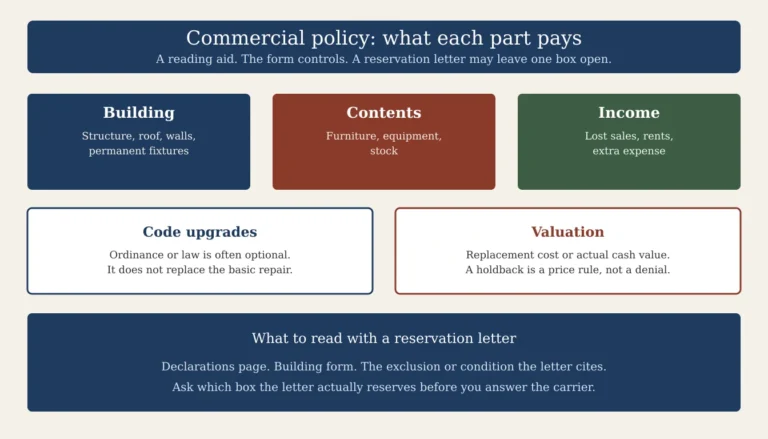
| Code upgrade or tenant-improvement invoice. | Work required by a building official or a lease, not ordinary repair. | Code and tenant-work folder, with the permit or lease clause. |
| Lost-rent ledger or vacancy note. | Income that stopped, which is not the same as a repair cost. | Separate rent file, not the repair receipt stack. |
If a document could fit two rows, file the original in the folder that matches the vendor’s scope and note the cross-reference in the index. Do not photocopy it into every folder. Duplicate copies create duplicate totals.
Match every invoice to a payment before you treat the cost as spent. A proposal is an offer. An invoice is a bill. A canceled check, card charge, or ACH record is what shows money left the account. If the names differ, say so on the index line. A management company may have paid a vendor the owner later reimbursed. Both records belong in the set, with a note of which one is the reimbursement.
Also keep voided or corrected invoices. A vendor who reissues a bill often changes the scope, the date, or the tax. The old version explains why the totals moved. Stamp or label it “replaced” so nobody adds both versions into the same claim total.
Emergency and temporary-protection receipts
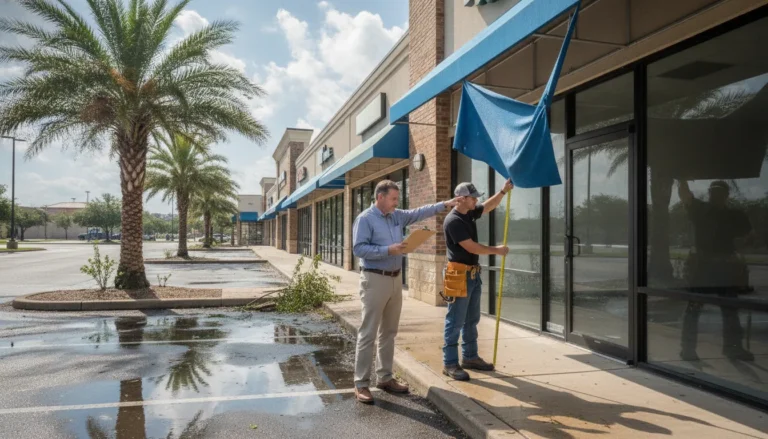
The first invoices are often the easiest to lose. A restoration company may text a proposal, then send a different invoice after the dry-out ends. A roofer may bill the tarp separately from the later roof scope. Keep the proposal, the invoice, and the proof of payment as a set. The proposal shows what was authorized. The invoice shows what was billed. The payment record shows what left the account.
Write the unit, roof section, or street address on the copy if the vendor left it off. A multi-building owner should not rely on memory to say which structure a $1,800 pump-out covered. The same rule applies to dumpster pulls, hotel rooms for an on-site manager, and after-hours security. Each one needs a date range and a reason tied to the loss. A note that the property was “a mess” is not enough.
Do not throw out a receipt because the work looks routine. A small board-up can matter later if the insurer asks whether the owner mitigated the loss.
The Texas Department of Insurance commercial property claim page describes what happens after a claim is filed. The insurer must acknowledge the claim, say whether it is investigating, and say whether it needs more information. Dated mitigation paper is part of what that request usually reaches for.
Repair, contents, and code-upgrade paper
Once the emergency work slows down, the stack shifts to estimates and deposits. Keep competing estimates if you have them, but mark which one was accepted. An unsigned bid is not the same document as a paid deposit. If the accepted contractor later changes the scope, keep the change order next to the original invoice so the increase has a date and a reason.
Separate building repairs from business personal property. A replacement oven, a server, or a tenant’s built-in fixture can be insured differently from the roof. The receipt should name the item, the model if there is one, and where it was installed. A lump-sum invoice that says only “interior repairs” is weaker than one that lists rooms, quantities, and unit prices.
Code-driven work and tenant-improvement work need their own clip. A city correction notice, a permit, or the lease clause that required the work should sit with the invoice. Without that companion document, a reviewer may treat the cost as an upgrade the owner chose, rather than work tied to the loss. This article stays on the paper, not on how every endorsement is priced.
Keep lost-rent records out of the repair receipt stack
A vacant unit and a paid contractor are different losses. Rent rolls, leases, and concession logs answer whether income stopped. They do not belong in the same total as tarps and drywall. Combining them causes two problems. A reviewer may treat a rent figure as if it were a repair bid. Or the reviewer may set a repair invoice aside because the rent file looks incomplete.
If hail or another storm is what emptied the units, keep the storm file intact and point to it. The firm’s commercial hail damage claim evidence guide covers photos, weather reports, and inspections. The firm’s loss of rents guidance covers leases, vacancy, and the restoration period. Use those pages for those questions. In the receipt file, a one-line cross-reference is enough: “Unit 210 rent file, separate folder.”
The same split applies to extra expense. A temporary office, rented equipment, or expedited shipping may be an extra-expense question rather than a building-repair question. The extra expense claim guide walks through how those costs are evaluated. File the invoice where the coverage question lives, and note the amount in the index so it is not added twice.
What to hold back, and what to send when the insurer asks
Not every scrap needs to go out in the first email. Send the set that matches the request. That set is the invoices for the work asked about, proof those invoices were paid, and the photos or permits that explain them. Hold internal drafts, unsigned bids you rejected, and unrelated operating bills unless someone asks for a baseline. A thinner, labeled packet is easier to review than a zip file of an entire year.
Texas law also limits when an insurer can demand tax returns. Texas Insurance Code Section 542.004 says an insurer may not require a claimant’s federal income tax returns as a condition of settling a claim. The section lists two exceptions. A court may order production. The claim may also involve a fire loss, or a loss of profits or income. A routine building-repair receipt file is not the same request as a tax return. If the ask is broader than the loss you reported, write down the date and the exact wording before you send more paper. This is a limit on requiring the returns to settle. It is not a promise that every request is improper.
Business-income accounting is its own project. Profit-and-loss statements, payroll, and tax-basis questions belong with the business interruption documentation guide, not in the vendor-receipt folder. If the claim has already been denied, the next set of records is a response to that letter. The documentation-after-denial guide covers that later stage. Do not rebuild it here.
Deadlines still matter while you sort paper. The firm’s Texas property claim deadline guide is the place to check how long you have. Receipts do not extend a contractual or statutory deadline by themselves. Tim Hoch is Board Certified in Personal Injury Trial Law by the Texas Board of Legal Specialization. He reviews disputed property claims for Texas owners when the file and the insurer’s position no longer match.
Call 817-731-9703 before a proof-of-loss deadline if the receipt file is incomplete.
Frequently Asked Questions
Which receipts should I keep first after commercial property damage?
Start with emergency work: tarps, board-up, water extraction, temporary power, and security. Keep the invoice and the proof of payment together, and write the building or unit on the copy if the vendor did not. Those dates are hard to reconstruct later.
Does a receipt prove the insurer has to pay that amount?
No. A receipt shows that a cost was incurred and, if you have payment proof, that it was paid. Whether the policy covers it depends on the cause of loss, the policy wording, and the rest of the claim file. Keep the receipt even when coverage is still undecided.
Should lost rent go in the same folder as repair invoices?
No. Leases, rent rolls, and vacancy notes answer an income question. Repair invoices answer a construction question. Cross-reference them in the index, and keep the totals separate so neither figure is counted twice.
What if the only record is a text message or a card charge?
Save it. A text that approves a scope, a card charge that matches a vendor, or an email with a photo can fill a gap until the formal invoice arrives. Export the message with its date rather than relying on a screenshot that crops the timestamp.
Do I have to send every receipt with the first notice of loss?
Usually you send enough to identify the loss, then respond to specific requests. Label what you send. If the insurer asks for tax returns, compare that request with Texas Insurance Code Section 542.004 before you produce them. A court order, a fire loss, or a claim for lost profits or income can change the answer.