A commercial landlord insurance claim lawyer helps a Texas building owner sort building damage, lease duties, tenant losses, rental income, and repair scope into one claim the insurer can actually review. Hoch Law Firm, PC represents policyholders only, including owners of strip centers, warehouses, and office buildings across Dallas-Fort Worth and the rest of Texas. Tim Hoch is Board Certified in Personal Injury Trial Law and takes property-insurance cases on a contingent fee, with a free case evaluation and no upfront cost.
Call 817-731-9703 for a free case evaluation of your commercial landlord claim.
The work starts with the file, not a lawsuit. Keep the building estimate, the leases, the rent ledger, and the tenant notices in separate stacks. A mixed file is how a repair dispute turns into a rent dispute, and then into a denial that does not name the real disagreement. If a denial letter is already in hand, the denied commercial insurance page covers the appeal. This guide is the file you build before that letter, and the file you keep if only one part of the claim is paid.
What a commercial landlord insurance claim lawyer separates in the file
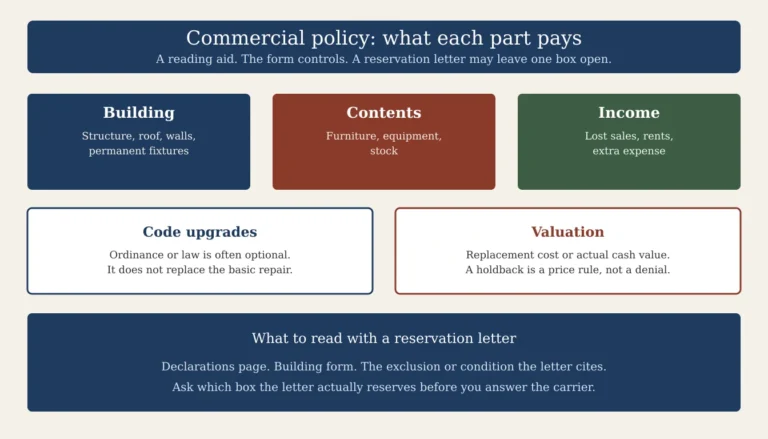
A landlord policy is not one bucket of money. The building, the tenant’s interior work, the rent, and the cost of operating around the loss can sit in different grants, limits, and deductibles. Treating them as one number invites the carrier to pay the easiest piece and stall the rest.
Hoch Law Firm’s commercial property insurance work covers strip centers, warehouses, office buildings, and other landlord-owned property. That service page is the broad practice. This guide stays on the landlord’s own claim file: who owns each damaged item, which lease controls the repair, and which records prove the rent that stopped.
Four stacks that should not be blended
- Building damage: roof, structure, exterior, and landlord-owned systems, with photos, moisture readings, and a repair scope.
- Lease and tenant items: the lease, estoppel or insurance certificates, and a list of who installed fixtures, signs, or interior finishes.
- Rental income: the rent roll, ledgers, and notices showing which suites went dark and when.
- Repair path: contractor bids, code items the city required, and a timeline the carrier can test.
If a tenant has its own policy, say so early. Hiding that fact does not help. It gives the carrier a reason to pause the whole claim while it hunts for another payer.
Who the claim is actually for
Name the named insured before you describe the damage. A management company, a single-asset LLC, and the person who signed the lease are not interchangeable. The policy’s named insured should match the entity that owns the building, or the letter should explain the relationship in one sentence.
Lender letters belong in their own folder. Many commercial policies require the mortgage holder to be named on a building payment. That requirement does not move the rent ledgers into the lender’s file. Send the lender what the policy requires, and keep the rent proof with the landlord.
Hoch Law Firm sees this pattern on strip centers and small office buildings around Fort Worth, Arlington, and the rest of North Texas, and on warehouses farther out in the state. The owner is often also running other businesses. The claim still has to read as one building, one owner, and one loss date. Mixing a second property into the photo set is a common way a clean file becomes a coverage argument.
Building damage versus what the lease assigns
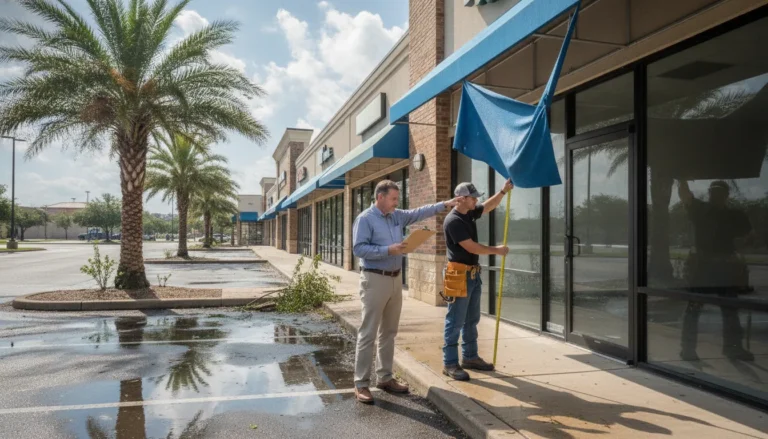
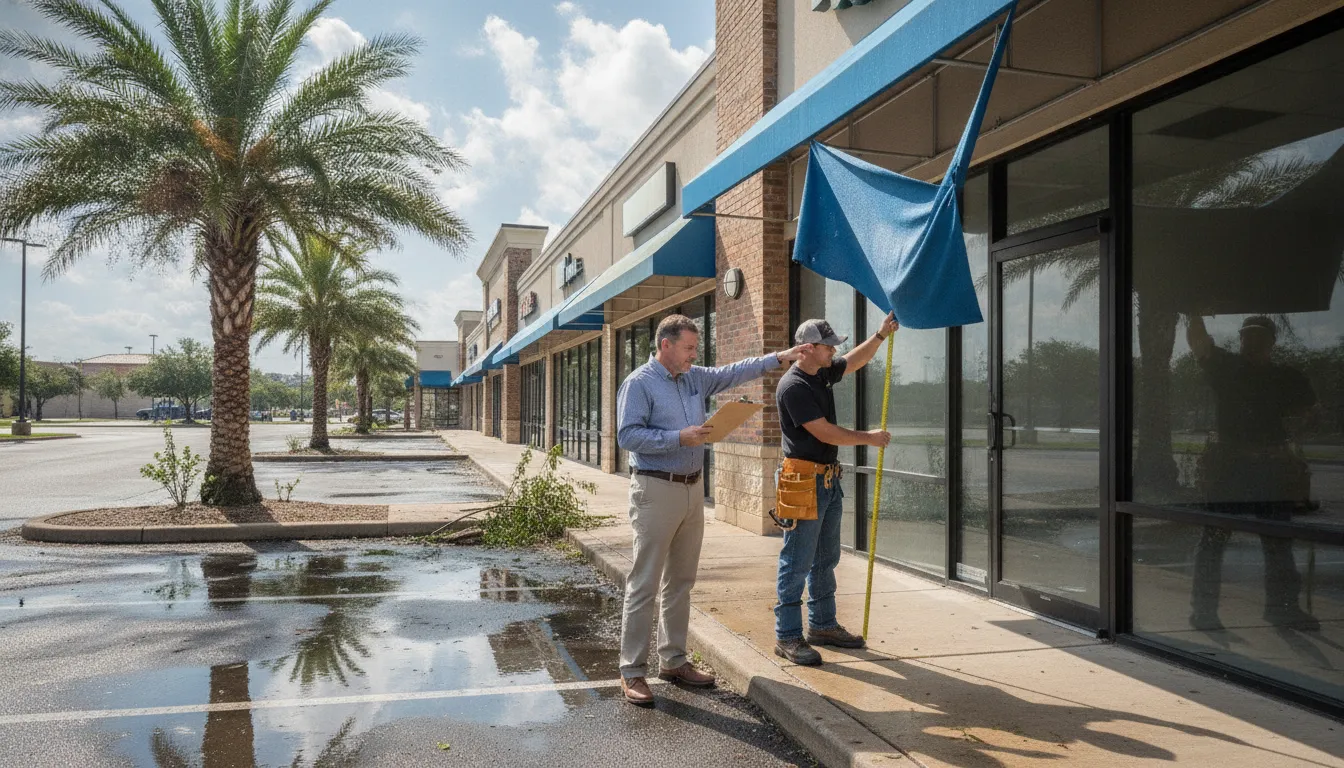
Start with the damaged thing, then the lease, then the policy. A storefront awning, a roof, and a tenant’s interior build-out are not the same insured interest. The lease often says the landlord repairs the structure and the tenant repairs its own improvements. The policy may not follow that sentence.
Pull every lease that touches a damaged suite. Note the repair clause, the insurance clause, and any waiver of claims between landlord and tenant. A waiver can block a later fight with the tenant. It does not, by itself, decide what the landlord’s carrier owes for the building.
Photograph landlord areas and tenant areas on the same day, but label them. A shared hallway and a tenant sales floor should not live in one unlabeled folder. Adjusters use unlabeled photos to argue that the landlord is claiming someone else’s property.
When the loss also shut down an operating business inside the building, the tenant’s own income claim is a different file. Link that problem to the business interruption claim denial page instead of folding the tenant’s payroll and sales into the landlord’s building estimate.
A short lease worksheet
You do not need a memo. A one-page worksheet per damaged suite is enough:
- Suite number, tenant name, and whether the suite was occupied on the date of loss.
- Who the lease says must repair the structure, the interior, and the storefront.
- Whether rent was abated, reduced, or still billed, and the notice that says so.
- Any tenant insurance certificate, and the items you are not claiming.
- The date you expect the suite to be dry, safe, and releasable, or “unknown” if you do not know.
That worksheet is the bridge between the lease and the estimate. Adjusters rarely read a 40-page lease on the first pass. They will read five lines if those lines point to the page and paragraph.
Do not use the worksheet to decide coverage. It only stops the carrier from guessing. If the lease and the policy point in different directions, say that in the cover note and ask which grant they are applying. Silence lets them pick the reading that pays less.
How a commercial landlord insurance claim lawyer sorts rent, repairs, and disputes
Rent and repairs move on different clocks. The building can be under repair while a suite is dark, or a suite can be releasable while the carrier still argues about the roof. Those are separate proof problems.
Rent records, without redoing the rent formula
Keep the rent roll from the month before the loss, the ledger after it, and every abatement or termination notice. Do not invent a market rent figure in the first letter. The policy, not a guess, decides whether the claim uses actual rent or a stated rental value. The firm’s loss of rents insurance claim page covers that calculation. Use it for the formula. Use this page to keep the rent stack from swallowing the building stack.
Vacant suites need their own note. A suite that was empty before the storm is not the same as a suite the tenant left because the roof failed. Say which is which. The proof guide at loss of rents insurance claim proof is the place for the vacancy and timeline detail.
Repair scope the carrier can audit
Ask the contractor for a scope that matches the damaged assembly, not a lump sum. If the city required a code upgrade, keep the city letter with the bid. Do not argue depreciation or coinsurance math in the landlord narrative. Those mechanics live on their own pages. Here, the point is to show what must be fixed, who is allowed on site, and how long the suite stays offline.
Extra costs to keep a tenant operating, such as temporary power or a short move, are not automatically part of the building repair. Point those invoices to the extra expense coverage claim guide and leave them out of the roof number.
Repair access and the suites that are still open
Landlords rarely get to empty the whole building. A dry cleaner on the end cap may be open while the suite next door is gutted. The claim should say which doors are closed, which are open, and who has the keys. A carrier that assumes the whole center is dark will overstate the rent loss, then cut it later and distrust the rest of the file.
Put site rules in writing. If the tenant must approve entry, or if a roofing crew can work only before the store opens, that constraint belongs in the timeline. It explains a longer repair without turning the letter into a complaint about the contractor.
Code items and lender draw requirements can add weeks. Keep the city comment letter and the lender’s inspection list with the bids. You are not asking the insurer to become the building department. You are showing why a two-week dry-in does not equal a reopened suite.
| Record | What it proves | Keep it apart from |
|---|---|---|
| Labeled building photos and the repair scope. | Which landlord assemblies were damaged and what the bid covers. | Tenant interior finishes and the tenant’s own contents. |
| Leases, insurance certificates, and tenant notices. | Who must repair, who may enter, and whether rent was abated. | The carrier’s coverage position and any denial letter. |
| Rent roll and ledgers from before and after the loss. | Which suites paid rent, and which went dark, and on what date. | A rebuild estimate or a code-upgrade bid. |
| City letters, permits, and contractor timelines. | Why the suite cannot reopen on the carrier’s shorter schedule. | A business-income worksheet for the tenant’s sales. |
| Claim letters that separate each disagreement. | Whether the fight is price, cause, a tenant item, or rent. | One combined demand that mixes all four. |
What to send the insurer, and what to hold for counsel
Notice should be prompt and plain. Identify the building, the date of loss, and the suites involved. Attach a photo index and say that leases and rent ledgers will follow as a separate set. Do not wait for a perfect repair number before you report the loss.
The Texas Department of Insurance explains the commercial-property claim deadlines in Insurance Code Chapter 542. Within 15 days after you file, the insurer must acknowledge the claim, start looking into it, and say what else it needs. After it has the items it required, it generally has 15 business days to accept or reject the claim in writing, with the reasons if it rejects. Payment on an accepted claim is due within 5 business days after that notice. More time, arson questions, and disaster extensions have their own rules on that page.
Match what you send to what they asked for. A dump of every lease in the building, with no index, slows the same deadline you want them to meet. An index that lists each suite, the tenant, and the missing pages is more useful than a thick unmarked PDF.
Hold back only what is not yet true. Do not promise a reopen date you do not have. Do not state a rent figure the ledger does not support. If the carrier asks for tax returns, ask why before you send them. A building claim often needs the lease and the ledger, not the owner’s whole tax file.
A production list that stays readable
Number the sets. Building photos as Set A. Leases and worksheets as Set B. Rent roll and ledgers as Set C. Bids, permits, and the city letter as Set D. Refer to those letters in every later email. “See Set C, March ledger, suite 120” is easier to audit than “see attached.”
Send updates when a fact changes, not on a fixed weekly essay. A tenant who returns, a permit that issues, or a bid that replaces an emergency patch is a one-paragraph update with the new page behind it. Long narratives that repeat the storm story do not move the claim.
Keep a copy of what you sent and when. The Chapter 542 clock is tied to notice and to the items the insurer said it needed. If you cannot show the send date, you cannot show the delay. A chronological folder beats a perfectly worded complaint.
The Texas Prompt Payment of Claims Act page is where the firm lays out the broader deadline and penalty framework. Use that page for the statute’s structure. Use your set list to feed the deadlines, not to restate them.

When the carrier mixes the issues
Read every letter for the sentence that actually disagrees. Price, cause, a tenant improvement, and lost rent are different disputes. Answer the one they named, and say which stack of your file answers it.
A low building offer is not a rent denial. A rent question is not a reason to ignore a leaking roof. Reply in parts. If they deny the claim, or pay one part and ignore the rest, the next step is the denial file, not a second copy of the landlord checklist. Fire losses that spread into smoke, water, and code work belong with the fire damage insurance claim guide.
Deadlines still run while you sort the file. The statute of limitations for a Texas insurance claim is a separate question from the Chapter 542 claim-handling clock. Policy proof-of-loss dates can be shorter than either one. Count from the documents you have, and do not assume a denial letter reset the calendar.
Partial payments deserve their own ledger. Note the check amount, the suites it claims to cover, and the items it leaves open. Depositing a building check is not the same thing as agreeing the rent is closed. Say that in a short reservation if the release language is broad, and ask counsel to read the release before you sign it.
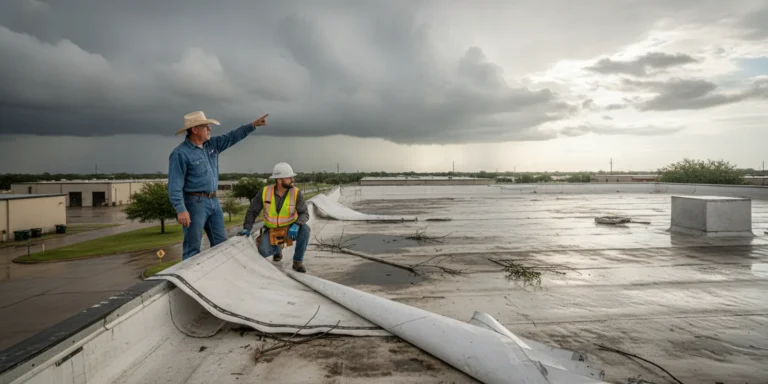
Storm losses that also involve hail or wind on a landlord roof can overlap the firm’s storm damage claim work. Stay on the landlord questions here: which suites, whose improvements, and which rent stopped. Let that page carry the weather-damage dispute itself.
Hoch Law Firm handles a select number of these files at a time so Tim Hoch can stay on the claim. The firm advances litigation costs and is paid a contingent fee only if there is a recovery. That is not a promise of a result. It is the fee structure posted on the commercial property pages and confirmed in a free case evaluation.
Call 817-731-9703 before a mixed landlord file turns into a partial payment.
Frequently Asked Questions
Does a commercial landlord file one claim for the building and the rent?
Often one notice of loss covers the event, but the proof should stay in separate stacks. Building repairs, lease duties, and rental income can have different limits and different disagreements. Sending them as one unlabeled total makes a partial payment harder to challenge.
What if the tenant had its own insurance?
Say so. The tenant’s policy may cover the tenant’s improvements and the tenant’s income. It does not automatically pay for the landlord’s roof, structure, or lost rent. List which items you say are landlord property and which items you are not claiming.
Should the rent roll go in the first notice?
Notice can be short. The rent roll, leases, and ledgers should follow as their own indexed set, especially if the carrier’s acknowledgment asks for them. Do not hold the building report until the rent math is finished.
When should a landlord call Hoch Law Firm?
Call when the carrier mixes the building price with a tenant item or a rent question. Also call if a Chapter 542 deadline passes, or if one part is paid and the rest goes quiet. You can call before you send a large lease production, so the file answers what was asked and nothing more. Tim Hoch reviews the claim with you on a free case evaluation.
A clean landlord claim is a separated claim. Building, lease, rent, and repair timeline. Keep those four stacks intact, answer the carrier in those same parts, and call 817-731-9703 if the letters start treating them as one dispute.