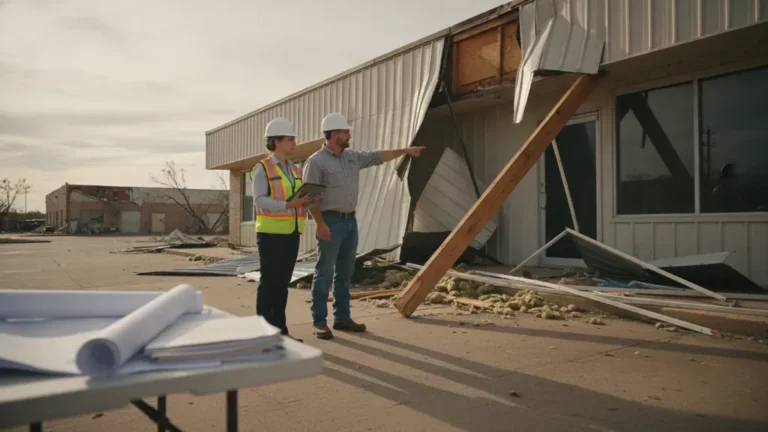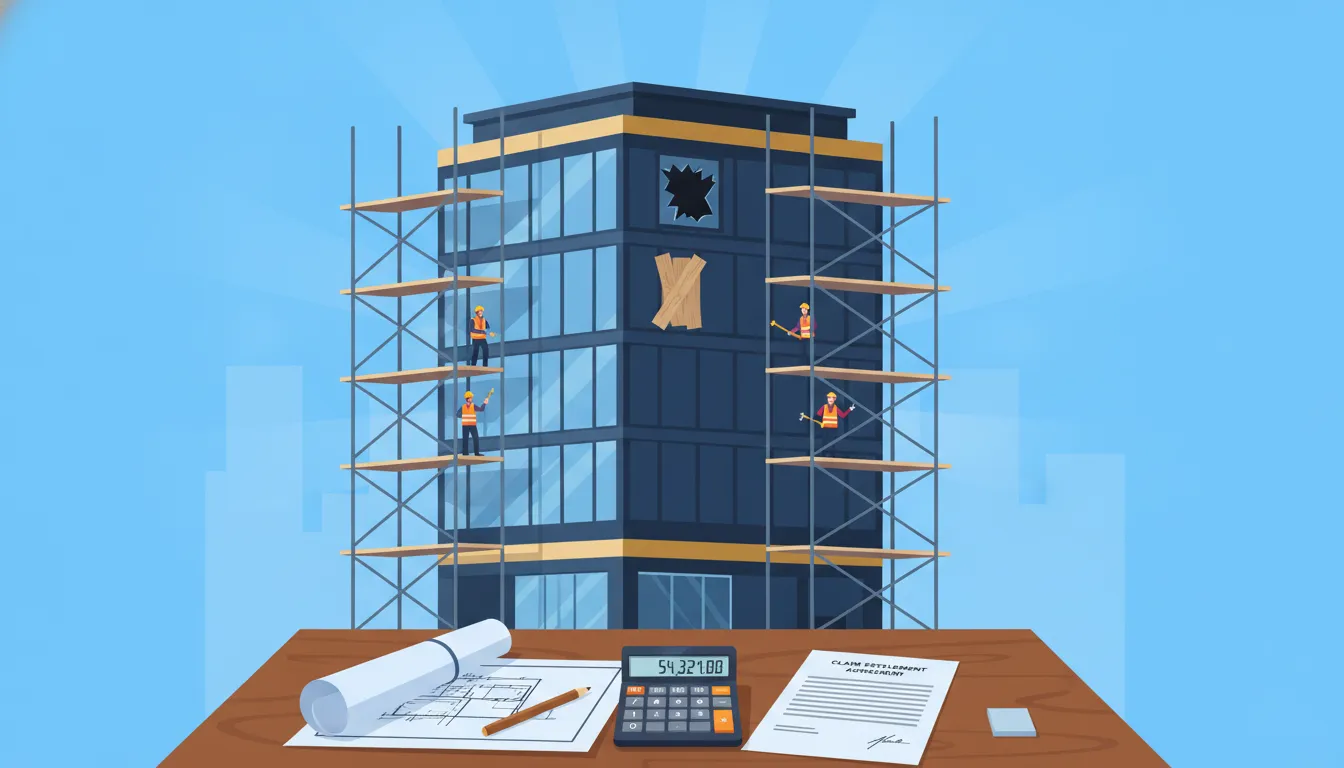
After severe property damage, your business cannot wait months for a full repair to start operating again. You need to keep your doors open, even if it means renting a temporary office or paying for rush labor. These costs can quickly drain your cash flow if your insurer refuses to pay.
Need help with a denied extra expense claim? Call (817) 731-9703 for a free case evaluation.
An extra expense coverage claim dispute often happens when an insurance company denies payment for costs needed to keep a business running after property damage. This coverage pays for essential costs that would not have existed without the loss. Common examples include renting a temporary office, moving equipment to a new site, or leasing substitute machinery. According to the Texas Department of Insurance, these benefits cover needed expenses to continue operations while your property is being repaired. If an insurer claims your costs were not needed or calls them permanent upgrades rather than temporary fixes, they may reject your claim. To win a dispute, you must provide clear proof that every cost was directly tied to minimizing your loss and speeding up your recovery.
Filing a successful claim for these costs requires a deep understanding of your policy limits and the period of restoration. You must be able to prove that every dollar spent was vital for your recovery and allowed you to stay in business. We will explore the basics of these policies in the section below, What Is Extra Expense Coverage in Commercial Insurance? The path begins with…
Extra Expense Coverage Claim Dispute: What Is Extra Expense Coverage in Commercial Insurance?
Extra expense coverage is a key part of many commercial property policies in Texas. It gives funds for costs that a business must pay to stay open after a fire, storm, or other event causes physical damage. Most people assume that basic property insurance will pay for everything after a disaster. Standard insurance pays to fix the building. But extra expense coverage pays for the added costs of keeping your doors open during repairs. Per the Texas Department of Insurance, these funds cover needed costs that you would not have had if the damage had not happened.
Examples of Extra Expenses
The goal of this coverage is to help your business avoid a total shutdown. When a disaster strikes, you may need to spend more than your normal budget to serve your customers. For example, you might need to rent a short-term office or retail space while your main building is being fixed. You might also need to pay for moving costs or to lease gear to replace what was lost.
Other common extra expenses include:
- Overtime pay for workers who help speed up the repair work.
- Costs to move stock to a safe storage spot.
- Power and water fees for a short-term site.
- Short-term leases for trucks or tools.
Extra Expense vs. Business Income Coverage
It is easy to mix up extra expense coverage with business income or interruption insurance. Both aim to put your business back in the same financial spot it was in before the loss. However, they do it in different ways. Business income coverage pays for the profit you lost because you could not work. In contrast, extra expense coverage pays for the money you spent to keep working. Many businesses manage extra expense and business interruption disputes at the same time after a large claim. Both types of coverage use “normal work” as a baseline to decide what counts as an added cost.
Issues of an Extra Expense Coverage Claim Dispute
Even with clear policy terms, many owners face an extra expense coverage claim dispute when they try to use their benefits. Insurance companies often look for ways to pay less than what is owed. A common tactic is for the insurer to claim that a cost was not needed to keep the business going. They might argue that you could have waited for repairs instead of renting a new space.
In other cases, an insurer might say that your spending went toward a permanent upgrade rather than a short-term fix. For instance, if you buy new gear instead of leasing it, the company may deny that part of the claim. To protect your rights, you should keep clear records of every dollar spent during the recovery. If your insurer refuses to pay for valid costs, you may need help from a property insurance lawyer in Fort Worth. A trial lawyer can help you handle extra expense claims during fire recovery.
The Difference Between Business Income and Extra Expense Coverage
Business income and extra expense coverage often work with each other, but they serve other roles. Business income covers the money you lose when you cannot work. Extra expense coverage pays for the added costs to keep your business running. Knowing how these differ helps you manage extra expense and business interruption disputes if a claim is denied. Both are vital for Texas business owners who face property damage from storms or fire.
Business Income for Lost Profits
Business income insurance helps when a fire or storm stops your work. It pays for the profit you would have made if the loss did not happen. It also covers fixed costs like rent or taxes that you still must pay while your doors are shut. This coverage starts after a waiting period, which is often 72 hours according to the Texas Department of Insurance. This time acts as a deductible before you get paid.
This coverage aims to keep your business in the same financial state it was in before the loss. It lasts during the “period of restoration,” which is the time needed to fix or replace the damage with fair speed. If a fix takes too long due to poor work, the insurer might stop paying early. You must show that you are working fast to get back to normal work. Clear records from before the loss are needed to prove what your profit should have been.
Extra Expense for Keeping Doors Open
Extra expense coverage pays for costs above your normal budget that help you stay open. This includes renting a new space or leasing tools to keep work going. It can also cover moving costs to save your stock. Sometimes, it pays for overtime to help crews fix the damage faster. The goal is to avoid a total stop in your work. Many firms use this to keep serving clients while they rebuild.
If you face an extra expense coverage claim dispute, you must show these costs were needed. You must prove they helped lower your total loss. Insurers often fight these claims to save money. They may say a cost was not “needed” to keep the business alive. They might even claim a fix was a new upgrade instead of a short move. To win, you must keep every receipt and log why each cost was made during the handle extra expense claims during fire recovery phase.
Avoiding Extra Expense Coverage Claim Disputes
Insurance firms often fight these claims to lower their payouts. They may argue about the “period of restoration” or say a cost was a new upgrade. In Texas, you have a right to a written explanation for any denial or partial payment. If an insurer acts in bad faith by denying a clear claim, they can face big fines under state law. This includes paying 18% interest per year on the claim amount.
Very clear records are the best way to stop a dispute before it starts. You should use an expert to track how your costs changed after the loss. This helps split your normal costs from the “extra” ones. If the insurer still says no, you may need a trial lawyer. A board-certified lawyer can show the insurer that you are ready to fight for your rights. This often leads to a fair settlement faster.
| Coverage Feature | Business Income | Extra Expense |
|---|---|---|
| Primary Goal | Replaces lost net income and pays fixed costs. | Pays for added costs to keep the business running. |
| Common Costs Covered | Lost profit, rent, taxes, and loan payments. | Moving fees, rent for new space, and overtime pay. |
| Waiting Period | Usually 72 hours (functions as a time deductible). | Usually starts right away after the covered loss. |
| Key Dispute Area | The exact amount of profit lost during the stop. | Whether the added cost was truly needed. |
Residential Additional Living Expenses: A Separate Path
A policy may provide additional living expense (ALE) coverage for the reasonable increase in living costs if a covered loss makes a Texas residence unfit to live in. Coverage, limits, exclusions, and proof requirements depend on the policy. This is different from the commercial extra expense coverage discussed above, which addresses added costs of keeping a business operating after covered damage. Do not assume a commercial coverage explanation answers a residential ALE question.
For the commercial coverage framework, review Hoch Law Firm’s commercial property insurance guidance. For business-income issues that may arise in a commercial claim, see business interruption claims guidance.
1. Preserve the Claim Record
Keep the policy, declarations, claim notice, photos and videos, repair or inspection records, carrier messages, temporary housing records, invoices, and receipts. Maintain a running comparison of ordinary household costs and the added costs tied to the loss. Record the date, amount, reason, and connection to the damage for each expense. Do not discard receipts or rely only on a phone conversation.
2. Compare the Carrier’s Position With the Policy
If the carrier questions an expense, limits the period, requests more proof, or denies ALE, ask for the position in writing. Compare it with the policy’s coverage language, exclusions, limits, conditions, and documentation requirements. A carrier’s estimate of what is reasonable is not a substitute for reviewing the policy and the evidence supporting the expense.
3. Know When to Seek Counsel
Consider speaking with a Texas property insurance attorney when the carrier denies or underpays the claim, disputes whether the residence is livable, refuses reasonable documentation, or leaves you paying significant added costs. Bring the policy, claim correspondence, photos, receipts, and repair or inspection records so counsel can evaluate the dispute and explain the next step.
What Counts as a Covered ‘Extra Expense’ Under Texas Law?
Extra expense coverage helps your business stay open after a disaster. It covers costs that you would not have had if the property damage did not happen. These funds allow you to keep serving customers while you repair your main office. According to the Texas Department of Insurance, these costs must be needed to limit your total loss. Without this help, many firms would have to close their doors for good.
Common Types of Extra Expenses
Texas law and standard policies look at costs that go beyond your normal budget. If you must spend more to avoid a total shutdown, those costs should be covered. The goal is to put your business back in the same financial position it was in before the loss. This coverage is distinct from your lost income. It focuses on the extra cash you spend to keep the doors open.
Most policies will cover a wide range of costs during the time it takes to fix your property. This window is often called the period of restoration. You must show that each cost was a direct result of the covered damage. Keeping good logs and files of all spending is vital for a smooth claim.
- Move to a new space. You can get money for the cost of leasing a short-term office or shop. This includes the rent for the new spot and the cost to move your desk or tools there. It also covers the cost of setting up phone lines in the new spot.
- Rent tools and machines. If your main machines are broken, you might need to lease other ones. This helps you keep making your products or giving your services to clients. This leasing cost can be high, but it is often less than the cost of losing all your sales.
- Pay for overtime labor. You may need to pay your staff to work extra hours. This helps speed up the work to fix your building so you can move back in sooner. You can also use this to pay for help to move stock to your new site.
- Store and save stock. It costs money to move your goods to a safe warehouse. Protecting your stock from more harm is a big part of your job under Texas law. This ensures you do not lose more money while you wait for repairs.
- Tell your customers. You might need to send mail or run ads to let people know where you are. These costs help you keep the trust of the people who buy from you. It also helps them find your new shop.
Why Claim Disputes Happen
Insurance firms often try to say that your costs were not needed. They might call a move to a better office an upgrade instead of a fix. This is a common way to start an extra expense coverage claim dispute with your provider. They may also argue that you took too long to fix the damage and try to cut off your funds.
Under the Texas Insurance Code, your provider must act in good faith. They must give you a clear reason in writing if they turn down any part of your claim. If they fail to do this, they may be breaking the law. A firm that acts in bad faith could be liable for more than just your original claim.
How to Document Your Claim
You must keep every bill and receipt. If you don’t have proof, the insurance company will likely deny your claim. They want to see that the cost was truly “extra” and not just a normal part of doing business. You should compare your new bills to what you paid before the loss happened. This makes it clear to the agent that the cost was due to the property damage.
It is also wise to keep a log of all talks with your insurer. Write down the name of the person you spoke with and the date. Note what they said about your extra expense coverage. Having a clear record shows that you did everything right from the start. This can be key if you need to challenge a denied claim later on.
Why Insurers Dispute Extra Expense Claims
Insurance firms often try to lower the amount they pay on claims. They are firms that want to keep their own costs down. This can lead to an extra expense coverage claim dispute. It happens when you try to get back the money you spent to keep your firm running. Knowing how they fight these claims can help you prepare.
Questions About Needed Costs
One common trick is to argue that your costs were not “needed.” Your policy likely says it covers “needed” costs to keep your firm open. But the insurance firm may have a different view of what that means. They might claim you could have stayed open without renting a new space.
For example, they may say you spent too much on new gear to replace what was lost. The Texas Department of Insurance notes that this coverage is for costs you would not have had without the damage. This is why you must keep clear records of every dollar spent during your fix. You should be ready to manage extra expense and business interruption disputes if the firm pushes back.
Limits on the Repair Period
Another point of fight is the “period of repair.” This is the time it should take to fix your property and get back to work. Insurers want this time to be as short as possible. They may argue that your repairs took too long because you did not start fast enough.
Or they might say your builder was too slow. If the insurance firm thinks you could have finished repairs in six months, they may stop paying at that point. Even if the work really takes nine months, they might refuse to cover the last three months of extra costs. You must track every delay, such as waiting for permits or parts.
Proving that you moved as fast as possible is key to winning this fight. In Texas, you have rights if a firm tries to drag out the work. You can resolve complex commercial property insurance disputes with the right help.
Naming Your Costs Wrong
The insurance firm may also try to say an extra cost is just a normal business cost. They look at your past spending to find a reason to deny your new costs. For example, if you move to a new site, they might say the rent there is a “normal” cost, not an “extra” one.
They may try to take your old rent from your new rent and only pay the gap. This kind of math can quickly lower your payout. It is often helpful to have an expert look at your claim. Hoch Law Firm is led by Tim Hoch, a board-certified trial lawyer. The firm can push back against these unfair tricks to help you get the full amount you need.
How to Protect Your Business During an Insurance Dispute
When you face an extra expense coverage claim dispute, the steps you take now can change the result of your case. Insurance firms often look for any reason to pay less or deny your request. You must show that your costs were both real and needed to keep your doors open. Start by sorting all your money data and keeping a close eye on the clock.
Record Every Extra Cost
Success in a claim dispute depends on proof. You must keep every receipt, log, and bank record for costs that go beyond your normal budget. This includes things like rent for a temporary space, moving fees, or extra pay for staff. Without a clear trail of paper, the insurer may say these costs were not needed.
Keep a daily log of why you spent the money. For example, if you rent a tool to keep your goods cool, write down why that was the only way to save your stock. Texas law gives you the right to written reasons for why a claim is denied. Having your own records ready makes it harder for the firm to give you a vague answer.
Meet Your Duty to Mitigate
Texas courts expect you to take steps to stop more damage from happening. This is called your “duty to mitigate” your losses. If you do not try to protect your property or resume work, the insurer might use that as an excuse to cut your pay. For instance, you should cover broken glass or move stock away from a leaky roof.
A commercial property insurance dispute lawyer in Texas can help you understand what counts as a fair effort. You should focus on getting back to your normal business work as fast as you can. While you work on this, keep a record of all the steps you took to save the site and keep the shop running. This shows the insurance company that you are acting in good faith.
Hire a Board-Certified Lawyer
Handling a complex dispute on your own is hard. Large insurance firms have teams of experts working to save them money. You need someone on your side who knows the rules of the extra expense coverage claim dispute process. In Texas, very few lawyers hold Board Certification in Personal Injury Trial Law. This mark of skill shows that a lawyer has the trial experience needed for big cases.
Tim Hoch at Hoch Law Firm is board-certified and has over 28 years of experience in this field. He knows how to push back against bad-faith tactics. By hiring a skilled lawyer, you signal to the insurance firm that you are ready to fight. This often leads to a more fair and faster result for your business. You can focus on your work while your lawyer handles the legal fight.
Frequently Asked Questions
How long does a Texas insurance company have to act on a claim?
In Texas, insurance firms must follow strict time rules. Once you file a claim, the firm has 15 days to let you know they got it. They must then start looking into the damage. After they get all your forms, they have 15 more business days to say if they will pay or deny the claim. Under the Texas Insurance Code, if they need more time, they must tell you why.
Can I get back the money spent on overtime to finish repairs faster?
Yes, extra expense coverage often pays for costs to help your business get back to work fast. This includes paying workers for extra hours or hiring more help to finish repairs sooner. You must show that these costs are truly needed to keep your business running or to get it open again. If the extra pay helps you lower your total loss, the insurance firm should cover it. Keeping good records of all work hours is key for your claim.
What should I do if my insurance company denies my extra expense claim?
If your claim is denied, you have a right to know why. Under Texas law, the insurance firm must give you a written note telling you about the exact part of the policy they used to deny you. You should review this note with a lawyer to see if the firm is acting in bad faith. You may need to file a formal dispute or a lawsuit to get the money you are owed.
Are the costs of moving to a new office covered by extra expenses?
Moving costs and the price of a short-term office are common extra expenses. If your building is damaged, you may need to rent a new space to stay in business. This coverage helps pay for the rent, the cost of moving gear, and even storing items that you cannot use yet. These costs must be above what you would normally pay. For example, if you rent a shop for $2,000 but your old shop cost $1,000, the firm pays the $1,000 gap.
Ready to Talk to a Texas Lawyer About Your Claim?
Waiting too long to act on your commercial property damage claim can put your business in a tough spot. If you do not push for the money you need right now, those extra costs will keep coming out of your own pocket. This can lead to large debts or even force you to close your doors for good. The insurance firm often hopes that you will just give up and walk away. Taking action today gives you the best chance to fix these problems and get a clear plan to bounce back. When you start the process now, you can stop the stress of unpaid bills. You get to focus on running your business while an expert works on your case. This move helps you get the cash you need to stay open and keep your team working.
Ready to take the next step? Call (817) 731-9703 to schedule a free case evaluation.