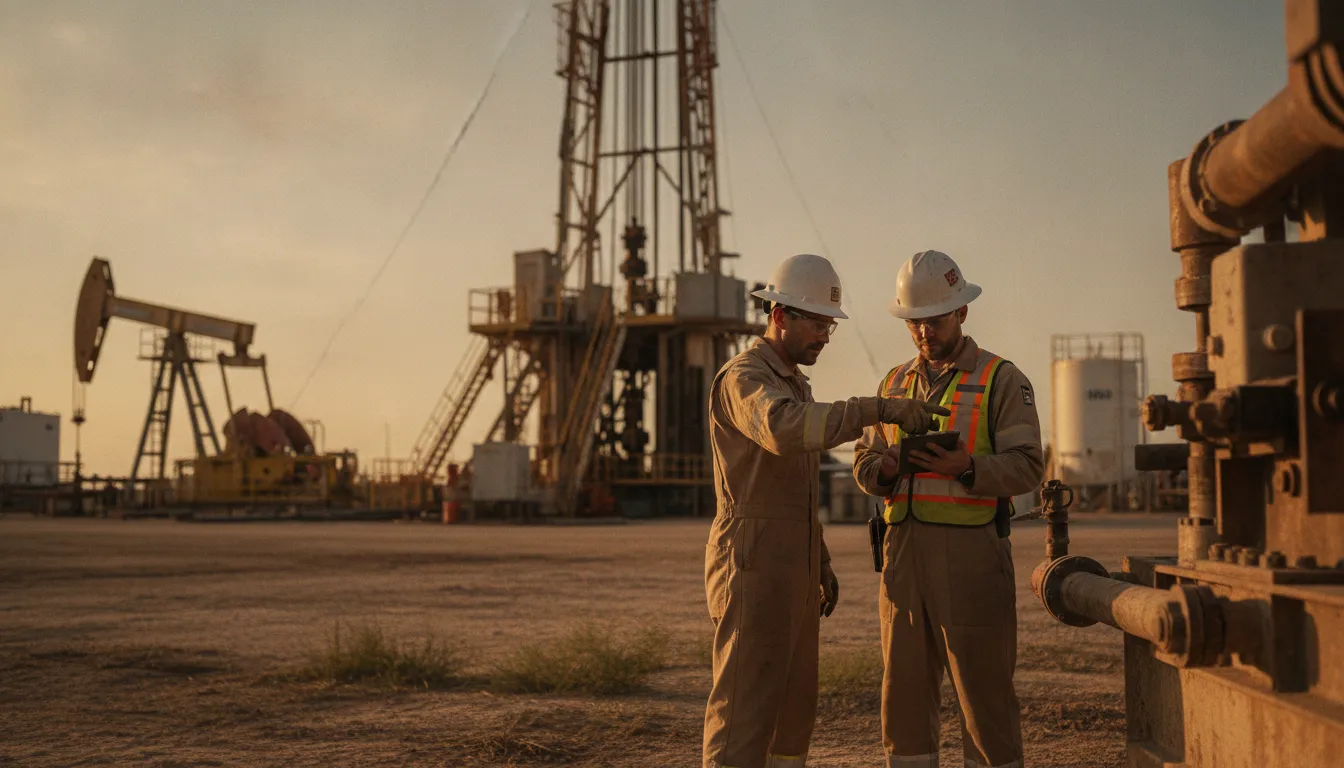

 Oilfield Injury Attorney Fort Worth: What Injured Workers Should Know
Oilfield work can turn dangerous in seconds. Moving machinery, high-pressure equipment, and flammable chemicals can cause serious harm. Equipment failures and improperly secured pressurized systems can cause burns, crush injuries, amputations, head trauma, and other life-changing injuries. The consequences may extend far beyond the first emergency-room visit.
Call Hoch Law Firm for a free case evaluation about your oilfield injury
If you were injured at a North Texas wellsite, an oilfield injury attorney Fort Worth workers can help examine what happened and who controlled the dangerous condition. A contractor, equipment manufacturer, or another third party may share responsibility. Available claims and damages depend on the facts, employment relationship, and evidence.
These cases often involve more than one company and complex safety records. Injuries can affect your ability to work and support your family. Understanding the most common accident patterns is the first step toward recognizing what evidence may matter and where responsibility may lie.
What Are the Most Common Oilfield Accidents and Injuries?
Oilfield accidents commonly involve machinery, high-pressure lines, fires, explosions, chemical exposure, and falls. These incidents can cause burns, crush injuries, amputations, head trauma, and other life-changing harm. The equipment, site conditions, company roles, and safety records can help show what happened and whether another party may be responsible.
Oilfield work combines heavy equipment, pressurized systems, flammable materials, and demanding conditions. A moment of equipment failure or an unsecured line can cause injuries that affect a worker’s health, ability to earn income, and family life for years.
The Occupational Safety and Health Administration identifies moving machinery, high-pressure equipment, and flammable chemicals as significant oil and gas hazards. OSHA also points to equipment fatigue, mechanical failure, and improper securing of pressurized equipment as common causes of wellsite incidents. These risks can affect workers on drilling sites, production facilities, and other oil and gas operations.
Equipment failures and machinery accidents
Workers can be struck, caught between components, or pulled into machinery when equipment lacks proper guards or malfunctions during operation. A failed component may also release stored energy without warning. Injuries may include broken bones, crush injuries, traumatic amputations, spinal damage, and head injuries.
These accidents are not always caused by the injured worker. Maintenance decisions, inspection failures, inadequate training, or an unsafe work procedure may have contributed. The condition of the equipment, maintenance records, safety policies, and witness accounts can help clarify what happened.
High-pressure line and wellsite incidents
Pressurized lines and equipment can rupture, disconnect, or release fluids and gases with tremendous force. Workers nearby may suffer severe impact injuries, burns, chemical exposure, or hearing damage. A sudden release can also trigger a larger fire or explosion when flammable materials are present.
Hoch Law Firm’s overview of oil rig accidents and explosions describes the potential for severe burns, amputations, head injuries, and long-term care needs after serious incidents. The specific injury pattern often depends on the equipment involved, the force of the release, and how quickly emergency care was provided.
Fires, explosions, and chemical exposure
Flammable chemicals and gases can ignite during drilling, transfer, storage, or maintenance work. Fires and explosions may cause thermal burns, inhalation injuries, eye injuries, and permanent disfigurement. Chemical exposure can damage skin, lungs, or other organs, sometimes with symptoms that develop after the initial event.
When a site involves several companies, responsibility may not rest with one employer. Depending on the facts, a contractor, subcontractor, site operator, or equipment manufacturer may have played a role. Preserving incident reports, photographs, medical records, and the names of everyone working at the site can be important when the cause is disputed.
What Should You Do After an Oilfield Accident?
After an oilfield accident, seek medical care, report the incident, preserve photographs and records, identify witnesses and involved companies, and avoid signing unfamiliar documents. These steps can protect your health and preserve evidence while the cause, employment relationships, and potential claims are investigated.
The first hours after an oilfield accident can be confusing, especially when pain, medication, or pressure from a supervisor affects your decisions. Focus on your health and preserve accurate information. Oil and gas worksites may involve moving machinery, high-pressure equipment, flammable chemicals, and failures involving pressurized lines, according to the Occupational Safety and Health Administration. Those conditions can make early medical care and evidence preservation especially important.
- Get emergency medical care. If you have a serious injury, ask for emergency treatment immediately. Follow the medical provider’s instructions and tell the provider about every symptom, even if it seems minor at first. Keep discharge papers, diagnoses, prescriptions, bills, work restrictions, and follow-up records. Do not return to hazardous work against medical advice. A complete medical record helps show how the incident affected you and what care may be needed later.
- Report the incident through the required channels. Notify your supervisor, employer, site operator, or safety contact as soon as you reasonably can. Ask how the report will be documented and keep a copy if one is available. Write down when you reported the accident, whom you contacted, and what you said. Reporting duties and deadlines can vary depending on your employment arrangement, the type of claim, and the parties involved. Do not assume that an internal report satisfies every legal requirement.
- Preserve photographs and physical evidence. If it is safe and your condition allows, photograph the work area, equipment, warning signs, protective gear, visible injuries, and conditions that may have contributed to the incident. Do not re-enter a dangerous area or interfere with an investigation. Save texts, emails, schedules, training materials, incident notices, pay records, and written instructions. Never alter a photograph or delete a message.
- Identify witnesses and every company involved. Record the names and contact information of coworkers, supervisors, contractors, inspectors, and anyone who saw the incident or its aftermath. Write a private timeline while events are fresh. Note the employer, drilling or production company, site operator, staffing company, maintenance contractor, and equipment manufacturer if known. Multiple contractors may be involved in an oilfield accident, so responsibility may require investigation beyond the primary operator.
- Avoid guessing about fault or signing unfamiliar documents. Give truthful facts, but do not speculate about what caused the accident or accept blame simply because someone asks. Be cautious before signing a release, recorded statement, settlement document, or document describing your injury. Ask what the document means and consider speaking with an attorney first. Deadlines and legal duties vary by claim, and an early conversation with an oilfield injury attorney Fort Worth workers can reach for trial-tested personal injury representation may help clarify what should happen next.
Keep a simple symptom and expense log, including missed work and changes in daily activities. Bring that information, your records, and any incident communications to a qualified lawyer for review. The facts, applicable law, and identity of the responsible parties determine which claims and deadlines may apply.
Is Workers’ Compensation the Only Recovery After an Oilfield Injury?
Workers’ compensation may not be the only potential recovery after an oilfield injury. If a separate contractor, site operator, equipment manufacturer, or other party contributed to the accident, a third-party personal injury claim may also deserve review. The available path depends on the employment relationship, contracts, evidence, and applicable law.
Workers’ compensation benefits and a third-party personal injury claim are not the same type of recovery. Workers’ compensation generally addresses benefits available through an employer’s workers’ compensation system. A third-party claim may involve a separate company whose conduct or product contributed to the incident. Whether either option applies depends on the worker’s employment relationship, the companies present at the site, the contracts between them, and the evidence about what happened.
Oilfield worksites often bring together operators, drilling contractors, service companies, vendors, and equipment manufacturers. OSHA’s oil and gas safety guidance recognizes that when multiple contractors work at one site, responsibility may extend beyond the primary operator to subcontractors or equipment manufacturers. That does not establish liability in a particular case, but it shows why identifying every involved entity can matter.
| Issue | Workers’ compensation benefits | Possible third-party claim |
|---|---|---|
| Potential source | The employer’s workers’ compensation coverage or applicable state system. | A separate company, contractor, property owner, manufacturer, or other entity whose conduct or product may be connected to the injury. |
| Questions examined | Whether the injury occurred in a work-related setting and what benefits may be available under the applicable workers’ compensation rules. | Whether another party owed a duty, failed to meet it, and contributed to the accident or resulting harm. |
| Evidence that may matter | Employment records, incident reports, medical records, and documentation of the injury and treatment. | Contracts, work assignments, inspection and maintenance records, equipment history, safety communications, photographs, and witness testimony. |
| Potential recovery | Benefits can depend on the applicable system and may address medical treatment or income-related needs. | A personal injury claim may involve damages recognized under Texas law, but the available categories and amount depend on the facts and proof. |
For example, a contractor may have controlled a particular task, supplied a crew, or failed to communicate a known hazard. A manufacturer may become relevant if a defective component or inadequate warning contributed to the event. In other cases, the facts may point somewhere else, or the evidence may not support a claim against a separate entity. The identity of the responsible party cannot be determined from the job title alone.
Preserving evidence early can help clarify these relationships. Work orders, site access records, equipment tags, maintenance documents, safety meeting materials, and communications may show who owned, supplied, inspected, or controlled the equipment and work area. Photos of the site and equipment, along with prompt medical documentation, may also help preserve the sequence of events.
Workers and families dealing with serious oil rig accidents and explosions should avoid assuming that one benefit system answers every legal question. A review of the employment structure, contracts, incident evidence, and injuries can help identify which potential avenues deserve further evaluation.
What Damages May an Oilfield Injury Claim Involve?
An oilfield injury claim may involve medical expenses, future care, lost wages, reduced earning capacity, pain, impairment, disfigurement, or family losses, depending on the facts and legal claim. Each category requires evidence connecting the loss to the injury, responsible party, and applicable law.
The damages available after an oilfield injury depend on the injury, the evidence, the responsible parties, and the legal claims involved. A claim may address more than the initial emergency-room bill. It may also account for the care, income, and quality-of-life effects that continue after the accident.
The Occupational Safety and Health Administration identifies moving machinery, high-pressure equipment, and flammable chemicals as oil and gas extraction hazards. Its guidance also discusses medical care and lost future earnings associated with permanent disability. Those categories can become important when an incident involves equipment failure, pressurized lines, burns, fractures, amputation, or another serious injury. OSHA’s oil and gas extraction hazards guidance provides helpful safety context, but the damages in an individual case must be supported by case-specific evidence.
Medical expenses and future care
A claim may include reasonable medical expenses already incurred, such as ambulance transportation, hospitalization, surgery, medication, rehabilitation, and follow-up visits. If the injury causes permanent limitations, the analysis may also include reasonably necessary future care. Depending on the circumstances, that can involve additional procedures, physical or occupational therapy, medical equipment, prescriptions, in-home assistance, or other treatment.
Medical records, treatment plans, and qualified medical opinions can help show what care is necessary and how long it may be needed. The severity of an injury alone does not establish a specific dollar amount.
Lost wages and reduced earning capacity
An injured worker may be unable to work during recovery. Potential economic damages may therefore include documented lost wages and other employment income. If the injury prevents a return to the same job, limits available work, or permanently reduces earning ability, a claim may also address diminished future earning capacity.
That evaluation can require evidence about the worker’s prior earnings, work history, education, physical restrictions, age, and expected career path. A vocational or economic expert may be needed when the loss extends well into the future. The goal is to connect the claimed loss to the injury, rather than rely on an unsupported estimate.
Pain, impairment, and disfigurement
Texas personal-injury claims may also involve non-economic losses, including physical pain, emotional distress, physical impairment, and disfigurement when the facts and applicable law support them. A serious burn, visible scar, loss of function, or permanent disability can affect daily activities, independence, sleep, relationships, and confidence. Evidence may include treatment records, photographs, testimony from the injured person and family members, and opinions from medical professionals.
Family and wrongful-death losses
When an oilfield injury affects a spouse or family, additional remedies may be legally available in some circumstances. A wrongful-death claim may involve losses suffered by eligible surviving family members. The rules differ based on the claim and relationship, so a family should obtain advice specific to its situation.
Because contractors, operators, and equipment manufacturers may share responsibility on an oilfield site, identifying every potentially responsible party can affect which damages are pursued. Preserve medical and employment records, and discuss the facts promptly with an oilfield injury attorney Fort Worth families can reach for a fact-specific evaluation.
How an Oilfield Injury Attorney Fort Worth Workers Trust Builds a Case
An oilfield injury attorney Fort Worth workers trust can build a case by identifying every company involved, examining contracts and safety records, preserving physical evidence, connecting the accident to medical and wage losses, and preparing for disputed testimony. The investigation should be fact-specific and should not promise a particular result.
A serious oilfield injury case requires more than collecting medical bills and describing what happened. An oilfield injury attorney Fort Worth workers trust will work to understand the job, the site, the people involved, and the decisions that preceded the incident. The goal is to develop a fact-supported account of responsibility and the harm that followed.
That investigation may begin with the contracts governing the project. Agreements can help identify the operator, general contractor, subcontractors, equipment owners, and the parties responsible for supervision or maintenance. When several contractors share a worksite, potential responsibility may extend beyond the primary operator to a subcontractor or equipment manufacturer, depending on the facts. The OSHA contractor-safety guidance provides useful context for why coordination and clearly defined responsibilities matter on multi-employer sites.
Examining the site, equipment, and safety records
Counsel may inspect the wellsite or preserve photographs, videos, maintenance records, inspection reports, training materials, and incident documentation. The investigation can focus on who controlled the area, who supplied or secured the equipment, and whether required warnings or procedures were provided. OSHA identifies moving machinery, high-pressure equipment, and flammable chemicals as oil and gas extraction hazards. It also identifies equipment fatigue, mechanical failure, and improper securing of pressurized equipment as possible sources of wellsite incidents.
Those details can be important when the defense argues that an injury was unavoidable, caused by a worker’s mistake, or unrelated to a particular piece of equipment. A careful review does not assume liability. It tests each explanation against the physical evidence, applicable procedures, witness accounts, and the records created before and after the incident.
Connecting the incident to the injury
Medical evidence is another central part of the case. Medical records, diagnostic studies, physician opinions, treatment plans, and testimony from specialists may help explain the nature of the injury, the treatment already required, and the care that may be needed later. Employment records and vocational evidence may also help evaluate missed work, limitations, and changes in earning capacity. OSHA notes that potential damages in an injury claim may include medical care and lost future earnings associated with permanent disability. Available remedies depend on the facts and applicable law.
Witnesses can add context that a report cannot. Coworkers, supervisors, first responders, engineers, safety personnel, and treating providers may each have different knowledge of the equipment, conditions, warnings, sequence of events, or resulting limitations. Depositions preserve testimony and allow counsel to test conflicting accounts before trial.
Preparing for defenses and trial
An insurer or company may dispute who controlled the site, whether a safety rule applied, how the equipment was used, or how severe the injury is. Counsel may consult qualified technical, medical, or vocational professionals when the evidence calls for specialized analysis. Trial readiness means developing the case as though the evidence will need to withstand questioning in court, while still evaluating practical resolution options.
Tim Hoch’s trial experience includes litigating hundreds of cases, many tried to verdict. He is Board Certified in Personal Injury Trial Law. Hoch Law Firm also explains its trial-tested personal injury representation approach. Those credentials do not guarantee an outcome, but they reflect the importance of careful preparation when an oilfield injury involves disputed facts, multiple companies, and life-changing consequences.
Why Does Trial-Tested Representation Matter in an Oilfield Case?
Trial-tested representation matters because oilfield injury cases can involve disputed fault, multiple companies, technical equipment, and serious long-term damages. Preparing for depositions, expert analysis, and trial can strengthen the factual foundation for negotiations while preserving the ability to present the claim in court if resolution is not fair.
Oilfield injury cases can involve more than one employer, contractor, equipment company, or site operator. Each may have a different account of what happened and a different position on who was responsible. A lawyer preparing the case for trial must test those accounts against the physical evidence, safety records, contracts, medical documentation, and testimony.
That preparation matters when fault is disputed. A company may argue that a worker failed to follow a procedure, while another company points to equipment maintenance or site supervision. The facts may show a different combination of causes. A careful investigation identifies the people and entities with relevant knowledge, preserves evidence before it disappears, and develops a theory of responsibility that can withstand opposing arguments.
Depositions and expert analysis
Depositions give attorneys an opportunity to question supervisors, safety personnel, contractors, engineers, and other witnesses under oath. The answers may clarify who controlled a task, what warnings were provided, whether equipment was inspected, and what policies applied. They can also reveal conflicts between written records and later explanations.
Experts may be necessary when the case involves equipment design, industrial safety, workplace practices, medical treatment, or the long-term effect of an injury. Their role is to explain technical issues clearly and connect reliable evidence to the disputed questions. Expert testimony must be grounded in the available facts, not assumptions about how an accident occurred.
Trial preparation changes the quality of the case
Trial readiness requires more than sending a demand letter. It means organizing documents, evaluating testimony, preparing witnesses, anticipating evidentiary disputes, and understanding how a jury may assess competing explanations. Even if a case resolves before trial, that preparation helps the client make decisions with a clearer view of the strengths and limits of the claim. No lawyer can guarantee an outcome, and liability and available remedies depend on the facts.
Tim Hoch has more than 30 years of experience as a trial lawyer. He has litigated hundreds of cases and tried many to verdict. He is also Board Certified in Personal Injury Trial Law. For a complex oilfield injury case, that background provides a foundation for direct, informed evaluation from investigation through trial preparation.
Call Hoch Law Firm for a free case evaluation about your oilfield injury
Frequently Asked Questions
What should I do immediately after an oilfield accident?
Get emergency medical care, report the incident through the required workplace channel, and preserve photographs, witness names, equipment information, and medical records. Avoid guessing about fault or the extent of your injuries before the investigation is complete.
Can I pursue a claim against someone other than my employer?
Possibly. When several contractors work at one site, responsibility may involve a subcontractor, site operator, equipment manufacturer, or another party, depending on the evidence. OSHA identifies contractors and equipment manufacturers as possible sources of liability in some multi-employer oilfield incidents. OSHA contractor-safety guidance can provide background, but it does not determine who is legally responsible in a specific case.
Is workers’ compensation enough to cover an oilfield injury?
Workers’ compensation may not address every loss, particularly when a responsible third party contributed to the accident. The available remedies depend on the employer, the parties involved, the injury, and the facts established during investigation.
What damages may an oilfield injury claim involve?
Depending on the circumstances, a claim may involve medical care, lost income, reduced future earning capacity, pain, and other injury-related losses. OSHA notes that permanent disability can affect future earnings. OSHA oil and gas hazard information provides general context, while the specific damages require case evaluation.
When should I contact an oilfield injury attorney in Fort Worth?
Contact an attorney promptly when injuries are serious, the cause is disputed, multiple companies were involved, or you are unsure which records and evidence matter. Early legal review can help identify potential responsible parties before important evidence becomes harder to obtain.
Understanding who may be responsible and what damages may be available can require a careful review of the accident, worksite, and medical records. A focused case evaluation can help you understand possible next steps without guessing about your legal options.
Call Hoch Law Firm for a free case evaluation about your oilfield injury