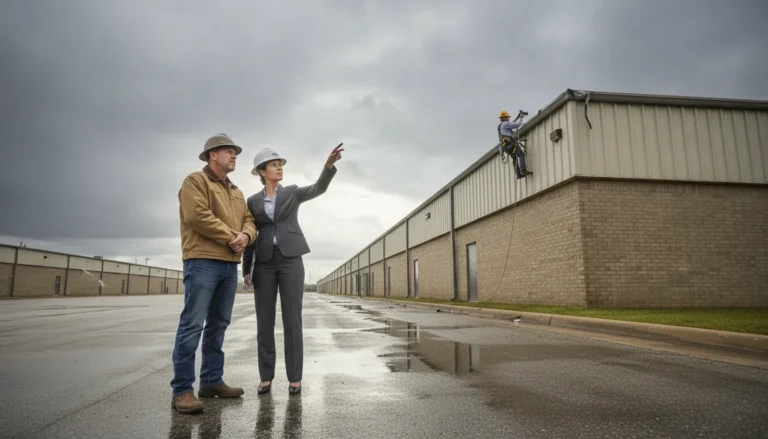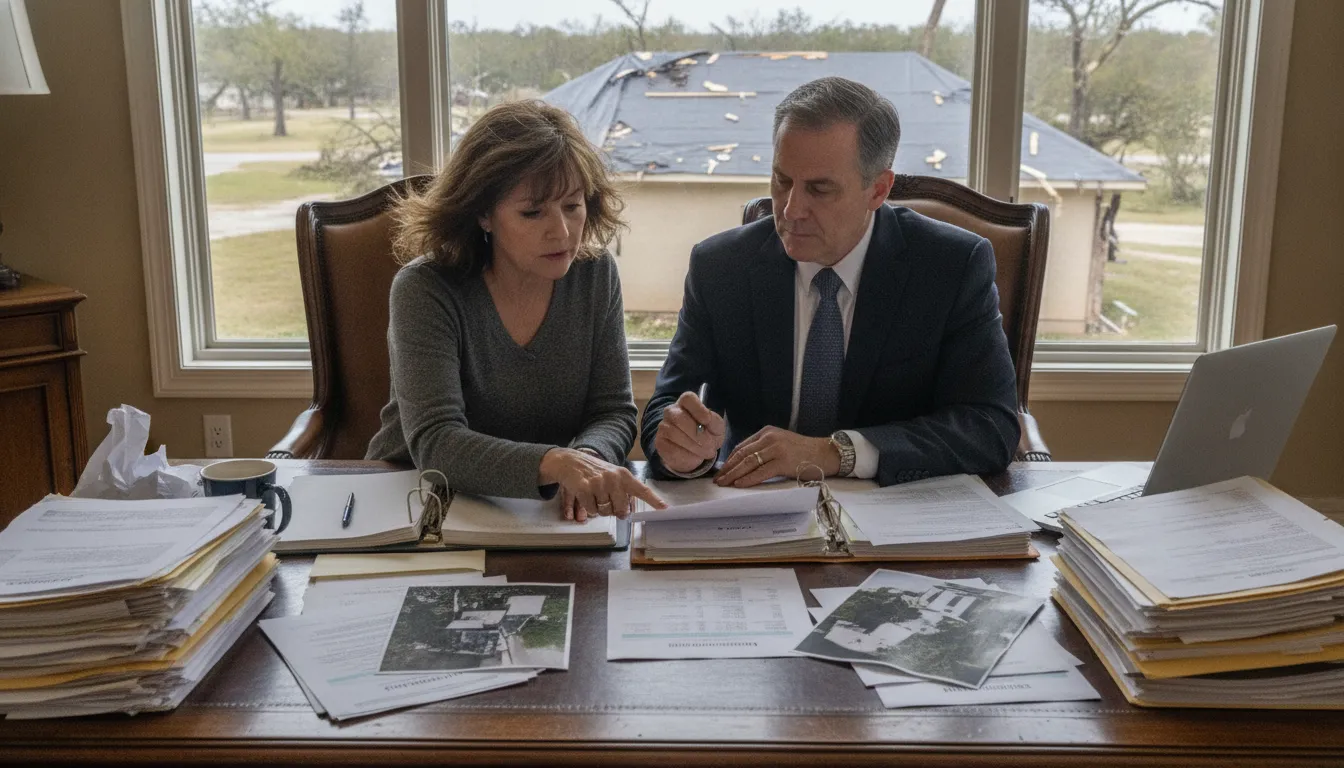
A severe storm can damage a Texas property in minutes, but the insurance dispute may unfold over months. When an insurer delays, denies, or underpays a covered loss, a storm damage insurance claim lawyer can help a policyholder understand the dispute, preserve evidence, and decide what to do next.
Schedule a free case evaluation with Hoch Law Firm to discuss a delayed, denied, or underpaid storm claim directly with a trial lawyer.
Call 817-731-9703 to speak with Tim Hoch about your storm damage claim.
A storm claim becomes a legal dispute when the insurer and policyholder disagree about coverage, storm causation, repair scope, required work, or the value of the loss. Warning signs include repeated document requests, unexplained delays, a vague denial, or an estimate that omits necessary repairs. When these warning signs persist, repeated delays or an unreasonable denial may indicate bad faith.
Not every difficult claim requires litigation. Some disputes can be resolved with a clearer estimate, stronger documentation, or a formal request for reconsideration. The important point is to identify the disagreement early, before evidence disappears or a policy deadline passes.
When does a storm damage claim become a legal dispute?
A storm damage claim becomes a legal dispute when ordinary claim handling no longer resolves a material disagreement. The conflict may involve whether the storm caused the damage, whether the policy covers it, what repairs are reasonably necessary, or how much the insurer must pay under the policy.
Texas recorded 902 major hail events in 2025. Total Texas weather losses reached $8.2B in Q2 2025 alone, with $2.4B in the DFW metroplex. The DFW area sits in the most active hail corridor in the United States, making storm damage claims especially common in North Texas.
Unexplained delay or a vague denial
A carrier may reasonably need time to inspect a complex property loss. Concern rises when the adjuster stops communicating, repeatedly requests the same records, misses inspections, or issues a denial that does not connect the facts to specific policy language. Keep a dated communication log and ask the carrier to explain its position in writing.
Disagreement over storm causation
Insurers often distinguish sudden storm damage from deterioration in tornado and windstorm damage claims, faulty maintenance, or wear and tear. That distinction can control coverage. A property owner should preserve pre-storm photographs, maintenance records, weather information, contractor observations, and post-storm images. For commercial properties, also document lost income and operating expenses — key evidence for business interruption claims. The goal is to show what changed and when it changed, not merely that damage exists today.
A repair estimate that leaves work out
A low estimate may omit damaged areas, required demolition, matching materials, code-related work, or the cost of restoring connected building systems, which may be covered by ordinance or law coverage for post-storm building code upgrades. Compare estimates line by line. Identify each difference and support it with photographs, measurements, invoices, or professional opinions. A clear scope dispute is easier to evaluate than a general complaint that the offer is unfair.
Policyholders facing a serious disagreement can review the firm’s guidance on when to hire a lawyer after storm damage.
How do insurance companies investigate storm damage claims in Texas?
When a storm damage claim is filed, insurance companies typically assign an adjuster to inspect the property, take photographs, and document the extent of the loss. The adjuster evaluates whether the damage is consistent with the reported storm event, reviews policy terms and exclusions, and may consult engineers or meteorologists for complex causation questions. Insurers also examine the timing of the claim, prior maintenance records, and any pre-existing damage. Policyholders should be prepared to provide their own documentation, including photographs, repair estimates, and weather data, to ensure a complete and accurate investigation.
What should you document before the claim turns adversarial?
Strong documentation should show the property’s condition before and after the storm, the steps taken to prevent further loss, the full repair scope, and every important exchange with the insurer. An organized claim file helps experts and counsel evaluate the dispute without relying on memory or incomplete records.
- Photograph the property before emergency work begins when it is safe to do so.
- Save the complete policy, claim letters, estimates, reports, invoices, and receipts.
- Record the date, participants, and key points from every important claim conversation.
- Ask the insurer to explain coverage and payment decisions in writing.
Photograph and preserve the damage
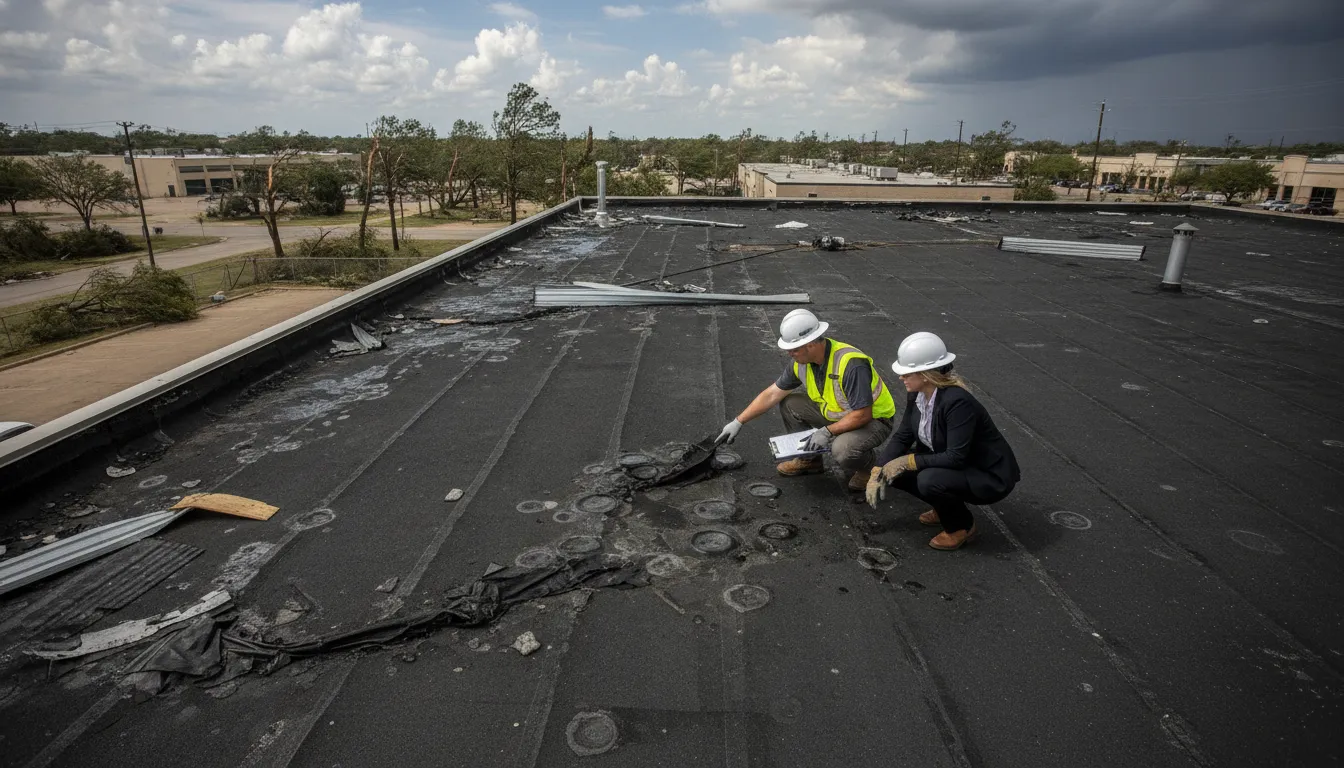
Take wide photographs that show where damage is located, then capture close views that show detail. Photograph the exterior, interior, roof areas that can be safely accessed, equipment, inventory, and signs of water intrusion. Preserve original files with dates and avoid discarding damaged materials before the insurer has a fair opportunity to inspect them.
Track emergency work and repair costs
Take reasonable steps to protect the property from additional damage, but document the condition before emergency work begins when possible. Keep contracts, invoices, receipts, and proof of payment for tarping, water extraction, temporary security, and other mitigation. Note who performed each task and why the work was necessary.
Build a complete communication record
Save the policy, endorsements, claim acknowledgment, estimates, reports, photographs, emails, letters, and payment records in one place. After an important phone call, write down the date, participants, and substance of the discussion. Ask for coverage decisions and requested documents in writing. This record can expose inconsistent explanations and establish what information the insurer received.
For larger properties, the firm’s discussion of a business storm damage claim explains why careful loss documentation matters.
Why do storm damage claims get denied or underpaid?
Storm claims are often denied or underpaid because the insurer disputes causation, applies an exclusion, uses a narrower repair scope, subtracts a deductible or depreciation, or values damaged property differently. The policy language and evidence must be reviewed together because the same physical damage can produce different coverage questions.
Wear and tear versus storm damage
A common dispute is whether the storm caused new damage or merely revealed an old condition. The insurer may point to aging materials, prior leaks, deferred maintenance, or installation defects. The policyholder may have evidence of a sudden change after a documented weather event. A qualified professional can help distinguish old conditions from storm-created damage.
Repair scope and matching materials
Even when coverage is accepted, the parties may disagree about what work is required to restore the property. One estimate may call for limited spot repairs while another calls for replacing a larger connected area. Availability of compatible materials, access requirements, and local code obligations may affect the proper scope. These issues require facts and policy analysis, not assumptions.
Deductibles, depreciation, and exclusions
The amount paid can turn on the applicable deductible, whether depreciation is recoverable, and whether the carrier applies an exclusion or limitation. Request a written explanation of the calculation. Compare it with the declarations, endorsements, and loss-settlement terms in the complete policy. A declarations page alone rarely answers every question.
| Dispute | Useful evidence | Question to ask |
|---|---|---|
| Storm causation | Pre-loss photos, weather data, inspection findings | What facts support the carrier’s cause conclusion? |
| Repair scope | Detailed estimates, measurements, code information | Which necessary items were omitted, and why? |
| Claim value | Invoices, inventory, valuation records | How were deductible and depreciation calculated? |
How can a storm damage insurance claim lawyer help?
A storm damage insurance claim lawyer can identify the real points of disagreement, evaluate policy language, organize evidence, communicate with the insurer, and pursue an appropriate remedy. The lawyer’s role is not simply to demand more money. It is to build a supportable position and protect the policyholder’s legal options.
Review the policy and claim file
A useful legal review begins with the complete policy and the complete claim record. Counsel can compare the insurer’s stated position with the actual language, identify missing information, and determine whether the dispute concerns coverage, causation, scope, valuation, or claim handling. That diagnosis helps avoid spending time on the wrong issue.
Coordinate evidence and experts
Some losses require input from roofers, engineers, contractors, accountants, or other professionals. Counsel can help define the question each expert must answer and connect technical findings to the policy dispute. This is especially important for commercial losses involving several buildings, interrupted operations, or multiple damaged systems.
Negotiate or pursue litigation when appropriate
A lawyer can present a documented position, respond to the insurer’s arguments, and negotiate from the claim record. If a reasonable resolution is not possible, counsel can evaluate litigation and applicable legal claims. Hoch Law Firm exclusively represents policyholders and injured parties. Tim Hoch brings Board Certification in Personal Injury Trial Law plus direct trial experience to complex disputes.
Talk directly with Tim Hoch about your claim and learn whether legal action may be appropriate.
When should you contact a lawyer about a storm claim?
Consider contacting counsel when the claim involves a significant loss, a denial, a materially low estimate, a causation dispute, unexplained delay, or pressure to accept a result you do not understand. Early advice can help preserve evidence and deadlines even when the dispute ultimately resolves without filing a lawsuit.
After a denial or materially low offer
A denial letter or low estimate should be reviewed alongside the policy and evidence. Look for the exact factual and policy basis for the decision. If the explanation is unclear, incomplete, or inconsistent with the property condition, legal review may clarify whether more documentation, reconsideration, appraisal, negotiation, or litigation deserves consideration.
When the loss is large or complex
Complex losses create more points of disagreement. Commercial properties may involve roofs, HVAC systems, tenant spaces, inventory, equipment, mitigation work, and lost business income. Residential losses can also involve extensive interior and structural damage. The greater the stakes and complexity, the more valuable an early, organized evaluation can be.
Before accepting a final resolution
Do not sign a release or accept a final resolution without understanding its effect. Confirm which damage and costs the payment addresses, whether additional benefits may remain available, and whether deadlines are approaching. If the carrier’s position is unclear, ask questions in writing and consider legal advice before giving up rights.
Hoch Law Firm handles selected matters on a contingent-fee basis. Learn more about working with a contingent-fee storm claim lawyer.
What options exist after an insurer refuses to pay fairly?
Options after an unsatisfactory claim decision may include submitting additional evidence, requesting reconsideration, using appraisal when the policy and dispute make it appropriate, negotiating through counsel, or filing suit. The right option depends on whether the disagreement concerns the amount of loss, coverage, causation, or claim handling.
Request reconsideration with focused evidence
A productive request for reconsideration identifies the specific disputed items and supplies evidence that addresses the insurer’s reasons. A new estimate alone may not resolve a causation or coverage disagreement. Explain what changed, which evidence supports the request, and what response is requested. Keep the communication professional and specific.
Evaluate appraisal carefully
Some policies contain appraisal provisions intended to address disputes about the amount of loss. Appraisal is not necessarily a solution to disputes about whether damage is covered or what caused it. Before invoking appraisal, understand the provision, costs, timing, disputed issues, and potential effect on other rights. Legal advice can help determine whether it fits the particular claim.
Consider litigation when other efforts fail
Litigation may be appropriate when a material dispute cannot be resolved and the evidence supports legal action. Filing suit introduces deadlines, costs, discovery, expert work, and risk. A trial lawyer can explain those considerations and develop a strategy based on the policy, claim record, damages, and applicable Texas law.
Property owners can also review Hoch Law Firm’s broader property insurance dispute guidance.
Frequently asked questions about storm damage claims
How can a storm damage lawyer help with a claim?
A storm damage lawyer can review the policy and claim file, identify disputed facts, preserve evidence, communicate with the insurer, and pursue a fair resolution through negotiation or litigation when appropriate. The lawyer can also help the policyholder understand deadlines and avoid decisions that may limit available options.
Does homeowners insurance cover storm damage?
Coverage depends on the policy, the cause of loss, exclusions, deductibles, and the evidence connecting the damage to the storm. Some policies treat wind, hail, water, and other causes differently. Review the complete policy and claim decision before accepting an insurer’s conclusion about coverage.
What should I not say to an insurance adjuster?
Do not guess about the cause, extent, or timing of damage. Give accurate facts, avoid speculation, keep copies of communications, and ask for important decisions in writing. If you do not know an answer, say so and offer to provide reliable information after you investigate.
How long do you have to file a claim after storm damage?
Deadlines vary by policy and legal claim. Report damage promptly, review the policy’s notice and suit-limitation provisions, and seek legal advice early enough to preserve your options. Do not assume that ongoing discussions with an insurer automatically extend a deadline.
Discuss your Texas storm claim with Hoch Law Firm
A delayed, denied, or underpaid storm claim can place repairs, business operations, and financial plans at risk. Hoch Law Firm offers direct attorney access and highly personalized representation for selected complex matters. The firm represents policyholders, not insurance companies, and can evaluate whether a legal dispute requires action.
Call 817-731-9703 for a free case evaluation with Hoch Law Firm about your Texas storm damage insurance dispute.