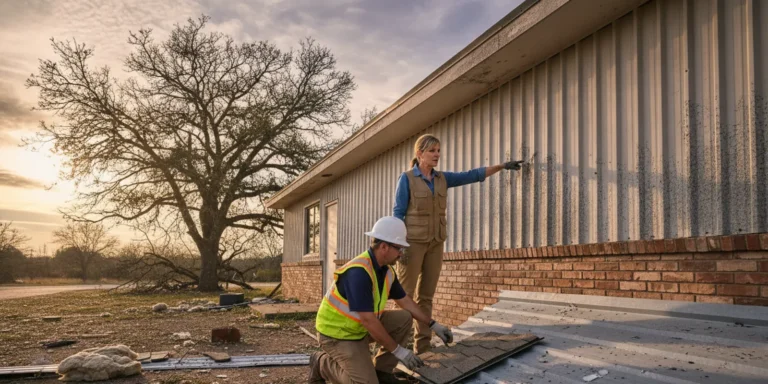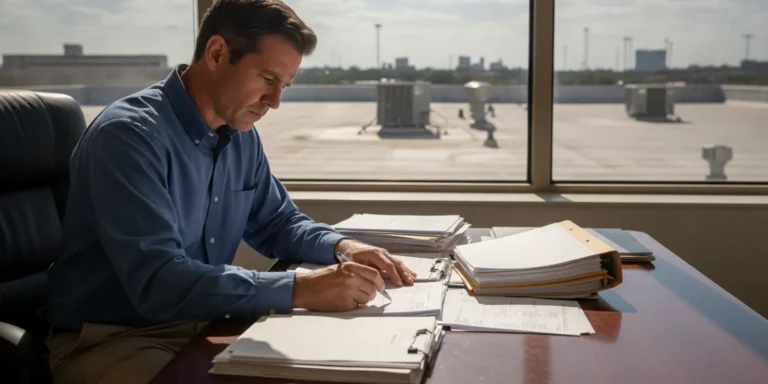
An insurer’s first check can leave a commercial property owner funding the missing repairs. That shortfall can delay reopening, drain reserves, and weaken the business behind the building.
Schedule a free case evaluation today.
An insurance claim underpaid lawyer helps a commercial property owner challenge a payment that does not cover the full insured loss. Before accepting more money or signing anything, preserve photographs, repair estimates, invoices, the policy, the insurer’s estimate, payment letters, and every communication. Compare the insurer’s scope and pricing against independent estimates, then document omitted damage, hidden damage, necessary code upgrades, and business interruption costs. Ask the insurer to explain each deduction in writing, and do not treat its first check as the final measure of your loss. Texas law may impose interest and reasonable attorney’s fees when an insurer promptly fails to pay a covered claim in compliance with state requirements.
Before you challenge the payment, you need a clear answer to one question: does the insurer’s estimate match the covered loss? The next section, How to tell whether a commercial property claim was underpaid, identifies the warning signs and evidence that matter. Here’s how.
How an insurance claim underpaid lawyer spots underpayment
An insurer’s payment can be timely yet still fall short of the full commercial loss. The clearest warning sign is a gap between the carrier’s estimate, the policy, and the work needed to restore operations. Compare documents line by line before treating the payment as final.
Gaps between the estimate and actual damage
Start with scope, quantities, and prices. Look for damaged roofing, HVAC units, electrical systems, interior finishes, equipment, or debris removal that the adjuster’s estimate omits. Also check whether labor rates, material prices, measurements, and repair methods match current contractor bids. A low total often begins with several small scope gaps.
- Rooms or roof areas shown in photos but absent from the estimate.
- Temporary protection, cleanup, testing, permits, or professional fees not listed.
- Repairs priced as patches when contractors say full replacement is needed.
Keep dated photographs, inspection reports, invoices, and contractor estimates together. These records show what was damaged and why the insurer’s scope may be incomplete.
Missing costs beyond physical repairs
Physical repairs are only one part of many commercial losses. Check whether the estimate addresses code-required upgrades, such as changes needed to obtain permits or complete lawful repairs. Then read the policy for limits, deductibles, and endorsements that may govern those costs.
Also review income lost while the property could not operate as usual. Business interruption may involve lost revenue, continuing expenses, extra costs, and the length of the restoration period. Compare the insurer’s calculation with tax returns, sales records, payroll, leases, and other business records. A missing month or unsupported sales assumption can change the result.
Depreciation, exclusions, and written explanations
A payment may be based on actual cash value rather than full replacement cost. Review every depreciation deduction and confirm whether the policy permits recovery of withheld amounts after repairs. Large or unexplained deductions deserve a clear written explanation.
Exclusions and coverage limits can also reduce payment. The insurer should connect each reduction or denied item to specific policy language, not a broad label. Texas guidance says a denial notice must give the reasons for denial. That same guidance says TDI may help if the issue remains unresolved.
If several gaps remain after your review, preserve the records and avoid signing a release before understanding its effect. The firm’s guide to steps to take after an insurer denies or underpays a claim explains next steps when a carrier denies coverage. An insurance claim underpaid lawyer can compare the estimate with the policy and documented loss, without assuming a specific outcome.
What should you do after receiving a low insurance payment?
A low payment is not always the final word on a property claim. Treat the check and estimate as the insurer’s current position, then build a clear record before challenging it.
Start with the policy, damage evidence, and every claim document. These materials help show where the insurer’s estimate may have missed covered damage or priced repairs too low.
Immediate steps after a low payment
Work through these steps in order. A careful file can make later talks with the adjuster, an expert, or an attorney more focused.
-
Preserve the damage. Take dated photos and video from wide and close views. Keep damaged materials when safe, save samples, and record any steps taken to stop further loss.
-
Gather and compare the documents. Place the policy, insurer estimate, payment letter, deductible, contractor bids, and repair invoices together. Mark missing rooms, materials, labor, code work, and other differences.
-
Request a written explanation. Ask the adjuster to explain each disputed item and identify the policy terms used. Texas insurers must give written reasons when denying a claim, according to the Texas Department of Insurance.
-
Track every contact. Keep a claim log with dates, names, phone calls, emails, requests, and promised response times. Confirm key phone talks by email so the record does not depend on memory.
-
Pause before accepting final terms. Read every check, release, proof of loss, and settlement document before signing. Get legal advice if the wording could end the claim or waive disputed damage.
Evidence that supports the dispute
The strongest comparison uses the same repair scope across all estimates. Ask contractors to state quantities, material grades, labor needs, and code-related work instead of giving one total price.
Preserve business records too. For a commercial property, save tenant notices, closure records, lost-rent documents, emergency invoices, and records of steps taken to limit further loss.
Send disputes and added evidence in writing. If the issue remains unresolved, review the firm’s guide to options for challenging a property insurance decision before deciding on the next step.
Actions that can weaken the claim
Do not discard damaged property or begin full repairs before the insurer has a fair chance to inspect it. Emergency work may be needed, but document the condition before and during that work.
Avoid signing a broad release just to receive funds quickly. Also avoid guessing about causes, dates, or repair costs when speaking with the insurer. State what you know and support it with records.
When the gap is large or the policy terms are unclear, an insurance claim underpaid lawyer can review the record. Counsel can also assess deadlines and the effect of any proposed release.
Build a claim file that shows the full loss
An underpaid claim dispute often turns on the gap between the insurer’s estimate and the actual cost of the loss. Build one organized claim file that explains that gap with records, not assumptions. Keep original files, save copies, and note when each item was created or received.
Policy terms and claim communications
Start with the full policy, declarations, forms, and every endorsement in force on the loss date. These documents show the covered property, limits, deductibles, exclusions, and rules for valuing damage. Do not rely only on a declarations page or the insurer’s summary.
Save the loss notice, claim number, adjuster letters, emails, text messages, inspection notes, and payment records. Create a dated contact log with the speaker, topic, and promised next step. The insurer must send its decision within 15 business days after it gets all needed information, subject to a permitted extension. The Texas Department of Insurance explains these claim deadlines.
Proof of physical damage and repair cost
Photograph and record each damaged area before cleanup or repair, when safe. Use wide views to show location and close views to show detail. Label files by building, room, system, and date so another person can follow the evidence.
Keep contractor estimates, engineering reports, inspection reports, bids, invoices, receipts, and proof of payment. Ask vendors to separate emergency work, permanent repairs, code work, and upgrades. Preserve damaged items when practical, and document anything that must be discarded.
- Make an inventory of damaged equipment, stock, furniture, and fixtures.
- List each item’s age, condition, purchase cost, replacement cost, and supporting receipt.
- Compare every line of the insurer’s estimate with contractor scopes and actual invoices.
Business interruption and the value gap
Property damage can disrupt revenue even while repairs remain unfinished. Gather sales records, profit-and-loss statements, payroll, leases, tax records, bank statements, and prior operating reports. Also save extra expense records for temporary space, equipment rental, rush shipping, security, storage, and other steps taken to keep operating.
Use a simple timeline that connects the event, shutdowns, repair delays, added costs, and reopening dates. Keep prior-period records that show normal results, plus current records that show the change. An accountant can help explain the method and separate loss-related changes from unrelated business trends.
Finally, prepare a short index that maps each claimed amount to its supporting record. This lets an adjuster, expert, or Texas commercial property lawyer review the file without guessing. It also makes missing proof easier to spot before a dispute moves forward.
Compare the insurer’s estimate with an independent assessment

An insurer’s estimate is a starting point, not a full record of every covered loss. Compare it line by line with an assessment from a qualified contractor, engineer, or other independent expert. The goal is to find differences in what was measured, priced, excluded, or left unexplained.
Documents to compare
Place the policy, insurer estimate, independent assessment, photographs, invoices, and claim letters side by side. Match each damaged area to a specific line item and supporting photo. Keep notes that show which document supports each requested cost.
Also compare the insurer’s written coverage position with the policy language. The Texas Department of Insurance states that a denied claim notice must give the reasons for denial. Written reasons help show whether a disputed item was excluded, overlooked, or valued differently.
Key differences in the estimates
The strongest comparison does more than show two bottom-line totals. It explains why the totals differ and ties each gap to evidence. Use a simple comparison table to organize the main issues before responding to the insurer.
| Issue. | Insurer’s estimate. | Independent assessment. | What to verify. |
|---|---|---|---|
| Scope of damage. | May list only visible or accepted damage. | May include hidden damage and related work. | Photos, testing, measurements, and causation. |
| Repair pricing. | Uses the insurer’s quantities and price inputs. | Uses contractor bids or local cost data. | Labor, materials, quantities, and taxes. |
| Exclusions. | May omit items based on coverage decisions. | May price all work needed for repair. | Policy terms and written reasons. |
| Code requirements. | May separate or limit code-related work. | May include upgrades required for the project. | Applicable code, permit needs, and policy coverage. |
| Business income. | May use a shorter repair period or limited records. | May use updated schedules and operating records. | Revenue, expenses, delays, and restoration period. |
Turning gaps into a clear response
Create a written variance list after the comparison. For each gap, state the disputed amount, explain the cause, and attach the best supporting record. Ask the insurer to address each item in writing rather than sending only a revised total.
Business income needs its own review because the repair estimate may not capture lost operations. Compare revenue records, saved expenses, repair timing, and delays tied to the covered damage. Property owners considering a challenge can also review their guide to responding to an insurance claim dispute while preserving the estimate files and claim correspondence.
A well-organized comparison gives the insurer a clear basis to reconsider the payment. It also helps an insurance claim underpaid lawyer assess the dispute without rebuilding the claim file from scratch.
Ask Hoch Law Firm to review the underpaid commercial claim.
When should you involve an insurance claim underpaid lawyer?
Commercial property owners do not need to wait for a final denial before seeking legal advice. Consider speaking with a Fort Worth property insurance lawyer or an insurance claim underpaid lawyer an insurance claim underpaid lawyer when the insurer’s payment will not fund covered repairs. Early advice can help preserve records, clarify deadlines, and prevent a weak response from narrowing the claim.
Warning signs that call for legal review
A low payment alone does not prove the insurer acted improperly. Still, a large gap between the carrier’s estimate and documented repair costs deserves a close look. Other warning signs include excluded damage without a clear reason, repeated requests for the same records, or long periods without a useful update.
Timing also matters. The Texas Department of Insurance explains commercial property claim deadlines, including when insurers must acknowledge claims and issue decisions after receiving needed information. Counsel can compare that timeline with the claim file and assess whether the insurer followed the policy and Texas law.
Owners should also seek advice when the dispute threatens cash flow, tenant operations, or repair schedules. Before the first meeting, gather the policy, endorsements, estimates, photos, payment letters, and all insurer communications. These records help counsel see what was claimed, what was paid, and what remains in dispute.
What counsel can examine
A lawyer can review the policy language, deductible, exclusions, valuation terms, and the insurer’s estimate. Counsel may also compare the carrier’s stated reasons with contractor bids, expert reports, invoices, and damage photos. The goal is to find the source of the shortfall and choose a sound response.
That response may involve a detailed demand, more proof of loss, negotiation, or litigation when the facts support it. Each path carries costs, timing issues, and business risks. A Texas commercial property lawyer can explain those tradeoffs without treating a lawsuit as the automatic first step.
Hoch Law Firm’s policyholder-focused approach
Hoch Law Firm represents policyholders and injured parties, not insurance companies. Commercial owners work directly with Tim Hoch, rather than having the matter passed through a volume-based case system. His experience as a business owner helps frame the claim around both covered damage and its effect on operations.
Tim Hoch is Board Certified in Personal Injury Trial Law and has trial experience in complex disputes. That background can matter when an insurer will not resolve a well-supported claim. It does not promise a result, since every claim turns on its policy, evidence, and facts.
The firm handles commercial property insurance matters on a contingent-fee basis. This means the legal fee depends on a recovery, subject to the engagement terms. An initial review can help an owner decide whether the unpaid amount and available proof justify the next step.
Why timing matters in an underpaid commercial claim
An underpayment can disrupt repair plans, tenant needs, and cash flow. Prompt action helps a Texas commercial owner preserve records and understand the insurer’s position. Waiting may make it harder to connect later damage findings to the covered event.
The policy controls the owner’s duties
Start with the full policy, including endorsements and forms added after the main coverage document. Look for conditions on notice, cooperation, property protection, inventories, sworn proof of loss, inspections, and requested records. These terms can shape what the owner must do after finding an underpayment.
Do not assume that earlier notice of the original loss satisfies every later request. A dispute about scope or price may lead to new document demands. Track each request, response, delivery method, and receipt in one claim file.
A proof of loss request deserves prompt attention because it may call for a signed statement and detailed support. Check the request against the policy. Ask for clarity in writing if the required form, records, or timing is unclear.
Insurer timelines are not owner deadlines
The Texas Department of Insurance explains commercial property claim rights and the insurer’s duties after it receives needed information. Those rules matter, but they do not replace the conditions in the owner’s policy. They also should not be treated as a calendar for challenging an underpayment.
A commercial policy may contain contractual limitation provisions or other time-sensitive conditions. Their wording and effect can depend on the policy and the facts. Owners should not rely on a general deadline found online or assume negotiations pause every applicable time limit.
A practical response calendar
Create a calendar as soon as the payment estimate or coverage letter arrives. Record the loss date, notice date, inspection dates, payment date, and every insurer request. Also save envelopes, email headers, portal messages, estimates, photographs, repair invoices, leases, and business records.
- Compare the insurer’s estimate with contractor scopes and actual repair needs.
- List missing damage, disputed pricing, exclusions, and unanswered questions.
- Confirm upcoming policy conditions and requested proof in writing.
- Keep communications factual, dated, and tied to supporting records.
If timing or policy terms are unclear, seek a focused review before delay narrows the available choices. A Texas commercial property lawyer can assess the policy language and claim record. That review can also clarify the owner’s property claim dispute guidance without relying on an assumed deadline.
Protect the property and the business while the dispute continues
An underpaid claim creates two problems at once. The property still needs attention, while the business must keep serving tenants, workers, and customers. A clear operating plan can limit further loss without weakening the claim record.
Repair sequence and claim records
Start with work needed to prevent more damage or address an immediate safety risk. Before crews begin, photograph each damaged area and save videos, measurements, estimates, invoices, and removed materials. Ask contractors to separate emergency work from permanent repairs on their paperwork.
Avoid making broad permanent repairs before the insurer can inspect the damage, unless waiting would cause more loss. Send written notice of urgent work and invite another inspection. The Texas Department of Insurance claim guidance explains the insurer’s response duties after it receives needed information.
- Keep a dated log of damage, calls, visits, and repair decisions.
- Store damaged items when safe, or document why disposal was required.
- Track temporary repairs separately from planned upgrades.
- Use written change orders when contractors find hidden damage.
Tenant and operating decisions
Tell tenants what areas are affected, what steps are underway, and when the next update will arrive. Do not promise a repair date that depends on disputed funds. Keep copies of tenant notices, complaints, rent credits, lease changes, and requests for alternate space.
Map how each repair phase may affect access, utilities, inventory, equipment, and customer traffic. Then schedule work around the most costly operating risks. Record the reason for each choice, including why a cheaper or faster option was not workable.
When possible, use a single point of contact for tenants, contractors, and the insurer. This reduces mixed messages and creates a cleaner timeline. It also helps the owner connect each business disruption to the damaged property and repair process.
Cash flow and mitigation costs
Build a short-term cash plan that treats expected insurance money as uncertain until paid. Separate normal operating costs from expenses caused by the loss. Track lost rent, canceled work, added labor, storage, security, temporary space, and other mitigation costs in distinct ledger entries.
Review the policy and claim correspondence before accepting conditions tied to any payment. Deposit decisions can affect available options, so ask counsel when wording is unclear. Owners weighing their next steps for a denied or underpaid insurance claim should preserve every payment letter, estimate, proof of loss, and email.
Continue reasonable steps that protect the property, but document the cost and purpose of each step. Keep rejected bids and notes from vendors who cannot perform the work. Those records help show how the funding gap shaped repairs, operations, and efforts to reduce further loss.
Frequently Asked Questions
What are my options when my commercial insurance claim is underpaid?
Commercial property owners can request the insurer’s estimate and a written explanation of the payment. Compare those documents with the policy, contractor estimates, photographs, invoices, and business-loss records. Owners may submit missing evidence, request reconsideration, use any policy-required appraisal process, or file a complaint with the Texas Department of Insurance. An insurance claim underpaid lawyer can assess options before important deadlines pass.
Can you sue an insurance company for not paying enough on a claim?
A commercial property owner may be able to sue when an insurer fails to pay amounts owed under the policy or violates Texas law. A lawsuit is not automatically appropriate whenever estimates differ. The policy terms, damage evidence, insurer communications, and reason for the shortfall all matter. Under Texas Insurance Code Section 542.060, a noncompliant insurer may owe interest and reasonable attorney’s fees.
What is insurance bad faith in the context of an underpaid claim?
Insurance bad faith generally involves an insurer handling a claim unreasonably, rather than merely disagreeing about repair costs. Examples may include an inadequate investigation, ignoring material evidence, misrepresenting coverage, or withholding payment without a reasonable basis. Whether conduct qualifies depends on the policy, claim record, and Texas law. Keep every estimate, report, email, letter, and payment explanation so an attorney can evaluate the insurer’s conduct.
How can a lawyer help with an underpaid commercial insurance claim?
A lawyer can review the commercial property policy, identify disputed coverage or valuation issues, and compare the insurer’s estimate with evidence of the actual loss. The lawyer may gather expert reports, preserve deadlines, communicate with the insurer, and pursue negotiation, appraisal, or litigation when appropriate. Legal review can also clarify whether the dispute concerns missing documentation, differing estimates, policy exclusions, or potentially improper claim handling.
Ready to Challenge an Underpaid Insurance Claim?
An underpaid claim can force your business to carry repair costs and delay a full return to normal operations. Waiting may weaken the record of damage, lost income, and expenses needed to support your position. Starting now creates time to organize evidence, review the insurer’s payment, and respond before important deadlines limit your options.
The insurer’s initial payment does not have to define your business’s recovery. A prompt review can show what remains unpaid and which records may support a stronger response. Bring your estimate, policy, payment letter, repair invoices, and claim communications so the discussion can focus on practical next steps. Schedule a free case evaluation to discuss your underpaid commercial property claim and prepare a clear plan for pursuing the unpaid amount.